Feng E Zushi, Incubated by SF Express, Teams Up with Jiu Shi Intelligence: The 'Two-Way Journey' of 180,000 Smart Cabinets and Autonomous Vehicles—Can AI-Driven Full-Link Unmanned Retail Unlock a Bill
 01/04 2026
 883
883
Introduction
Late-night cola fixes from unmanned smart cabinets after overtime, grabbing a bag of chips during a park stroll—unmanned retail has seamlessly integrated into daily life.
Yet few realize the industry's hidden deadlock behind the ubiquitous smart cabinets: Restocking personnel spend 1-2 hours daily traveling to and from warehouses. In first-tier cities, traffic restrictions and parking challenges drive up labor costs, leaving most operators stuck below the 10,000-unit scale.
On December 26, 2025, Feng E Zushi, an industry leader incubated by SF Express, made a bold move by partnering with Jiu Shi Intelligence to launch an autonomous delivery vehicle restocking solution, initiating an 'AI + Unmanned' strategy to reconstruct warehouse distribution models. As the first industry pilot, this move aims not only to solve delivery challenges for 180,000 smart cabinets but also to potentially disrupt the entire unmanned retail sector.
Today, 'Autonomous Vehicles Are Here' (WeChat Official Account: Autonomous Vehicles Are Here) dives into whether Feng E Zushi's autonomous vehicles can crack industry dilemmas. Is the era of full-link unmanned operations truly upon us?
(For related reading, click: 'Singapore Retail Giant Sheng Siong Group Approved for Autonomous Fleet Operations, to Purchase Nearly 30 China-Made QCraft Z10 Autonomous Vehicles') 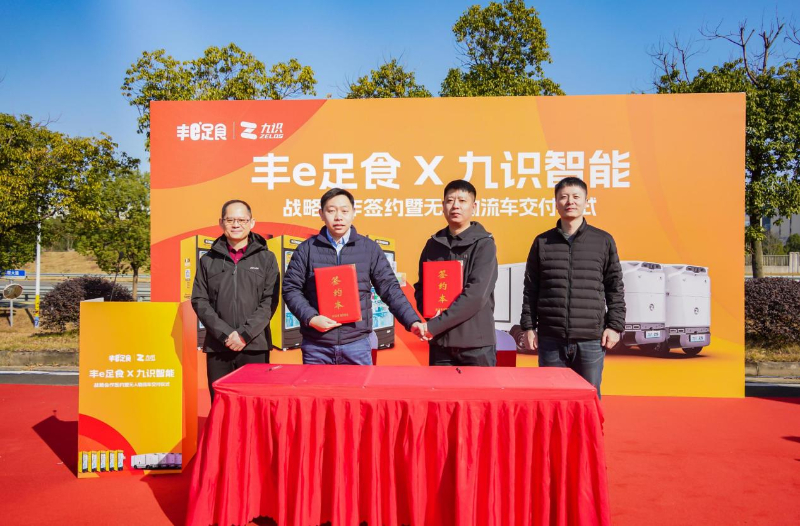
I. Industry Pain Points Amplified: Operational Anxiety Behind 180,000 Smart Cabinets
To understand Feng E Zushi's urgency, one must first grasp the 'grim' reality of unmanned retail operations.
The industry is fragmented, with scattered scenarios relying entirely on manual labor: Restocking personnel load goods, navigate urban areas, search for parking, restock, and return to warehouses in a repetitive cycle.
Pain points abound: Traffic restrictions during peak hours in first-tier cities compress restocking windows; finding parking in core business districts takes over 30 minutes; restocking personnel spend more than a quarter of their time traveling to warehouses, resulting in extremely low actual restocking efficiency.
These pain points are even more fatal for industry leader Feng E Zushi. By September 2025, it had deployed 180,000 smart terminals across 72 cities, covering 107 niche scenarios and serving over 100 million users—all through a 100% direct operation model with 3,000+ offline teams handling all operations. 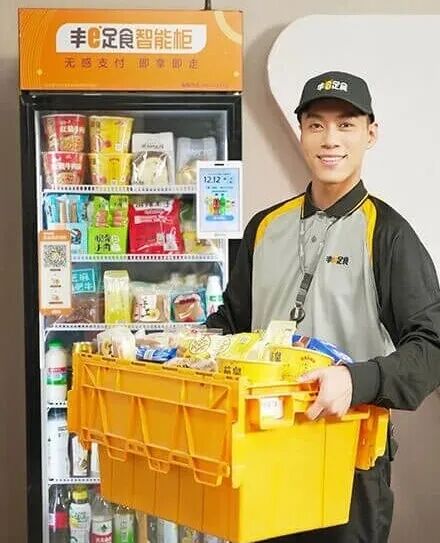
While relying on self-developed AI for full-link digitalization in areas like product selection and logistics allocation, the 'last-5-kilometer' delivery challenge remained a bottleneck.
COO Zhu Tao straightforward words (directly stated) that real-time management of 180,000 smart cabinets is extremely challenging, with labor shortages, low efficiency, and high costs representing the biggest barriers to industry scaling.
The data doesn't lie: Under traditional models, restocking personnel spend 1-2 hours daily traveling to warehouses, with 20 locations accounting for a quarter of their workday. Rising labor costs in first-tier cities, combined with delivery costs accounting for 35% of industry expenses, severely squeeze profit margins. This is the core reason Feng E Zushi introduced autonomous vehicles—not for show, but to survive and scale.
II. Model Innovation: 'Two-Stage Relay' Solves the Last-5-Kilometer Challenge
Feng E Zushi's solution is the 'two-stage relay' model: Breaking restocking into three segments, using human labor for the first and last stages and autonomous vehicles for the middle.
Warehouse sorters load goods, autonomous vehicles transport them from micro-warehouses to locations, and restocking personnel directly receive and shelve goods at the location without returning to the warehouse, proceeding straight to the next point.
This seemingly simple shift achieves a transformation from 'people seeking goods' to 'goods seeking people.'
Pilot programs in Beijing's Yizhuang district in late 2025 validated the approach: Autonomous vehicles, unrestricted by traffic bans, operate longer than electric trucks, consume less fuel than gasoline vans, and avoid parking fees, boosting single-trip restocking efficiency by over 40%. Beijing's business head cited an example: Previously, restocking personnel handled 20 locations and made two warehouse trips daily; now, they cover 30 locations in the same time, freed from parking searches and warehouse returns. 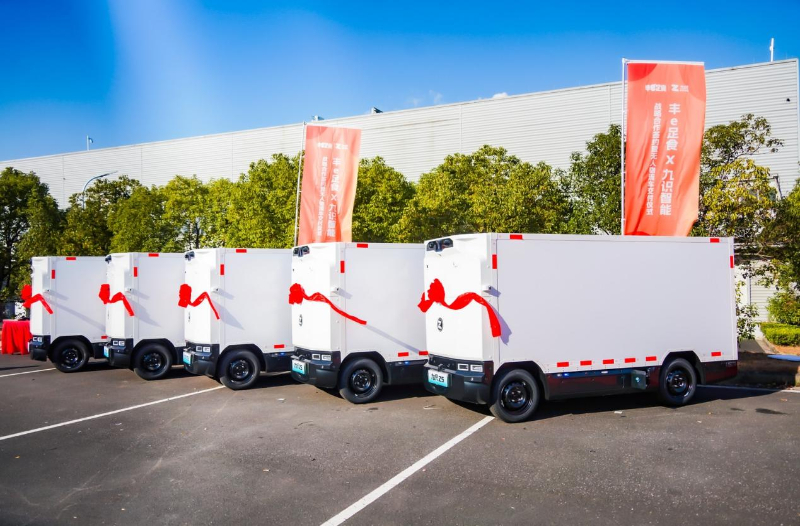
The model's core challenge lies not in the vehicles but in scheduling coordination.
Introducing autonomous vehicles requires synchronizing two 'asynchronous resources': restocking personnel and vehicles, ensuring 'personnel arrive as vehicles do.'
This is highly complex for 180,000 smart cabinets.
Yet Feng E Zushi overcame this with operations research and AI algorithms, achieving 'asynchronous scheduling, synchronous arrival.'
According to sources, the system monitors national logistics capacity and demand in real time, combining sales data and restocking cycles to precisely plan routes and timings for seamless coordination. The selected Jiu Shi Intelligence autonomous vehicles are equally capable: Equipped with LiDAR, millimeter-wave radar, and multi-camera systems, they handle nighttime, rain, snow, fog, and other complex environments while optimizing routes and avoiding obstacles in real time. Jiu Shi Intelligence's head admitted that Feng E Zushi's 180,000 terminals provide a high-density, high-frequency scenario—an ideal training ground for validating complex vehicle scheduling capabilities.
III. Strategic Partnership: A 1+1>2 Ecosystem Synergy
Feng E Zushi didn't act alone. On December 26, 2025, it signed an agreement with Jiu Shi Intelligence in Huzhou and delivered autonomous logistics vehicles, focusing on complementary strengths.
For Feng E Zushi, Jiu Shi Intelligence fills the final gap in smart logistics; for Jiu Shi Intelligence, Feng E Zushi's vast scenarios enable technology commercialization, extending from logistics to retail.
The partnership's foundation is technological alignment.
After its 2025 Series B+ funding round, Feng E Zushi focused on 'AI + Unmanned' operations, achieving full-link digitalization through self-developed algorithms. Jiu Shi Intelligence, centered on AI, specializes in autonomous vehicle R&D and operations.
The direct operation model's heavy reliance on AI makes Jiu Shi Intelligence's technological edge a perfect complement—a prerequisite for collaboration. 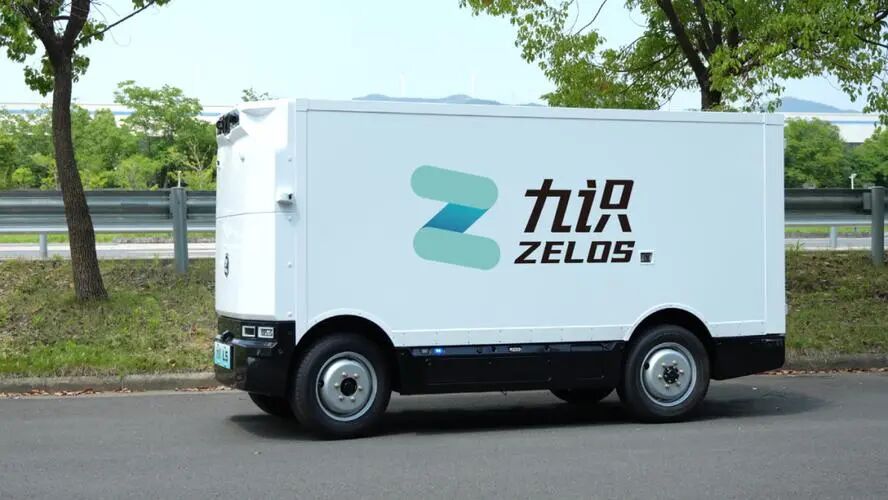
The partnership has two goals: Short-term cost reduction and efficiency gains to solve restocking challenges; long-term exploration of a 'mobile micro-warehouse' model.
In the future, autonomous vehicles will serve as dynamic storage nodes, replacing fixed micro-warehouses to enable 'warehouses-on-wheels'—for example, pre-positioning popular goods in high-traffic areas during peak hours to reduce reliance on physical warehouses and build agile supply chains for improved inventory turnover.
This achieves 1+1>2 synergy, propelling unmanned retail from 'terminal intelligence' to 'full-link unmanned operations.'
IV. Future Roadmap: Thousands of Vehicles in Three Years, Reshaping the Unmanned Retail Ecosystem
Feng E Zushi's ambitions extend far beyond pilots, with a clear phased plan: Start with testing stability, adaptability, and scheduling efficiency in Beijing's Yizhuang district, then expand to cities nationwide with open road access.
The goal is to deploy thousands of autonomous vehicles over the next three years, covering three scenarios: autonomous logistics, mobile warehouses, and unmanned retail vehicles.
These scenarios represent three strategic moves to reshape the ecosystem: Step one solves restocking pain points via autonomous logistics; step two explores agile supply chains through mobile warehouses; step three penetrates fragmented scenarios (e.g., music festivals, sports events) with unmanned retail vehicles, eliminating reliance on fixed smart cabinets. 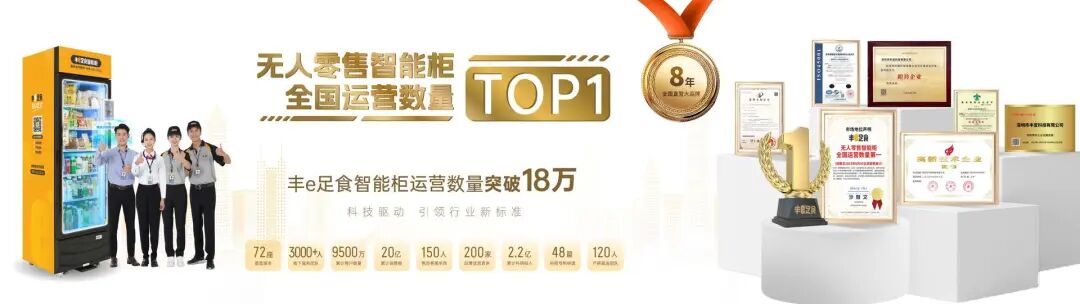
This strategy could disrupt industry dynamics. Currently, most operators struggle to scale beyond 10,000 units due to efficiency and cost barriers. If Feng E Zushi's model succeeds at scale, it will not only expand its lead but also provide a replicable path for the industry.
Industry experts believe unmanned retail's high scenario density and stable demand make it an ideal field for autonomous vehicle deployment. Scaling will drive industry-wide digital transformation. Critically, this 'autonomous vehicle + unmanned retail' model aligns with the '15th Five-Year Plan'—AI is designated a strategic technology, with goals to achieve over 90% smart terminal penetration and over 40% AI adoption in key industries by 2030. Feng E Zushi's practice exemplifies AI's integration into the real economy, blending algorithms and autonomous vehicles to boost efficiency and innovate business models.
This marks unmanned retail's leap from 'single-terminal intelligence' to 'full-link unmanned operations,' rapidly advancing the sector from isolated smart upgrades to systemic evolution.
In summary, 'Autonomous Vehicles Are Here' (WeChat Official Account: Autonomous Vehicles Are Here) argues:
Feng E Zushi, with 180,000 cabinets and thousands of autonomous vehicles, offers the ultimate solution for unmanned retail: First, let warehouses 'grow' on wheels; then, let goods 'run' on algorithms. When restocking personnel evolve from 'movers' to 'customer service specialists,' and autonomous vehicles from 'transport tools' to 'mobile micro-warehouses,' retail's boundaries shatter. By 2026, perhaps the endgame of unmanned retail arrives: Not 'unmanned,' but 'humans and machines in their places'; not 'delivery,' but 'spatial folding.'
What's your take?
#AutonomousVehiclesAreHere #AutonomousDriving #SelfDriving #AutonomousVehicles
-
![]()
Net Profit Surges 13.65% Year-on-Year! Yutong Optics Reports RMB 1.782 Billion in H1 Revenue
-
![]()
Q2 Net Profit Slashes Losses by 80%! Has Costar Emerged from Its Darkest Hour?
-
AI Agents: The Paradigm Shift from 'Conversation' to 'Execution'
-
NVIDIA Takes Bold Strides to Lead in Both Hardware and Software Realms
-
![]()
It's Hard to Build Cars, Even Harder to Build Humans, and XPENG is Doing Both
-
![]()
Valuation Soars by $57 Billion: Three Entrepreneurs Born in the 1980s Forge an AI Unicorn Now Suddenly on the Market
-
![]()
How Can We Achieve the Goal of 100,000 Hydrogen Vehicles by 2030?
-
![]()
July Online Market for Consumer-Grade Sports Cameras: Robust Double-Digit Growth in Sales Volume and Value, Mid-Range Products Fuel Market Expansion