Forging Ahead: One Major Economic City’s Growth Annually! Unveiling the Ambitions of China's Premier Central-Western Province
 05/12 2026
 696
696
Source: Shenlan Finance
At 10 a.m. on May 11, the News Release Hall in Chengdu, Sichuan Province, buzzed with anticipation.
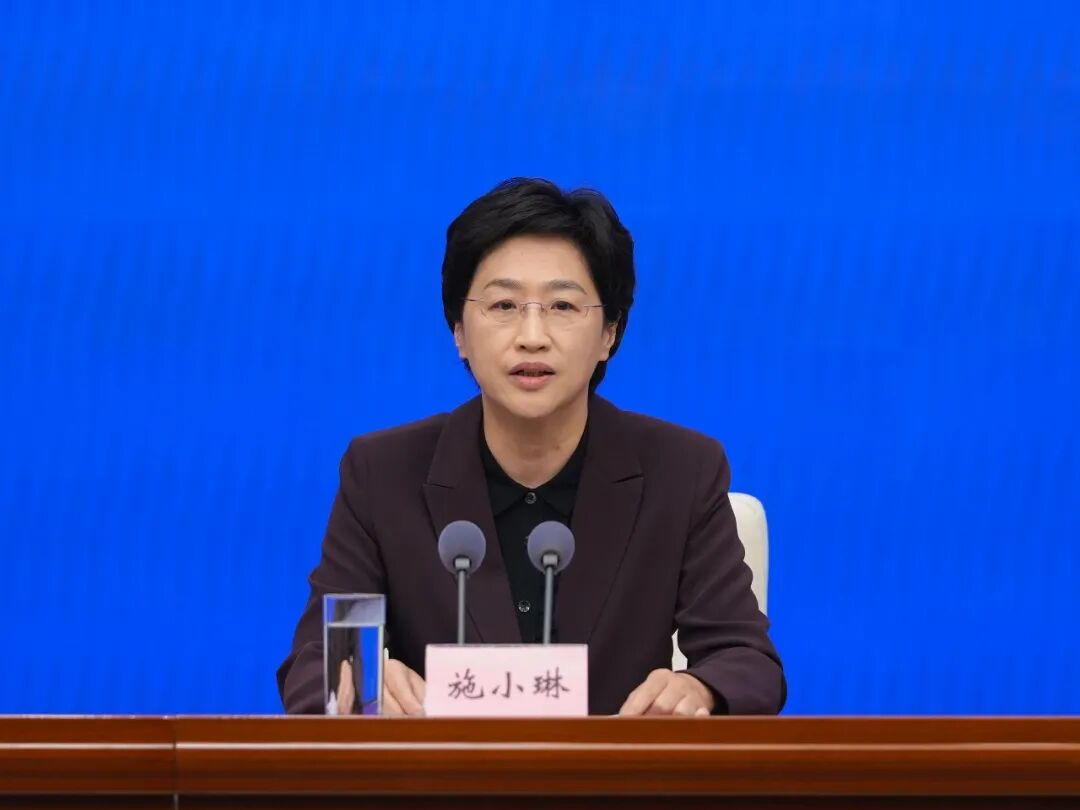
During the "15th Five-Year Plan Kickoff" special press conference for Sichuan, Governor Shi Xiaolin took center stage at the podium, flanked by Executive Vice Governor Dong Weimin, Director of the Provincial Development and Reform Commission Cao Junjie, Director of the Science and Technology Department Lu Songming, and Director of the Human Resources and Social Security Department Liu Huiying.
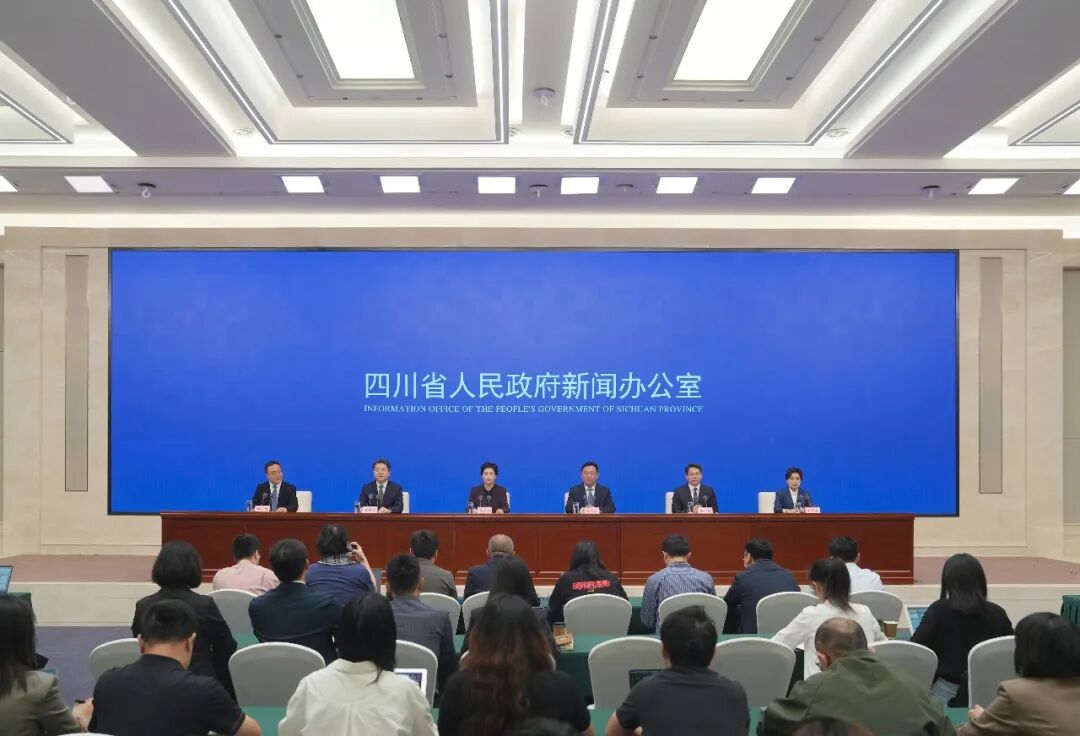
This assembly signified that Sichuan was unveiling its "report card" for the past five years and its strategic "military orders" for the next five years to the entire nation in one fell swoop.
Over the past five years, Sichuan has successively surpassed two significant economic milestones, with its GDP reaching 6.77 trillion yuan in 2025 and per capita GDP exceeding $10,000. Its economic aggregate and growth rate have consistently ranked fifth nationwide, marking it as the first province in western China to surpass the 6 trillion yuan threshold. According to Sichuan's 15th Five-Year Plan, the province aims for an economic growth rate of approximately 5.5% over the next five years, outpacing the national expected level of 4.5%-5%.
Based on this growth trajectory, Sichuan is projected to augment its GDP by an average of 300-400 billion yuan annually in the coming years, akin to "adding a new major economic city each year."
For a province already at a 6 trillion yuan scale, grappling with an accelerating aging population and situated in the western inland region, why set such an ambitious growth target?
The answer is straightforward—to lead by example.
1
Sichuan's "Three Frontlines" Strategy to Revamp Its Industrial Landscape
Nationwide, only four eastern coastal provinces—Guangdong, Jiangsu, Shandong, and Zhejiang—surpass Sichuan in terms of economic aggregate.
Yet, Sichuan, with over 90% of its terrain comprising mountains and hills and lacking coastal ports or inherent geographical advantages, manages to rank fifth in the national economy. How?
The cornerstone of its success lies in industry. Presently, Sichuan boasts six competitive industries: electronics and information, equipment manufacturing, food and light textiles, energy and chemical engineering, advanced materials, and pharmaceutical health. By 2025, electronics and information, food and light textiles, and energy and chemical engineering have all achieved trillion-yuan scales.
Many may be unaware that 50% of the world's high-end flexible displays are manufactured in Sichuan, along with 16% of polysilicon, 10% of tablets, 15% of projectors, and 10% of power batteries bearing the "Made in Sichuan" label.
Behind these impressive figures, during the 14th Five-Year Plan period, Sichuan's above-scale industrial added value grew by an average of 6.5% annually, with the total industrial added value escalating from 1.34 trillion yuan to 1.84 trillion yuan, ranking seventh nationwide. The profit margin of above-scale industrial enterprises stood at 6.9%, ranking second among the top ten economic provinces.
However, a persistent challenge remains. According to public statistical bulletins, during the 14th Five-Year Plan period, the proportion of industrial added value in Sichuan's GDP fluctuated between 28% and 29%, significantly lower than the over 35% levels observed in eastern coastal regions. This indicates that while Sichuan's scale is substantial, its industrialization depth still lags. Relying solely on traditional growth models will make sustaining a long-term growth rate of around 5.5% a formidable task.
Therefore, during the 15th Five-Year Plan period, Sichuan's true mission is not merely to stabilize growth but to discover new growth avenues.
The first frontier involves elevating the six competitive industries from "quality improvement and doubling" to "trillion-yuan clusters." By 2027, Sichuan aims to cultivate six trillion-yuan industrial clusters, implying that equipment manufacturing, advanced materials, and pharmaceutical health—currently in the 500-900 billion yuan range—will all surpass the trillion-yuan mark within just over two years. These six pillar industries will collectively underpin Sichuan's economic foundation.
The second frontier focuses on transforming "new frontiers" into "new pillars." The press conference specifically highlighted that during the 15th Five-Year Plan period, Sichuan will vigorously support industries such as nuclear medicine, commercial space, new aviation, low-altitude economy, new energy storage, and laser equipment, driving them to become emerging pillar industries.
These decisions are not impulsive but rather extensions of Sichuan's existing industrial strengths.
For instance, in nuclear medicine, Lu Songming, Director of the Science and Technology Department, cited an example: "The domestic first Flash ultra-high-dose-rate radiotherapy equipment developed by Zhongjiu Shuguang Medical Technology in Mianyang has been described by the media as precisely 'eliminating' cancer cells. In reality, it eradicates cancer cells in sub-seconds."
In commercial space, Sichuan is one of the few provinces nationwide capable of covering the entire chain from satellite development to launch services, with a leading position in reusable rocket mass production. Leveraging its provincial topography and industrial needs, Sichuan has established a domestically leading Beidou ground-based augmentation system and the "Huantian Constellation," providing real commercial applications for logistics, emergency response, and communication in uninhabited areas.
The third frontier centers on "Eight Future Industries," including 6G, quantum technology, metaverse, frontier biology, brain science and brain-machine interfaces, hydrogen energy and controlled nuclear fusion, ultra-high-speed rail transit, and deep earth science.
Behind each of these lies Sichuan's profound industrial heritage. For example, ultra-high-speed rail transit is backed by decades of vacuum tube maglev research at Southwest Jiaotong University; deep earth science is supported by the Jinping Underground Laboratory in Liangshan Prefecture, China's only and the world's deepest underground lab; hydrogen energy and controlled nuclear fusion rely on the Southwest Institute of Physics under the China National Nuclear Corporation, the "China HL-3" device, and the province's 130 million kilowatts of clean energy capacity.
Combining these three frontlines, Sichuan's industrial landscape for the 15th Five-Year Plan resembles a rising "pyramid": the six competitive industries strive to form six trillion-yuan clusters, serving as the stabilizing foundation; emerging industries like nuclear medicine, commercial space, and low-altitude economy accelerate to form the mid-level framework; and future industries such as 6G, quantum technology, and controlled nuclear fusion seize the commanding heights, constituting the pyramid's sharpest peak.
This three-tiered superimposed structure perhaps embodies what Governor Shi Xiaolin refers to as "innovation content."
2
The Opportunity Highlighted by Jensen Huang: Sichuan Seizes the Moment
At the press conference, Governor Shi Xiaolin emphasized "innovation content," "economic value," and "green content." If "innovation content" answers "how Sichuan grows," then "economic value" addresses "where investments go" and "where the fruits of growth ultimately land."
First, where to invest.
The planning outline includes 35 special columns, 34 of which focus on major projects. Cao Junjie, Director of the Provincial Development and Reform Commission, outlined five key investment areas at the press conference, covering transportation, industry, and people's livelihoods, including the Chengdu-Chongqing Central Line and Chengdu-Dazhou-Wanzhou High-Speed Rail opening next year, the commencement of Tianfu International Airport Phase II, and the accelerated construction of the Sichuan-Chongqing 100 billion cubic meter national oil and gas production base.
Shenlan Finance believes the most noteworthy aspect is energy: vigorous development of hydro, wind, and solar resources in the "Three Rivers" basin, striving to add 10 billion cubic meters of annual natural gas production and over 50 million kilowatts of new energy capacity by the end of the 15th Five-Year Plan.
These figures traditionally signify energy supply from a resource-rich province, but in the AI era, their meaning has evolved. Jensen Huang, CEO of NVIDIA, once stated that without stable, abundant, and affordable electricity, all intelligence is futile. In other words, electricity is the "oil" of the AI era, and Sichuan happens to sit atop an oil field.
Thus, Sichuan's next move is clear: deploy a series of computing-power-electricity integration and 10,000-card cluster projects, aiming to "export Sichuan's computing power globally."
In simpler terms, this means converting affordable electricity (computing-power-electricity integration) into large-scale AI computing clusters (10,000-card clusters) and selling this computing power as a service worldwide (computing power export).
"In the past, we exported electricity; in the future, we may export computing power. Isn't this an upgrade of the traditional 'West-East Electricity Transmission' logic?" a participant remarked to Shenlan Finance.
Investments must ultimately benefit the people, the other layer of "economic value."
Shenlan Finance notes that among the 23 development indicators in the planning outline, seven are related to people's livelihoods, accounting for over 30%. The most core indicator is "residents' per capita disposable income growth synchronizing with GDP growth," meaning wages rise in tandem with economic growth, ensuring government accounts look good while people feel the benefits.
Specifically, during the 15th Five-Year Plan period, Sichuan will maintain general public budget spending on people's livelihoods at over 65%, focusing on addressing three shortfalls.
The first is "caring for the elderly and the young." The proportion of nursing-type beds in elderly care institutions will increase from 68% to 75%; the enrollment rate for children under three years old in childcare will rise by 6 percentage points over five years. These efforts address the practical pressures faced by many dual-income families with elderly relatives needing care and children requiring attention.
The second is balancing urban-rural public services. Governor Shi Xiaolin mentioned at the press conference that "the primary school-age population peaked in 2023, while junior and senior high school-age populations will peak in 2029 and 2032, respectively." This means the layout of schools, hospitals, and elderly care institutions must dynamically adjust with population flows to avoid resource misallocation.
The third is employment. Liu Huiying, Director of the Human Resources and Social Security Department, admitted that AI is accelerating the replacement of certain basic jobs, with "people without jobs" and "jobs without people" coexisting long-term. In response, Sichuan will train no fewer than 2 million people over the next five years, create 1 million new urban jobs annually, and promote an olive-shaped income structure with a large middle class.
3
"A Major Province Leading by Example": Sichuan Cannot Afford to Slow Down
As the fifth-largest economy nationwide and the largest in central and western China, Sichuan's development has never been just its own affair—it shoulders greater responsibilities and cannot afford to slow down.
First, Sichuan and Chongqing are the core "engines" of western development. The Chengdu-Chongqing dual-city economic circle is a national major strategy. As a key province, if Sichuan slows down, it will not only hinder its own development but also drag down the effectiveness of the entire western development initiative, affecting the national agenda of balanced regional development. From this perspective, Chengdu and Chongqing must collaborate more closely and deepen cooperation to jointly serve as the "dragon head" driving western development.
Second, Sichuan bears the responsibility of being the nation's "material security base."
In food production, Sichuan's annual output consistently exceeds 35 billion kilograms, surpassing 36.5 billion kilograms in 2025. The goal for 2026 is to stabilize above 36.5 billion kilograms, striving for higher levels during the 15th Five-Year Plan.
In energy, Sichuan's clean energy installed capacity exceeds 130 million kilowatts, with "West-East Electricity Transmission" exceeding 810 billion kilowatt-hours. It has built the nation's largest natural gas production base and will accelerate the construction of integrated hydro, wind, and solar clean energy bases.
In strategic minerals, Sichuan ranks first nationwide in proven reserves of nine minerals, including vanadium-titanium and pyrite. Amid intensifying global industrial chain competition, these resources are critical pillars for national supply chain security.
Third, Sichuan shoulders the responsibility of being a national strategic hinterland.
The world has changed, and so has China's "security coordinate system." As a major inland economic province, Sichuan naturally serves as a "buffer zone" against external risks. This identity determines that Sichuan's development is not just an economic calculation but a strategic one.
Fortunately, the starting point is promising. In Q1 2026, Sichuan's GDP grew by 5.5%, stabilizing at 5.5% for three consecutive quarters; above-scale industrial added value grew by 6.9%, with high-tech manufacturing investment surging by 20.8%. The high-tech manufacturing investment growth rate outpaced the overall industrial sector by 14 percentage points, indicating that real capital is flowing into the highest "innovation content" sectors.
4
Conclusion
Five years ago, Sichuan's GDP was below 5 trillion yuan.
Five years later, it stands at 6.77 trillion yuan, ranking fifth nationwide and leading central and western China.
In the upcoming five-year span, Sichuan's objective transcends merely "taking another stride ahead." It is imperative for the province to unearth fresh avenues of growth within traditional industries, forge new pillars in burgeoning sectors, secure advantageous positions in future-oriented industries, and deliver on new commitments to enhance the well-being of its people.
None of these endeavors will be a walk in the park, yet none can afford to be postponed.
After all, a province that aspires to lead by example cannot afford the luxury of complacency.
The Shenlan Finance New Media Cluster, which evolved from the Shenlan Finance Journalist Community, boasts a 15-year legacy and stands as a preeminent financial new media entity within China. Its platforms are dedicated to covering China's most valuable enterprises, pioneering industry trends, and emerging regional economies, thereby furnishing investors, corporate leaders, and the middle class with insightful and valuable content. We invite you to follow us.
-
![]()
Net Profit Surges 13.65% Year-on-Year! Yutong Optics Reports RMB 1.782 Billion in H1 Revenue
-
![]()
Q2 Net Profit Slashes Losses by 80%! Has Costar Emerged from Its Darkest Hour?
-
AI Agents: The Paradigm Shift from 'Conversation' to 'Execution'
-
NVIDIA Takes Bold Strides to Lead in Both Hardware and Software Realms
-
![]()
It's Hard to Build Cars, Even Harder to Build Humans, and XPENG is Doing Both
-
![]()
Valuation Soars by $57 Billion: Three Entrepreneurs Born in the 1980s Forge an AI Unicorn Now Suddenly on the Market
-
![]()
How Can We Achieve the Goal of 100,000 Hydrogen Vehicles by 2030?
-
![]()
July Online Market for Consumer-Grade Sports Cameras: Robust Double-Digit Growth in Sales Volume and Value, Mid-Range Products Fuel Market Expansion