Crush San Francisco! Qingdao Stages a Comeback to Become the World's Top City with 9.9 RMB Driverless Vehicles and an 'Energy Island': Neolix, 9D Tech, White Rhino, Cainiao, Didi, Huolala—Who Will Hav
 05/14 2026
 805
805
Introduction
9.9 RMB for a 30+ km driverless delivery—over 50% cheaper than traditional Huolala and Didi delivery services.
Qingdao has now become a must-compete arena for driverless vehicles nationwide and even globally, with Neolix, 9D Tech, and White Rhino making their entries one after another, while Didi, Cainiao, and Huolala join the fray with their strong industry influence.
As of April 2026, Qingdao has deployed over 1,200 L4 autonomous delivery vehicles, with daily order peaks exceeding 6,500 and cumulative service mileage surpassing 40 million km. This scale has quietly surpassed Waymo’s Robotaxi fleet in San Francisco, earning Qingdao the crown of the “World’s No.1 City for Driverless Vehicles.”
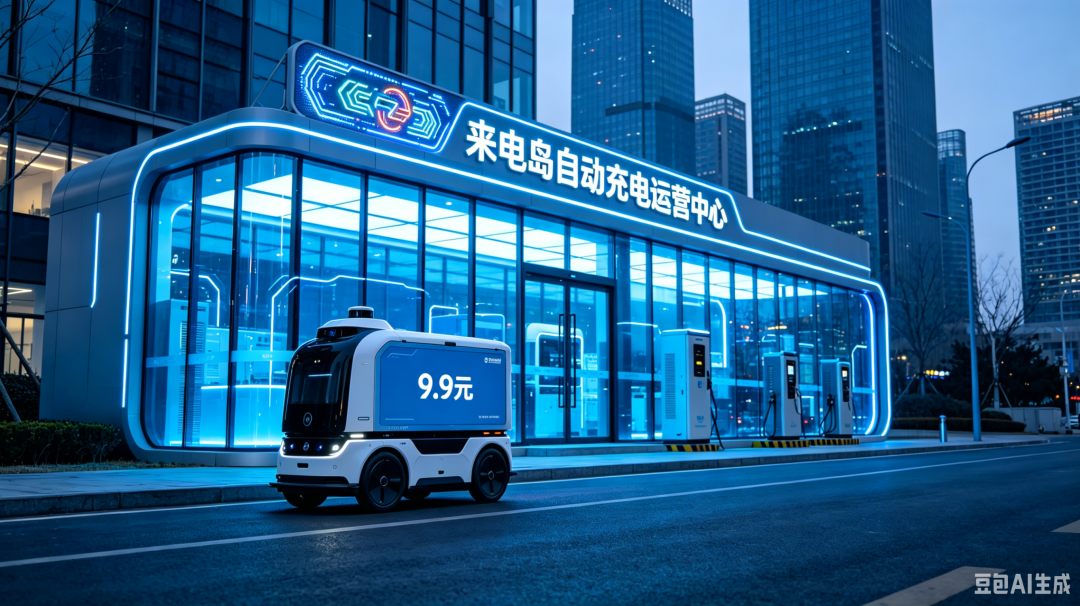
In May 2026, Qingdao’s Chengyang District saw the official launch of the world's first automated charging and operations center for driverless vehicles—“Energy Island.”
Here Comes the Driverless Vehicle (WeChat ID: HereComestheDriverlessVehicle—let’s talk about this!)
(For further reading, click: “49 Players in the Driverless Delivery Vehicle Race: 37 New Entrants Rush In, 12 Incumbents Build Walls—Who Will Have the Last Laugh?”)
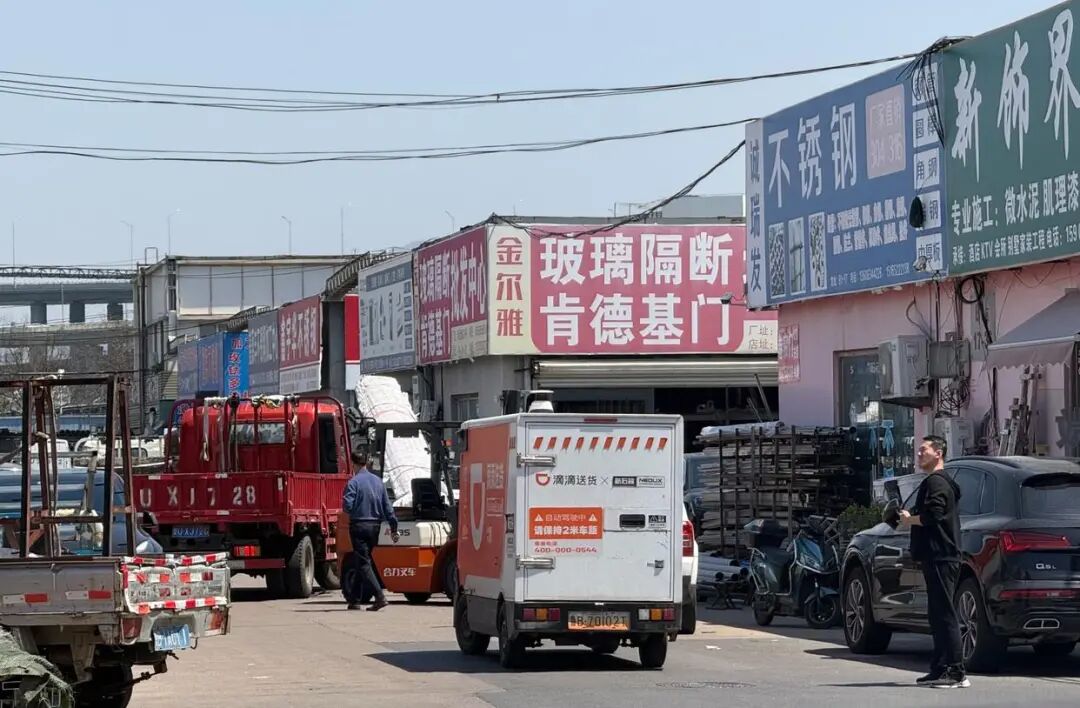
Image Source: National Business Daily
I. Policy “Green Light”: Faster Than Technology—The “Qingdao Speed”
The first hurdle for large-scale deployment of any cutting-edge technology is always policy. Qingdao’s story began with a document more decisive than those of many first-tier cities.
In March 2024, while most cities remained cautious about driverless vehicles on public roads, Qingdao issued the “Qingdao Implementation Rules for Road Testing and Demonstration Applications of Intelligent Connected Vehicles (Trial),” explicitly granting road access to low-speed autonomous vehicles.
(For further reading, click: “Qingdao Releases Automotive Industry Growth Stabilization Plan: Regulating Road Testing for Autonomous Vehicles, Building a Nationally Leading Hub for Functional Driverless Vehicles”)
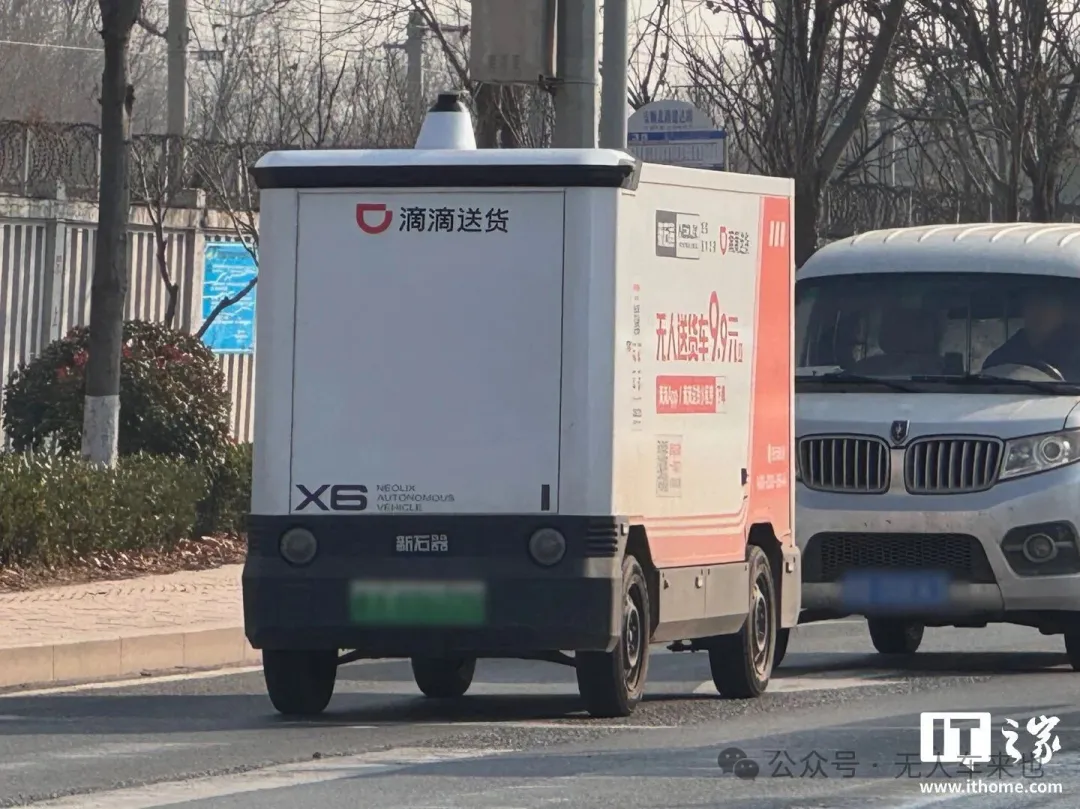
Image Source: IT Home
This was not just a permit but a systematic management approach: requiring operators to insure each vehicle with liability coverage of no less than 2 million RMB and establishing a robust remote monitoring and takeover mechanism.
This “prudent yet inclusive” attitude provided businesses with reassurance, setting clear safety boundaries while offering valuable room for trial and error.
Yang Jingwei, Shandong Affairs Director at Neolix, commented: “Qingdao leads the nation in policy support, road access, and scenario adaptation for autonomous vehicles.”
To date, Qingdao has opened two batches totaling 204 intelligent connected vehicle test roads and is actively pursuing citywide access through a negative-list management approach.
This “Qingdao Speed” has cleared the largest institutional barrier for driverless vehicles to move from labs to streets.
II. Commercial “Ledger”: How Does 9.9 RMB Open Up a Trillion-Dollar Market?
Policies open the door, but long-term survival depends on commercial viability.
Qingdao’s answer is straightforward: use ultra-low prices to unlock massive “non-standard” and fragmented demand.
“9.9 RMB for 30+ km”—this is the headline price Didi Delivery and Neolix launched in Qingdao.
For Zhou Ming, a merchant at Qingdao Sifang Decoration City, this means costs cut in half—previously, hiring a driver cost around 28 RMB per trip; now, using driverless vehicles saves him thousands of RMB each month.
This math has activated countless short-distance, fragmented orders that were previously either handled by “the boss’s wife driving herself” or deemed “not worth calling a vehicle.”
Yu Enyuan, founder of Neolix, revealed that before driverless vehicles entered Qingdao, local Huolala and Didi Delivery commercial vehicle orders averaged around 20,000 per day; now, total orders (including driverless vehicles) have risen to 24,000. “We’re not taking jobs from drivers—we’re driving more business to them.”
Where did this growth come from? It’s orders like a bag of clams transported from Huangdao to Chengyang—tiny transactions that would never appear on traditional freight platforms.
Deeper cost reductions are happening in the express delivery sector. According to Qingdao’s Postal Administration, the “driverless vehicle pre-delivery model” saves each courier 1.5 hours of daily work time.
In rural areas, through “express-express collaboration,” costs per parcel from town to village have dropped by 0.2 RMB, with efficiency improving by 15%.
For companies like Qingdao Zhongji Tools Co., Ltd., monthly logistics expenses have plummeted from 5,000–6,000 RMB to just over 2,000 RMB.
iResearch reports that the cost per kilometer for autonomous urban delivery vehicles (Robovans) can now be controlled below 1.5 RMB, far lower than the traditional 3 RMB, with further reductions expected.
(For further reading, click: “China Autonomous Urban Delivery Vehicle Industry White Paper: Top Players Account for Over 80% Market Share”)
Image Source: iResearch
As technology drives vehicle costs down from 200,000 RMB to under 20,000 RMB, the marginal cost advantages of large-scale operations become increasingly pronounced.
This isn’t a zero-sum game for existing markets—it’s creating a brand-new, lower-tier market through new technologies and models.
III. Infrastructure “Positioning”: How Does an “Energy Island” Solve Logistics for a 10,000-Vehicle Fleet?
With 1,200 driverless vehicles operating on Qingdao’s streets, a practical issue arises: vehicles need charging, maintenance, and parking. Without solving these “logistics” problems, scale is unattainable.
Relying on manual charging, cleaning, and inspections would quickly erode operational profits through labor costs, while urban centers lack suitable bulk parking spaces.
Qingdao’s solution embodies the “infrastructure obsession” of an industrial city: building a dedicated “home” and “gas station” for driverless vehicles—the world’s first automated charging and operations center, “Energy Island No.1.”
Located in Chengyang District, this 580-square-meter, three-story “island” plans for 100 parking spaces.
Its core logic is “full-process automation”: driverless vehicles enter on command, are lifted and transported by autonomous parking robots, connected to charging robots (fully charged in 20 minutes), scheduled for automatic cleaning and inspection by AI, and exit independently once charged.
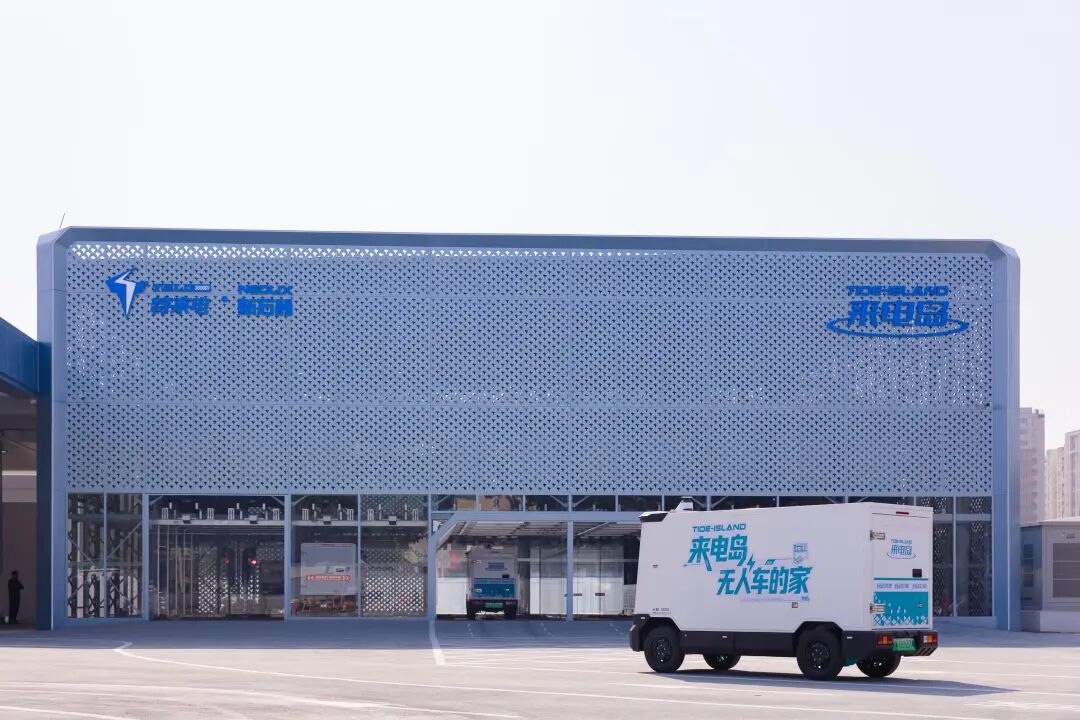
Image Source: CCTV.com
It’s more than a charging station—it’s an automated operations hub.
Yu Dexiang, Chairman of Teld, calculated that by integrating “Energy Island” into the grid’s virtual power plant system and utilizing vehicle-to-grid (V2G), load forecasting, and off-peak charging, operational electricity costs for the driverless fleet can be reduced by about 30%.
Crucially, “Energy Island” is designed as open infrastructure, with plans to welcome all compliant driverless vehicle brands in the future.
Neolix and Teld have launched the “Global 100 Cities Plan,” aiming to deploy over 300 “Energy Islands” in more than 100 cities within three years and have signed agreements with 12 domestic city government platforms to promote a “100 vehicles per island, 1,000 vehicles per chain” network model.
The competition has shifted from who moves fastest on the roads to who builds the denser, smarter “logistics network” behind the scenes.
IV. Battle for Qingdao: Players Swarm to Stake Claims, Sector Landscape Diversifies
Today’s Qingdao is no longer a solo act but a battleground where startups, mobility giants, and logistics platforms compete head-to-head. Neolix, 9D Tech, White Rhino, Didi, and Huolala each have distinct strategies and paces.
Neolix is undoubtedly Qingdao’s top player, with the deepest layout (layout) and largest scale.
It has deployed 1,200 L4 autonomous delivery vehicles across Qingdao’s ten districts, ranking first globally for single-city driverless vehicle deployment.
With over 1.5 million instant delivery services completed, total service mileage exceeding 40 million km, and daily order peaks of 6,500, Neolix has transitioned from merely building and selling vehicles to becoming a logistics service provider, deeply operating urban delivery scenarios and building backend infrastructure.
9D Tech takes a cross-industry collaboration approach.
By late 2025 and 2026, it partnered with Didi, Kuaigou, and Huolala to deploy a national driverless freight network within two years.
(For further reading, click: “Didi Delivery Teams Up with 9D Tech: 25,000 Driverless Vehicles Running 24/7 Nationwide—A ‘Game-Changing’ Era for Autonomous Freight”)
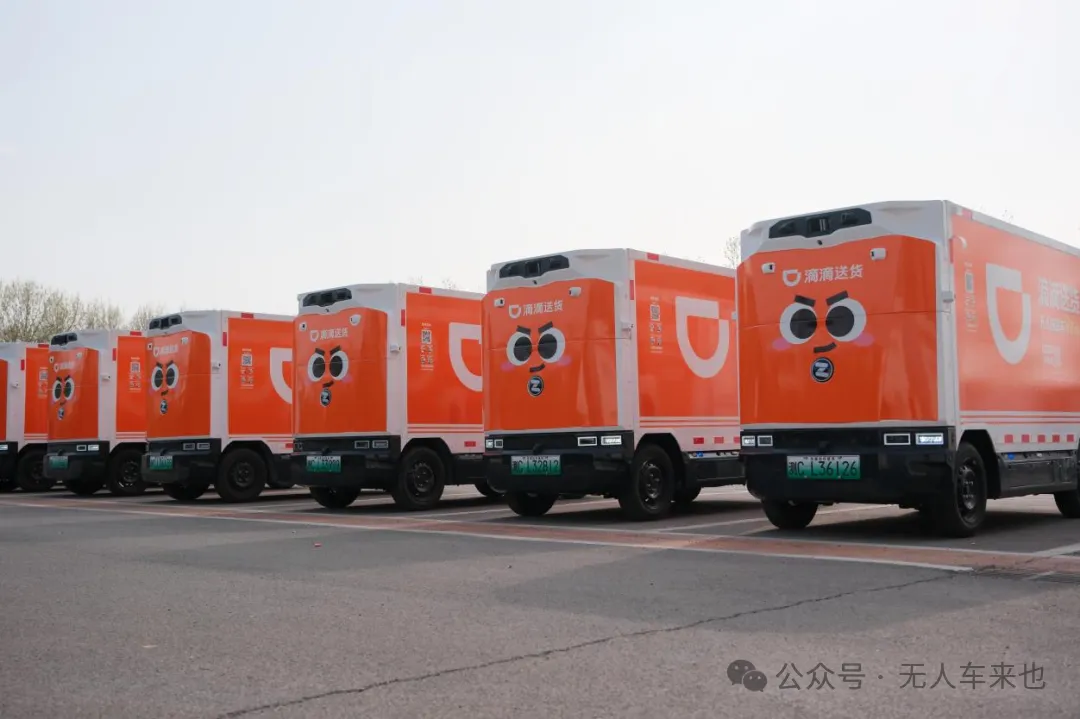
Image Source: Logistics Times Official WeChat
In January 2026, it strategically merged with Cainiao’s driverless vehicle division, operating both brands in parallel. In May, it deployed 2,000 driverless delivery vehicles in Hohhot in a single batch, securing bulk operation licenses and focusing on last-mile delivery in communities, industrial parks, and business districts, creating differentiated competition with Neolix.
White Rhino is also surging.
In May 2026, it completed its C1 funding round, doubling down on Same city freight (intracity freight) and instant delivery. Tightly aligned with Huolala, it first commercialized in Hefei before scaling operations in Linyi, Shandong, targeting instant delivery for small merchants and community stores to fill gaps in short-distance, high-frequency scenarios.
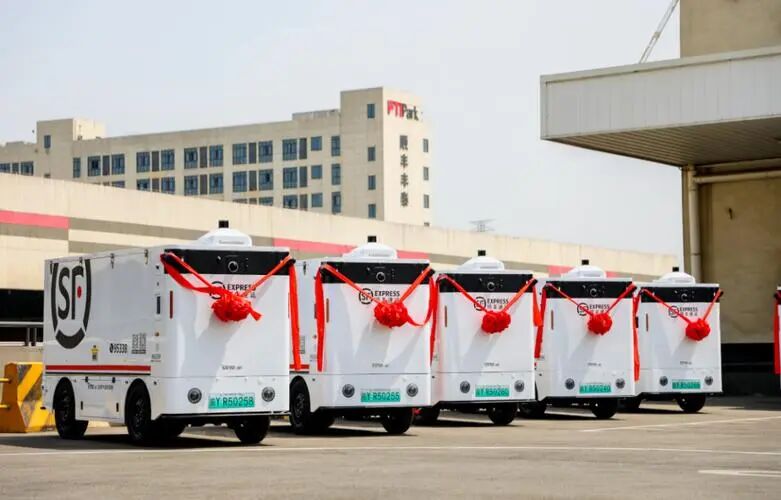
Image Source: Low-Speed Autonomous Driving Editorial Team
For traditional intracity freight giants like Didi and Huolala, the entry logic is simpler: protect existing markets, capture new growth.
Leveraging mature merchant resources and ordering platforms, they supplement with driverless vehicle capacity—using low-cost autonomous vehicles to attract and retain customers while addressing worsening driver shortages and aging workforces through intelligent capacity replacement.
Additionally, 431 express delivery driverless vehicles now operate in Qingdao, covering all mainstream brands, County level regions (county-level regions), and delivery services, extending applications to rural logistics, fresh cold chain, and feeder connections. Policies have opened two batches totaling 204 test roads under negative-list management, paving the way for normalized driverless operations.
V. Insights and Future: A City Experiment That Starts “Rustic” but Ends “Smart”
Qingdao’s story offers a tech deployment model starkly different from Silicon Valley.
Instead of pursuing flashy, direct passenger services, Qingdao chose logistics delivery—the most pragmatic, pain-point-ridden “capillary” of the economy.
It unlocked the market with extreme commercial affordability (9.9 RMB), supported scale with powerful infrastructure (Energy Island), and nurtured ecosystems through systematic industrial policies (citywide access).
This path may lack glamour, but it’s solid and effective.
Qingdao’s practice proves that when technology, commerce, policy, and infrastructure align, the tipping point for large-scale autonomous driving deployment has arrived.
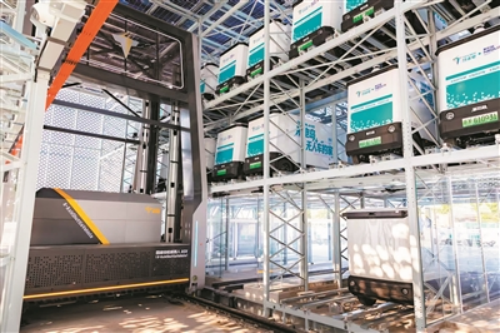
Image Source: Qingdao Daily
In summary, Here Comes the Driverless Vehicle (WeChat ID: HereComestheDriverlessVehicle) argues:
From 9.9 RMB price wars to infrastructure positioning with Energy Island; from scattered pilots blossoming everywhere to a full industry ecosystem taking shape, Qingdao’s driverless vehicle competition is no longer just about a few companies’ wins and losses—it’s a true microcosm of commercialized autonomous urban delivery in China.
In the autonomous driving era, whoever masters scenarios, builds infrastructure, and achieves profitability will secure a ticket to the next era in the trillion-dollar urban delivery sector.
What do you think?
References: National Business Daily, CCTV.com, Qingdao Daily, iResearch, Low-Speed Autonomous Driving Editorial Team, Logistics Times Official WeChat
#HereComestheDriverlessVehicle #AutonomousDriving #SelfDriving #DriverlessVehicles
-
How Far Have Domestic GPUs Progressed Behind Book Losses?
-
![]()
Taobao Flash Sale Restructures: After a Year of 90 Billion Yuan in Losses in the Food Delivery Battle, Even Alibaba Can’t Sustain the Fight
-
![]()
Valued at 7 Billion! Turing Quantum Races to Become the First Photonic Quantum Computing Company to Go Public
-
![]()
Revenue Sees Slight Rise, Net Profit Soars Twofold: Wavelength Opto-Electronic's 'Optics+' Strategy Yields Initial Fruits
-
![]()
Expected loss widens to HK$12.1 million! Ever Smart Eyewear issues profit warning
-
After 'No Right to Recall,' Can GAC Still Spin a Compelling Robot Tale?
-
![]()
Baidu's Critical Moment in AI Transformation: After Losing the Main Apple Partnership, What's Next for Ping Xiaoli's Strategy?
-
![]()
Voice Input: Opening the AI Gateway?