From 'Most Daring Gambler' to 'Gravitational Well': How Hefei Rewrites the Logic of Urban Competition
 05/25 2026
 726
726
By Tanglang Observer
In recent years, Hefei’s story of industrial rise has continued to draw outside attention. From new-type displays to big science, and from new energy vehicles to artificial intelligence, Hefei has achieved breakthroughs in multiple strategic emerging industries, creating the remarkable 'Hefei Phenomenon.' Some praise its precise vision, while others attribute it to 'luck,' even using 'high-stakes gambling' to describe the city’s development path. But if the focus remains solely on the 'gambling' narrative, the true code of this city will remain undeciphered.
Hefei’s rise is not a series of high-stakes gambles but rather the formation of a unique 'gravitational well.' Once the industrial ecosystem is established, companies, talent, capital, and technology along the industrial chain are drawn in like matter falling into a gravitational well—continuously attracted, converged, and accelerated—ultimately unleashing astonishing energy. This 'gravitational well' is rewriting the logic of urban competition in China.
The Economic Explosiveness Behind Hefei’s 6.8% Growth Rate
Hefei’s momentum in recent years rivals that of the Yangtze River Delta or Pearl River Delta regions.
In 2024 and 2025, Hefei’s GDP growth rate stood at 6.1%, ranking first among China’s top 20 economic cities for two consecutive years. Entering 2026, this momentum has only intensified. In the first quarter, Hefei’s GDP reached RMB 322.96 billion, up 6.8% year-on-year, topping the list among 29 cities with trillion-yuan economies. The quarterly increase of RMB 22.572 billion even surpassed some of the top 10 economic cities.
Breaking it down, this 6.8% growth is highly valuable. In the first quarter, Hefei’s value-added of industrial enterprises above designated size grew by 19.6% year-on-year, far exceeding the national average of 6.1%. Notably, two sub-sectors deserve special attention: the value-added of the computer, communication, and other electronic equipment manufacturing sector surged by 74.2%, while high-tech manufacturing value-added skyrocketed by 64.6%.
This is the roar of a fully unleashed industrial engine. When a city’s industrial growth approaches 20%, and high-tech manufacturing growth exceeds 60%, it signifies a qualitative leap in the core of its economic growth. Driving this growth is no longer traditional factor inputs but advanced manufacturing with high added value and technological content.
Changes in industrial structure further confirm this point. By 2025, the output value of strategic emerging industries in Hefei accounted for 60.4% of the industrial output value of enterprises above designated size, up more than 10 percentage points from five years earlier. In other words, over 60% of Hefei’s industrial output comes from strategic emerging industries. This proportion ranks among the highest nationwide.
Export data provides additional evidence. In the first quarter, Hefei’s exports of high-tech products reached RMB 44.56 billion, up 73.2%, with integrated circuit exports surging by 275.7% and automotive exports growing by 168.6%. The ability of these products to achieve such rapid growth in international markets indicates that Hefei’s industrial competitiveness is no longer just 'domestically leading' but is beginning to occupy an irreplaceable position in the global division of labor.
When a city’s industrial growth approaches 20%, when high-tech manufacturing drives half of its growth, and when 'Hefei-made' chips and vehicles accelerate their penetration into international markets, one cannot help but ask: Where does Hefei’s confidence in high-speed growth truly come from?
The Industrial 'Gravitational Well' Forms the Core of the 'Hefei Speed'
The 'venture capital city' label is Hefei’s outward appearance, but a closer look reveals that the city’s resilience lies in its carefully constructed industrial matrix.
Outsiders use the term 'chip-display-auto-AI' to summarize Hefei’s industrial development trend. This phrasing is clever—the 'he' ( combine, synthesize ) in 'hecheng' ( combine, synthesize 称, collective term) is a pun, referring to both artificial intelligence and future industries as well as the city of Hefei itself. However, what deserves more attention than these four labels is the sophisticated industrial ecosystem operating behind them.
For example, in the chip industry, Hefei has aggregated over 400 integrated circuit enterprises along the material, design, manufacturing, and packaging/testing links, including Nexchip, Tongfu Microelectronics, and Hitech, forming a highly efficient and interconnected landscape. Nexchip, for instance, is Anhui Province’s first 12-inch wafer foundry and went public on the STAR Market in 2023, becoming the province’s first pure-play wafer foundry to successfully list on the capital market.
In other words, Hefei’s integrated circuit industry is no longer a lone enterprise fighting alone but an ecosystem capable of self-sustaining cycles.
If the chip industry represents the 'new aristocrat' of Hefei’s industrial landscape, the new-type display industry was its earliest 'pathfinder.'
In 2008, Hefei temporarily halted subway construction and invested a significant portion of its annual local fiscal revenue—real money—to attract BOE, which was still operating at a loss at the time. This decision has been written about repeatedly, but what truly inspires awe is not the initial 'courage' but the sustained deep cultivation over the following decade. Today, Hefei has gathered over 190 industry leaders, including BOE, Visionox, Corning, and Rainbow LCD (Chihong LCD), forming a full industrial chain layout 'from sand to finished products' and possessing reserves in seven major technology routes, including liquid crystal displays, flexible displays, holographic displays, and laser displays.
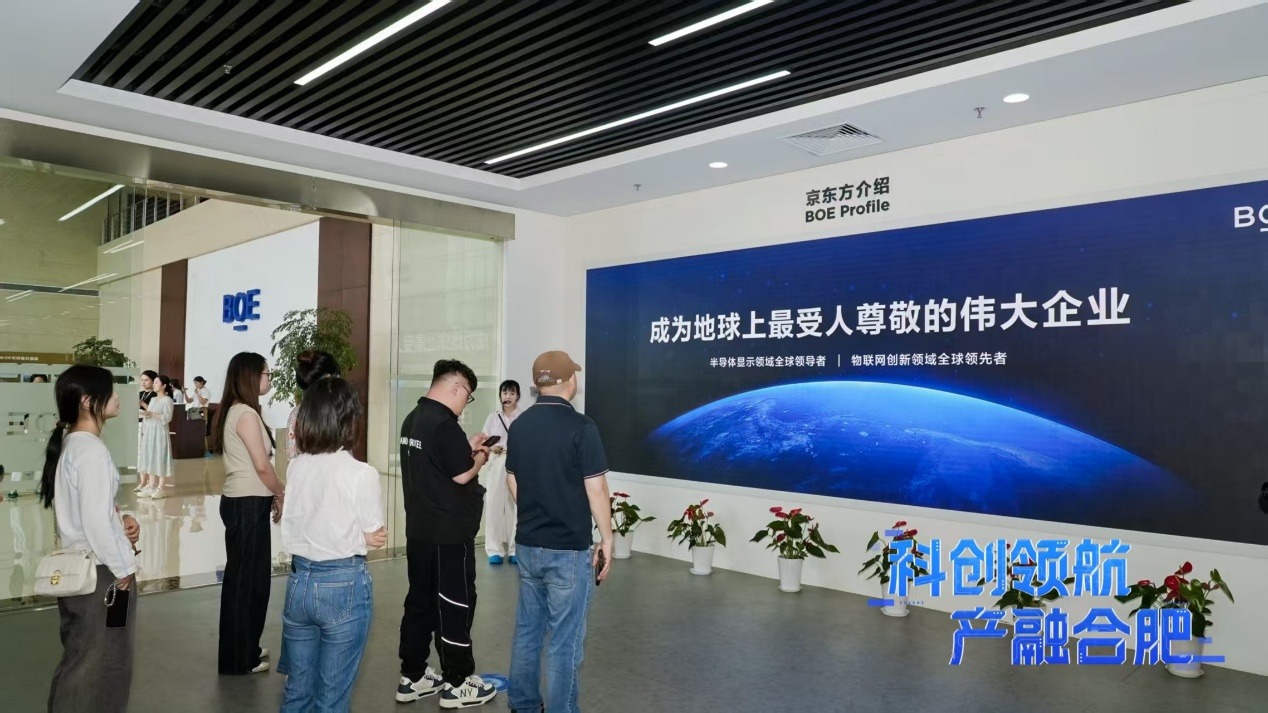
From a single panel to an industrial cluster, Hefei’s journey in the 'display' sector proves one thing: once the seeds of industry are planted and continuously nurtured, an entire forest can grow.
New energy vehicles represent Hefei’s most well-known case of an industrial 'gravitational well.'
From NIO to BYD, Volkswagen Anhui, JAC Motors, Changan Automobile, and Ankai Bus, six major vehicle manufacturers have formed a 'grand slam' layout encompassing foreign giants, central SOEs, new-energy vehicle startups, and local independent brands, cultivating over 600 core component enterprises and generating cluster revenue exceeding RMB 600 billion. In 2025, Hefei produced 1.37 million new energy vehicles, ranking first among Chinese cities for two consecutive years.
The uniqueness of this layout lies in its diversity rather than dominance by a single player, fostering collaborative coexistence among multiple entities. This is also the key to Hefei’s economically resilient growth.
'Chip-display-auto' represents current industrial strength, while the cluster of big science facilities and future industry layout (layouts) are Hefei’s strategic moves for the next decade.
Currently, Hefei’s Big Science Facility Cluster Zone has gathered China’s three major nuclear fusion research facilities: the Critical System for Fusion Reactor (CRAFT), the Compact Fusion Energy Experimental Device (BEST), and the Experimental Advanced Superconducting Tokamak (EAST), along with multiple world-class big science facilities such as Phase I of the Deep Space Science City.
Among them, EAST is the world’s first non-circular cross-section fully superconducting tokamak, boasting over 200 core technologies and 2,000+ patents, propelling China to the forefront of global magnetic confinement fusion research. The CRAFT project focuses on the design and development of critical systems for fusion reactors, laying a solid foundation for China to independently build fusion reactors.
The value of big science facilities extends beyond frontier exploration; they also 'lay eggs along the way,' allowing cutting-edge scientific research capabilities to spill over and catalyze emerging industries. Kexicaiyang ( Zhongke Elephant Collection ) is a prime example of such spillover. Founded by a professorial team from the University of Science and Technology of China’s (USTC) Fast Electronics Laboratory and established under the national policy for assigning intellectual property rights of public sector R&D outcomes, it is one of USTC’s first batch of enterprises to implement such reforms. Specializing in sensor signal digitization and the development of high-end data acquisition instruments and equipment, it extends advanced nuclear and particle physics detection methods to various sectors of the national economy.
Another enterprise, Keshikexue ( Visual Science ), founded by a doctoral team from USTC, has created cinematic-grade digital twin models for over 20 national major scientific infrastructure projects, more than 100 cutting-edge scientific facilities, and over 200 scientific achievements, undertaking the digitization work for China’s big science facilities.
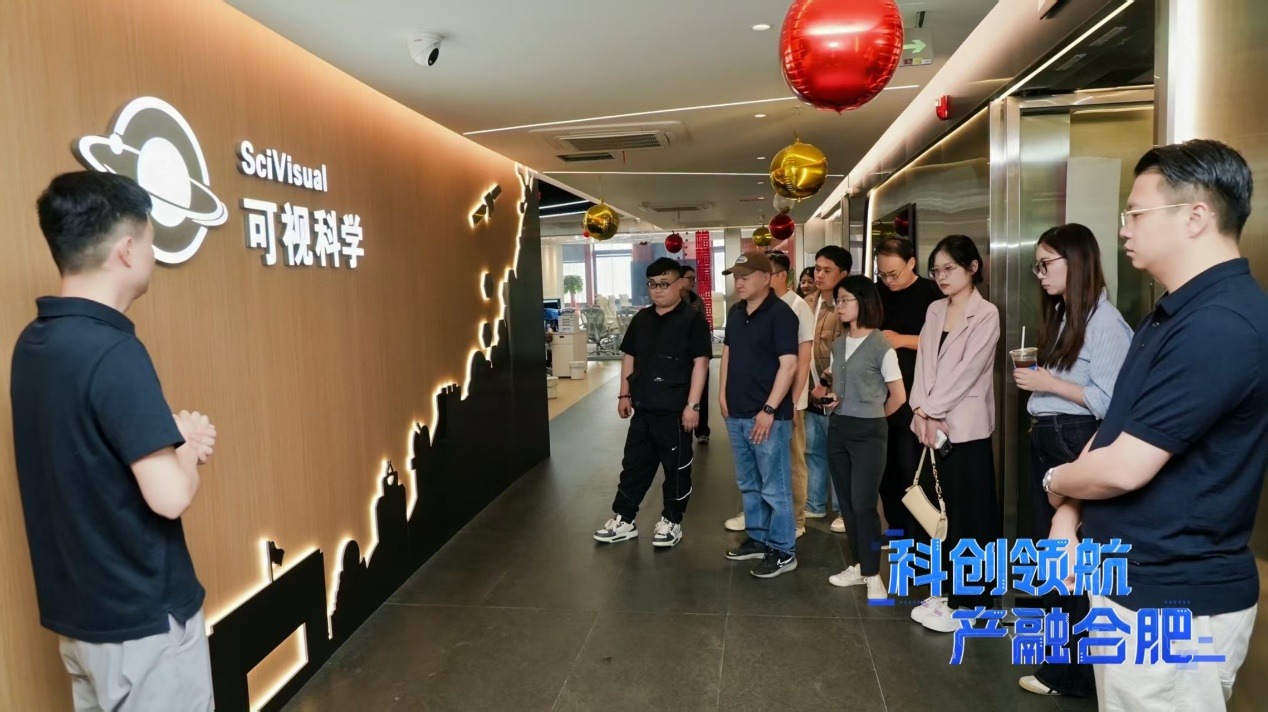
From 'chip-display-auto-AI' to quantum technology and fusion energy, Hefei’s industrial landscape is not a static collage but a dynamically growing neural network. Each sector accelerates its self-sustaining cycles while continuously cross-empowering others—display panels provide in-vehicle screens for automobiles, memory chips offer foundational support for AI computing power, and new energy vehicles create massive terminal demand for chips and panels. This is the true strength formed by the 'gravitational well' effect.
Why Hefei? The Business Code Behind the 'Gravitational Well'
Industrial clusters do not emerge out of thin air. To decode Hefei’s success, the key lies in two words: business environment.
When outsiders discuss Hefei, the most frequently used label is 'China’s most daring venture capital city.' However, this label obscures a deeper truth: Hefei’s industrial investments have never been financial 'venture capital' but rather a form of deep 'strategic partnership.'
Take the BEST project as an example. This commercial company for the Compact Fusion Energy Experimental Device has a registered capital of RMB 5 billion, with NIO holding 19.9%, provincial investment platforms (Wanneng) and Hefei Industrial Investment each holding 10%, and 20% reserved as an equity incentive platform for core technical teams. The park infrastructure is financed and constructed by Hefei’s Binhu Investment Group using policy-based financial tools and then leased to the commercial company for operation. This represents a complete closed loop of 'state-guided capital—social capital participation—market-driven operations.'
The core logic of this model is that the government identifies sectors with strategic vision, leverages state capital to mobilize social capital, and uses patient capital to support companies through cycles, ultimately achieving a win-win for industrial value and urban development.
To continuously optimize its business environment, Hefei persists in iterating its institutional supply. It recently released the 'Hefei Action Plan for Optimizing the Business Environment (2026 Edition),' marking the eighth consecutive year of releasing such a plan. The plan systematically outlines 120 reform measures across 16 areas, focusing on four dimensions: 'convenience, marketization, rule of law, and internationalization.' It aims to provide higher-level and deeper institutional support for the full lifecycle development needs of business entities.
The purpose of Hefei’s continuous iteration and refinement of such plans is to derive institutional supply from the actual needs of enterprises, ensuring 'precision irrigation' rather than 'flood irrigation' in policy implementation.
To ensure businesses settle in comfortably, Hefei continuously addresses practical issues from the service end. For instance, in 2025, Hefei pioneered the 'R&D Special Loan' nationwide, featuring government credit enhancement, precise usage, and flexible repayment terms. This breaks the traditional credit logic of 'heavy collateral, light innovation' and addresses financing difficulties for tech innovation enterprises. Hefei High-Tech Zone has meticulously crafted a 'project steward' system, where each key enterprise enjoys a dedicated steward providing 50+ 'full-chain' services from project site selection to construction commencement, extending services from 'windows' to 'sides' through a 'companion + agency' model.
These service optimizations at the 'capillary' level may lack the drama of attracting billion-yuan projects, but it is precisely these quiet details that constitute the true essence of Hefei’s business environment.
Conclusion
Reviewing Hefei’s industrial story, three insights emerge clearly. First, urban competition has shifted from 'project grabbing' to 'ecosystem cultivation'—truly vibrant industrial clusters are 'gathered' by ecological gravity. Second, the essence of 'daring to gamble' is 'calculating wisely'; behind every step aligned with industrial transformation nodes, from BOE to NIO, lies a profound understanding of industrial laws. Third, the best business environment embodies 'long-termism'—from 2008 to today, Hefei has demonstrated with nearly two decades of strategic perseverance that enduring solitude is the deepest moat.
The so-called 'gravitational well' is merely the consistent realization of a simple truth: making businesses come and never want to leave.
-
![]()
Registered Capital Slashed to 372 Million Yuan! Yutong Optical Finalizes Industrial and Commercial Change Registration
-
![]()
Zhuque-3 Successfully Lands, and 'Time Traveler' Secures Another ¥100 Million in Funding: China's Commercial Space Industry Experiences a 'Dynamic August'
-
![]()
Autohome Faces a Shrinking Window of Opportunity
-
![]()
Even a Titan Like Musk Has Faced Setbacks in Fulfilling Promises
-
![]()
AI Office: The End of the Racing Era, Context Becomes the Key to Success
-
![]()
Domestic Vehicle Chassis Revolution ②: The Steering Wheel Remains, But Mechanical Connections in the Steering System Are Decreasing
-
![]()
Exploring MiniMax Design: Can Video Editing Be as Simple as Speaking?
-
![]()
Why Can SenseTime Achieve Profitability While CloudWalk Still Faces Challenges, Despite Both Adopting Large Models?