Doubao Marginalizes Doubao
 09/28 2026
 370
370


Doubao is getting bigger
Image source | Internet (Please contact us for deletion if infringement occurs) Partially generated by AI
On September 24, rumors about Doubao's team "layoffs" and "halving the conversation team" spread rapidly in the tech circle.
Doubao's PR head responded urgently on social media: Claims of "Doubao, used by 200 million, laying off staff" and "halving the conversation team" are false. In reality, it was just an organizational adjustment in task division.
Officially, some functions of Doubao's General Session team were reassigned to the Transaction and Doubao Work teams, involving 11 people, with 3 resignations.
A team of fewer than 50 people adjusting the roles of 11 is insignificant for any internet company. Yet, it trended on Weibo.
What truly matters isn't the fate of these 11 individuals but the timing and direction of this adjustment.
Just over two months ago, ByteDance completed its largest AI organizational restructuring since 2021: The Feishu product team merged into Doubao, with Feishu's head now reporting to Doubao's leader; the Feishu GTM team merged with Volcano Engine under unified leadership.
Feishu, operating for a decade and once an independent BU alongside Douyin, was thus "dismantled" into Doubao and Volcano Engine's ecosystems.
Viewing this organizational shift alongside the September 24 Session team split reveals a clear logic: Doubao is pursuing "self-marginalization."
It appears to tilt resources and organizational capabilities toward monetizable areas like transactions, office services, and enterprise solutions.
Behind this lies a life-and-death experiment on how AI large models transition from "burning money" to "making money."

The "Sweet Burden" of 380 Million MAUs
Let's clarify Doubao's fundamentals. By Q2 2026, Doubao's MAUs neared 370 million, up 22.3% quarterly, widening its lead over second place to over 200 million—exceeding the combined volume of runners-up. By September, MAUs climbed to 380 million, making it China's largest AI product by users.
By any measure, this is an enviable achievement.
QuestMobile's research director noted Doubao's 7-day retention rate hovers around 60%, driven by ByteDance's precision recommendation algorithms and seamless integration with Douyin's ecosystem, converting tool usage into user habits and creating high switching costs.
But the data has another side: Doubao's daily Token usage surpassed 120 trillion in March 2026, a thousandfold increase since launch.
Industry insiders estimate Doubao burns tens of millions daily in computing costs while earning less than a million in revenue.
In June, Doubao introduced membership fees, followed by a 12% commission on hotel bookings in late July. Yet, financial impact remains negligible.
A simple calculation: 380 million MAUs, daily revenue under a million, daily burns in the tens of millions—this isn't scale efficiency; it's scale burden.
More intriguing is ByteDance's financial strain from AI investments.
2025 net profit dropped over 70% year-on-year, with profit margins plummeting, primarily due to heavy Q3-Q4 AI supply chain investments. High computing purchases and infrastructure builds dragged annual earnings.
2026 capital expenditure budgets rose above 200 billion yuan, over half earmarked for AI infrastructure.
Meanwhile, ByteDance secured a $29.6 billion syndicated loan—Asia's second-largest this year—mainly for data center expansion and chip procurement.
Cash reserves accumulated in the asset-light era are being massively converted into GPUs, server rooms, and electricity.

Feishu's "Demotion" or Doubao's "Catch-Up"?
To understand why Doubao must "marginalize" itself, examine Feishu's shifting role in ByteDance's AI ecosystem.
Superficially, Feishu was "demoted." In late July's restructuring, Feishu's product team merged into Doubao, with its head now reporting to Doubao's leader instead of the group CEO.
A decade-old product once on par with Douyin as an independent BU is now part of Doubao's framework.
From another perspective, this resembles a "capability graft": transplanting Feishu's proven monetization skills onto Doubao's user base.
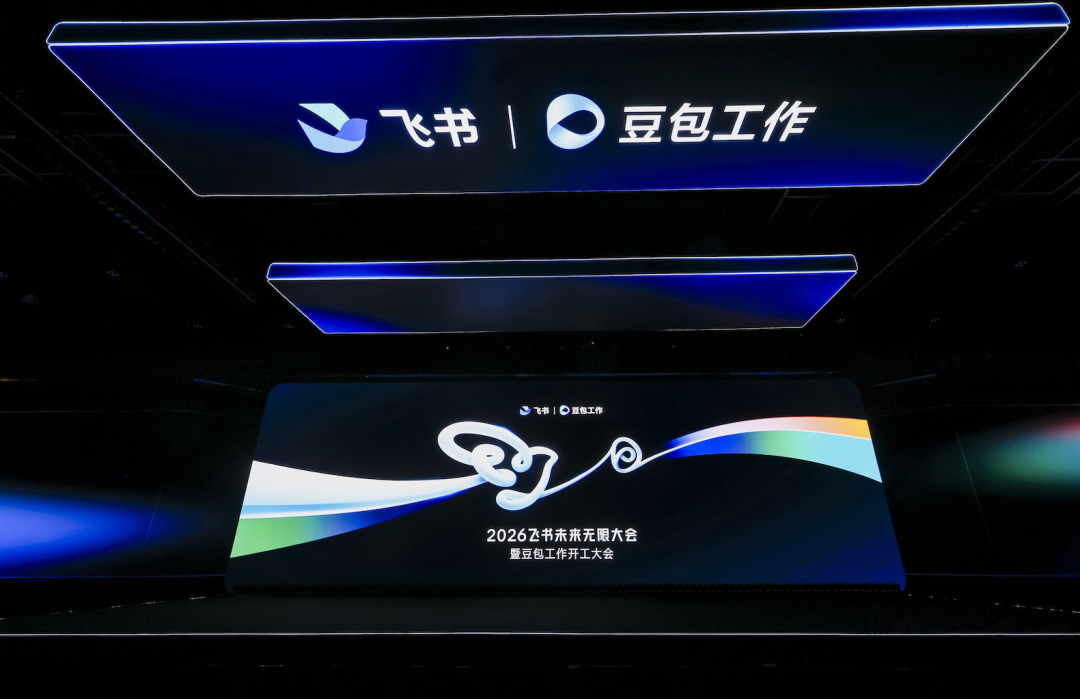
Feishu's 2026 commercial performance was robust. Its ARR exceeded 3 billion yuan in 2025, doubling year-on-year by Q2 2026—its fastest commercial growth ever.
At Feishu's Future Infinity Conference on September 15, its CEO revealed ARR growth in H1 2026 reached 2.5x year-on-year, a record, with over 90% of new clients purchasing Feishu AI products. SME clients grew 70% in a year.
The significance: Feishu proved Chinese enterprises pay for AI, with conversion rates strongly tied to product engagement.
Over 90% of Feishu's enterprise clients adopt AI products post-purchase—driven by necessity, not impulse.
Doubao lacks this "payment habit" channel. C-end users expect free services, making converting 380 million MAUs to paid subscriptions extremely challenging.
Morgan Stanley estimates Doubao's annualized subscription revenue between $101 million and $1.5 billion, with a neutral scenario at $426–684 million.
At a 1% conversion rate, annual revenue hits ~2.37 billion yuan. While this shows C-end AI payment potential, it's a drop in the ocean compared to ByteDance's AI investments.
Thus, the integration's rationale emerges: using Feishu's B-end monetization to "remediate" Doubao's C-end traffic.
The integrated Doubao Work directly taps Feishu's enterprise account system, with Feishu's docs, sheets, meetings, and chats feeding Doubao Agent's context. Enterprises' payment habits on Feishu naturally extend to Doubao's AI capabilities.
Feishu is no longer a standalone SaaS product but Doubao's "data pool" and "permission layer" for enterprise scenarios.
Reports suggest Doubao Work, deeply integrated with Feishu Daily, will charge based on actual Token consumption, significantly lowering prices.


Rumors "Misinterpreted"
Returning to the September 24 rumors: When self-media interpreted the "Session team reorganization" as "halving the conversation team," it reflected an intuitive panic: If an AI assistant's conversation team is dismantled, does it mean the product deprioritizes conversations?
The official response revealed the opposite logic. Parts of the Session team's functions shifted to "Transaction" and "Doubao Work" teams—key vectors for Doubao's shift from "chat tool" to "transaction gateway" and "productivity platform."
On transactions, Doubao's moves are clear. Hotel bookings completed within Doubao are billed as independent channels at ~12% commission.
This signals Doubao's evolution from "helping users find information" to "helping users complete transactions," shifting from ads to commissions.
Liang Rubo stated internally that Doubao aims to become a core business alongside Douyin, spawning independent branches like e-commerce and lifestyle services.
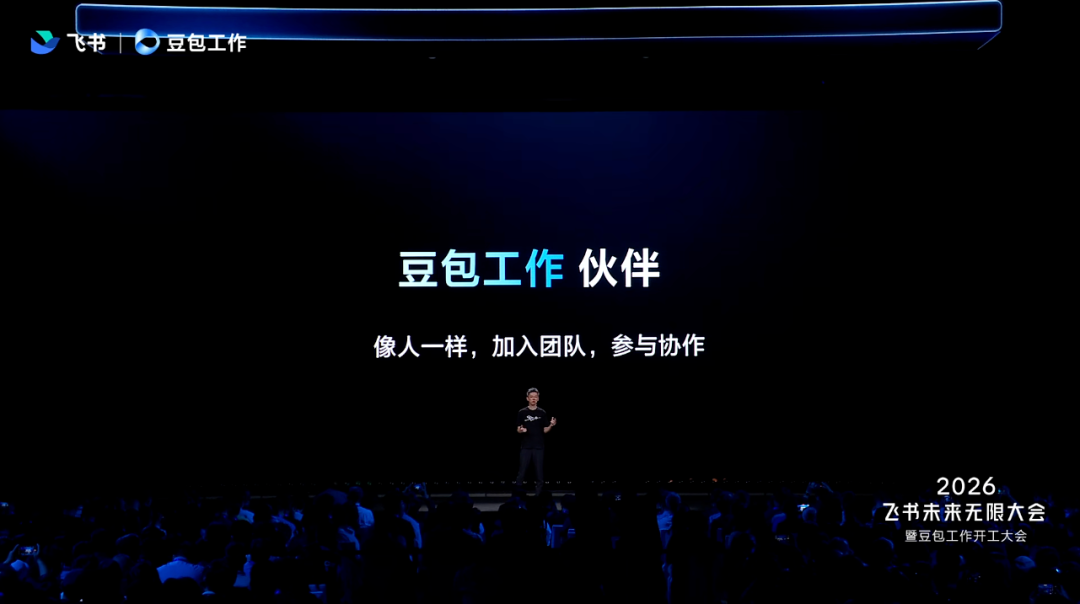
On productivity, Doubao Work debuted at Feishu's Future Infinity Conference on September 15, alongside Feishu 8.0.
ByteDance's CEO rarely appeared at such events, underscoring its importance. Doubao Work supports local PC operations, browser use, skill modules, scheduled tasks, and includes an Office suite, directly rivaling Claude's office Agent capabilities.
Viewed together, the Session team's reassignment isn't a "layoff" signal but an organizational alignment with strategic pivots: Conversational abilities are no longer ends but means embedded in transaction and office scenarios.
When users say, "Book me a hotel" to Doubao, a transaction follows the chat. When they say, "Summarize this meeting," office collaboration ensues.
The conversation team's functions are "redirected" to transaction and office teams to align conversational abilities with monetization scenes.

A "Profit-for-Future" Gambit With No Retreat
Zooming out, Doubao and Feishu's integration marks a symbolic event in China's AI large model commercialization race.
Rhodium Group reports that from March–August 2026, seven major Chinese AI developers' model businesses generated ~$10.7 billion in ARR combined.
ByteDance led with ~$4 billion in AI ARR (July data). With ~30 billion yuan in annualized ARR, it dominates Token revenue rankings. Its video model, Seedance, holds pricing power in the industry, charging at least 50% more per second than rivals.
Yet, these revenues pale against ByteDance's investments. Seedance's annualized revenue is ~$2 billion (over 1 billion yuan monthly)—ByteDance's best-performing AI product—but still insufficient to cover hundreds of billions in capital expenditures.
This is ByteDance's reality: AI large model spending is colossal, and profitability matters most.
Under this pressure, Doubao's strategic shift makes sense.
380 million MAUs are a vast asset, but without monetization, they're a depreciating asset.
Feishu's decade-accumulated enterprise clients, payment habits, and collaboration data are the "password" to cash in.
Post-integration, Doubao is no longer just an AI chat assistant but a super gateway bridging C-end conversations and B-end collaborations.
Feishu's product capabilities are "marginalized" as Doubao's data infrastructure, but its monetization skills are "centralized" as Doubao's strategic core.
In this light, ByteDance is proactively shedding Doubao's "national AI chat app" persona, reshaping it into a productivity platform generating revenue from every conversation.
This path won't be easy. C-end users' payment willingness mismatches income levels—a 500 yuan monthly fee accounts for ~16% of China's per capita disposable monthly income.
But the direction is irreversible: In a sector burning $200 billion annually, no one can afford idealism without profit.
Perhaps Doubao must first "marginalize" its chat-only self to become ByteDance's next-decade core business.
-
![]()
The Crayfish Craze Fades Away
-
![]()
Doubao Marginalizes Doubao
-
A Unique Leader with Opportunities 10 Times Greater Than Tesla and BYD: The Journey Has Just Begun!
-
![]()
Apple Ordered to Pay $5.7 Billion in Damages
-
![]()
September's Flagship Chips Split into Four Paths: A20 Pro and Dimensity 9600 Pro Break Same-Series, Same-Chip Tradition
-
![]()
Starting from 279,800 Yuan! Yijing X9 Emerges as a Strong Contender in the 300,000 Yuan Home SUV Market | Mingjing Pro
-
![]()
US Large Models Also Start a Price War
-
![]()
How Should Consulting Firms Position Themselves in the Era of Large Language Models?