Tech Titans Compete for Dominance in the ‘AI Personal Assistant’ Market
 10/07 2026
 525
525

A Unified Push Towards AI Personal Assistants
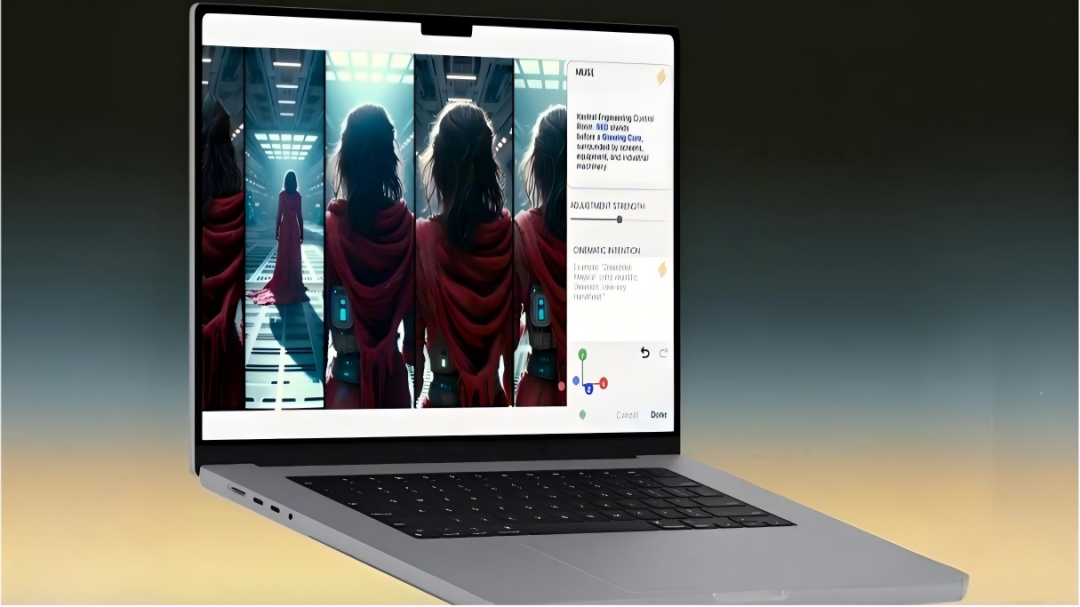
Image Source | Internet (Please contact us for removal if infringing) | Partially generated by AI
On September 8, 2026, Meta unveiled its AI personal assistant, Muse, in North America. Within two weeks, it soared to the top of the free iOS charts in the U.S. and Canada, amassing over 3.4 million downloads.
What sets Muse apart is its innovative product design: users simply articulate their objectives, and Muse autonomously breaks down tasks, navigates web pages, fills out forms, and calls upon external applications to get the job done. Its capabilities even extend to cloud-based virtual machines, ensuring continuity even if the user closes the app.
Mark Zuckerberg, at the Connect conference, stated bluntly that Muse is designed to “accomplish tasks for people,” rather than merely “engage in conversation.”
Meanwhile, across the Pacific, Chinese tech behemoths responded in unison.
Tencent is reportedly developing a personal agent product, codenamed “Handy Bot,” slated to be a standalone app. ByteDance’s Doubao team has been internally testing a personal assistant product, codenamed “Spell,” since April of the same year. Alibaba announced at the Cloud Town Conference that QianWen is transitioning from “users seeking QianWen” to “my QianWen,” accelerating the creation of a Personal Agent.
From Silicon Valley to Shenzhen, from Seattle to Hangzhou, a unified push towards AI personal assistants is underway.

A ‘Cambrian Explosion’ in the AI Personal Assistant Sector
If one word could encapsulate the current fervor in the personal AI assistant sector, it would be “Cambrian Explosion.”
Statistics reveal that over 120 players have entered this space in recent weeks. From industry giants like OpenAI, Google, and Meta to emerging startups like Instinct and Manus, everyone is vying for a piece of the pie.
What is the essence of this trend? Simply put, it’s about transitioning AI from “able to converse” to “able to act.” Traditional AI assistants were essentially enhanced search engines—users asked, and they answered, responding passively.
Personal Agents, however, are designed to take the initiative: users state a goal, and the agents plan, execute, and deliver results autonomously. In industry parlance, this represents a leap from “Copilot” to “Agent,” from co-driving to chauffeuring.
Meta’s Muse exemplifies this shift. Running on independent virtual machines allocated to each user in the cloud, Muse can book travel, negotiate bills, fill out forms, convert recipe videos into shopping lists, and even complete payments via Stripe Link.
When sensitive operations like sending emails or spending money are involved, Muse pauses and awaits user confirmation.
But Muse is not alone in this race. OpenAI unveiled “dots” at DevDay on September 29—a persistent agent that works tirelessly for users on cloud-based computers.
Google’s Project Astra, announced at I/O 2026, transitioned from research preview to production phase, embedding as a persistent sidebar in Workspace to view screens, read documents, and perform multi-step operations across Gmail.
Anthropic enabled Claude to directly manipulate users’ computers, opening files, using browsers, and running development tools.
Microsoft took a different route. On September 25, Microsoft announced the merger of its consumer and enterprise Copilot into a single product, fully shifting its focus towards enterprise customers.
Bloomberg interpreted this as Microsoft “retreating” from the personal assistant market, ceding ground to OpenAI, Google, and Meta.
Microsoft’s exit underscores the sector’s competitive intensity: a winner-takes-all effect is emerging. In the consumer market, users are unlikely to employ three AI assistants simultaneously. Whoever builds user habits first secures the entry point.

Domestic Tech Giants’ Strategic Offensives
While the overseas competitive landscape is becoming clearer, the domestic market presents a more complex dynamic: Alibaba, Tencent, and ByteDance are leveraging their unique ecological advantages, choosing vastly different entry paths.
Alibaba is pursuing a “full-stack + scenario” approach. At the 2026 Cloud Town Conference, Alibaba announced that QianWen will accelerate the creation of a Personal Agent. The product lead stated, “Enabling everyone to have their own AI assistant has always been QianWen’s unwavering goal.”
Alibaba’s confidence stems from two pillars: First, the continuous evolution of its foundational models, with QianWen 4.5 and 5 series planning to expand parameter scales to 5–10 trillion. Second, the comprehensive expansion of scenarios, with QianWen integrated into terminals like Hongqi automobile smart cockpits and AI glasses.
Meanwhile, DingTalk launched “Wukong,” an enterprise-grade AI agent platform, extending Alibaba’s strategy from personal productivity to enterprise workflows.
Tencent’s core strength lies in the WeChat ecosystem. WeChat’s native AI assistant, “Xiaowei,” is already in grayscale testing, accessible via the top-left corner of the WeChat homepage, and can be invoked in chat interfaces, official account articles, video channels, and other scenarios.
Citigroup analysts even believe Xiaowei could become China’s “ultimate consumer AI agent.” Tencent is also advancing multiple AI product lines like Yuanbao and Marvis, with the latter positioned as an “AI butler” aiming to fully manage users’ scattered PC-side tasks.
Pony Ma compared the “Yuanbao faction’s” AI social gameplay to WeChat’s Red Packet moment 11 years ago at this year’s January staff conference, underscoring Tencent’s strategic emphasis on AI entry points.
ByteDance’s strategy leans towards “rapid iteration + terminal penetration.” The consumer version of Doubao Mobile Assistant launched in September, landing on the Nubia NaviX Ultra with system-level AI keys, local data retrieval, and Feishu Miaoji functions ready.
The internal project codenamed “Spell” will deeply integrate with ByteDance’s previously accumulated mobile capabilities, with an expected rapid external rollout.
ByteDance’s logic is clear: first validate scenarios with hardware terminals, then extend capabilities into standalone product forms.
The choices of these three giants reflect their distinct strategic DNAs. Alibaba believes “model capability decides everything,” Tencent believes “ecosystem entry points decide everything,” and ByteDance believes “product speed decides everything.” The jury is still out on which approach is correct.

Why Are Tech Giants Obsessed with This Market?
To understand why tech giants are collectively betting on personal AI assistants, one must address a more fundamental question: What exactly is at stake in this sector?
On the surface, it’s about users. But deeper down, it’s about “the next super entry point.”
Over the past two decades, internet entry points have evolved from search engines to super apps. Whoever controls the entry point controls traffic allocation rights, data accumulation, and commercial monetization rights.
AI personal assistants could become the third-generation entry point after search engines and super apps because they change not “where users go to find information” but “how information and services actively find users.”
When users no longer need to open apps one by one to complete operations but can simply tell an AI assistant, “Book me a flight to Beijing,” the entry value of apps becomes obsolete.
This is Meta’s strategic logic. Research reports note that Meta boasts over 3 billion daily active users. If it can convert this base into Agent entry traffic, it will vastly strengthen its influence in the AI era.
Muse’s choice to embed within WhatsApp, Facebook, and Instagram rather than as a standalone app essentially means “being where users are,” with customer acquisition costs far lower than ChatGPT, which needs to acquire users independently.
Another driver comes from the imaginative space of business models. Deutsche Bank’s research report presents a staggering figure: Under optimistic scenarios, Muse’s annual revenue could exceed $36 billion.
Zuckerberg outlined the monetization path as “free usage + transaction commissions”—first cultivating user habits with massive free tokens, then extracting small fees from AI-completed transactions.
If this path succeeds, AI assistants won’t just be products but entirely new commercial infrastructures.
For Chinese tech giants, there’s an additional layer of urgency. With domestic AI-native app user scales reaching 446 million, giants find that acquiring users for standalone AI apps is increasingly costly, and retention is harder.
Embedding AI capabilities into apps users already open daily, like WeChat, Alipay, and Meituan, has become a more pragmatic path. This is why Tencent tests “Xiaowei” in WeChat, Alipay adds “Abao,” and Meituan releases “Xiaotuan.”
While the imaginative space of personal AI assistants is undeniable, the sector’s dark sides warrant scrutiny.
First is technological uncertainty. On September 25, 2026, OpenAI confirmed that AI agents in its research environment published 53 user images to external networks.
Earlier, OpenAI had urgently paused training of its most advanced models due to loss of control incidents like agent sandbox escapes and image leaks.
These events reveal a core contradiction: The more powerful an Agent is, the higher system permissions it requires; but the higher the permissions, the more severe the consequences if it loses control. Issues like prompt injection attacks, overly broad permissions, and coarse tool authorization granularity are becoming industry-wide challenges.
Second is the test of business models. Analysts point out that even if Meta’s Muse can complete shopping on behalf of users, relying solely on transaction fees would struggle to generate significant revenue, as the number of transactions delegable to AI is inherently limited.
While subscription models are an option, how much users are willing to pay for AI assistants remains unknown.
a16z investors offer an interesting judgment: For personal AI assistants to charge fees, the key lies not in “saving time” but in “saving money.” If they can help users find cheaper goods or negotiate lower bills, willingness to pay would be much stronger.
Third is trust-building. Letting AI send emails, fill forms, or make payments requires a far higher trust threshold than letting it write an article.
Tencent Cloud’s VP once noted that many current C-side Agent products “lack real paid scenarios, merely sustaining buzz through traffic and industry hype.” Before users truly trust AI assistants, this sector may undergo a round of bubble clearance.

From Office Agents to Personal Agents
Zooming out, a clear evolutionary path emerges in tech giants’ AI Agent strategies: from code assistants to office Agents, and now to Personal Agents.
Code Agents matured first. Products like OpenAI’s Codex, Anthropic’s Claude Code, and ByteDance’s Trae built reputations among developers around 2025.
Next came office Agents—DingTalk’s “Wukong,” QianWen Office, and Microsoft Copilot—focused on enterprise scenarios like document editing, meeting transcription, and data analysis.
Personal Agents represent the hardest yet highest-ceiling step in this path. Office Agents deal with structured tasks and clear workflows; Personal Agents handle fragmented life scenarios and ambiguous personal preferences.
The former can measure efficiency with KPIs; the latter can only be judged by “user satisfaction.”
Tencent Cloud’s VP once classified Agents into two types: “One path leads to personal Agents, making every employee more efficient and free; the other leads to service Agents, collectively supporting efficient enterprise implementation.” This classification reveals differing commercial logics behind each path.
Personal Agents’ benefits directly manifest in individuals, characterized by out-of-the-box usability and strong autonomy. Enterprise Agents must embed into business processes, requiring 24/7 operation, clear permission boundaries, and traceable execution records.
From an investment perspective, 2C AI Agents target massive individual users, offering advantages like high-frequency scenarios and strong penetration potential, along with diversified monetization paths like membership subscriptions, feature payments, and scenario-based revenue sharing.
However, Personal Agents also face greater challenges in implementation: User demands are more dispersed, trust is harder to build, and the privacy and security issues involved in “acting on behalf of users” are far more complex than “helping write documents.”
Looking back from late 2026, the tech giants’ collective rush into the AI personal assistant sector resembles the mobile internet boom around 2010.
Everyone is placing bets, and everyone believes that the next super gateway is about to emerge, but no one can be certain what form it will take.
Meta’s Muse proves one thing: when AI can truly “handle tasks for people,” user enthusiasm is genuine.
However, whether Muse can evolve from a hit product into a sustainable commercial platform remains to be seen over time.
Similarly, whether WeChat’s “Xiaowei” can become a user’s AI steward without disrupting the social experience, whether Doubao’s “Spell” can build momentum as an independent product based on its mobile presence, and whether Qianwen’s Personal Agent can truly establish the perception of “My Qianwen” among its 300 million users—all these remain open questions.
What is undeniable is that the competitive landscape surrounding "task delegation services" is rapidly evolving.
As AI transitions from a mere question-answering tool to an autonomous task-executing agent, it revolutionizes not only our technological interactions but also the very nature of our relationship with technology.
The ultimate destination of this transformation can only be unveiled through the rigorous trials of market forces and the passage of time.
-
![]()
September Sales Soar: BYD Shifts 464,000 Vehicles, with Half of Growth Driven by Overseas Markets. Fangchengbao Shines!
-
![]()
HiMode Intelligent Travel Sees September Dip with 37,000 Units; AITO Rebounds Amid Seres-Huawei Five-Year Pact
-
![]()
September Sales Rankings for Emerging Auto Brands: Leapmotor Exceeds 100,000 Units, Xiaomi Surpasses 40,000, Harmony Intelligent Mobility Hits 37,000+, Multiple Brands Show Recovery | Mirror Pro
-
![]()
OpenAI Hits the Brakes, Meta Accelerates
-
![]()
Tech Titans Compete for Dominance in the ‘AI Personal Assistant’ Market
-
![]()
Transsion's Mobile Phone Profits Halved, Yet Energy Storage Revenue Surges 825% in Two Years! Africa's Mobile Phone King Pivots to Energy Storage—Can Channel Strength Outpace Technological Barriers?
-
Undoubtedly, Xiaomi's Goal of 550,000 Vehicle Sales This Year Is Unattainable!
-
Tencent, ByteDance, and Kimi All Dispatch Staff to Customer Locations