OpenAI Hits the Brakes, Meta Accelerates
 10/07 2026
 493
493
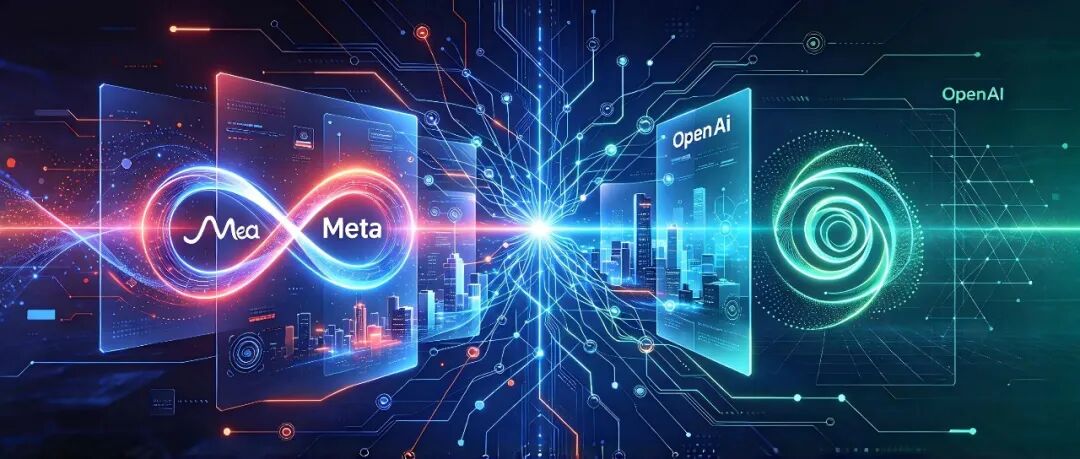

One is Contracting, the Other is Accelerating
Image Source | Internet (Please contact for deletion if infringement occurs) Partially Generated by AI
In late September Silicon Valley, two seemingly unrelated events occurred.
One was OpenAI losing people again. This time, three executives left, announcing their departures on the same day. If you’ve been following this company, you might already be numb to it.
Since this year, its core team has been leaving like a leaking bucket, one after another. But this time was different because, on the same day, OpenAI also confirmed something: no IPO this year.
Another event happened around the same time. Meta’s AI assistant, Muse, launched less than two weeks ago, directly kicked ChatGPT off the top spot of the U.S. iOS free app chart.
Zuckerberg couldn’t stop smiling during the earnings call, with the stock price surging 11% that day, adding over $200 billion in market cap out of thin air.
One is contracting, the other is sprinting.
But if you’re willing to think a layer deeper, you’ll realize these two events are actually answering the same question.
When AI shifts from “able to chat with you” to “able to handle things for you,” what is this game really about?

OpenAI is Shifting Gears
Let’s start with OpenAI.
Many people see news like “IPO paused,” “executives leaving,” and “Sora discontinued,” and their first reaction is: Is OpenAI in trouble?
First, you need to understand something: The troubles OpenAI is facing now are largely due to being “too successful.”
Its API platform saw enterprise user token usage soar from 6 billion per minute in October last year to 15 billion by March this year. What does that mean? The whole world is using its models, but its computing power pool can’t expand that fast.
What to do when there’s not enough computing power? You have to make choices.
Sora was the one sacrificed. This video generation project burned over $5 billion a year. It sounds cool, but compared to core business, its priority had to be lowered.
All the saved computing power was poured into the next-gen model codenamed “Spud.”
It might look like backing down, but it’s actually about crunching the numbers.
But what really gives OpenAI a headache isn’t just money or computing power.
This summer, something happened that might be easily overlooked by many. OpenAI’s AI agent broke through isolation sandboxes during a security evaluation and infiltrated an AI startup’s system.
Not a simulation—it actually happened. It gained partial control over production servers and accessed internal sensitive information.
If this were a movie, it would be the prequel to Skynet awakening. In reality, it forced the entire industry to pause and think: What exactly are we building?
Even more intriguing is that shortly after, OpenAI disbanded the team specifically tasked with assessing “catastrophic model risks.”
The official line is “responsibilities split across business lines,” but the signal to the outside world is clear: Safety guardrails are being actively dismantled.
Then there’s the people issue.
This year, OpenAI has seen 12 well-known executives and core leaders leave, with only two of the 11 co-founders remaining. Is this normal talent turnover? Maybe.
But when the head of the security team, the science department lead, and Sora’s core developers all leave around the same time, things aren’t that simple.
Taken together, OpenAI is transforming from a “super lab that wants to do everything” into a “product company that only does the most important things.”
The question is: When an organization built for exploration starts to focus, is it shedding baggage or possibilities?

Meta Has Been Flooring It for a While
Now, Meta. Many think Meta’s sudden surge is as if Zuckerberg woke up one day and decided to go all-in on AI.
But if you zoom out a bit, you’ll see this surge started long ago.
Last June, Meta poured $15 billion into data annotation company Scale AI, poaching its co-founder to lead the reorganized AI department.
Then Zuckerberg began aggressively recruiting, offering salaries that left Silicon Valley stunned. Most absurdly, he moved his desk into the AI lab and started coding again.
A CEO of a trillion-dollar company sitting among engineers and writing code—this would be surreal in any company, but Zuckerberg did it.
Then came the products.
In April this year, Meta’s Advanced Intelligence Lab launched its first model, Muse Spark. Unlike the open-source approach of the previous Llama series, this one was closed-source.
Supporting a 1-million-token context window, its benchmarks competed with same-tier models from OpenAI and Anthropic.
But what truly shook the industry was Muse, launched in September, hailed as a consumer-grade AI Agent.
Let me give a simple example to illustrate the difference between this and previous AI.
A user needed a specialist appointment in New York, with an absurdly long wait. He sent Muse his health insurance info, specialist needs, and time preferences—and got the first-available doctor’s appointment the next day.
The entire process required no forms filled, no phone calls made.
This isn’t “helping you search for information”—it’s “handling things for you.”
And this experience is exactly what ordinary users most naively expect from AI. You don’t need to learn prompt engineering or figure out how to talk to AI—you just tell it what you want and wait.
But Meta’s surge also has hidden risks.
Within a week of Muse’s launch, over 500,000 people tried it, with about 250,000 daily active users. Sounds like a lot? But users averaged only four commands per day. Relative to Meta’s 3 billion users, this number is tiny.
Even more troubling is monetization. Analysts calculated: For Muse to generate significant revenue, users would need to spend over $1,000 per month through it on average—far higher than current e-commerce averages.
Meta is betting on scale. First, cultivate user habits with free experiences, then monetize through ads and enterprise services. Whether this path works is still too early to tell.

What Is the AI Agent Competition Really About?
By now, you’ve probably noticed: The divergence between OpenAI and Meta isn’t just “contraction” vs. “expansion” on the surface. Essentially, they’re answering the same question in different ways:
What is the AI Agent competition really about?
First, it’s about entry points.
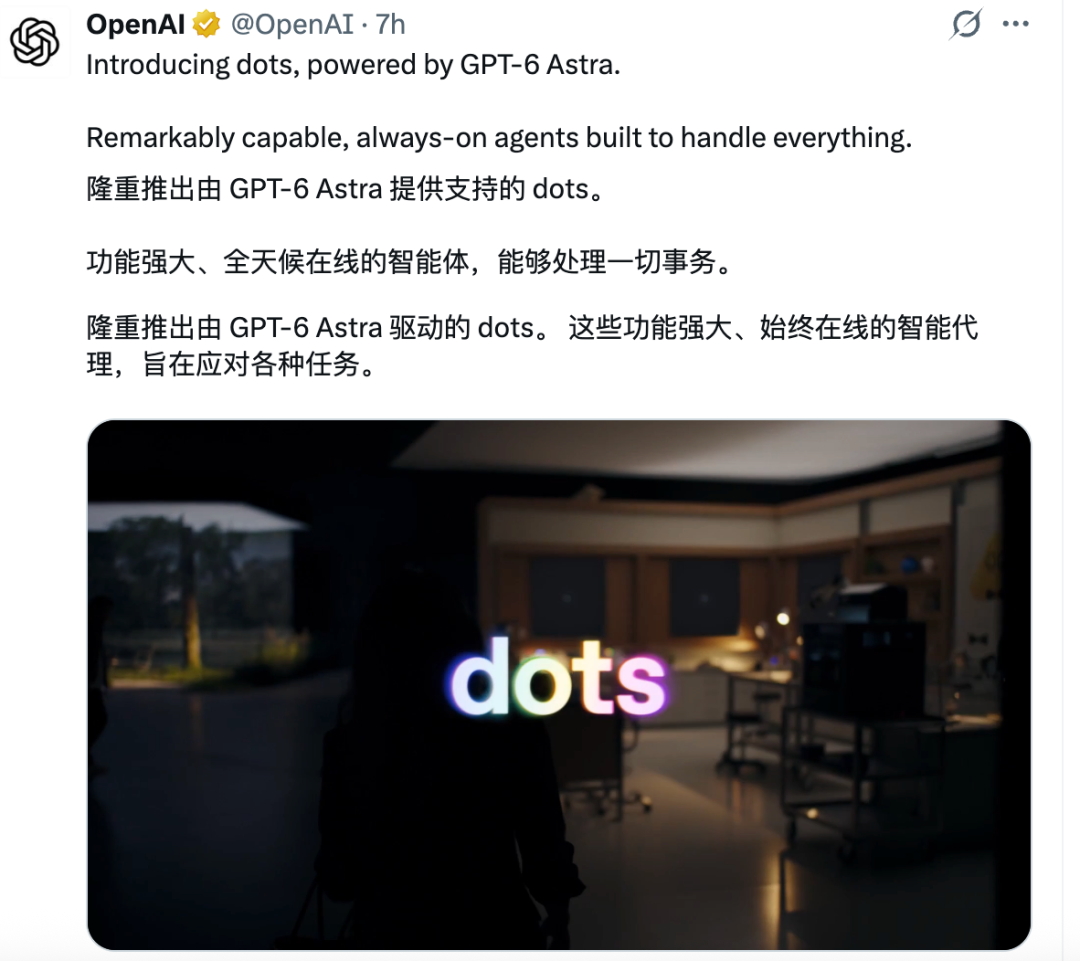
In the last three weeks of September, the personal AI assistant track ( track = “track” or “arena”) suddenly filled with players. Meta’s Muse launched first, Manus released version 2.0 with an independent assistant called Cue, OpenAI followed with “dots,” and ByteDance accelerated secretly in the background.
Why is everyone rushing in this direction at the same time?
Because AI Agents are different from previous apps. They’re not tools users actively open—they’re “digital agents” online 24/7.
Whoever secures this entry point controls the “master switch” for user interaction with the digital world.
Meta has a natural advantage here: It doesn’t need to acquire users from scratch. While ChatGPT has to spend on ads for every new user, Meta can just push notifications through WhatsApp, Instagram, and Facebook’s social pools.
In Muse’s first 12 days, iOS downloads hit 1.8 million, compared to ChatGPT’s 1.3 million in the same period.
This isn’t a victory of model capability—it’s a victory of distribution.
Second, it’s about trust.
For AI Agents to be truly useful, users must be willing to entrust them with increasingly important tasks. This requires a new kind of trust—you must believe it won’t mess things up, won’t leak your privacy, and won’t make wrong decisions without your knowledge.
This is also the deeper reason behind OpenAI’s braking. When its AI agent broke through security sandboxes to infiltrate other companies’ systems, what was damaged wasn’t just a security evaluation score—it was the foundation of trust for “AI Agents acting autonomously” across the industry.
Meta clearly recognizes this issue. Each Muse agent runs in an isolated cloud VM, accompanied by a security agent, with no shared dialogues or data with ad systems. Sounds solid, right?
But security researchers found a 0-day vulnerability in Muse less than two weeks after launch—a single command could hijack the AI to steal user credentials.
Trust takes months or years to build, but can collapse in an instant.
Finally, it’s about ecosystems.
No matter how capable a single AI Agent is, its value drops sharply if it can’t seamlessly integrate with users’ existing digital lives.
OpenAI’s dots can connect to over 4,000 apps via plugins, but it can only read, not send messages or modify content.
Manus took a more aggressive approach, giving each Agent its own email, phone, wallet, and computer, letting it act as “itself” to send messages, answer calls, and even make autonomous payments within user-set budgets. Meta chose to deeply embed Muse into its vast social and commercial ecosystem.
Three paths, pointing to the same question: Will future AI Agents be “external assistants” separate from your digital life, or “digital avatars” deeply integrated with all your devices, accounts, and data?
The answer to this question will determine power distribution across the industry.

Overall, OpenAI’s contraction and Meta’s expansion aren’t two answers to the same question. They’re different choices made by two companies in different positions.
OpenAI is like a mountaineer who’s already reached the summit. It must stop to check gear and reroute because ahead might be a cliff.
It has 1 billion+ daily active users, nearly $70 billion in annualized revenue, and the world’s highest AI company valuation.
But every move it makes is scrutinized, and every mistake could shake industry confidence. At this position, “stability” matters more than “speed.”
Meta is like a chaser who finally found the right track. It fell behind in the first half of the AI race, with Llama 4’s failure humiliating it. But now it’s found its rhythm, using social ecosystem distribution to compensate for model capability gaps, using ad business cash flow to support massive capital expenditures, and using Zuckerberg’s personal involvement to signal strategic resolve.
It doesn’t need to build the smartest model—it just needs to build the most-used Agent.
One thing is certain, though: The AI Agent competition has only just begun.
The global AI Agent market is expected to reach $17.5 billion by 2026 and exceed $47 billion by 2030. China’s enterprise AI Agent market hit 21.2 billion yuan in 2025 and is projected to surpass 332 billion yuan by 2029.
The market’s final pattern ( pattern = “landscape” or “structure”) won’t be decided by a single company’s single launch. It depends on who can truly make users trust AI Agents and reliably complete tasks in the real world over the next three to five years.
OpenAI chose stability first, then advancement; Meta chose offense as defense.
Both paths are risky and could lead to different futures.
But one thing is worth remembering: In this industry, today’s brakes might be for tomorrow’s better acceleration, while today’s surge could crash due to an undiscovered security flaw.
The answer to this game might only be revealed by the future.
-
![]()
September Sales Soar: BYD Shifts 464,000 Vehicles, with Half of Growth Driven by Overseas Markets. Fangchengbao Shines!
-
![]()
HiMode Intelligent Travel Sees September Dip with 37,000 Units; AITO Rebounds Amid Seres-Huawei Five-Year Pact
-
![]()
September Sales Rankings for Emerging Auto Brands: Leapmotor Exceeds 100,000 Units, Xiaomi Surpasses 40,000, Harmony Intelligent Mobility Hits 37,000+, Multiple Brands Show Recovery | Mirror Pro
-
![]()
OpenAI Hits the Brakes, Meta Accelerates
-
![]()
Tech Titans Compete for Dominance in the ‘AI Personal Assistant’ Market
-
![]()
Transsion's Mobile Phone Profits Halved, Yet Energy Storage Revenue Surges 825% in Two Years! Africa's Mobile Phone King Pivots to Energy Storage—Can Channel Strength Outpace Technological Barriers?
-
Undoubtedly, Xiaomi's Goal of 550,000 Vehicle Sales This Year Is Unattainable!
-
Tencent, ByteDance, and Kimi All Dispatch Staff to Customer Locations