September Sales Soar: BYD Shifts 464,000 Vehicles, with Half of Growth Driven by Overseas Markets. Fangchengbao Shines!
 10/07 2026
 508
508
In September, BYD's wholesale sales surged to 464,000 vehicles, marking a 17% year-on-year increase. Amidst fierce price competition across the industry, the key challenge lies in sustaining the domestic market while capitalizing on the low overseas base to fuel growth.
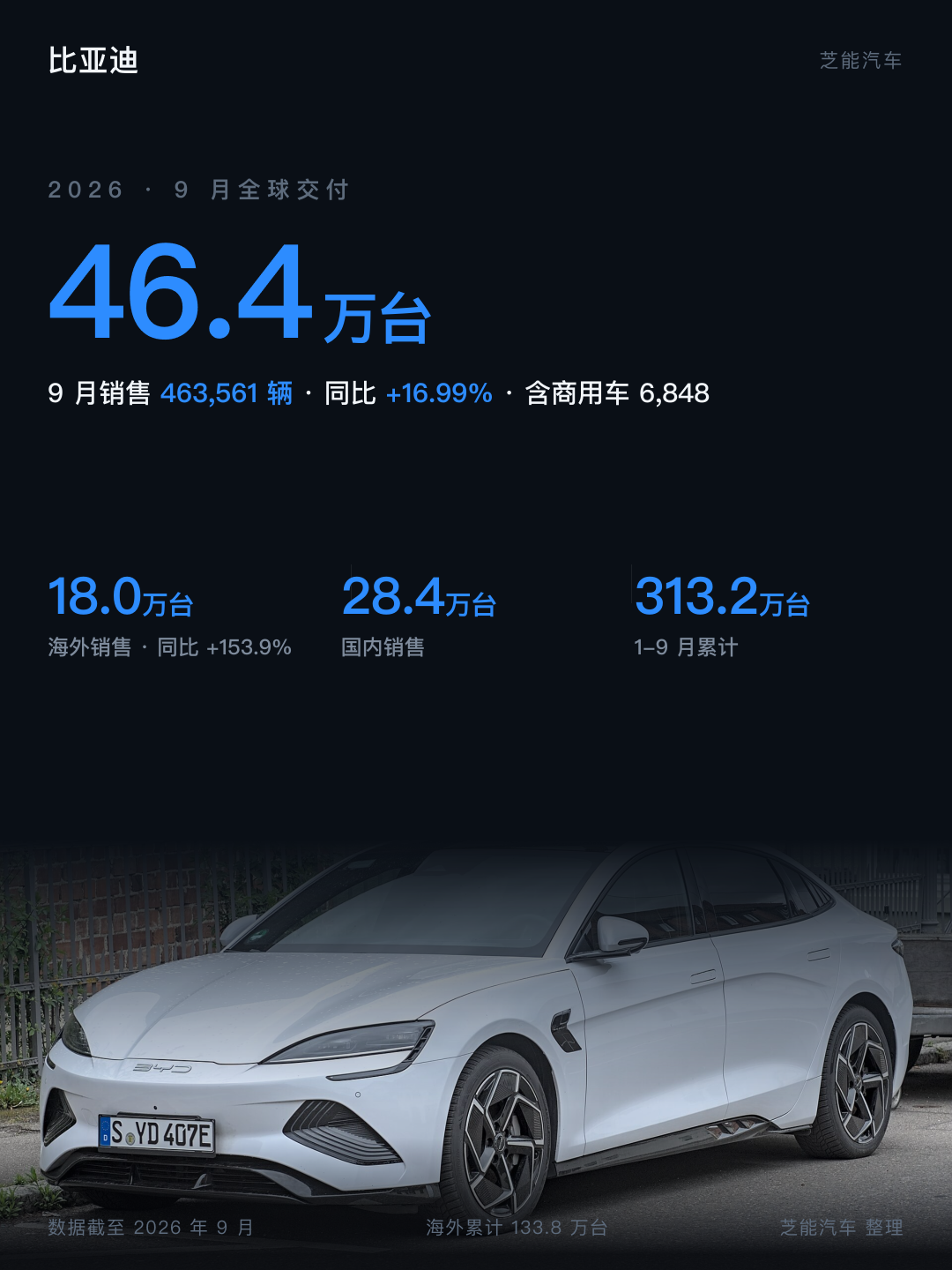
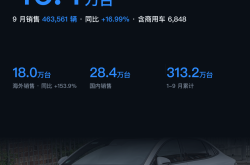
September's wholesale sales hit 463,561 units (rounded to 464,000), up 16.99% year-on-year, including 6,848 commercial vehicles. Cumulative sales from January to September reached 3.132 million units.
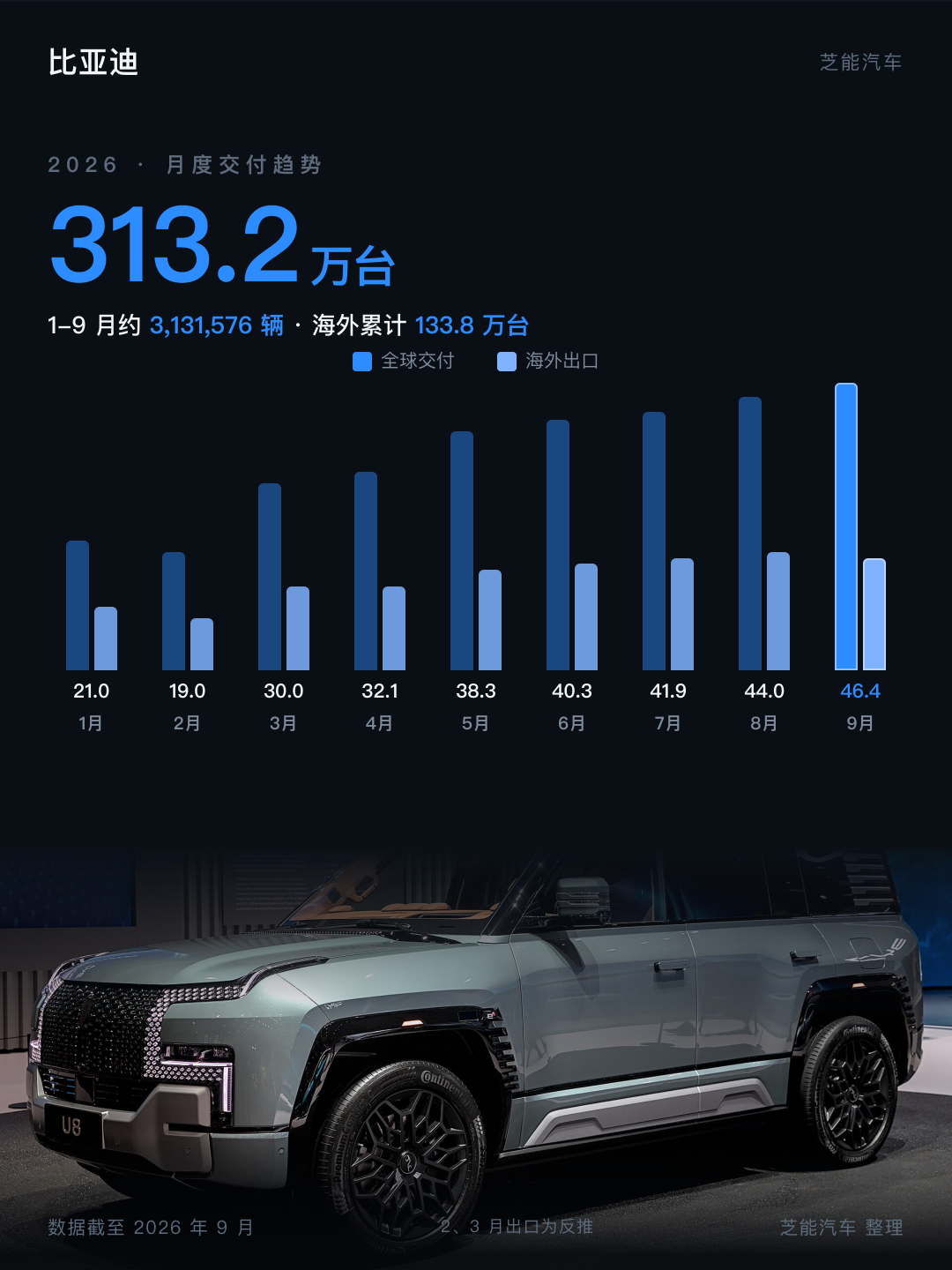
Domestic sales stood at approximately 284,000 units, constituting 61% of the total, with a stable foundation representing the primary battleground of the price war.
Following price reductions, the Qin series has successfully edged out joint venture fuel vehicles priced below 100,000 yuan. Meanwhile, the Seagull dominates the commuter vehicle segment, and the Song series leads in family SUVs.
Overseas sales reached 180,000 units, soaring by 153.9% year-on-year and accounting for 39% of the total. At this time last year, BYD's ro-ro ships had not yet been extensively deployed. However, after establishing factories in Brazil and Thailand, the company has circumvented tariff barriers through localization. In September, overseas sales contributed 39%, with Southeast Asia, Europe, and South America emerging as the three major markets. Models such as the ATTO 3, Seal, and Song PLUS have witnessed significant sales growth.
Maintaining a solid domestic base while capturing market share overseas amidst a price war has transformed BYD's growth structure!
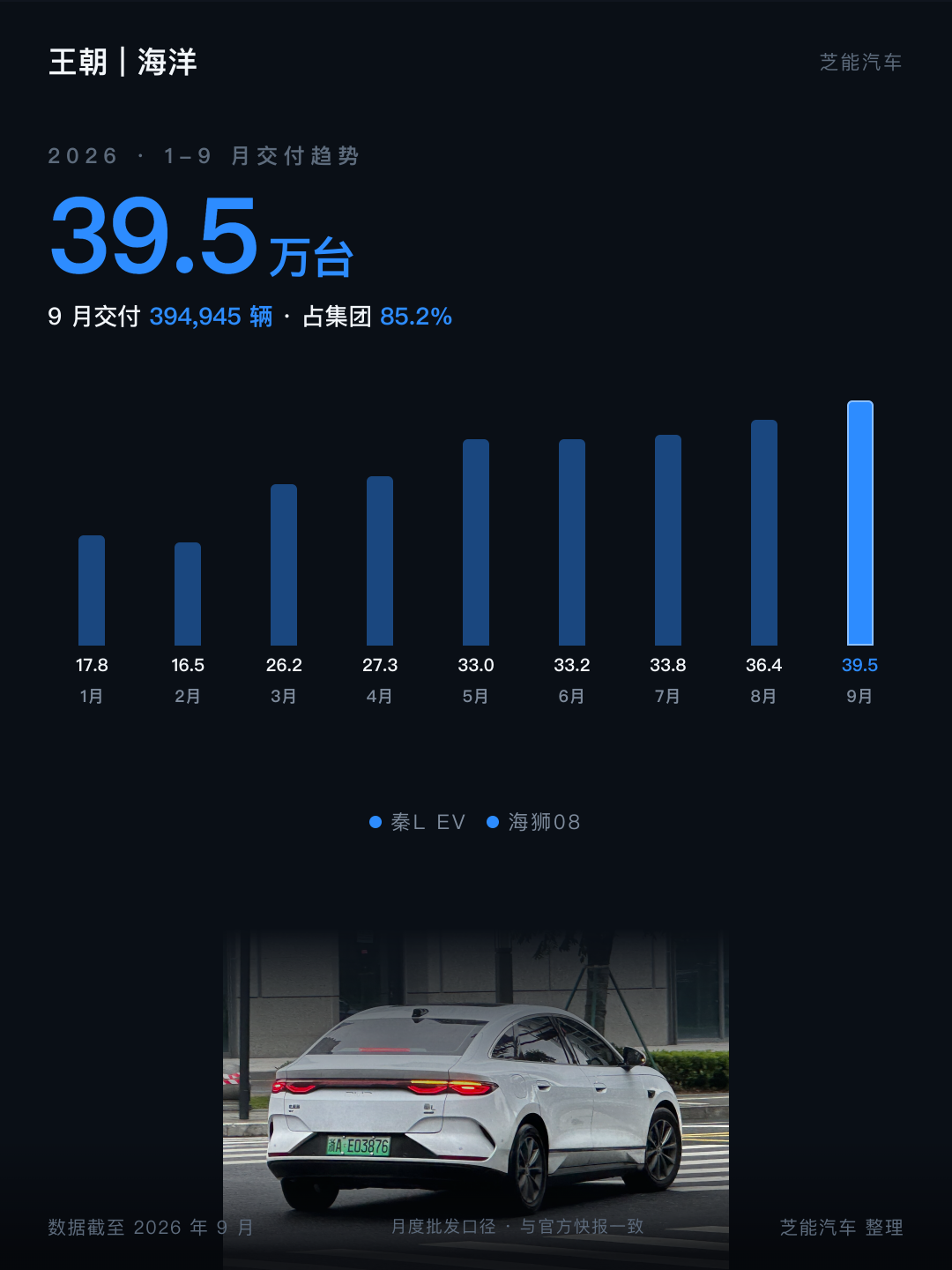
The core sales base comprises the Dynasty and Ocean series, with a combined total of 395,000 units in September, representing 85% of the group. This forms BYD's foundation and the main battleground of the price war. Models like the Qin, Song, and Seagull bolster the mass-market segment, leveraging economies of scale to reduce costs.
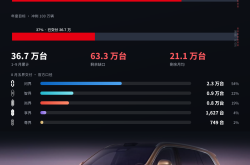
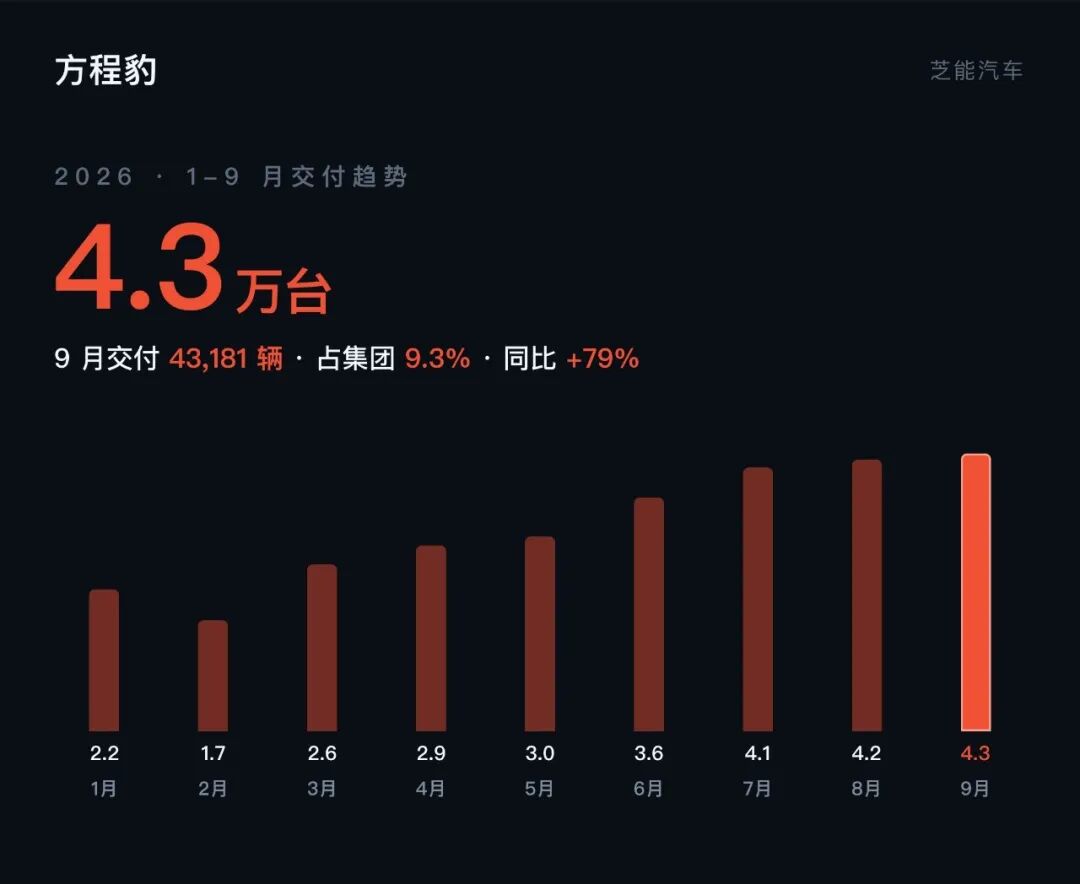
The mid-to-high-end segment has established two distinct layers. Fangchengbao delivered 43,181 units in September, up 79% year-on-year, accounting for 9.3% of the group. Its off-road and personalized models have forged an independent growth trajectory, stabilizing at 40,000 monthly sales. The Titan 7 targets the 200,000-yuan hardcore off-road segment, while the Titan 3 caters to the 150,000-yuan light off-road segment, covering the personalized market previously dominated by joint ventures.
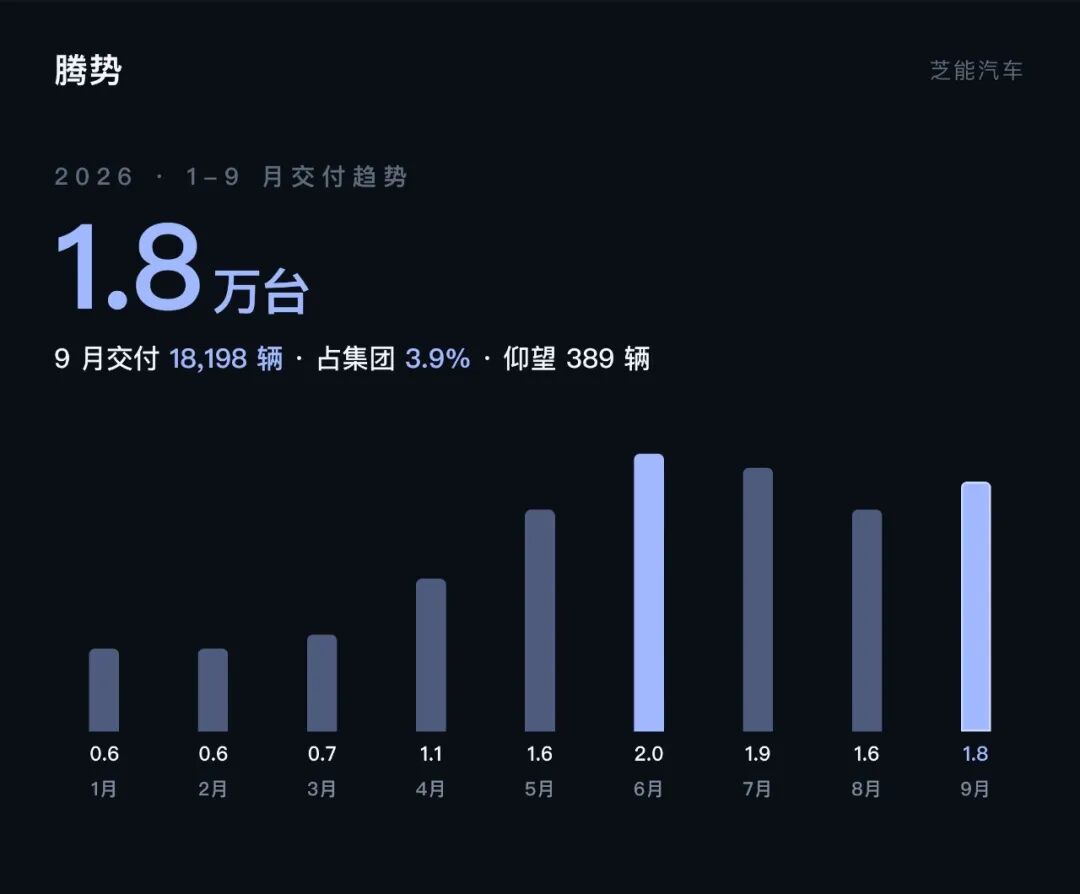
Denza sold 18,198 units, with the D9 and M9 models firmly positioned above the 300,000-yuan price point. The D9, with over 10,000 monthly sales, leads the MPV segment, while the N9 completes the full-size lineup, serving as the backbone of BYD's high-end segment.
Yangwang sold 389 units, a relatively small volume but pushing the brand's ceiling to the million-yuan level. The U8 and U9 symbolize the ultra-high-end segment, with their significance transcending their sales volume.
The three high-end brands combined account for approximately 13% of the group. The next focal point is whether Fangchengbao can increase its share to 20%.
Summary:
BYD's 154% overseas growth is remarkable, and the expansion of fast-charging infrastructure has significantly bolstered its domestic market position.
-
![]()
September Sales Soar: BYD Shifts 464,000 Vehicles, with Half of Growth Driven by Overseas Markets. Fangchengbao Shines!
-
![]()
HiMode Intelligent Travel Sees September Dip with 37,000 Units; AITO Rebounds Amid Seres-Huawei Five-Year Pact
-
![]()
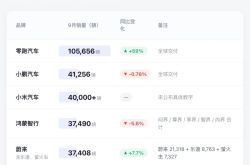
September Sales Rankings for Emerging Auto Brands: Leapmotor Exceeds 100,000 Units, Xiaomi Surpasses 40,000, Harmony Intelligent Mobility Hits 37,000+, Multiple Brands Show Recovery | Mirror Pro
-
![]()
OpenAI Hits the Brakes, Meta Accelerates
-
![]()
Tech Titans Compete for Dominance in the ‘AI Personal Assistant’ Market
-
![]()
Transsion's Mobile Phone Profits Halved, Yet Energy Storage Revenue Surges 825% in Two Years! Africa's Mobile Phone King Pivots to Energy Storage—Can Channel Strength Outpace Technological Barriers?
-
Undoubtedly, Xiaomi's Goal of 550,000 Vehicle Sales This Year Is Unattainable!
-
Tencent, ByteDance, and Kimi All Dispatch Staff to Customer Locations