Math PhD Makes 141.7 Billion Through AI Stock Trading!
 10/13 2026
 459
459
There are many stories about AI stock trading, but this British billionaire has emerged as the biggest winner.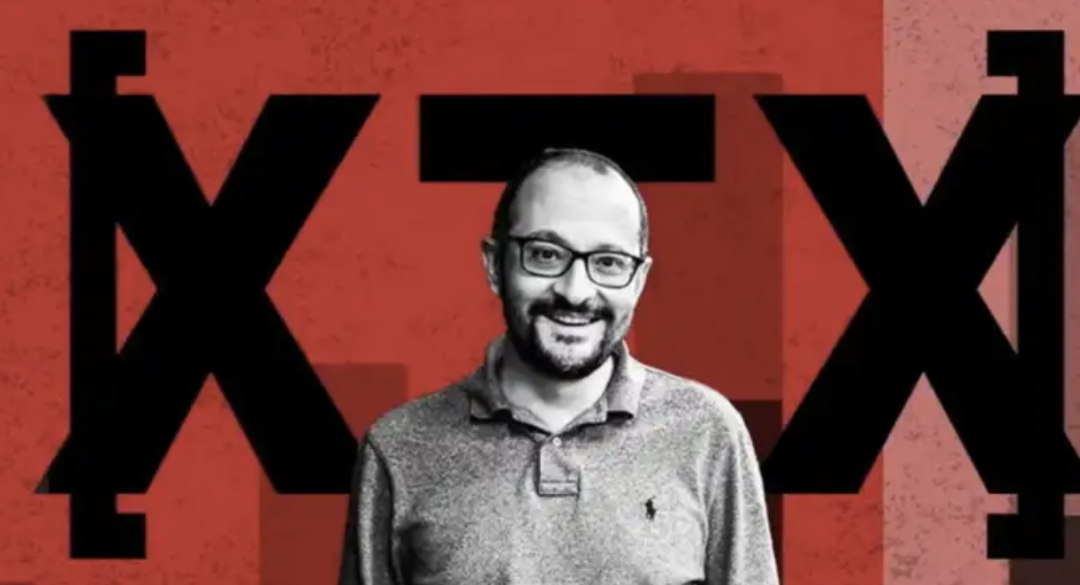
Alex Gerko. Source: Social media.
On October 11, according to reports from Cailian Press and Securities Times citing The Sunday Times' 2026 Rich List, Alex Gerko, known as the "mathematician" in the industry, ranked eighth among British billionaires at age 46. Through his platform's stock trading and market-making, his total assets reached £16.006 billion (approximately RMB 141.7 billion), a staggering increase of £7.261 billion (approximately RMB 64.3 billion) from 2025. This means he added an average of £19.89 million (approximately RMB 176 million) in value per day over the past year.
Public records show Alex Gerko was born in Moscow in 1979 and earned a PhD in Mathematics from Moscow State University. After graduation, he moved to London, joining Deutsche Bank and later GSA Capital, where he established the foreign exchange trading department. According to Cailian Press, Gerko founded trading firm XTX Markets ("XTX") in 2015. XTX built a for-profit AI trading system with over 400PB of global financial market data driving a massive GPU cluster. With just over 250 employees, XTX has no traditional traders or external investors. The company quickly became one of Britain's most profitable private firms, with profits flowing entirely to a small group of partners, making Gerko—who holds about 75% ownership—one of Britain's wealthiest individuals. In 2025, XTX's three main UK operating entities reported combined after-tax profits of approximately £1.71 billion, up about 33% from £1.28 billion the previous year. AI-generated conceptual image.
The Financial Genius Behind the Math PhD
Gerko holds a PhD in Mathematics from Moscow State University and a master's degree in Economics from the New Economic School. The title "mathematician" is well-earned. His trading experience is extensive. At Deutsche Bank, he demonstrated financial acumen through foreign exchange quantitative trading and equity execution research; he later led FX trading at GSA Capital for six years. When XTX was founded in 2015, his mathematical training enabled him to process complex data, while his trading experience taught him how many obstacles a model faces when moving from computer to market.
Historical data buy prices may not execute in real markets; opportunities identified by models may vanish before orders arrive. No matter how elegant the formula, these fragmented yet costly issues must be confronted. Today, XTX's website reports about 300 employees, a research cluster with over 25,000 GPUs, price predictions covering over 53,000 financial instruments, trading across 35 countries, and daily trading volumes around $250 billion. This figure reflects business scale, not assets under management or revenue. Interpreting it as "betting $250 billion daily on price movements" would stray far from actual operations.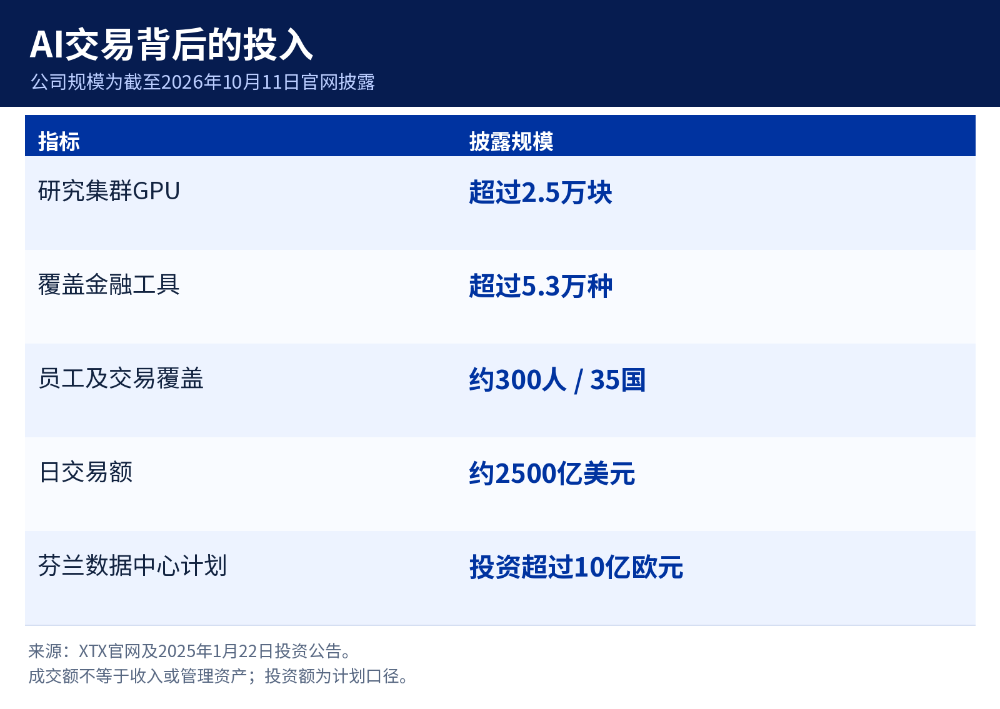
Only by Fulfilling Orders Can Business Thrive
Public records show XTX's core business involves using machine learning to predict prices, trading on exchanges and other venues, and directly providing liquidity to clients. Assets covered include equities, foreign exchange, fixed income, commodities, and crypto assets. Simply put, when clients want to buy or sell, XTX stands on the other side of the trade, quoting executable prices. Market makers aim to profit from the spread between bid and ask prices, but this income is unstable. Assets may decline immediately after purchase or surge after sale, with losses potentially far exceeding the narrow spread. Position control and risk hedging directly determine whether this business can continue. XTX's clients include banks, asset managers, hedge funds, and retail brokers.
The company explicitly states it holds risk for periods, using machine learning to provide liquidity with minimal market impact. This capability extends beyond "front-running" orders. Quotes must remain competitive, and executed trades require subsequent risk management. Focusing solely on order capture may lead to greater activity but also greater losses. Algorithmic trading in the industry follows different paths: market making earns from spreads, arbitrage trades price discrepancies between related assets, and directional strategies assume price movement risks. Each approach faces challenges; "quantitative" cannot be treated as a guaranteed profit method.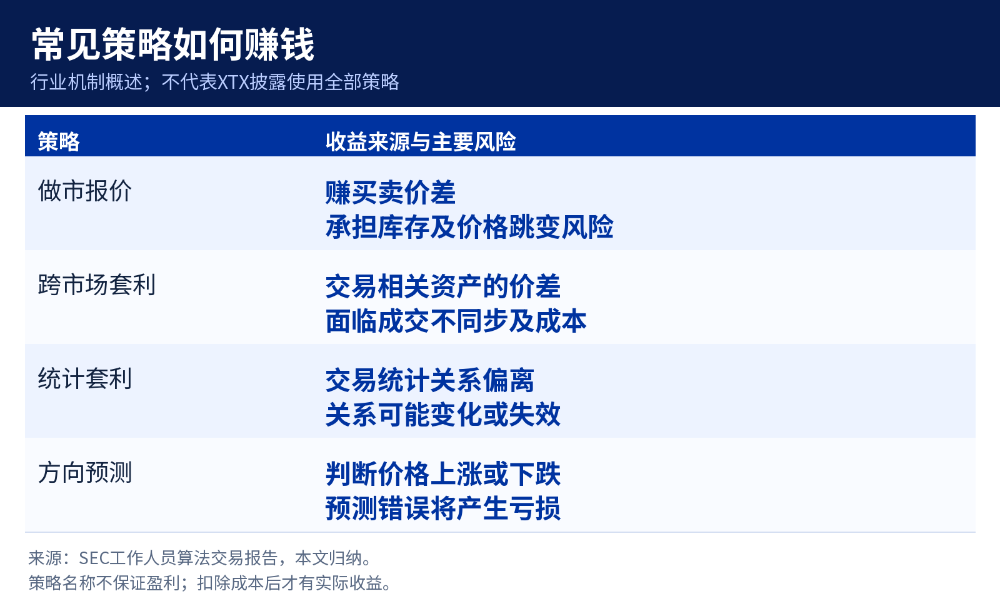
XTX has not disclosed complete models, trading signals, or position rules. Industry strategies help understand its business but cannot replicate its proprietary approach. The demand this business faces is indeed enormous. The Bank for International Settlements' December 2025 report showed global average daily foreign exchange trading reached approximately $9.5 trillion in April 2025, up 27% from April 2022.
Corporate currency exchanges, fund rebalancing, and institutional hedging all require quoted prices. During volatile markets, trading demand may increase, but so does market maker risk. More orders do not automatically translate to higher profits.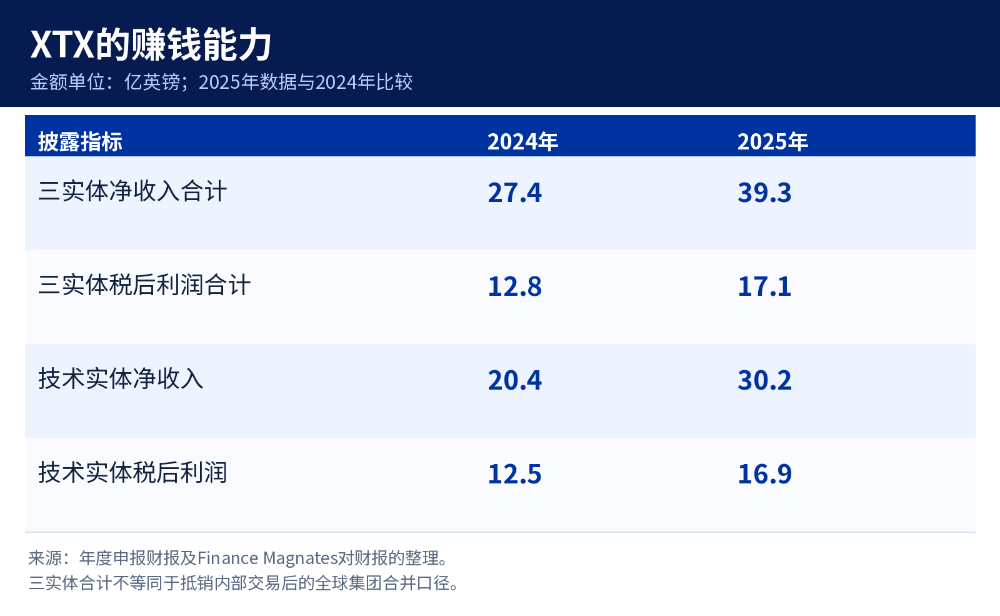
An often-overlooked detail in XTX's financial structure: In 2025, the technology entity providing intellectual property and related services reported after-tax profits of approximately £1.69 billion, accounting for most of the combined profits of the three UK entities. This relates to internal business and fee arrangements and should not be interpreted as profit from selling stock trading software to retail investors.
The reported net income aggregates the three entities and should not be directly viewed as global group revenue after offsetting internal transactions. Public materials do not break down how much AI contributed to profits alone. Attributing all gains to AI resembles crediting a single player for an entire team's victory—satisfying to say but inadequate to explain the game. Image source: XTX official website.
True Profitability Requires Real Execution
Gerko's success offers a direct reminder to the trading community: Profitable strategies must ultimately withstand real-world execution. Backtesting can produce beautiful curves, but live trading adds costs line by line. Commissions, execution slippage, hedging expenses, and price impact from increased capital can erode paper profits. Therefore, strategies without complete trading records remain theoretical. Confident explanations cannot fill financial losses.
This does not mean research or theory has no value. Research can be conducted by teams, and teaching aids market understanding. The problem arises when explanation is confused with profitability, turning listeners into risk bearers. Similarly, trading experience does not guarantee validity. Showing only profitable trades while hiding losses and leverage can still craft a success narrative. The weight of trading records lies in their inclusion of unflattering details.
Gerko's story provides an excellent observational window—not because it proves "AI stock trading can be profitable," but because it demonstrates how AI genuinely functions in financial markets.
XTX's earnings essentially come from technological infrastructure. The 400PB of data, massive GPU cluster, and 250-person engineering team represent extremely high barriers to entry.
This cannot be replicated by opening an app and entering a few prompts. What retail investors see as "AI stock trading" is often packaged as low-threshold, high-return products, separated from genuine quantitative trading by an entire industrial system.
If Gerko's story offers any lesson, it is this: AI is transforming financial market operations, but the rewards of this transformation primarily flow to those capable of building systems, bearing risks, and executing trades.
For ordinary people, recognizing this matters more than chasing any AI stock-picking tool.
Markets do not become easier to profit from simply because tools grow smarter.
On the contrary, when everyone's tools evolve, making money only becomes harder.
What are your thoughts on this topic? We welcome civil and rational opinions in the comments section.
Disclaimer: This article provides financial hotspot analysis only. Data and references come from public queries, company announcements, and Huitong Financial IFinD. Views are for reference only and do not constitute investment or consumption advice.
-
![]()
Math PhD Makes 141.7 Billion Through AI Stock Trading!
-
![]()
The Enigma of Zeekr's Sales: How 96% of Annual Target Was Achieved in 9 Months
-
![]()
Apple Reduces Orders! Luxshare Precision Faces a 50.3 Billion Yuan Inventory Challenge
-
![]()
From January to September, Chinese EV Brands Shine in Europe: One in Five Cars Sold, Some Brands See 20-Fold Increase | Mirror Pro
-
Transsion Holdings' Hong Kong IPO: What Makes the Business in Africa's Mobile Phone Market So Challenging?
-
![]()
Global Market Share of Pure Gasoline Vehicles Dips Below 50%: Is the Gasoline Car Era Nearing Its End?
-
![]()
The Whole Story of the 2026 'Rushed Vehicle' Controversy: From a Live Stream Joke to a Public Naming by People's Daily
-
![]()
V4 Flash Scores Impressively, But DeepSeek Hasn't Revealed All Its Cards Yet