When AI Starts to 'Spout Nonsense' for Brands, Who's Left Footing the Bill for Unchecked Algorithms?
 10/13 2026
 423
423

What You Believe to Be AI-Driven Cost Savings Could Be Turning into a 'Hidden Bomb' for Brands
Author|Qingyun
Editor|Xiaobai
Illustrations|Generated by AI
Produced by|Qiangdiao Next
Consumers are already voicing their dissatisfaction, yet brand headquarters may remain blissfully unaware of their own advertisements.
This was the most awkward moment in the 'tag-cutting' controversy. On October 12, in Sina Finance's BUG column, a marketing department staff member from Warrior mentioned that they had not yet seen the ad in question but had recorded and escalated the issue. Peak Sports' customer service claimed that authorized stores could independently publish ads without needing approval from headquarters.
These ads, which employed similar storylines to discourage returns, had some scenes marked as AI-generated. Whether they originated from the same producer remains unclear. However, the issue has exposed a significant problem for brands: allowing dealers to sell products effectively grants them the power to speak on behalf of the brand.

In the past, such lack of control was limited by production capabilities. Today, a single store or operator can continuously generate new ads using AI. While the permissions granted by headquarters remain unchanged, the channels' ability and effectiveness in using these permissions have evolved significantly.
AI marketing has reached this juncture. A 2026 survey by CTR Market Research, involving over 200 enterprise marketing executives, revealed that 94.1% of advertisers had invested in AI marketing applications, yet 60.3% rated their effectiveness as merely 'average.' While tools are rapidly becoming widespread, there is no consensus on how to use them effectively after purchase.
For brands, the first challenge posed by AI is: when ads can be continuously generated, rewritten, and launched, how can each version adhere to the same product facts and brand positioning?
Even After Original Draft Approval, AI May Launch a Different Ad
What most easily tempts bosses about AI marketing is the potential for cost savings. Tasks that previously required directors, actors, and editors can now be initiated by simply inputting product information. If one version is unsatisfactory, more can be generated until a usable one is found.

However, as the volume of content increases, the original method of reviewing each draft becomes increasingly strained. In response, brand teams often take a step back: reviewing templates first, while leaving character, scene, and a few lines of dialogue changes to operators.
The problem may lie precisely in these 'few lines of dialogue.'
Take clothing ads as an example: changing 'durable fabric' to 'won't wear out no matter how you wear it' may seem like a stronger tone but actually alters the product promise. Omitting a few words from discount terms may make a limited-time offer sound universally available. While visuals and logos remain unchanged, the brand's message does not.
Moreover, modifications may not end before uploading. Juyuan Engine's Jichuang can batch-generate scripts and finished videos, sync materials to ad accounts, and analyze performance; Google Ads offers features like automatic text generation and image/video optimization. Once these functions are enabled, brands face a constantly evolving set of content. Reviewing one original draft does not guarantee seeing all launched versions.
Traditionally, ad optimization mainly involved deciding whom to target; generative AI has taken a step further by participating in deciding what the ad says.
Tailoring expressions for different audiences is an AI strength. However, brands must also distinguish what can vary and what must remain consistent. AI can change life scenarios but should not alter product materials casually. It can adjust tone but must not 'optimize away' after-sales conditions.
The more freely AI can operate, the more brands need to specify upfront what it cannot change. Adding a final human signature before publication is no longer sufficient.
Setting Rules for Algorithms Is Harder Than Evaluating Employees
'Align with brand tone' and 'respect consumers' are fine requirements for brand manuals but too vague for constraining AI.
The tag-cutting ad controversy exemplifies this. Even without prohibited words, it may still offend consumers. Relying solely on the system to check for sensitive words makes it hard to detect how customers are positioned in the storyline: a person wanting to return an item has the decision made for them by the merchant with scissors.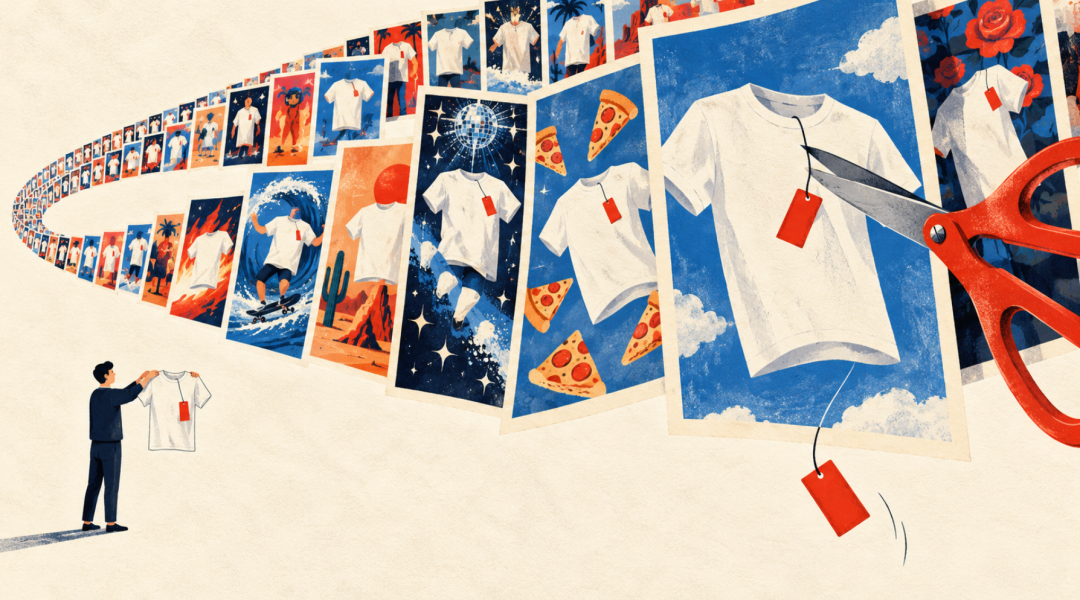
Brands must break down vague requirements into specific judgments. For example, avoid framing normal returns as taking advantage or using coercive storylines that deprive customer choice; discount copy must retain eligibility conditions and not let models delete them for brevity. Paired with approved and rejected examples, operators and AI will have a shared reference.
Ad platforms are already enhancing these capabilities. Google Ads' under-test 'Text Guidelines' feature lets advertisers exclude specific words and restrict AI from using certain concepts, associations, and expressions. Its official explanation gives an example: to avoid prices in ads, simply blocking the dollar sign is insufficient; explicitly requesting no price information generation is needed.
This detail highlights the difference between old and new management approaches. Previously, the focus was on checking finished content for inappropriateness; now, it's about informing the system of prohibited expressions before generation.
However, prohibitions only solve half the problem. Brands must also provide reliable product information so AI knows what it can say: which fabric composition document is authoritative, which features have evidence, and when the current promotion ends. Dealers can use this information to generate different versions but should not feed models with outdated product pages, competitor ads, or hastily written selling points.
This also gives brand headquarters a new role. Instead of requiring each store to experiment and waiting for headquarters to spot errors, providing confirmed images, selling points, and scripts makes compliant content easier to produce. AI can help brands deliver good materials to more stores—but only if headquarters manages the materials well first.
Rules must also evolve with problems. After a storyline fails, simply deleting the exposed ad and allowing the same template to regenerate with different characters is insufficient. Google's feature includes a noteworthy design: when text restrictions are updated, existing automatically generated materials that don't comply are also halted. While such functions have limitations, the management philosophy is clear—one error should enable handling similar content.
Ads Held Hostage by Conversion Rates Are Killing Brand Reputation
Even if products are depicted accurately and copy is correct, AI ads can still harm brands. The offense in the tag-cutting incident is hard to detect through simple parameter checks.
This raises a deeper question: What exactly is the system learning?
A 2025 study by Meta researchers provides concrete insights. They trained an ad copy model, AdLlama, using historical ad performance as reward signals. In a 10-week A/B test covering nearly 35,000 advertisers and 640,000 ad variants, the new model's click-through rate (CTR) increased by 6.7% relative to another model trained on curated ads.
This result proves that training models based on ad performance can improve click rates. However, a 6.7% CTR increase does not directly translate to higher sales, profits, or brand trust. Whether consumers feel deceived or request refunds after clicking may imply higher costs.
The author once experienced this disconnect while working in the brand department of an online education company. Information flow placement was managed by the sales department, whose team evaluations focused on lead cost and order volume. Materials exaggerating score improvements or amplifying user anxiety were hard to halt as long as they generated leads. The brand department could raise objections, hold meetings, and occasionally block a few ads, but their concerns didn't affect the sales team's bonuses.
AI exacerbates this conflict. It can continuously generate, test, and amplify materials based on team-selected content. If teams consistently reward immediate conversions, the brand department will face batches of ads increasingly skilled at achieving that goal alone.
Therefore, review cannot remain merely a brand department obligation—it must come with real authority. While operators can generate and test multiple versions, adding new efficacy claims, altering discount terms, or using controversial storylines requires reconfirmation. Headquarters must see what channels actually launch and gain methods—through account permissions or authorization agreements—to pause problematic ads.

Evaluation must also keep pace. When testing AI materials, besides comparing CTR and order costs, refunds, complaints, and repurchases should be tracked; assessing reputation requires separate consumer surveys, not relying on CTR alone. Materials that look good in short-term data but cause obvious subsequent problems should not serve as templates for further generation.
This increases management costs, but lower production expenses do not mean the entire marketing process should cut corners to save money. Part of the savings from AI should be reinvested in accuracy and control.
Returning to the tag-cutting controversy, AI has lowered the threshold for speaking on behalf of brands, making it even more crucial for brands to manage the basis, permissions, and outcomes of such messaging. Dealers may gain stronger creative capabilities but should not expand product promises or rewrite brand attitudes toward customers unilaterally.
In the AI era, effective brand management will also depend on this: when consumers see an ad, can headquarters explain what generated it, who confirmed it, and who can stop it if issues arise?
Note: Data in this article comes from public reports and sources, with some based on industry experience and not intended as investment advice.
- END -
-
![]()
Liang Wenfeng Pours 40 Billion Yuan Investment, Ulanqab Braces for AI Behemoths
-
![]()
AI Enters Memoirs: Can an Elderly Person's Life Be 'Generated' with One Click?
-
![]()
Coma: Why Do Points in the Peripheral Field Turn into 'Comets'?
-
![]()
When AI Starts to 'Spout Nonsense' for Brands, Who's Left Footing the Bill for Unchecked Algorithms?
-
12 weeks after Mercedes-Benz was tested for rollover
-
![]()
Math PhD Makes 141.7 Billion Through AI Stock Trading!
-
![]()
The Enigma of Zeekr's Sales: How 96% of Annual Target Was Achieved in 9 Months
-
![]()
Apple Reduces Orders! Luxshare Precision Faces a 50.3 Billion Yuan Inventory Challenge