Breaking News! Doubao Faces a Collective 'Ban' from Tencent, Alibaba, and Others for Attempting Mobile Phone Manipulation
 10/15 2026
 481
481
Source: Shenlan Finance
Doubao Mobile Assistant Again Rebuffed by Tencent and Alibaba
A month ago, Doubao Mobile Assistant rolled out its consumer version, introducing the SEAP protocol to empower third-party apps with the ability to decide whether to grant authorization for automated screen operations.
Today, after a 30-day public notice period, Doubao Mobile Assistant has published a list of apps that have declined its operations.
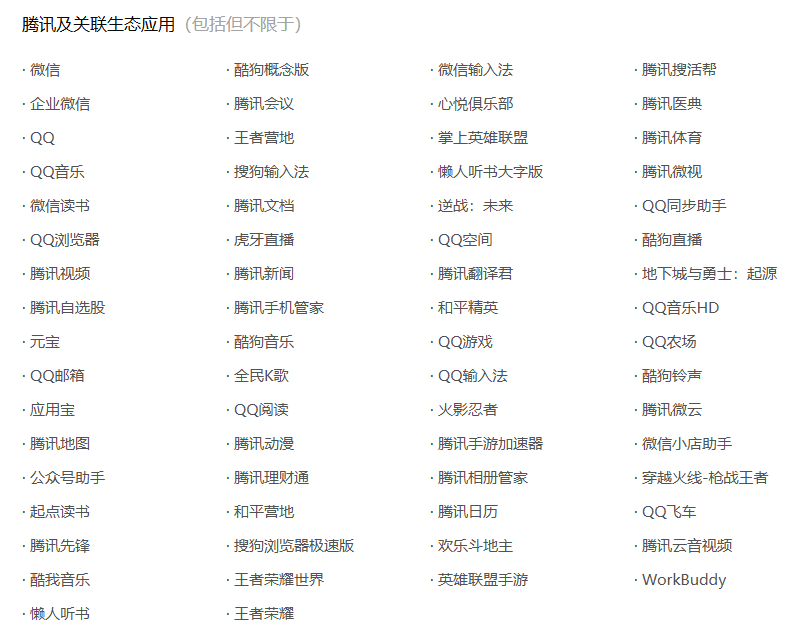
A total of 155 apps have explicitly refused, including 66 from Tencent's ecosystem, such as social apps WeChat, WeCom, and QQ; productivity apps like Tencent Meeting and Tencent Docs; and entertainment apps like Kugou Music and Honor of Kings.
The list also encompasses 23 apps from Alibaba's ecosystem, including Cainiao, Tmall, Ele.me, Gaode, Taobao, Xianyu, and Alipay.
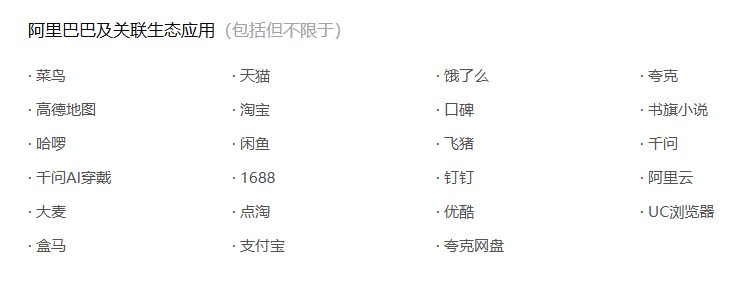
Tencent and Alibaba together account for 89 rejected apps, roughly 57% of the total.
1. Doubao Mobile Assistant Rebuffed Once Again
This is not Doubao's first setback.
On December 1, 2025, ByteDance and ZTE jointly launched the Nubia M153, priced at 3,499 yuan, featuring a technical preview of Doubao Mobile Assistant.
The phone's most enticing feature is that AI can now operate the device on behalf of users.
Previously, ordering milk tea required manually opening a food delivery app, searching for products, selecting a store, and completing payment. With Doubao, users can simply say, "Order me a milk tea," and the AI will attempt to automate the process, leaving the final payment confirmation to the user.
However, issues arose just days after the launch.
Starting December 2, some users reported being forcibly logged out of WeChat after using Doubao, with prompts indicating an abnormal login environment. On December 3, Doubao disabled automatic WeChat operations. WeChat responded that it had not taken any specific actions, suggesting the issue may have triggered existing security controls.
Subsequently, login obstructions and CAPTCHA challenges were reported in apps like Taobao, with some banking apps issuing risk warnings.
On December 5, Doubao announced adjustments to automation capabilities in financial, gaming, and incentive-based scenarios, proposing to jointly establish operational rules with app developers.
Doubao's initial challenge to super apps has revealed a reality: just because AI can operate a phone doesn't mean apps are willing to allow it.
Why is this the case?
The crux lies in Doubao's use of GUI technology. GUI, or Graphical User Interface, refers to the buttons, icons, input fields, and various screens we interact with daily on our phones.
Traditional AI assistants primarily answer questions, while GUI Agents take it a step further: by recognizing screen content and understanding user instructions, they simulate clicks, swipes, and inputs to operate different apps sequentially.
In simpler terms, they give AI "eyes" and "hands."
The Doubao Mobile Assistant leverages system-level permissions to enable cross-app automation. Unlike API calls, which require third-party developers to explicitly open interfaces, GUI technology attempts to operate existing apps directly without waiting for individual adaptations.
This grants Doubao greater versatility but also encroaches on app developers' original control boundaries. The first issue is security. AI simulations may trigger account risk controls, and in sensitive scenarios like payments and chat histories, there are challenges related to mistaken operations, privacy leaks, and liability allocation.
However, another layer of commercial impact is equally noteworthy.
In the past, users wanting to make a purchase would first open Taobao, browse recommended products, and then decide what to buy. In the future, users might simply tell Doubao, "Find me the best value-for-money phone," leaving AI to handle searching, price comparisons, and filtering.
Taobao might still facilitate the transaction, but the initial point of contact would shift to Doubao. AI is not just vying for app operation permissions but potentially the user access points that apps have controlled for over a decade.
Compared to last year's restrictions due to risk controls, Doubao this time attempted to resolve authorization disputes through public rules. On September 14, Doubao introduced the Screen Automation Operation Declaration Protocol (SAEP), allowing developers to proactively declare pages or features off-limits to AI automation.
However, after the 30-day public notice period, 155 apps explicitly declined.
Apps from Tencent and Alibaba accounted for over half, making their stance clear: they prefer not to collaborate with Doubao Mobile.
2. Tencent and Alibaba Are Also Competing for Their Own AI Access Points
While Tencent and Alibaba did not specify their reasons for rejection, the rationale is not hard to understand. In the AI Agent race, ByteDance, Tencent, and Alibaba are direct competitors. Both tech giants have recently stepped up efforts to enable AI to handle tasks on behalf of users.
First, consider Tencent.
In June this year, WeChat opened up AI ecosystem access to mini-program developers, with initial beta partners including JD.com, Meituan, KFC, Didi, and Ctrip, covering shopping, food delivery, and transportation.
Under WeChat's rules, developers can proactively authorize AI to invoke mini-program services or develop dedicated interfaces for AI use.
This means users may no longer need to open Meituan to search for restaurants; instead, they can directly request AI, which then calls Meituan's services to complete the task.
Tencent is also exploring A2A (Agent-to-Agent) collaboration with phone manufacturers. Honor and other vendors have participated in related partnerships, enabling phone AI to invoke certain WeChat functions through authorized means.
This stands in stark contrast to Doubao's GUI approach.
Doubao attempts to have AI directly recognize and operate apps; Tencent prefers app developers to grant authorization, allowing AI to invoke services under agreed-upon rules. This indicates that Tencent is not opposed to AI handling tasks but wants it done under rules it recognizes or approves.
Now, consider Alibaba.
Unlike Tencent, which relies on WeChat to connect partners, Alibaba's advantage is more direct: high-frequency services like Taobao, Alipay, Gaode, and Fliggy already exist within the same group ecosystem.
On January 15 this year, Alibaba announced that its Qianwen App would integrate services from Taobao, Taobao Deals, Alipay, and Fliggy. Users can now request AI assistance for tasks like ordering food, shopping, or booking flights, with payment confirmations at critical stages.
According to Alibaba, as of January 2026, Qianwen's consumer-facing version has over 100 million monthly active users.
On October 13, Qianwen announced the development of a new Personal Agent form—"Qianwen Go!"—and opened applications for beta testing. Qianwen Go aims to further explore complex tasks like flight delay claims, Taobao price protection refunds, car maintenance, and shopping price comparisons. Some test users have already demonstrated AI-assisted claims and refunds, though these capabilities are not yet fully rolled out.

In June this year, Alibaba also began expanding its Agent ecosystem beyond the group, attracting brands like Luckin Coffee and KFC to integrate services.
At this point, the strategies of the three companies have become clearer.
ByteDance hopes to use GUI technology to enable Doubao to complete tasks across different apps; Tencent relies on WeChat, mini-programs, and partners to build an authorized AI service network; Alibaba aims to use Qianwen as an access point to connect services within and outside the group.
While their technical approaches differ, they may all be vying for the same prize: determining which platform users turn to first for their next shopping, dining, or travel need. After all, whoever controls the AI access point may influence the order in which goods and services are distributed.
3. Conclusion
Doubao's two setbacks reveal a reality: ecological challenges for agents may be even harder to solve than technical ones.
This involves not only security, privacy, and technical standards but also traffic access points, commercial competition, and benefit distribution.
This challenge is not unique to Doubao.
Tencent's WeChat AI ecosystem requires partners to open services, and Alibaba's Qianwen also hopes to extend beyond the group to connect more third-party platforms. They, too, must navigate other platforms' permission boundaries.
Today's ecosystem-dominant platforms may tomorrow find themselves requesting open permissions from others.
AI has begun learning to operate the internet on behalf of users, but getting the internet to accept AI is the tougher hurdle in this competition.
*Disclaimer: The views expressed in this article are solely those of the author. Markets involve risks, and investments should be made cautiously. Under no circumstances does the information or opinions in this article constitute investment advice to any individual.
Shenlan Finance's new media cluster originated from the Shenlan Finance Journalist Community and boasts a 16-year history. As a well-known domestic financial new media outlet, its accounts focus on China's most valuable companies, cutting-edge industry developments, and emerging regional economies, providing valuable content for investors, corporate executives, and the middle class. Welcome to follow.
-
![]()
How 79-Year-Old Lao Gan Ma Founder Tao Huabi Leveraged AI to Achieve 5.4 Billion Yuan in Revenue
-
![]()
Breaking News! Doubao Faces a Collective 'Ban' from Tencent, Alibaba, and Others for Attempting Mobile Phone Manipulation
-
![]()
How Robust Are China’s New Energy Vehicles? A Look at Eight Months of Global Market Sales
-
Competition in Ecosystems: AI’s Next Frontier
-
![]()
The cost per vehicle is 73,000 yuan higher in Europe than in China; European markets can't stop Chinese cars by any means
-
![]()
Why Has Renault, Which Doesn't Sell Cars in China, Become the Biggest Winner in Europe?
-
![]()
ZTE: First-Half Net Profit Plummets Over 40%, Computing Business Grapples with Low-Margin Challenge
-
![]()
OPPO Could Be Manus's First Domestic Partner?