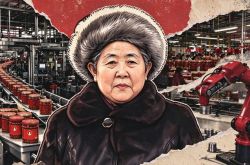
How 79-Year-Old Lao Gan Ma Founder Tao Huabi Leveraged AI to Achieve 5.4 Billion Yuan in Revenue
 10/15 2026
 561
561
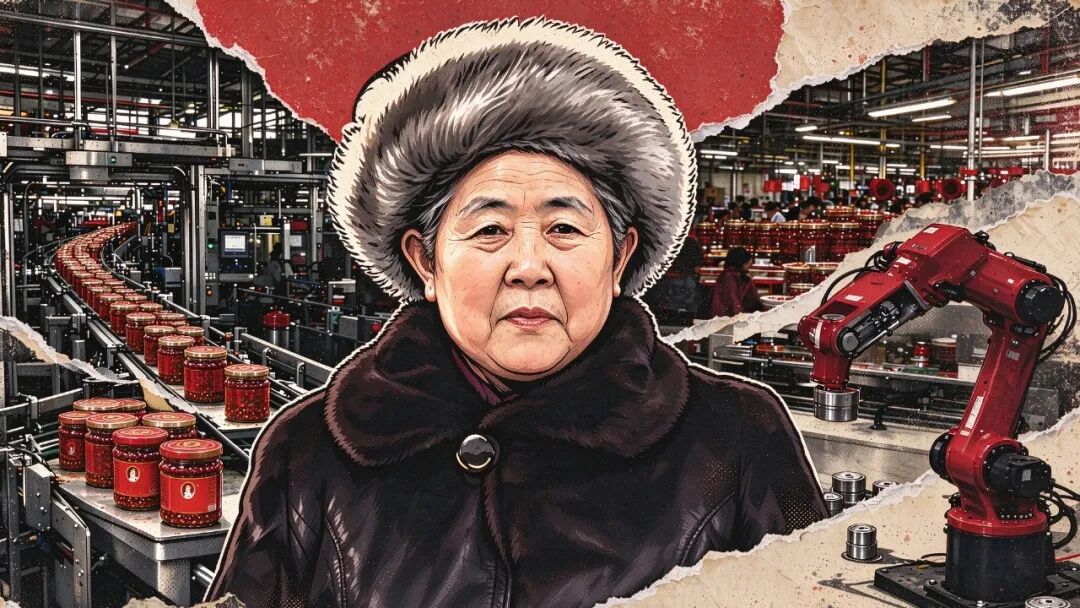
AI Quality Inspection Propels Lao Gan Ma to Record Revenue

Click to Listen to This Podcast
Has Lao Gan Ma Embraced AI?
On the evening of October 13, the topic “79-year-old Lao Gan Ma founder Tao Huabi achieves 5.4 billion yuan in annual revenue using AI” trended on Weibo.
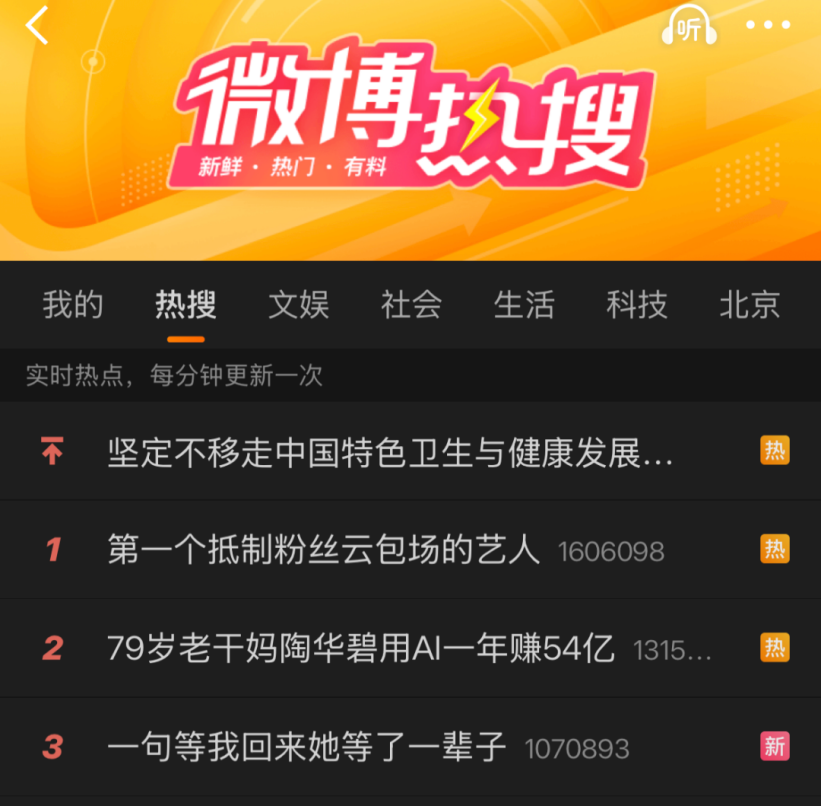
Image Source: Weibo
Who would have thought that a traditional food company, which has relied on chili sauce for decades, would now integrate AI into its production facilities?
Previously, Li Xin, Executive Vice President and Chief Quality Officer of Lao Gan Ma, revealed at the 2026 Guizhou Provincial Quality Development Conference that the company's revenue reached 5.4 billion yuan in 2025, marking a new all-time high. Concurrently, Lao Gan Ma has implemented an AI visual quality inspection system in its production process to assist in screening chili ingredients, reducing the defect rate of key processes to 0.02%.
What has Lao Gan Ma experienced in recent years, and how did it regain its peak performance with the help of AI?

Lao Gan Ma Integrates AI into Its Chili Factory
Lao Gan Ma's recent surge in prominence is attributed to the implementation of an AI system in its production facilities. Its primary task? Sorting chilies.
Chilies are the cornerstone of Lao Gan Ma's products, traditionally sorted by human eyes. The process involves removing stems, eliminating impurities, and identifying moldy or defective chilies—each step requiring workers to closely monitor conveyor belts for extended periods, inevitably leading to occasional oversights.
Now, this responsibility has been entrusted to AI. In 2025, Lao Gan Ma's AI visual quality inspection system became operational across all production lines. High-speed industrial cameras continuously scan the conveyor belts, and airflow devices promptly blow away moldy or black-spotted chilies as soon as they are detected.
According to reports, at Lao Gan Ma's Changming production base, cameras perform a scan every 0.3 seconds. Once a visibly defective chili enters the detection zone, it is immediately identified and blown into a waste bin.
The system's role extends beyond enhancing sorting efficiency. It integrates with the raw material traceability system, enabling batch information to be recorded and queried from the moment chilies enter the factory.
Data disclosed by Li Xin at the 2026 Guizhou Provincial Quality Development Conference revealed that Lao Gan Ma achieved 100% traceability for its core ingredients in 2025, with the defect rate of key processes dropping to 0.02%.
Previous reports also mentioned that Lao Gan Ma once employed over 600 chili-sorting workers. After the AI quality inspection system became operational, only 48 workers remained to oversee the final experience-based quality check. Machines handle the high-frequency, repetitive initial screenings, while humans continue to apply their expertise, ensuring raw material quality control through collaboration.
From manual sorting to machine recognition, the production method has changed—what remains unchanged is the taste of the chili sauce.
For a food company, consistent quality is a vital operational foundation. Especially for a mature brand like Lao Gan Ma, consumers have fixed expectations for its taste. Any significant product changes could impact not just the sales of a single bottle of chili sauce but also the brand's hard-earned reputation.
In 2025, Lao Gan Ma's revenue reached 5.4 billion yuan, nearly recovering to its 2020 level. The "2025 Top 100 Enterprises in Guizhou" list shows Lao Gan Ma's revenue at 5.26 billion yuan in 2022, 5.381 billion yuan in 2023, and 5.391 billion yuan in 2024, maintaining growth for three consecutive years.

Second-Generation Succession Faces Challenges, Tao Huabi Steps Back into the Fray
Revenue recovery does not mean Lao Gan Ma can rest on its laurels. Controversies over product taste still arise occasionally in recent years.
On January 13, 2026, the topic “Lao Gan Ma changes taste to cut costs” trended on Weibo. Many consumers reported that Lao Gan Ma's fermented black bean flavor had become unusual, with less chicken content.
In response, company staff stated that raw materials, processes, and recipes remained unchanged, suggesting that taste differences might stem from individual consumer preferences.
Meanwhile, market competition intensified. In the first quarter of 2026, Lao Gan Ma's market share in the Chinese-style condiment sauce sector declined slightly but remained the leader. Challengers are also growing rapidly—Hubang Chili Sauce's revenue exceeded 600 million yuan in the first 10 months of 2025, up nearly 40% year-on-year.
Product taste and brand reputation remain unavoidable topics for Lao Gan Ma. A business adjustment over a decade ago once caused it to stumble on this issue.
In June 2014, 67-year-old Tao Huabi announced her retirement, transferring her remaining 1% stake to her second son, Li Miaoxing. Subsequently, Li Miaoxing held 51%, and the eldest son, Li Guishan, held 49%, with the two sons taking over operations: the eldest focused on sales, while the second oversaw production.
The new management soon adjusted business strategies, including changes to chili raw materials.
In 2015, multiple media outlets reported that Lao Gan Ma had replaced some Guizhou chilies with cheaper Henan chilies to cut costs. At the time, Guizhou chilies cost about 12-13 yuan per jin, while Henan chilies cost around 7 yuan—a price difference of 4-5 yuan per jin. For Lao Gan Ma, which purchases tens of thousands of tons of chilies annually, this cost difference was substantial.
However, the lower raw material costs led to changes in product taste. Complaints that “Lao Gan Ma isn't as fragrant anymore” gradually increased, with consumers questioning whether the brand had sacrificed quality for cost savings.
From 2016 to 2018, Lao Gan Ma's revenue declined for three consecutive years, dropping from 4.5 billion yuan to 4.3 billion yuan. In 2019, an employee left with the recipe, causing the company over 10 million yuan in losses. That August, a fire broke out at Lao Gan Ma's factory, with the affected plant accounting for nearly one-third of total production capacity.
Li Guishan, the eldest son, also faced issues—his personal real estate investment project became stalled, leading to a court-issued consumption restriction order. Lao Gan Ma had to issue a public statement clarifying that the investment was unrelated to the company.
Amid these challenges, 72-year-old Tao Huabi returned to the operational frontline in 2019. Her first move was to restore the original recipe, fully switching back to Guizhou chilies, even if it meant higher raw material costs, to stabilize product taste.
According to Xinhua News Agency, Lao Gan Ma once destroyed around 500 tons of products—worth over 1 million yuan—due to slight flavor deviations. Tao Huabi stated, “Products are my creations. Food production requires integrity and a clear conscience.”
After readjusting products and operations, Lao Gan Ma's revenue gradually recovered. In 2019, revenue exceeded 5 billion yuan again, reaching 5.403 billion yuan in 2020.
Reflecting on this experience, it's easy to understand why Lao Gan Ma implemented AI in its production facilities. For the company, AI's value lies not in generating buzz but in helping manage raw material screening, production processing, and quality traceability to ensure more consistent product quality.

From Roadside Stall to Chili Sauce Empire, Succession Becomes the Biggest Challenge
Lao Gan Ma's current scale did not begin with a modern factory but with Tao Huabi's small shop and a pot of homemade chili sauce.
Born in 1947 in a rural family in Meitan, Guizhou, Tao Huabi received no formal education in her youth. In 1975, at 28, she lost her husband and became solely responsible for raising two children. To make ends meet, she took on various laborious jobs and earned a living by selling snacks like rice tofu.
In 1989, at 42, Tao Huabi set up a small shop in Guiyang named “Affordable Snack Shop,” mainly selling rice tofu and cold noodles. Her homemade chili sauce proved highly popular, especially among nearby students.
Some students, limited by financial constraints, couldn't afford many dishes, so Tao Huabi provided her homemade chili sauce for free. Over time, people began affectionately calling her “Lao Gan Ma” (Old Dry Mother). This nickname, originally from customers, later became a household brand name.
In 1996, Tao Huabi rented two rooms from the village committee, established a chili sauce processing factory, and officially launched the “Lao Gan Ma” brand. The initial factory had only 40 workers, and production scale paled in comparison to today. However, Tao Huabi insisted on personally participating in production, overseeing everything from chili selection to product taste.
Tao Huabi's product requirements gradually shaped Lao Gan Ma's unique business approach.
Lao Gan Ma has long adhered to a policy of no loans, no financing, and no listings, supporting enterprise development through operational earnings. The brand avoids heavy advertising and doesn't focus extensively on packaging or marketing—instead, it prioritizes the product itself.
In Tao Huabi's view, consumers buy chili sauce for its taste and quality, which matter most.
This business approach helped Lao Gan Ma grow from a street-side shop into a nationally recognized brand. Today, its products are exported to 160 countries and regions worldwide, maintaining a leading position in China's chili sauce market. Its growth relies not on rounds of capital injections but on long-term production, sales, and reputation building.
However, as the company expands, transmitting the founder's business philosophy has become a challenge Lao Gan Ma must address.
Now 79, Tao Huabi remains chairman and legal representative of Lao Gan Ma but no longer holds company shares. From the equity structure, Lao Gan Ma has been taken over by her two sons; however, Tao Huabi still wields significant influence over the brand and operations.
From personally selecting chilies and adjusting recipes to introducing AI visual quality inspection systems, Lao Gan Ma continues adapting its production methods to new development environments.
For this family-owned enterprise, ensuring the next generation takes over operational responsibilities while upholding the founder's commitment to product quality remains a critical issue for the future.
References:
“79-Year-Old Lao Gan Ma Founder Tao Huabi Achieves 5.4 Billion Yuan in Annual Revenue Using AI” Trends on Weibo, Revenue Hits New High, Jiemian News;
Lao Gan Ma Founder Returns to Save Son, Business Soars Again, Jiangsu News;
79-Year-Old Tao Huabi Achieves 5.4 Billion Yuan in Annual Revenue Using AI, Lao Gan Ma Faces Repeated Controversies Over Chili Ingredient Changes, Yangcheng Evening News;
Lao Gan Ma in a Rolls-Royce: From a 28-Year-Old Single Mother to a 7 Billion Yuan Spicy Queen, Zui Ren Wu;
Raking in 5.4 Billion, 79-Year-Old Lao Gan Ma Makes a Comeback, China Entrepreneur Magazine;
Lao Gan Ma's Tao Huabi Returns to Save Son, Sells 5.3 Billion in a Year, Regains Peak Performance, Xin Hang Qing;
“Lao Gan Ma” Tao Huabi: Turning a 5-Yuan Business into 2.5 Billion, China News Service.
THE END
-
![]()
How 79-Year-Old Lao Gan Ma Founder Tao Huabi Leveraged AI to Achieve 5.4 Billion Yuan in Revenue
-
![]()
Breaking News! Doubao Faces a Collective 'Ban' from Tencent, Alibaba, and Others for Attempting Mobile Phone Manipulation
-
![]()
How Robust Are China’s New Energy Vehicles? A Look at Eight Months of Global Market Sales
-
Competition in Ecosystems: AI’s Next Frontier
-
![]()
The cost per vehicle is 73,000 yuan higher in Europe than in China; European markets can't stop Chinese cars by any means
-
![]()
Why Has Renault, Which Doesn't Sell Cars in China, Become the Biggest Winner in Europe?
-
![]()
ZTE: First-Half Net Profit Plummets Over 40%, Computing Business Grapples with Low-Margin Challenge
-
![]()
OPPO Could Be Manus's First Domestic Partner?