The cost per vehicle is 73,000 yuan higher in Europe than in China; European markets can't stop Chinese cars by any means
 10/15 2026
 481
481
Lead
Introduction
The recent surge of news between China and Europe highlights the sparks flying from another direct clash between two automotive industry systems.
While the price gap between domestic and overseas models is felt in the market, it remains vague. Everyone knows Chinese cars are cheaper abroad, but exactly how much cheaper? Consumers lack a precise understanding.
Recently, a business consulting firm provided an answer.
Data from the U.S.-based company AlixPartners shows that Chinese automakers can produce an electric vehicle (EV) for $20,000, while European competitors require $31,000—a difference of $11,000 (73,000 yuan).
This refers to manufacturing costs. Terminal pricing is further influenced by branding, positioning, market conditions, and tariffs, especially overseas, where tariffs can double domestic prices.
European politicians hope to bridge this $11,000 gap with tariffs, but analysts point out: Tariffs cannot eliminate structural cost differences; they only weaken price competitiveness. Even with tariffs, Chinese EVs retain significant cost advantages. This edge stems not from government subsidies but from supply chain clustering, in-house R&D, and economies of scale.
01 Soaring sales of Chinese brands alarm Europe
Driven by global expansion strategies, Chinese automakers like Geely, SAIC, BYD, and Chery are making significant inroads into Europe, with eye-catching growth performances.
Dataforce statistics reveal that from January to August this year, Chinese passenger car sales in Europe reached 913,000 units, up 111% year-on-year—24 times the market average. Their market share rose from 5.2% to 9.9% year-on-year. In August alone, Chinese brands captured 11.7% of the European passenger car market.
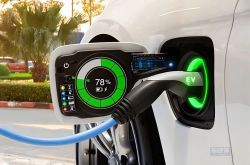
Europe's domestic electrification is also accelerating, with EV penetration reaching 29% in August and averaging 23% from January to August. Undoubtedly, new energy vehicles (NEVs) have become the core growth engine of Europe's auto market, with Chinese brands serving as a key driver in this segment.
In the first three quarters of this year, total EV sales across 14 core European countries reached 1.867 million units, up 36.15% year-on-year. Among them, Chinese-brand EV sales hit 371,300 units, surging 79.12%—far outpacing the market average.
Looking at Europe's top 20 EV sellers by sales volume, Chinese companies include BYD, Leapmotor, MG, XPENG, and Geely. Excluding Geely's extreme 21,296.97% year-on-year growth due to its low base, Leapmotor's sales surged over 500%, XPENG's grew 167%, and BYD ranked seventh, maintaining over 70% growth despite its large sales base.
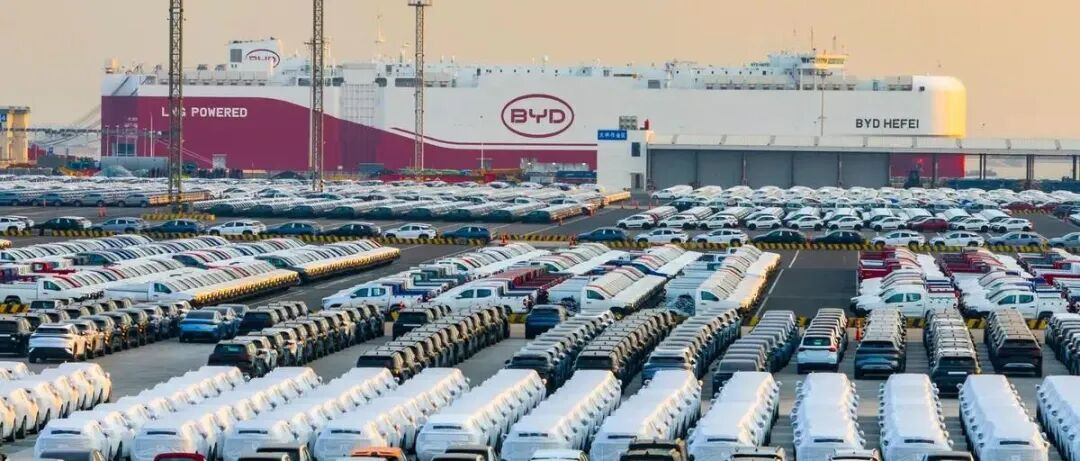
Notably, this growth occurred after the EU imposed up to 45.3% tariffs on Chinese pure EVs in 2024.
Tariffs did not halt Chinese automakers' export growth but slightly altered the export mix. Pure EV growth slowed, while plug-in hybrid (PHEV) exports accelerated sharply.
EU statistical office data shows that in 2024, the EU imported 107,000 PHEVs from China, rising to 302,000 in 2025. By July this year alone, EU imports of Chinese PHEVs reached 50,400 units, soaring 163.2% year-on-year.
The rapid rise in PHEV imports has directly triggered recent EU moves to restrict trade in Chinese PHEVs. Previously, the EU proposed an agreement requiring China to slash PHEV exports to Europe by over half—by one million units—within four years.
Bloomberg reported that quotas would be based on 2025 trade data, allowing 350,000 Chinese PHEV imports in the first year and increasing by 6% annually from the second year, with a four-year policy cycle. Total quotas would thus reach approximately 1.5 million units.
However, Financial Times data shows that if July's growth rate persists, imports in 2026 could hit 600,000 units—70% higher than the reported first-year quota. This reveals a clear mismatch between the original quota plan and actual market growth.
China's response did not specify quota details. On the 12th, the Ministry of Commerce stated that China and Europe had reached a consensus on hybrid and EV trade, setting incremental arrangements based on 2025 levels to safeguard export space and stable growth for Chinese companies while addressing mutual industrial concerns.
Despite escalating trade friction and the introduction of tariffs and quotas, market data shows these policy tools have failed to curb Chinese automakers' expansion in Europe. Trade restrictions can only adjust export structures, not undermine the deep-seated competitive foundations.
02 Quotas and tariffs can't stop Chinese cars
Tariffs and quotas have not halted Chinese automakers' advance in Europe.
Chinese automakers' rapid expansion in Europe relies on both product strength and pricing.
In terms of product strength, Chinese NEV models initially established a differentiated edge through intelligence and electrification.
However, European consumers' demand for intelligence is significantly lower than that of domestic consumers. Additionally, in the past two years, European automakers like Volkswagen, Mercedes-Benz, BMW, and Audi have accelerated their NEV transitions. Models such as the Mercedes-Benz electric CLA, GLC, and BMW's new-generation iX3 have gained traction in regional markets, with local brands rapidly closing the product strength gap.
By comparison, pricing remains the core competitive edge for Chinese brands. As mentioned earlier, Chinese-brand EVs hold a $11,000 manufacturing cost advantage over European rivals. In terminal sales scenarios, the price gap between the same model in China and Europe widens further.
NIO's Firefly averages 126,500 yuan domestically but 161,000 yuan in Thailand. In Europe, Norway offers the lowest price at around 180,000 yuan, while Hungary's average price reaches 262,000 yuan—double the domestic average. XPENG's L03 averages 140,300 yuan in China and about 257,700 yuan in Norway (its cheapest European market), up 83% from domestic prices. Switzerland's average price hits 333,400 yuan.
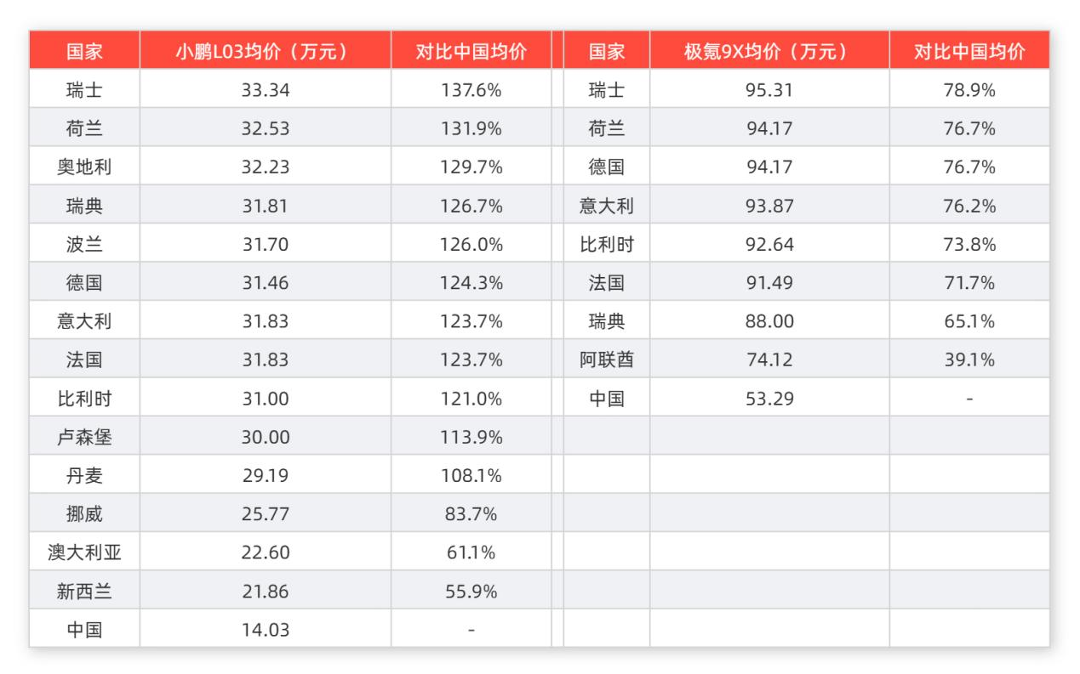
From sub-100,000-yuan A0-segment cars to premium flagships priced above 500,000 yuan, price gaps between domestic and European models are universal significant, far exceeding the 45.3% tariff barrier. Even after factoring in cross-border logistics costs, Chinese models remain highly competitive against European local products.
A typical case is the Denza Z9 GT, priced under 400,000 yuan domestically but 115,000 euros in Europe—directly competing with the Porsche Taycan.
This massive price gap has led European policymakers to misjudge Chinese automakers' competitive logic, prompting trade intervention measures in the name of fair competition.
Regarding EU quotas, Germany's Association of the Automotive Industry (VDA) evaluates policies based on whether they promote fair competition, create planning certainty, and strengthen open, rules-based trade. The focus remains on fairness.
However, protectionist tools like tariffs and quotas can only offer short-term fixes, not fundamentally alter the landscape. Chinese automakers' cost advantages stem from faster R&D iteration speeds, in-house software architectures, and full supply chain control.
In R&D cycles, Chinese automakers typically take 24 months to develop new models, while European peers often require 60 months. Chinese automakers derive 76%-100% of sales from models launched in the past three years, compared to just 33% for European automakers.
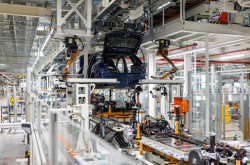
At the supply chain level, Europe's decentralized layout leaves automakers heavily reliant on imported components, with long-distance transportation driving up time and financial costs.
Chinese automakers are massively investing in in-house R&D and production of core components like batteries, chips, and motors. International Energy Agency data shows Chinese battery cell prices are over 30% lower than in Europe. Meanwhile, China's automotive supply chain clusters continue to evolve, with over 80% of global power battery manufacturing and raw material capacity and more than half of global EV production. These scale advantages enable continuous reductions in per-unit manufacturing costs.
Even with additional expenses like tariffs and cross-border logistics for European sales, automakers can offset these costs through their underlying manufacturing advantages and higher terminal prices overseas.
03 Next stop: system-based global expansion
While tariff barriers struggle to halt Chinese automakers' expansion, the influx of numerous independent brands into Europe requires addressing more diverse, complex long-term challenges.
The Paris Motor Show serves as a key window into Chinese automakers' European strategies. At this year's event, 16 Chinese automakers with 25 brands occupied one-third of the exhibition space—more than the combined presence of French and German brands.
However, Europe's industrial sector remains unwelcoming. Before the Paris Motor Show, French President Emmanuel Macron hosted a closed-door dinner at the Élysée Palace, gathering executives from automakers, parts giants, battery, and rare earth magnates—but excluding any familiar domestic Chinese faces. The abrupt declaration that Chinese exhibitors would not attend the dinner shut them out.
Yet, shut out though they were, Chinese automakers did not slow down. Amid this ambivalent atmosphere, participating Chinese brands shifted focus from merely launching new models to disclosing localized European strategies, with system-based global expansion becoming the consensus.
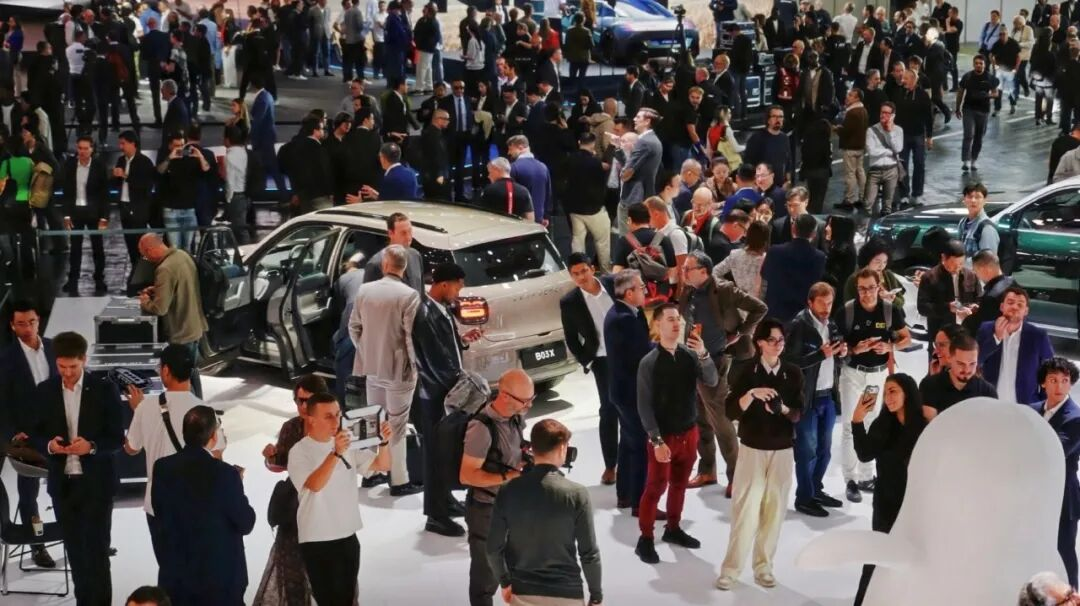
Among new forces, XPENG advanced localized production in Europe, with the G9L rolling off the assembly line at Magna's Austrian plant and opening for European reservations. Leapmotor leveraged Stellantis' mature channels to expand its market presence, committing to continuous product iteration and deeper localization.
LI Auto, debuting at the show, brought the i6 and its cautious European strategy of small-market validation before replication. In Q1 next year, the i6 will launch in Europe, entering small markets with high EV penetration like Norway and the Netherlands first to validate brand capabilities. LI Auto plans to replicate this cautious approach—establishing service loops before expanding into core markets like Germany, France, and the UK.
Geely Auto Group brought its three major brands—Geely, Lynk & Co, and Zeekr—to Paris. Having invested in Europe for nearly two decades, Geely now positions the region as a global capability hub, exporting R&D, products, channels, and manufacturing capabilities. Recently, Geely partnered with Ford in Europe to establish a joint venture and share production capacity.
GAC Group also entered a new phase of full-chain localization in Europe, accelerating layout in R&D, production, marketing, and energy.
Clearly, the consensus among independent brands for Europe's next phase is system-based global expansion: establishing a complete chain of R&D, production, sales, and after-sales while exporting systemic capabilities.
Despite a clear expansion direction, automakers face dual internal and external pressures.
Domestically, starting April next year, the VAT export rebate rate for NEVs will drop from 13% to 9%. Calculations show that for every 100,000 yuan in ex-factory price (excluding tax), export costs will rise by 4,000 yuan.
This policy shift will erode the cost advantage of low-priced EV exports but benefit gasoline and HEV products. In the short term, it may spur automakers to stockpile overseas inventory before next spring. Long-term, it will force NEV makers to move beyond price competition, accelerate local production in overseas markets, and compete on product strength and brand value.
Overseas, the influx of numerous Chinese brands has intensified competition in Europe, making growth through low pricing unsustainable. Meanwhile, local production in Europe will gradually dilute the original manufacturing cost advantages from China.
From price gaps to tariffs, and from tariffs to quotas, Europe's defensive tools against Chinese cars keep upgrading, but Chinese automakers' offensive strategies are also diversifying.
The recent surge of news between China and Europe highlights the sparks flying from another direct clash between two automotive industry systems. While tariffs and quotas represent Europe's emergency measures to protect local industries, Chinese automakers are responding with system-based global expansion.
Editor-in-Chief: Du Yuxin Editor: He Zengrong

THE END
-
![]()
How 79-Year-Old Lao Gan Ma Founder Tao Huabi Leveraged AI to Achieve 5.4 Billion Yuan in Revenue
-
![]()
Breaking News! Doubao Faces a Collective 'Ban' from Tencent, Alibaba, and Others for Attempting Mobile Phone Manipulation
-
![]()
How Robust Are China’s New Energy Vehicles? A Look at Eight Months of Global Market Sales
-
Competition in Ecosystems: AI’s Next Frontier
-
![]()
The cost per vehicle is 73,000 yuan higher in Europe than in China; European markets can't stop Chinese cars by any means
-
![]()
Why Has Renault, Which Doesn't Sell Cars in China, Become the Biggest Winner in Europe?
-
![]()
ZTE: First-Half Net Profit Plummets Over 40%, Computing Business Grapples with Low-Margin Challenge
-
![]()
OPPO Could Be Manus's First Domestic Partner?