Why Has Renault, Which Doesn't Sell Cars in China, Become the Biggest Winner in Europe?
 10/15 2026
 468
468
Lead
Introduction
One of the first automakers to leverage China's capabilities for global competitiveness.
In recent years, some European automakers have been struggling. The reason is simple: their home market in Europe and other regions worldwide are being fiercely impacted by China's new energy vehicles (NEVs).
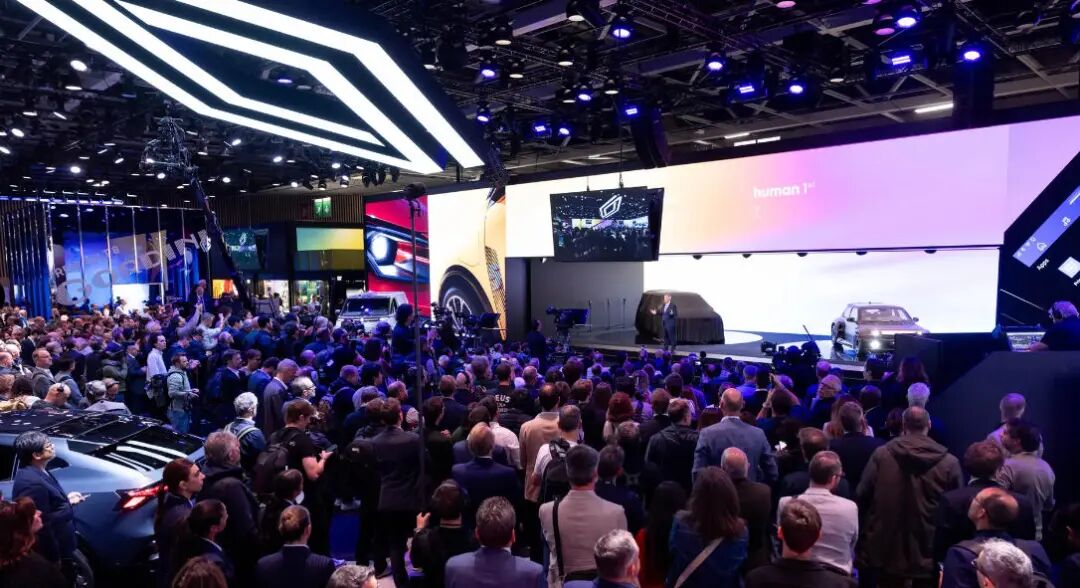
During the recent Paris Motor Show, several news stories highlighted this issue. First, the EU plans to reduce imports of hybrid vehicles from China by about half through trade safeguard measures. Second, President Macron hosted a dinner for about 60 representatives from the European automotive supply chain, with no Chinese automakers invited.
These developments reflect Europe's strengthening defense against Chinese NEV competition at both policy and industry levels, while also revealing the anxiety of traditional automakers.
Some time ago, Volkswagen planned to close up to four factories in Germany and lay off 50,000 employees. Stellantis's European plants are operating at about 60% capacity utilization and have signed production-sharing agreements with Chinese partners Leapmotor and Dongfeng Motor in Spain and France. Additionally, Ford and Geely are collaborating in Spain.
In contrast to these companies forced to retrench or seek partnerships, there is one notable exception: Renault Group. Despite not selling cars in the world's two largest automotive markets—China and the United States—it has become one of Europe's financially strongest automakers.
Its CEO, Luca de Meo, stated in late July that Renault excels over Chinese competitors in brand management, product offerings, and manufacturing, and is well-prepared to handle intense price competition from Chinese automakers in Europe.
01 Three Brands, Three Powertrains: The Winning Formula
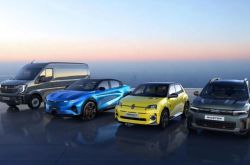
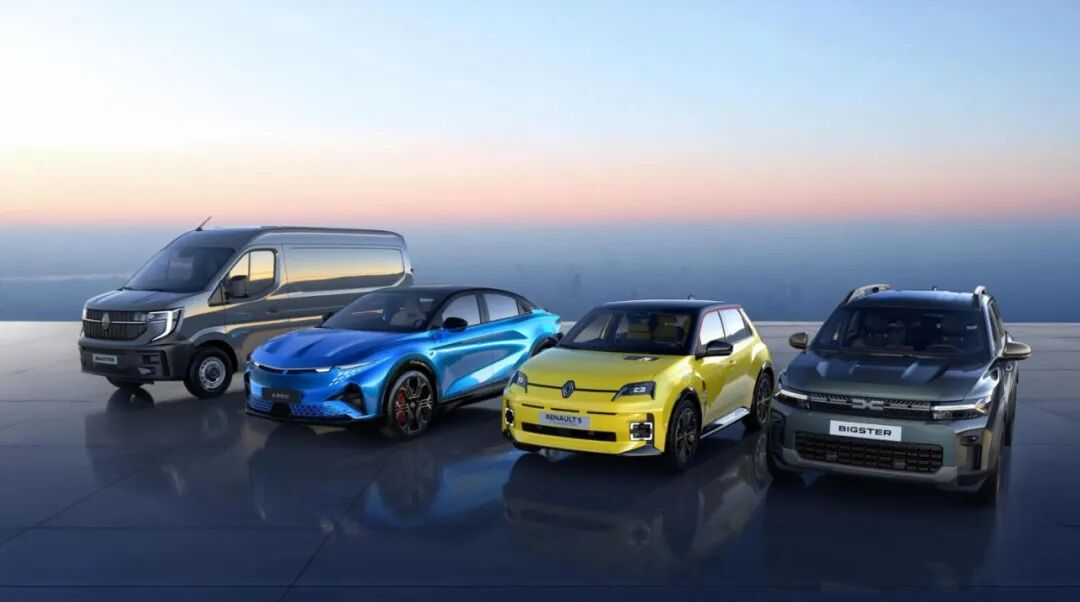
Why does Renault Group remain unfazed despite facing a smaller regional market and a more challenging competitive environment? The answer lies in its strong sales and performance. For instance, its three major brands—Renault, Dacia, and Alpine—are each positioned across pure electric, hybrid, and internal combustion engine/traditional powertrain technologies, collectively supporting the group.
The Renault brand aims to sell 1.628 million vehicles by 2025, a 3.2% increase from 2024, making it the second-best-selling automotive brand in Europe. Passenger vehicle sales are expected to reach 1.291 million units, up 10% year-on-year, serving as the primary growth driver. However, the light commercial vehicle segment underperformed, with van sales declining 16.5% year-on-year to 336,000 units.
In electrification, Renault has invested more heavily than most automakers. Last year, pure electric vehicles (EVs) accounted for one-fifth of Renault's new vehicle sales, with a 72.2% year-on-year increase. Since its launch in January 2025, the Renault 5 has sold over 100,000 units, becoming Europe's most popular B-segment EV and the second-best-selling EV among retail consumers.
In hybrids, Renault introduced its first E-Tech models in 2020 and now offers hybrid versions for all its fuel (internal combustion) models sold in Europe, making it Europe's second-largest hybrid seller after Toyota. The Symbioz crossover, launched in 2024, became Renault's best-selling hybrid model, with 88,500 units sold in 2025. Combined with pure EVs, six out of every ten vehicles Renault sold in Europe last year were electrified.
In Europe, Renault's passenger vehicle sales grew 7.4%, ranking second in both passenger and light commercial vehicle markets. Full hybrid sales increased 17.0% to about 287,000 units, accounting for 38.4% of Renault's total passenger vehicle sales, 25.6 percentage points higher than the market average. Pure EV sales surged 72.2% to 151,900 units, representing 20.2% of total passenger vehicle sales.
Outside Europe, Renault's passenger and light commercial vehicle sales grew 11.7%, accounting for 38% of total brand sales, a 2.9 percentage point increase year-on-year. Latin America saw 11.3% growth, South Korea 55.9%, and Morocco 44.8%. By the numbers, Renault remains the highest-selling French automotive brand globally.
Dacia, also part of Renault Group, sold 697,000 vehicles in 2025, a 3.1% year-on-year increase, with over 600,000 units sold in Europe and cumulative sales reaching 10 million since 2004. Last year, European registrations totaled 601,000 units, up 2.9% year-on-year. Focusing on retail channels, Dacia holds a 7.9% share of Europe's retail passenger vehicle market, ranking second.
Dacia achieved these results primarily through five key models. The Sandero is Europe's best-selling passenger vehicle across all channels; the Bigster, launched in the second quarter of 2025, is expected to become Europe's best-selling C-segment SUV among retail customers in the second half of 2025; and the Spring became the best-selling A-segment EV across all channels.
Driven by the Duster and Bigster, Dacia's hybrid sales more than doubled last year, increasing 121.7% to account for 19.2% of its total passenger vehicle sales, a 10.3 percentage point year-on-year rise. This means one out of every four Dacia vehicles sold is now electrified, double the rate in 2024.
Alpine, another Renault Group brand, sold 10,970 vehicles in 2025, a 139.2% increase, in addition to the A110 sports car. It also launched the A290 hatchback and A390 SUV by year-end. Product line expansion drove Alpine's growth, with the A290 accounting for 8,198 units. Growth came from multiple European markets, including 89.5% in France, 369.5% in the UK, and 133.5% in Germany.
Of course, the most compelling evidence lies in its financial performance. Renault Group reported first-half 2026 revenue of €30.25 billion, up 9.4% from €27.64 billion a year earlier, driven by vehicle production for partners Nissan and Mitsubishi at its factories and the higher pricing of the new Clio 6 compared to its predecessor.
The key metric is the operating profit margin, which stood at 5.2% in the first half of 2026. While lower than the 6% in the first half of 2025, it exceeded analyst expectations of 5%. Renault also confirmed its full-year 2026 operating profit margin target of 5.5%, down from the 2025 target of 6.3%.
Notably, this performance places Renault among Europe's leaders, comparable to premium brands like Audi's 2.6% operating profit margin, Mercedes-Benz Cars' 4% return on sales, and BMW's 2.3% automotive segment operating profit margin.
As the smallest traditional automaker by scale, Renault believes maintaining profitability is essential to continue investing in EVs and new software to stay competitive in Europe. The company stated it is on track to reduce variable costs per vehicle by about €400 annually.
Renault Group CEO Luca de Meo revealed that models like the Renault 4, Renault 5, and Twingo have significantly higher profit margins than larger, older EVs like the Megane and Scenic. Other highlights include more profitable international models, such as the Filante SUV in South Korea and the Boreal SUV in Brazil. Renault expects sales to rise further in the second half of the year, benefiting from a series of new model launches.
02 Efficiency, Speed, and the China Formula
In fact, before 2019, Renault Group also experienced a downturn; since then, its financial performance and corporate transformation have gradually improved. This century-old French automaker has not only returned to profitability but also demonstrated strong adaptability in the global new energy transition.
Over the past few years, Renault Group has undertaken significant efforts. For example, it shifted from blindly pursuing global sales expansion—which stretched its resources too thin and led to heavy losses—to a strategic retreat. This involved cutting unprofitable marginal markets, including exiting passenger vehicle sales in China, consolidating all resources in its European home market, and restructuring its business units.
As a result, the revival is often attributed to asset-light strategies, cost control, and streamlined brand architecture. However, the underlying logic repeatedly emphasized by Renault's leadership is more critical: early and deep integration into China's new energy supply chain and automotive technology, leveraged through ACDC to build global competitiveness.
For over three decades, the relationship between multinational automakers and the Chinese market primarily revolved around "in China, for China"—introducing European models through joint ventures and localizing them to capture market scale benefits. However, in recent years, the rise of China's domestic NEV brands has squeezed the Living space (living space) of traditional joint ventures.
In contrast, Renault made a bold, forward-looking decision several years ago to gradually exit the Chinese passenger vehicle market. Initially misinterpreted as a withdrawal from China, this move was actually a strategic retreat to enable lighter, more agile transformation.
Without the pressure of local sales performance or complex Game of interests (interest negotiations) with large joint venture partners, Renault re-entered China with a more nimble, asset-light mindset. It recognized that China is no longer just the world's largest single automotive market but also a vital technology hub and supply chain center for global NEVs.
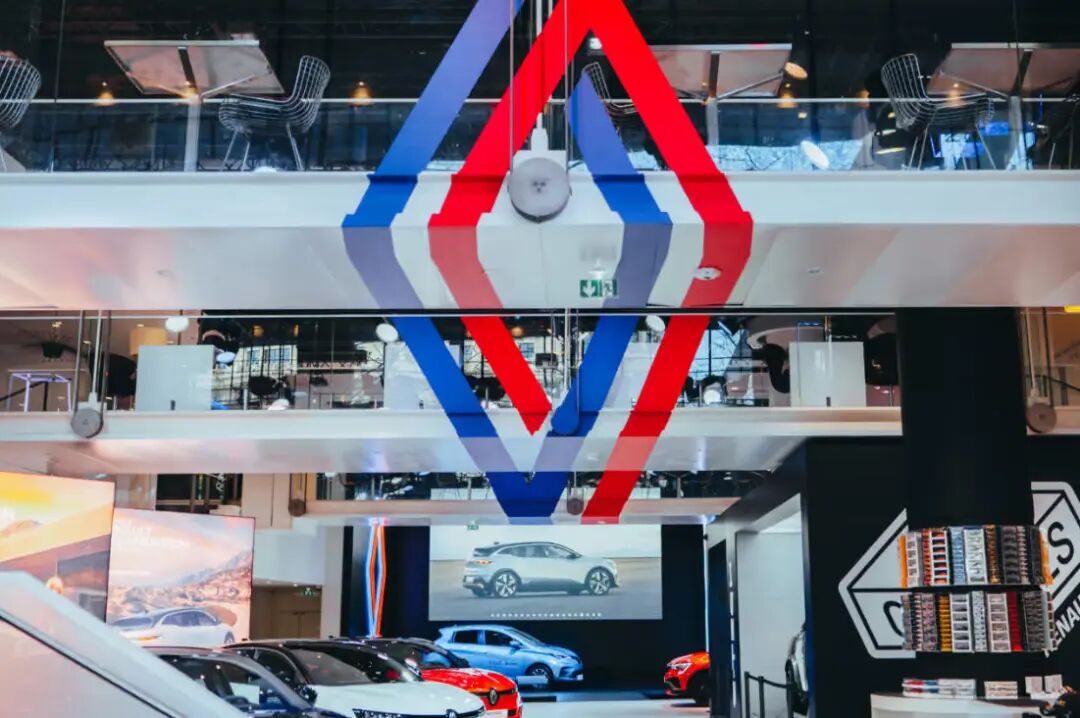
Central to this strategy are the ACDC R&D centers established in Shanghai and Hangzhou. Their core mission is to act as a technology filter and efficiency accelerator, precisely channeling the speed, cost, and technological advantages of China's NEV supply chain back to Renault's core markets in Europe and globally.
During the internal combustion engine era, traditional European automotive giants typically required 36 to 48 months for R&D cycles. This lengthy, rigorous process ensured mechanical reliability but became a burden in the era of electrification and intelligence. If Renault adhered to European R&D rhythms to compete with the influx of Chinese models, it would struggle to gain an edge in speed and cost.
ACDC, a multinational joint team encompassing engineering, procurement, quality control, and cost accounting, not only handles Renault's core EV project R&D but also transformed this landscape.
The most notable example is the all-new pure electric Twingo E-Tech, which moved from concept lockdown to production readiness in just 21 to 22 months, nearly halving the traditional R&D cycle. ACDC aims to make this approach the norm, targeting a 16-month development cycle for Dacia's next-generation A-segment EV.
With high inflation, rising energy costs, and strong union pressure in Europe, locally manufactured pure EVs remain expensive. As global NEV competition intensifies, cost has become a critical determinant of product success. To defend its European home market, Renault must achieve cost competitiveness.
By leveraging ACDC to tap into China's mature, large-scale EV supply chain, Renault gained cost control leverage, yielding tangible financial returns. Variable costs per vehicle were reduced by about €400—a decisive factor in the razor-thin margin A- and B-segment compact car markets.
Benefiting from Chinese R&D and supply chain support, the Twingo's starting price in Europe can be kept below €20,000. At a time when European traditional automakers widely complain about their inability to match Chinese brands' price advantages, Renault has proactively built defenses and secured greater global initiative through this leverage.
Renault's efficiency stems not only from utilizing China's hard supply chain but also from its openness to China's soft technologies. It no longer clings to pure European heritage but has become one of the most inclusive and cooperation-willing multinational automakers toward China's tech ecosystem. Beyond ACDC, its self-developed hub, Renault also collaborates with leading Chinese automakers through capital and technology ties.
For instance, it jointly established Horse Powertrain with Geely, enabling R&D resource sharing and scaled procurement while absorbing Geely's mature expertise in efficient hybrid systems. In overseas markets like South Korea and Brazil, Renault similarly uses Geely's technology platforms to develop and launch new models, reducing R&D risks and sunk costs.
While this approach may seem to dilute autonomy, Renault's performance proves that in an era of rapid technological change, efficient integration and open collaboration hold greater commercial value than inefficient isolation.
Renault's recent success reflects a traditional automaker's courage to self-adjust and drive efficiency and speed transformations amid era-defining changes. It has essentially pioneered a new globalization paradigm: French design, Chinese R&D and supply chain, and European manufacturing. In this chain, ACDC plays an irreplaceable bridging role.
However, it is essential to recognize another fact: ACDC, no matter how strong, is only one piece of Renault's global puzzle. If its European headquarters were decayed, rigid, or lacked a clear strategy, even the strongest Chinese supply chain would not prevent failure.
As Philippe Brunet, Renault Group's CTO and ACDC General Manager, noted in an interview: "When I first went to China to launch this project, most French engineers were skeptical, believing it impossible to complete development within two years. But now, we've proven the feasibility of this development model with tangible results, and they see it as scientifically sound."
"We're improving workflows and promoting concurrent engineering. When one team needs adjustments, related teams must respond swiftly and synchronously, ensuring tight alignment and efficient progress," he added. In his view, the headquarters' agile organizational structure and mindset provided the institutional foundation for ACDC's efficient integration with China's supply chain.
Editor: Du Yuxin Contributor: He Zengrong

THE END
-
![]()
How 79-Year-Old Lao Gan Ma Founder Tao Huabi Leveraged AI to Achieve 5.4 Billion Yuan in Revenue
-
![]()
Breaking News! Doubao Faces a Collective 'Ban' from Tencent, Alibaba, and Others for Attempting Mobile Phone Manipulation
-
![]()
How Robust Are China’s New Energy Vehicles? A Look at Eight Months of Global Market Sales
-
Competition in Ecosystems: AI’s Next Frontier
-
![]()
The cost per vehicle is 73,000 yuan higher in Europe than in China; European markets can't stop Chinese cars by any means
-
![]()
Why Has Renault, Which Doesn't Sell Cars in China, Become the Biggest Winner in Europe?
-
![]()
ZTE: First-Half Net Profit Plummets Over 40%, Computing Business Grapples with Low-Margin Challenge
-
![]()
OPPO Could Be Manus's First Domestic Partner?