The Enduring Wealth Empire of the Hilton Family: An $8.3 Billion Legacy and AI-Driven Family Office Fueling Financial Triumph
 10/20 2026
 564
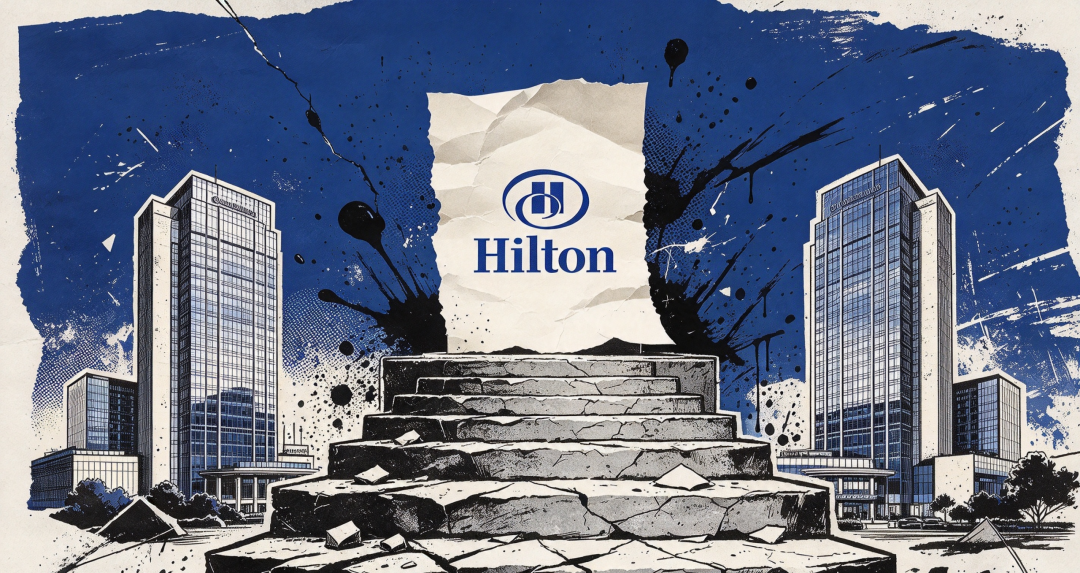
An $8.3 Billion Behemoth and a Third-Generation Family Office: Propelling the Hilton Family's Centennial Dominance

Click to Listen to the Podcast Version of This Article
How Has the Esteemed Hilton Family of the U.S. Safeguarded Its Billions?
Recently, the Hilton family office unveiled its deployment of an AI-powered financial intelligence platform dubbed "Legacy Intelligence," seamlessly integrating artificial intelligence into investment research, liquidity analysis, and due diligence processes. Contrary to popular belief, the Hilton family office's investment portfolio extends beyond the hotel industry, focusing instead on cutting-edge sectors such as cryptocurrency, blockchain, and artificial intelligence.
On the other hand, the Conrad N. Hilton Foundation, the family's philanthropic arm, released its 2025 financial data. Last year, the foundation donated over $300 million, boasting assets of $7.3 billion and total annual revenue of $619 million. According to the latest data disclosed on the foundation's official website, its current assets stand at a staggering $8.3 billion.
Interestingly, the Hilton family's original hotel business was acquired by Blackstone for a hefty $26 billion back in 2007.
Now, 19 years after exiting the hotel industry, the Hilton family has not only incorporated AI into its family office investment framework but has also witnessed its longstanding charitable foundation continue to flourish. How is this venerable family maintaining its wealth and influence?

Building an $8.3 Billion Philanthropic Powerhouse
The core of the Hilton family's wealth actually flows into the Conrad N. Hilton Foundation.
As early as 1944, Conrad N. Hilton, the visionary founder of the Hilton hotel empire, established the Conrad N. Hilton Foundation as a charitable trust using his personal assets.
Conrad, an American hotel magnate, upon his death in 1979, bequeathed nearly all his property to the Hilton Foundation, including a 27% stake in Hilton Hotels.
This generous donation rapidly inflated the foundation's assets, but the real transformation came from Conrad's son, Barron. In 2007, Barron announced that he would donate 97% of his personal assets, valued at approximately $2.3 billion, to the foundation, leaving only 3% for Hilton family descendants.
Consequently, after Barron's passing in 2019, the Hilton Foundation's assets surged from $2.9 billion to $6.3 billion, surpassing the Rockefeller Foundation and ranking among the largest private foundations in the U.S.
Today, the foundation boasts assets of approximately $8.3 billion. Since its inception, it has cumulatively granted over $4 billion, with more than $300 million awarded in 2025 alone.
These funds are channeled into multiple global areas, including early childhood development, homeless assistance, safe drinking water initiatives, and support for Catholic nuns. The foundation also presents the prestigious "Hilton Humanitarian Prize," awarding $3 million annually to an organization that has made exceptional contributions to alleviating human suffering—one of the world's largest humanitarian awards.
In February 2026, Hilton Global's Hilton Global Foundation announced a $5.4 million investment in 18 global non-profit organizations for tourism skills training, water resource projects, and more. This marks the largest annual funding round by the Hilton Global Foundation to date.
The Hilton Foundation has transcended the realm of family philanthropy to become a globally influential institution with systemic impact.
Beyond charity and public welfare, the Hilton Foundation also engages in investment activities. SEC filings for the second quarter of 2026 reveal that the Hilton Foundation holds approximately $576 million in publicly disclosed positions, primarily allocated to index funds such as the iShares Core S&P 500 ETF. Simultaneously, it deeply participates in top-tier funds like Andreessen Horowitz and Japan Industrial Partners through limited partnership interests.
This dumbbell-shaped allocation strategy—guaranteeing returns in public markets while seeking higher yields in private equity and venture capital—mirrors the strategies of many hedge funds.
The Hilton Foundation has undergone several stages, including establishment by the founder, continuous capital injections by descendants, and professional management and operation. Its asset scale has continuously expanded through investment returns. However, the foundation's governance remains firmly in the hands of the Hilton family, with most board members being family members.

Third-Generation Leadership at the Family Office: Embracing Cross-Border Investments
Beyond the foundation, the majority of the Hilton family members' wealth is managed by the family office.
The Hilton family office made a relatively late public debut. For a considerable period, the investment and wealth management of Hilton family members remained decentralized.
Around 2015, third-generation family member J. Bradley Hilton gradually consolidated the family's wealth management into a private platform with a clear investment strategy and governance framework, completing the transition from family affairs to an institutionalized platform.
Subsequently, Bradley continued to serve as chairman of the Hilton family office and progressively expanded its investment scope beyond hotels and real estate. Public information indicates that the Hilton family office's investments span multiple fields, including artificial intelligence, blockchain, digital assets, real estate, private capital, and film and entertainment.
In 2026, the Hilton family office has been particularly active. In July of this year, it acquired a controlling stake in Technology Labs, integrating the CoinResearch and StockResearch platforms into its investment ecosystem. The former focuses on research in the cryptocurrency market and blockchain activities, while the latter covers traditional stock markets.
In September, the Hilton family office deployed the Legacy Intelligence platform, embedding AI into five key areas: fund management, public market research, digital asset research, and due diligence.
In the field of crypto assets, the Hilton Tech Fund under the family office explicitly focuses its investments on cryptocurrency, blockchain, and artificial intelligence, while also paying attention to cutting-edge directions such as robotics and biotechnology. Regarding film investments, the Hilton family office recently expanded its movie financing business, participating in the investment of multiple films, including Bandit and Flight Risk.
Additionally, the Hilton family office provides bridge loans through Hilton Finance, covering commercial and residential mortgage businesses.
This approach differs significantly from the traditional family office strategy of "buying stocks, real estate, and bonds." The Hilton family office dares to invest in high-risk, high-reward areas such as early-stage tech projects and crypto assets, even incorporating AI into its investment strategy.
While most "old money" families emphasize diversified allocation and stable income from rents, the Hilton family office prefers a proactive approach, seizing opportunities wherever they arise.

From a Humble Inn to a Hotel Empire: The Hilton Family's Wealth Preservation Strategy
The Hilton family's wealth journey began with a dramatic twist.
In 1919, 32-year-old Conrad N. Hilton arrived in Texas with $5,000, intending to buy a bank. When the deal stalled, he accidentally purchased a small inn called the Mobley Hotel, which became the starting point of the Hilton business empire.
Over the next few decades, Conrad expanded his hotels across the U.S. and globally, opening the first Hilton-branded hotel in Dallas in 1925.
After Conrad's death, his second son, Barron, took over the reins. Barron led the Hilton Hotel Group for 30 years, increasing the company's market value by 60 times through extensive real estate acquisitions and mergers. In 2007, Barron sold Hilton Hotels to Blackstone Group for $26 billion, making it one of the largest hotel acquisitions in private equity history.
However, the Hilton family's true legacy lies in two parallel wealth management paths.
First is the Hilton Foundation, which bears the "social function" of the family's wealth. By investing nearly all their assets into the charitable foundation, the Hilton family fulfilled the founder's wish to "give back to the world" while avoiding hefty estate taxes that could erode family wealth.
Conrad and Barron, across two generations, donated 97% of their property to the foundation—a rarity among global wealthy families. Through long-term dominance of the board, the Hilton family retains absolute control over this charitable foundation.
The second crucial wealth management path is the Hilton family office. As an independent investment platform, it invests family members' personal capital in emerging fields, pursuing financial returns and effectively driving the appreciation of family wealth.
This dual-track structure of the foundation and the family office resolves a dilemma faced by wealthy families worldwide: how to maintain long-term family influence while motivating descendants to build their own careers.
Upon Barron's death, he left 3% of his personal wealth to his descendants. Based on his $2.3 billion asset scale at the time, each of his 27 descendants received only a few million dollars—far from enough to "retire comfortably" for Hilton family members accustomed to luxury.
However, the Hilton family still provides a safety net for its members through a family trust fund. Nearly every Hilton family member benefits from the family trust, which covers specific expenses such as medical care and education, indirectly offering a stable "security net" for future generations.
Since Conrad N. Hilton purchased his first hotel in Texas, the family has spanned over a century. Today, the Hilton family has reached its fourth or even fifth generation. The foundation has launched the "Generations in Giving" project to cultivate philanthropic awareness and governance abilities among Hilton descendants.
Now, the $8.3 billion foundation safeguards the Hilton family's charitable legacy, while the third-generation family office seeks new growth points at the forefront of AI and crypto assets, backed by the family trust fund. These paths may well be the reasons why the Hilton family has retained its wealth and influence for over a century.
References:
Unveiling the Hilton Family's Wealth Landscape: An $8.3 Billion Foundation and Third-Generation Family Office, Family Office New Intelligence Point
Publicly available data from the Conrad N. Hilton Foundation's official website and the Hilton family office's official website.
THE END
-
![]()
Why Not Opt for Price Reductions When Car Sales Are Sluggish?
-
![]()
Chang'an Automobile: Ushering in a New Era of 'Young Leaders'
-
![]()
What?! The Bumper is No Longer the First Line of Defense!
-
![]()
Who Can Achieve Big Results with AI During Double 11?"],"keywords":["Double 11, AI, Doubao, Qianwen, shopping recommendations"],"content":["During Double 11, Douyin and Alibaba attract users to use AI
-
![]()
The Enduring Wealth Empire of the Hilton Family: An $8.3 Billion Legacy and AI-Driven Family Office Fueling Financial Triumph
-
![]()
Cue One-Week Hands-On Test | AI Gets an ID Card, But Still Not “Always Available”
-
![]()
Musk's Masterstroke: Gifting SpaceX Shares—A Genius Calculation
-
![]()
Revealed! Xiaomi SU9 Executive Luxury Flagship Sedan Set to Launch, with Trademarks Registered and Test Car Spotted in Camouflage