Musk's Masterstroke: Gifting SpaceX Shares—A Genius Calculation
 10/20 2026
 465
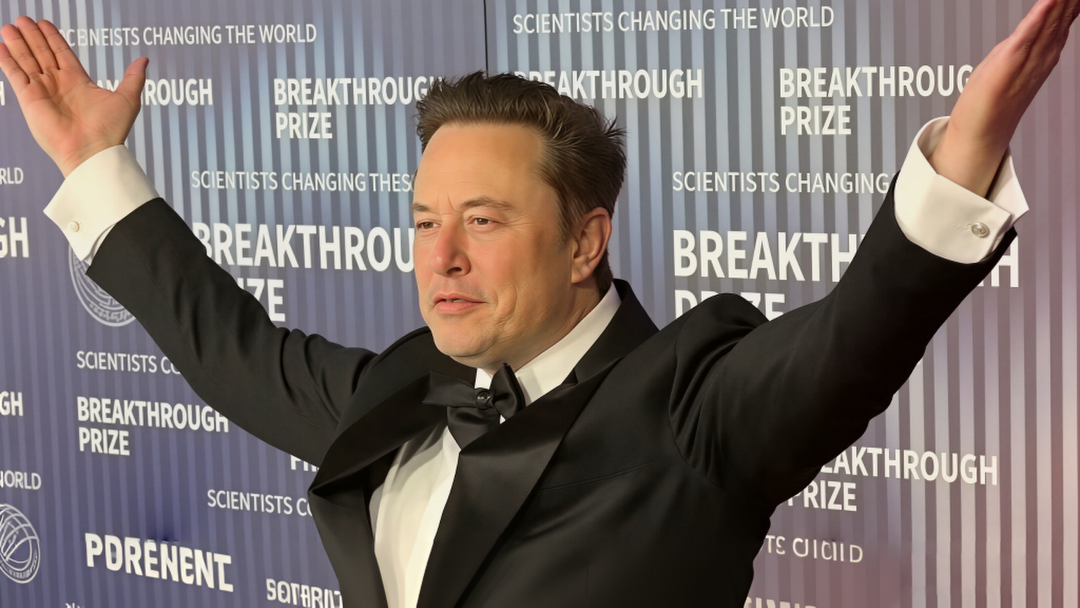
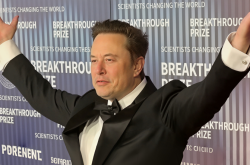
Today, the internet is once again abuzz with talk of Musk.
On October 19, Musk made a bold announcement directly on the X platform: Next year, every child in the U.S. will receive one share of SpaceX from his personal holdings. He emphasized that this is merely the initial phase of a larger giveaway initiative.
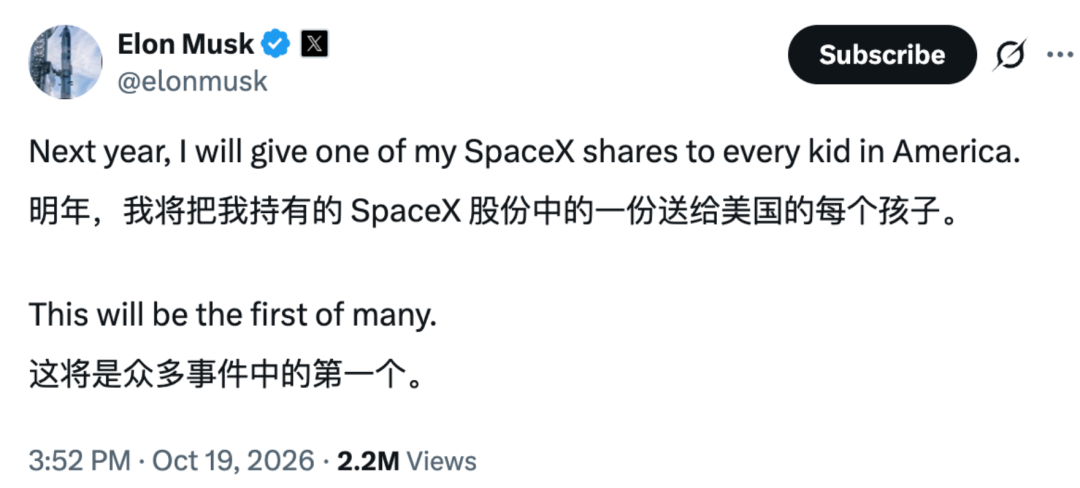 Image Source: X Social Platform
The news triggered an immediate market response, with SpaceX's stock price climbing by 1% during the trading session.
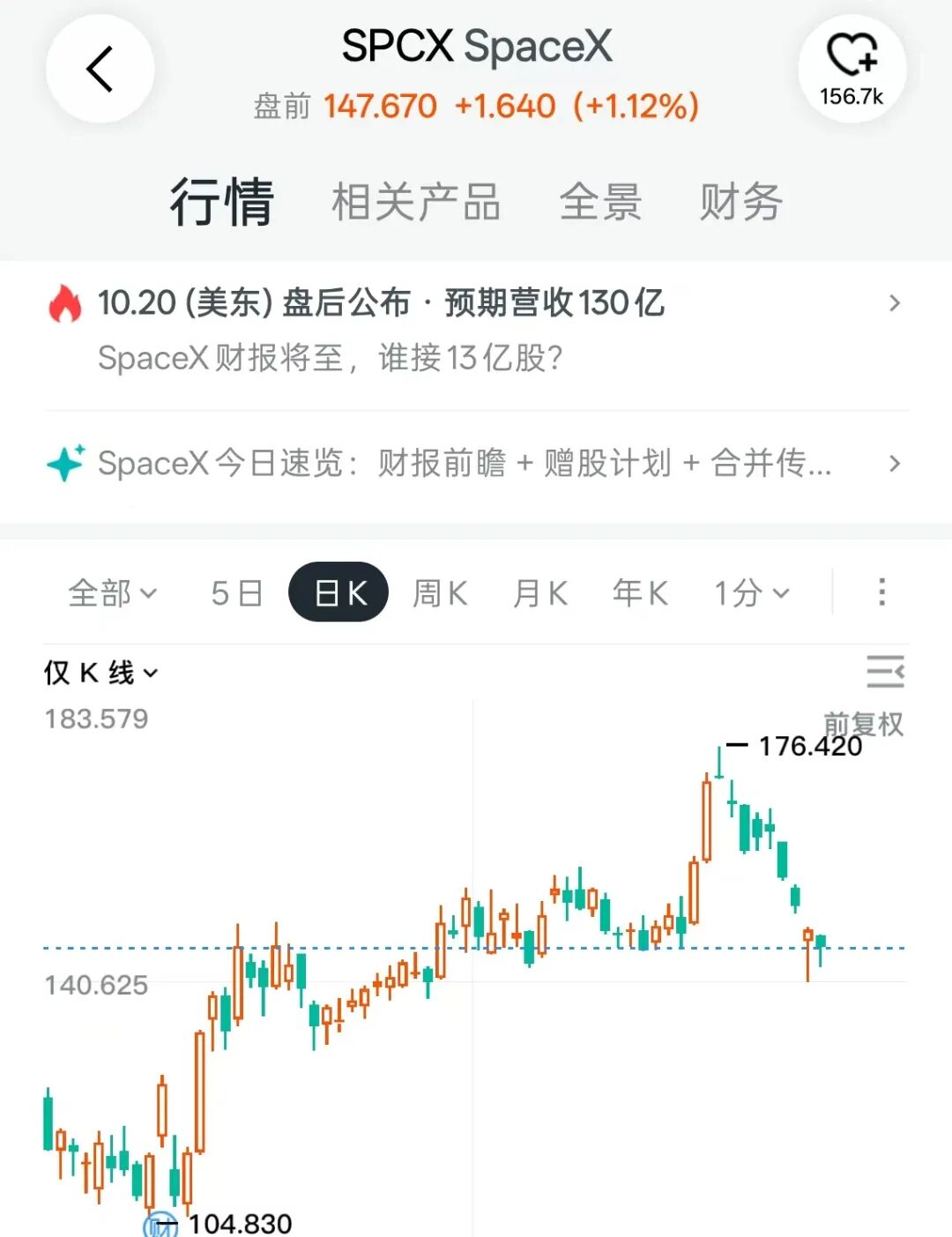 Image Source: Longbridge APP
To the casual observer, the first impression might be of a staggering $10.5 billion gift. The immediate reaction? Musk is incredibly generous. However, beneath this charitable facade lies a meticulously planned strategy. In essence, by parting with just over 1% of his personal stake, Musk is effectively "acquiring" 72 million potential advocates.
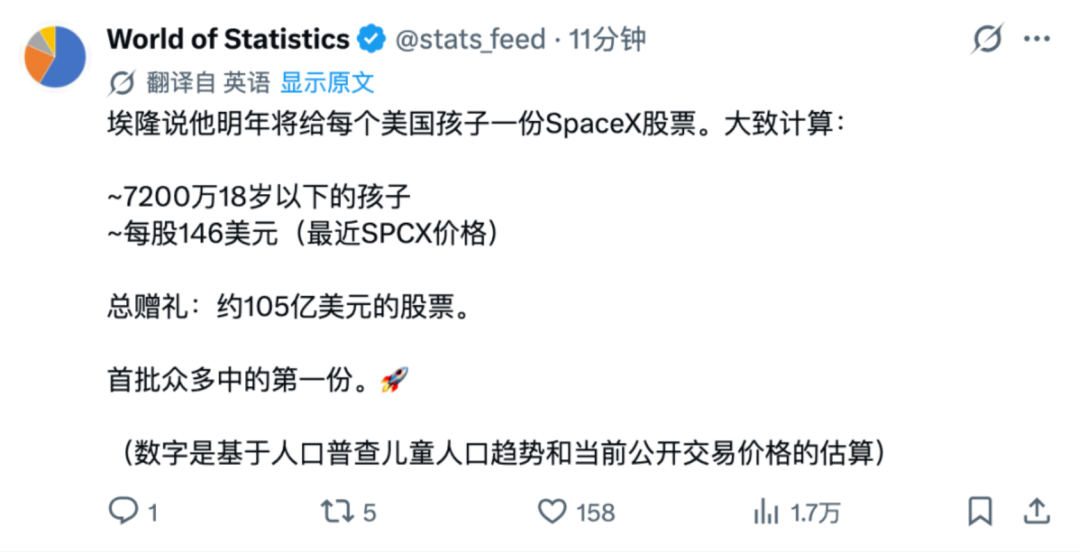 Image Source: X Social Platform
A Silicon Valley AI Showdown: One Comment Steals the Spotlight
The backdrop to this move is a cross-Silicon Valley AI rivalry that unfolded the day before.
On October 18, AI firm Anthropic, aiming to generate buzz for its upcoming IPO, announced plans to allocate 5% of its shares to establish a public welfare fund, with aspirations to eventually contribute up to 20% to address AI-induced employment disruptions. Essentially, they sought to use a philanthropic narrative to alleviate public concerns about the concentration of power among AI giants and smooth the path for their IPO.
Musk, upon seeing the post, swiftly commented, suggesting that instead of setting up a foundation, the shares should be distributed directly to the public.
A few hours later, he followed through, making a separate post to announce the SpaceX share giveaway. In a single comment, Musk hijacked Anthropic’s carefully orchestrated PR strategy, dramatically altering the dynamics of the Silicon Valley AI resource war.
This wasn't just a hollow promise. As early as July, SpaceX President Gwynne Shotwell and her husband had already conducted a small-scale pilot. Leveraging America’s “Trump Accounts,” they distributed one share of SpaceX—valued at nearly $300 million on paper—to over 2 million children aged 11 to 17 from low-income families.
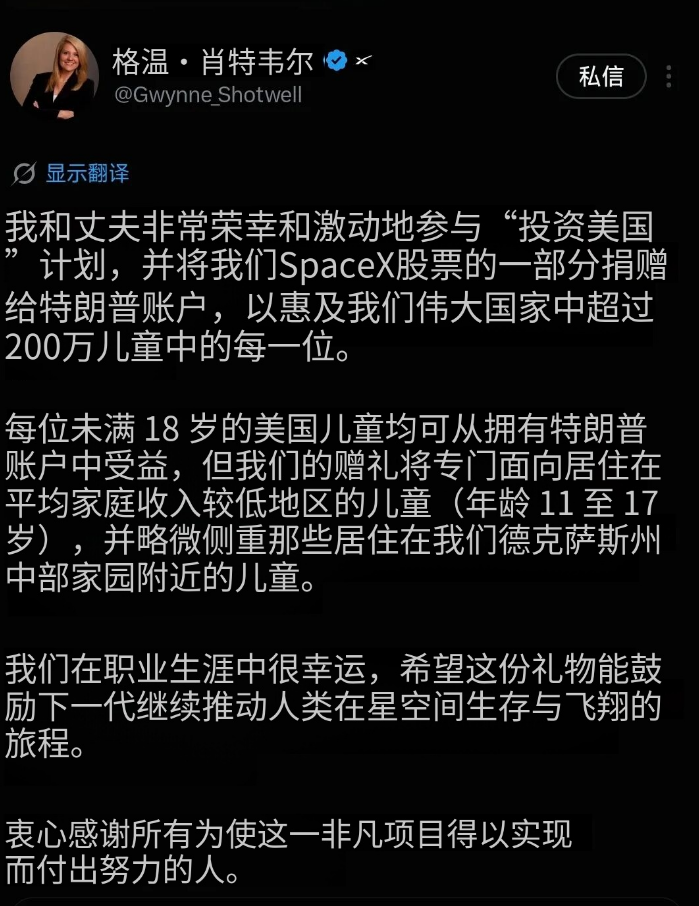 Image Source: X Social Platform
However, eligibility criteria were stringent: recipients had to be U.S. citizens with Social Security numbers, and the shares were locked, unable to be sold or cashed out until they turned 18, rendering them of mere paper value for the time being.
This time, Musk expanded the distribution from 2 million individuals to all 72 million minors across the U.S.
Crunching the Numbers: The Actual Cost Is Surprisingly Low
The billion-dollar headline figure may seem daunting, but let's delve into the real numbers.
At SpaceX's current share price of $146, 72 million shares would theoretically be worth around $10.5 billion. While this figure is impressive, a closer examination of the equity data reveals that the cost is surprisingly manageable.
These 72 million shares represent just 0.55% of SpaceX's total equity, a dilution so minimal that it's virtually negligible for the company. From Musk's personal stake—nearly 44.71% of SpaceX—the portion he plans to give away accounts for a mere 1.2% of his holdings. This sum is a drop in the bucket compared to his total assets and does nothing to diminish his control over SpaceX.
The best part? The timing is impeccable. The benefits are immediate, while the costs are deferred.
The moment the post went live, it dominated global headlines, cementing Musk's image as a "generous philanthropist" and boosting the stock price—benefits realized on the same day.
However, the so-called $10.5 billion cost won't materialize until next year. As of now, key details remain unresolved: Which children qualify? How will nationality be verified? Who bears the tax burden? When will the shares be transferred? What's the lock-up period? Will they use Trump Accounts? No formal plan exists for any of these aspects.
When questioned by the media, Musk admitted that the plan is still under study, the challenges are greater than anticipated, and the distribution scope might ultimately be narrowed.
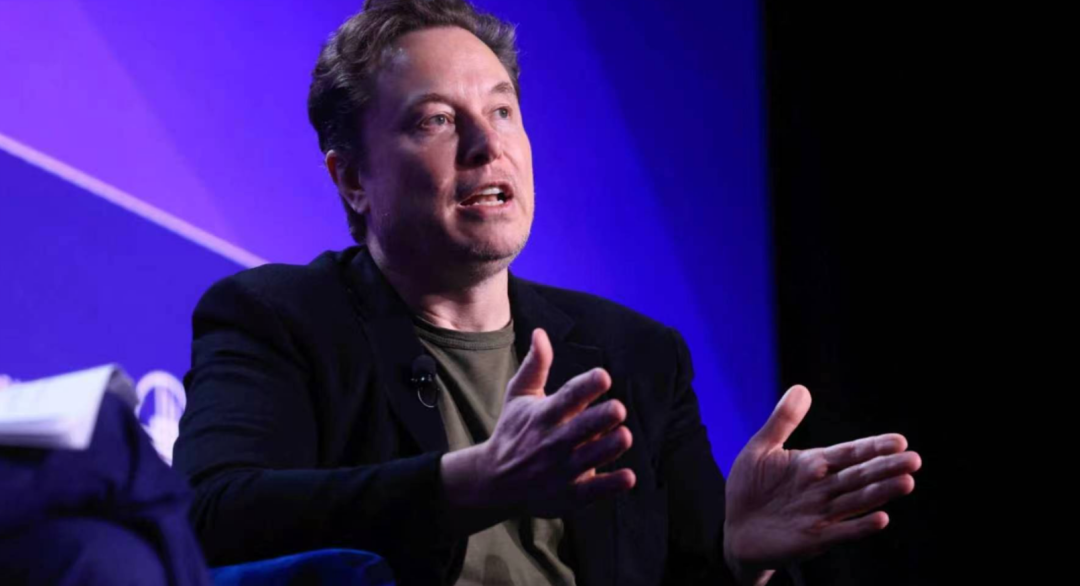 Image Source: Weibo
In other words, $10.5 billion is merely the theoretical maximum valuation. The actual amount delivered remains a significant unknown. A classic case of reaping the benefits first and negotiating payment later—with payment terms still unclear.
History provides a precedent. In similar past election-related giveaways, many Americans submitted all required materials only to end up with nothing, leading to class-action lawsuits. Numerous U.S. media outlets also predict that full implementation will be extremely challenging.
The Real Strategy: 0.55% Equity Secures Decades of Political Protection
Focusing solely on the financial aspect misses the essence of Musk's move. What he's acquiring with this small equity stake are three invaluable assets: decades of political protection, brand goodwill among the next generation, and a long-term stable shareholder base.
Firstly, he's constructing an almost impenetrable political moat.
SpaceX's survival hinges on U.S. government contracts, launch permits, and Starlink operating licenses. Antitrust investigations, regulatory restrictions, and tax audits could strike at any moment.
However, if millions of families' children now own SpaceX shares, any politician attempting to impose restrictions, raise taxes, or halt Starship launches will face an unassailable public backlash: You're stealing from America's children.
Traditional corporate lobbying involves spending money to persuade lawmakers. Musk's approach is far more ruthless—he's directly tying the interests of millions of families to SpaceX. Opposing the company now means "harming countless children's long-term wealth." The July pilot with 2 million shares was a small-scale test; this time, he's going all-in.
Secondly, he's securing the minds of a generation.
At $146 per share, the monetary value isn't substantial. But the identity of "SpaceX shareholder" will resonate with these children for decades.
As they mature, they'll naturally follow SpaceX, Starlink, and Mars missions. When choosing communication products or careers later, they'll feel an innate affinity. This isn't short-term advertising—it's using equity to implant identity, directly capturing the next generation's loyalty.
Thirdly, he's creating a massive retail shareholder base.
SpaceX is a high-valuation private company with illiquid equity, making its valuation prone to volatility. If millions of families hold small stakes, even if only a fraction hold long-term, they'll form a large pool of bullish retail investors—a natural buffer against stock price fluctuations.
This doesn't imply nationalization. Musk still retains majority voting rights, and SpaceX remains privately controlled. But it's a bold experiment: using less than 1% of equity to deeply bind a tech giant's future to the asset accounts of a superpower's next generation.
The packaging—inclusive finance, child welfare, wealth democratization—masks a highly cost-effective capital strategy.
Political Chess: Heavy Bets on the Republican Party
This move cannot be viewed in isolation from Musk's current political strategy.
According to The New York Times and CNBC, Musk has donated $366 million to the Republican Party for the 2025–2026 election cycle. Since July alone, he's added over $276 million in donations, including $158 million to a key political fund supporting Republican senators. He's now the largest individual donor in this midterm election.
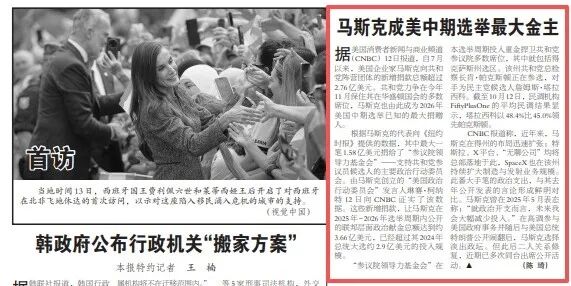 Image Source: Global Times
Musk had previously stated he would slash political spending, but his relationship with Trump warmed, and he returned to the political arena. With Tesla, X, Boring Company, and SpaceX all based in Texas—a battleground state for Republicans—his political moves align closely with local elections.
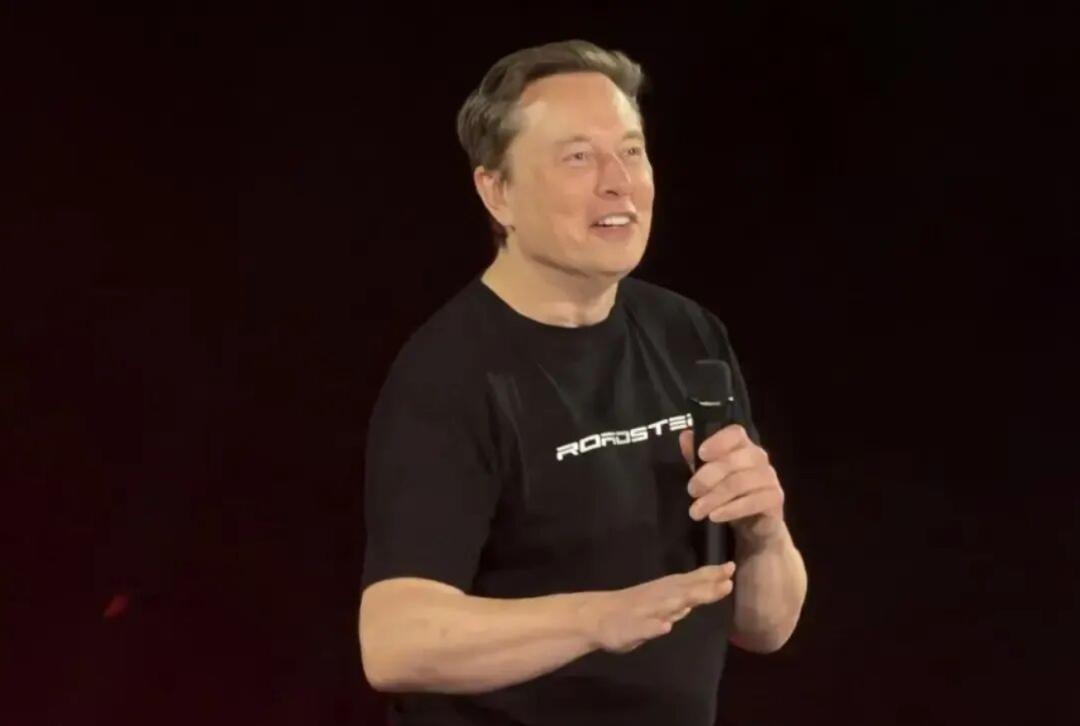 Image Source: Weibo
Large political donations, targeted share giveaways by SpaceX executives to specific children, and now this nationwide distribution are all part of a coordinated strategy. While funding the Republican Party with cash, he's using Trump Accounts to place SpaceX equity into millions of American households' long-term accounts, expanding the company's grassroots support.
Final Thoughts
Musk's most brilliant move here isn't the $10.5 billion headline—it's using less than 1% of equity to craft a narrative that's nearly impossible to attack.
Charity is merely the facade; equity binding is the real play.
With millions of children now minor SpaceX shareholders, this aerospace giant—heavily reliant on government approvals—gains a social shield that could last decades. Whether the shares fully reach every U.S. child next year isn't the only point. The real game began the moment the post went live.
Interactive Topic: Do you think Musk will fully deliver on his promise to give away shares, or will it be significantly scaled back? Share your thoughts in the comments.
Disclaimer: This article is for financial commentary only and does not constitute investment advice. All corporate data and regulatory events mentioned are from public sources and are for reference only. Official announcements shall prevail. Image sources are credited online; please contact us for copyright issues.
-
![]()
Settlement of Smart Horizon's 'Household Registration': First Independent Automaker Status Approved for Hongmeng Zhixing, Paving the Way for Listing
-
![]()
Why Not Opt for Price Reductions When Car Sales Are Sluggish?
-
![]()
Chang'an Automobile: Ushering in a New Era of 'Young Leaders'
-
![]()
What?! The Bumper is No Longer the First Line of Defense!
-
![]()
Who Can Achieve Big Results with AI During Double 11?"],"keywords":["Double 11, AI, Doubao, Qianwen, shopping recommendations"],"content":["During Double 11, Douyin and Alibaba attract users to use AI
-
![]()
The Enduring Wealth Empire of the Hilton Family: An $8.3 Billion Legacy and AI-Driven Family Office Fueling Financial Triumph
-
![]()
Cue One-Week Hands-On Test | AI Gets an ID Card, But Still Not “Always Available”
-
![]()
Musk's Masterstroke: Gifting SpaceX Shares—A Genius Calculation