Chang'an Automobile: Ushering in a New Era of 'Young Leaders'
 10/20 2026
 502
Lead-in
Introduction
Steadily nurtured and promoted from within the ranks.
In 2014, Zhu Huarong, aged 49 at the time, assumed the presidency of Chang'an Automobile. Over the next six years, he served as President and subsequently as Chairman for another six years. Zhu witnessed Chang'an's peak production of 3.06 million vehicles in 2016, followed by a low of 1.76 million in 2019.
By 2025, Zhu had guided Chang'an back to producing 2.913 million units, showcasing the automaker's resilience and his own leadership and competence. During his 12-year tenure, he led this state-owned enterprise to compete with the vigor of a private firm.
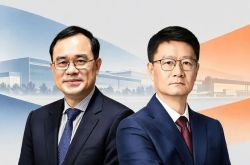
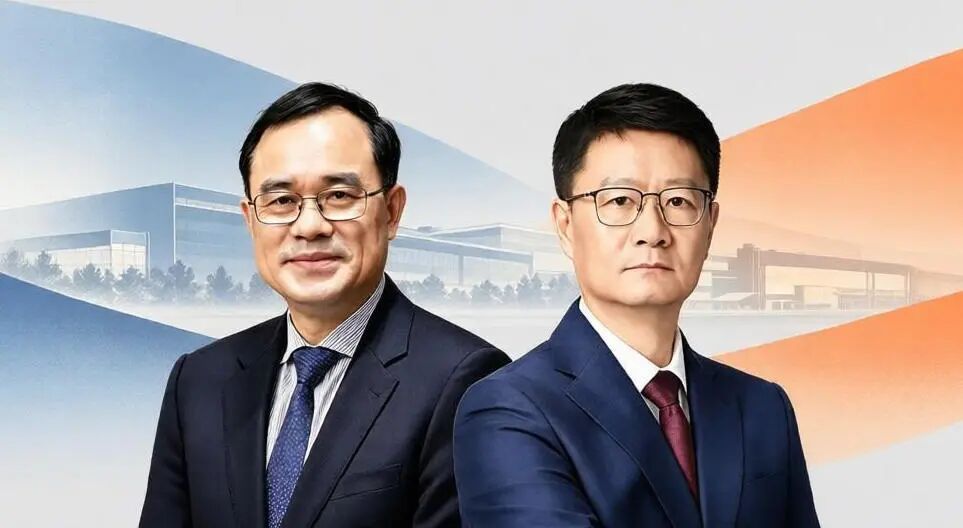
On September 17 of this year, Chang'an Automobile announced the completion of its board renewal, with Zhu retaining his position as Chairman of the listed company. However, just 29 days later, on October 16, Chang'an announced Zhu's resignation and introduced the new Chairman and President: former President Zhao Fei and former Executive Vice President Ye Pei.
Today, Zhu remains the Party Secretary and Chairman of China Chang'an Automobile Group (China Chang'an), relinquishing all roles within the listed company and its subsidiaries. He stated that China Chang'an requires a sharper strategic focus, while Chang'an Automobile must enhance its market-driven, global, and international operations to compete on the world stage.
Indeed, from 2014 to the present leadership, Chang'an has seen three generations of executive teams: Zhang Baolin alongside Zhu Huarong, Zhu Huarong with Wang Jun/Zhao Fei, and now Zhao Fei and Ye Pei. Like Zhu in his era, each generation has experienced Chang'an's V-shaped recovery—they are all seasoned veterans of Chang'an.
Last year, Chang'an was elevated to the status of a first-tier central enterprise. Zhu, now 60, renewed his contract as Chang'an enters a new cycle. His decision to concentrate on China Chang'an headquarters signifies the completion of his mission specific to this phase, passing the baton to the next core team.
Many believe the recent turnover of Chairmen and Presidents reflects a healthy, robust internal talent development and promotion system, ensuring strategic continuity and stability amid complex market conditions.
Crucially, each core executive assumed office around the age of 50. Zhu became President at 49 and Chairman at 55; Wang Jun became President at 48 before his transfer; Zhao Fei became President at 51 and Chairman at 52; Ye Pei became Vice President at 43 and President at 51.
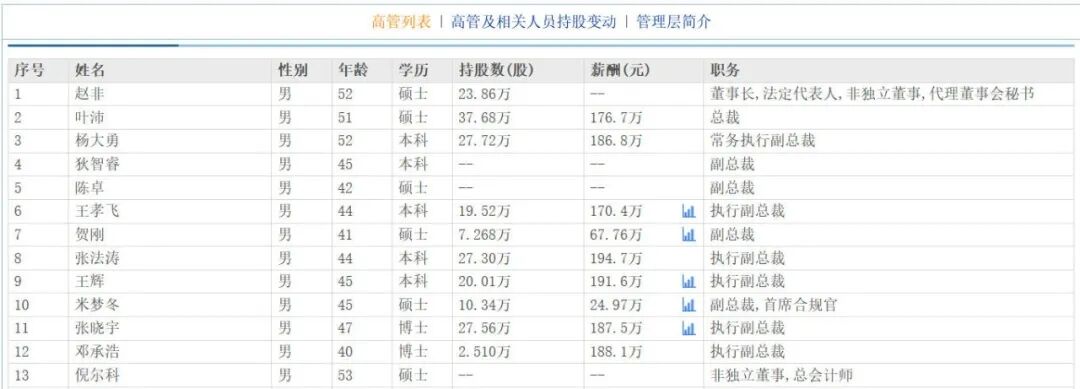
Meanwhile, Chang'an announced other executive appointments. Yang Dayong, 52, stepped down as Executive Vice President of Chongqing Chang'an to become Executive Vice President of Chang'an Automobile; Deng Chenghao, 40, was promoted from Vice President to Executive Vice President.
External observers note that these individuals are in their prime, bringing a wealth of experience and energy to ensure dynamic, forward-looking decision-making.
Interestingly, based on their backgrounds, the four newly appointed executives have clear, differentiated roles within Chang'an.
Chairman Zhao Fei began his career as an engine technician, ascending through technical supervision, research institutes, joint ventures, parts groups, and core management. His nearly 30-year career trajectory encompasses every key phase of Chang'an's transformation from traditional manufacturing to a tech company, with deep involvement and comprehensive contributions at each stage.
President Ye Pei started as Acting Deputy Section Chief at the Jiangling Engine Branch, later serving as General Manager of Nanjing Chang'an, Head of Strategic Planning, General Manager of Sedan Sales, General Manager of Passenger Vehicle Marketing, and finally Executive Vice President. His experience spans production, strategy, marketing, and human resources. Crucially, he drove market success for key CS series models, demonstrating a strong understanding of products and markets, as well as exceptional execution.
Executive Vice President Yang Dayong began at the grassroots level in Marketing, gained experience in the independent brand system, helped establish Chang'an's early new energy sector, and served as Executive Vice President of Changan Ford. He later oversaw Changan Universe (fuel vehicles) and Changan Origin (new energy), clearly differentiating the two brands: Origin focuses on making technology accessible, bringing long-range and advanced suspension capabilities to mainstream families, while Universe insists on making fuel vehicles smarter, more fuel-efficient, and reliable, addressing doubts about fuel vehicles in the new energy era.
Executive Vice President Deng Chenghao rose from Deputy General Manager of Power Development at Chang'an New Energy to Chairman of Deepal Automobile, leading the definition and development of core products like Deepal SL03, S07, and G318. However, he admits that marketing is a relative weakness; Deepal later brought in CEO Jiang Hairong with ICT marketing experience to complement product definition and R&D strengths with user insight and marketing capabilities.
Like all Chinese automakers, Chang'an is in a transformative phase and may face a new V-shaped cycle. Zhu Huarong confronted the dual challenges of a growth ceiling for independent brands and a precipitous sales decline for joint ventures.
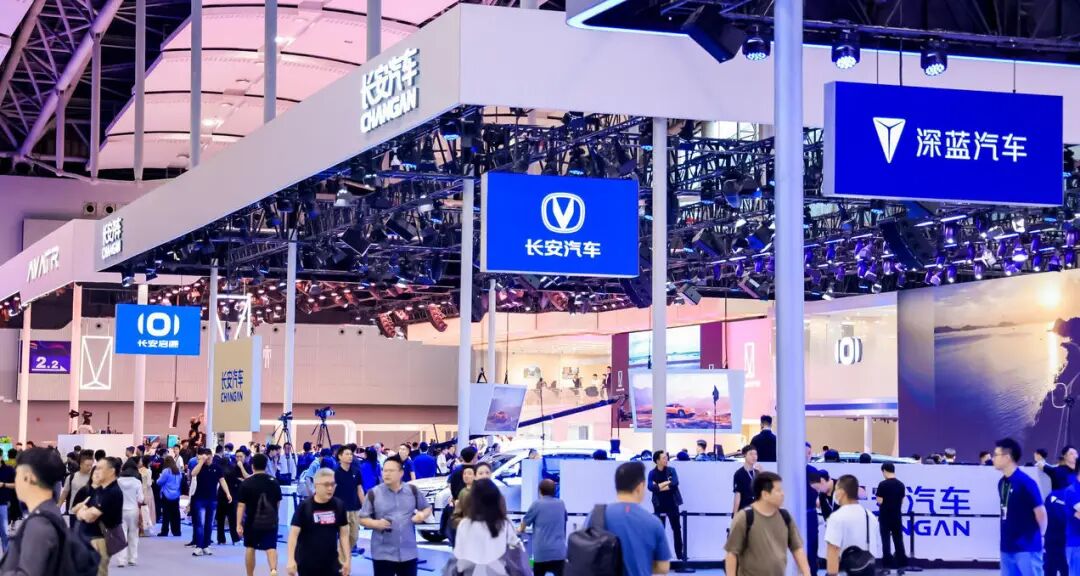
Fortunately, under his leadership, Chang'an has consistently improved. The new leadership now faces even greater challenges.
Currently, Chang'an's three major plans—New Energy 'Shangri-La,' Intelligence 'Beidou Tian Shu,' and Globalization 'All Rivers Run into the Sea'—remain unchanged, with targets of 5 million vehicles by 2030 (2 million overseas) and 6 million by 2035, aiming to rank among the top 10 global automakers.
In the short term, Chang'an must address issues like the synergy between Avatr and Deepal ('independent front end, collaborative middle and back end'), breakthroughs in overseas markets, and management of the listed company's market capitalization. These are critical battles for the new executive team and a test of their capabilities.
Chang'an has established an AD Synergy Development Department (AD derived from the initials of Avatr and Deepal), with sub-departments such as Planning & Cooperation, Market & Product, HR Shared Services, Finance Shared Services, and General Affairs, handling corresponding businesses for Deepal and Avatr. Deng Chenghao serves as General Manager, with Avatr Tech Chairman Chen Zhuo as Executive Deputy General Manager.
However, this is merely internal streamlining and synergy, not a fundamental solution to Avatr and Deepal's issues. In the market, Avatr faces sales and profitability pressure, while Deepal suffers from brand confusion, both contending with external competition. Leadership intervention remains essential.
Another issue is Chang'an's stock price. While the auto sector has faced headwinds this year, Chang'an's persistent decline is notable even within the sector, out of sync with its central enterprise status and positive developments in technology and new products.
Regardless, the new executive team is in place and fully aware of these issues. Solving short-term problems and meeting long-term challenges won't happen overnight. After all, Chang'an is known externally as a highly cyclical company.
Editor-in-Chief: Yang Jing Editor: Wang Yue

THE END
-
![]()
The Data Centers of AI Giants Are Hitting a Wall Harder Than Chips
-
How Far Is AI from Independently Contributing a Nobel Prize-Level Achievement?
-
![]()
SU8 and SU9 Are on Their Way! Xiaomi Unveils a Fleet of New Vehicles
-
![]()
Settlement of Smart Horizon's 'Household Registration': First Independent Automaker Status Approved for Hongmeng Zhixing, Paving the Way for Listing
-
![]()
Why Not Opt for Price Reductions When Car Sales Are Sluggish?
-
![]()
Chang'an Automobile: Ushering in a New Era of 'Young Leaders'
-
![]()
What?! The Bumper is No Longer the First Line of Defense!
-
![]()
Who Can Achieve Big Results with AI During Double 11?"],"keywords":["Double 11, AI, Doubao, Qianwen, shopping recommendations"],"content":["During Double 11, Douyin and Alibaba attract users to use AI