What?! The Bumper is No Longer the First Line of Defense!
 10/20 2026
 366
Lead-in
Introduction
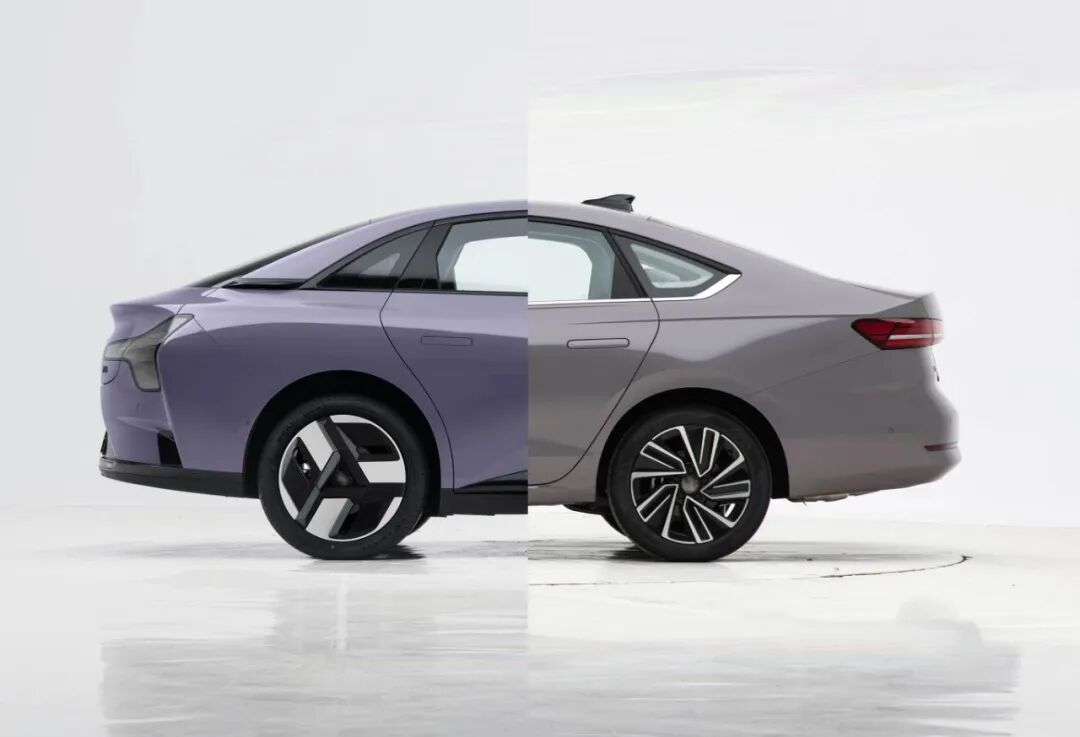
The bumper is losing its protective role; the rear doors and taillights of new energy vehicles (NEVs) are often the first casualties in minor collisions.
Over the past decade, China's NEV industry has achieved remarkable success. However, the rapid expansion has also exposed several issues, ranging from pseudo-innovative designs and non-standard configurations to hastily assembled vehicles. Efforts are gradually being made to address these shortcomings.
Recently, four government departments jointly stepped in to strengthen oversight of hastily assembled vehicles. They outlined specific measures, including mandatory testing mileage and verification cycles, safety-related virtual buttons, and restrictions on special seats. Previously, features like hidden door handles and smart driving indicator lights have also drawn criticism from consumers.
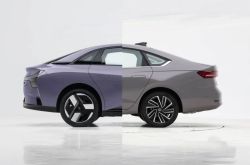
Another automotive design issue related to NEVs has been a hot topic among netizens but has yet to receive formal attention—it continues to spark online discussions. Many NEVs feature a design where the rear door and taillights protrude more than the rear bumper, leading to frequent dents in the rear ends of these vehicles during collisions.
Younger consumers might not notice this issue, but those with more experience driving gasoline-powered vehicles certainly will. As one netizen commented: "In the past, the rear bumper always stuck out a bit and took the brunt of any collision. Now, with NEVs, that design seems to have vanished."
Others were more blunt: "Even with boxy models like the Alphard, the bumper is the most protruding part at the rear and is considered a semi-disposable component. So, what have NEVs done? They've tucked the bumper away, and I don't understand why."
01 Is it a design flaw?
Indeed, traditional gasoline-powered vehicles adhere to a simple design principle: the bumper is always the most protruding part at the rear. Made of plastic, it is inexpensive, and replacing it after a scrape or dent costs only a few hundred yuan. Its primary function is to absorb minor impacts and protect more expensive components like the rear door and taillights.
However, many NEVs have reversed this design. The direct consequence is that in a minor reversing collision, the rear bumper may remain intact while the rear door sustains significant damage. Under current maintenance systems, repairing a metal rear door and a full-width taillight can be very costly.
Therefore, many consumers who are unaware of this design choice may wonder, "Why do so many NEVs have dents in their rear ends?"
To understand this, we must first grasp the logic behind traditional design. The rear bumpers of older gasoline-powered vehicles protruded by more than ten centimeters. The plastic material is elastic and can withstand minor collisions. Even if damaged, replacing it is cheap. More importantly, plastic does not rust, so many owners do not bother to repair scratches on the bumper, as it does not affect usability.
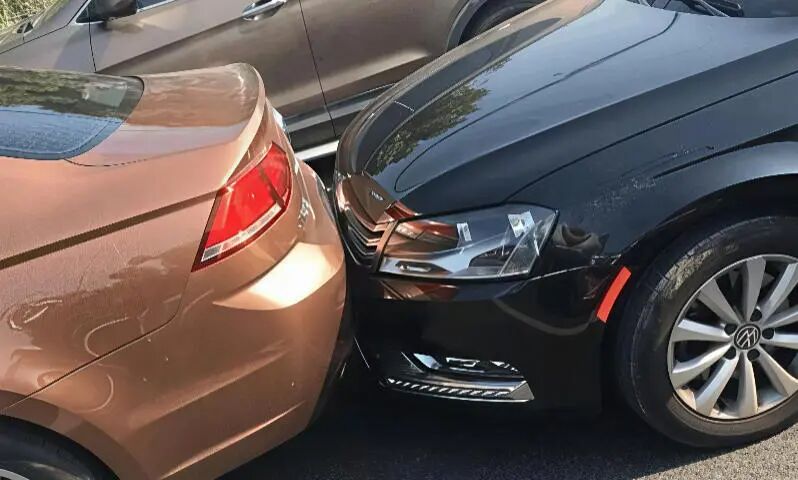
However, in many modern NEVs, the outermost part of the rear has become the metal rear door and full-width taillight assembly. Some explain that this is because NEV buyers, often first-time car owners, prioritize the vehicle's cool appearance and attractive taillights. Automakers believe that a visually appealing design can attract customers.
More objective analyses suggest that the design of taillights and rear doors protruding more than the bumper predates the widespread adoption of electric vehicles and is not necessarily related to whether a vehicle is powered by gasoline or electricity. Large rear doors and full-width lights require a complete rear surface, and the change in bumper design is a result of stylistic evolution.
However, due to this design, many owners choose to drive with dented rear ends rather than repair them, precisely because the cost is so high—the opposite of the situation with gasoline-powered vehicles. One post claimed that repairing a small dent on a 70,000-yuan NEV could cost over 1,000 yuan. For more expensive NEVs, repair costs could reach tens of thousands of yuan.
Speaking of collisions involving NEVs, another related issue arises: many parts cannot be repaired and must be replaced entirely. Reports citing maintenance data show that the average repair cost for minor collisions in NEVs ranges from 5,000 to 15,000 yuan, compared to just 2,000 to 8,000 yuan for gasoline-powered vehicles in the same price range—a difference of about 2 to 2.5 times.
The full-width taillight is one of the key components contributing to high repair costs. It combines the left and right taillights with a central light strip into a sealed assembly, with the lens, LED modules, light guides, and control circuits all encapsulated together and sealed with glue or ultrasonic welding, making it impossible to disassemble and repair individually. Some owners have reported that replacing the full-width taillight on certain models can cost as much as 6,000 to 7,000 yuan.
From this perspective, NEV manufacturers may have reasons for adopting this design. For example, the bumper may integrate LiDAR, millimeter-wave radar, high-definition cameras, and various sensor brackets. These components are deeply integrated with the bumper itself, making it impossible to repair partial damage individually. In such cases, replacing the entire assembly may be more cost-effective than repairing a dented rear door.
02 The ultimate result is high repair costs
But what if we consider more serious accidents? This is also related to changes in manufacturing technology, particularly the popularity of integrated die-casting. This technology combines dozens of components into a single piece, reducing manufacturing costs and speeding up production cycles. However, the trade-off is that aluminum die-cast parts are brittle and cannot be repaired with bodywork after a collision; they must be replaced entirely.
In authoritative crash tests, models using large-scale die-casting received the worst rating (P for Poor) in the "Crashworthiness and Repair Economy" category, while similarly priced models without large-scale die-casting received a G (Good) rating. Of course, this is not absolute and depends on the specific model and the manufacturer's subsequent design choices.
Another technology, battery-body integration, also transforms the battery pack from an independent module into part of the vehicle's structure. Even a minor impact that deforms the battery housing often requires replacing the entire battery pack. Data from the latest China Insurance Research Institute (CIRI) report (Issue 21) shows that the average replacement cost ratio for battery packs in pure electric vehicles is 44.17%.
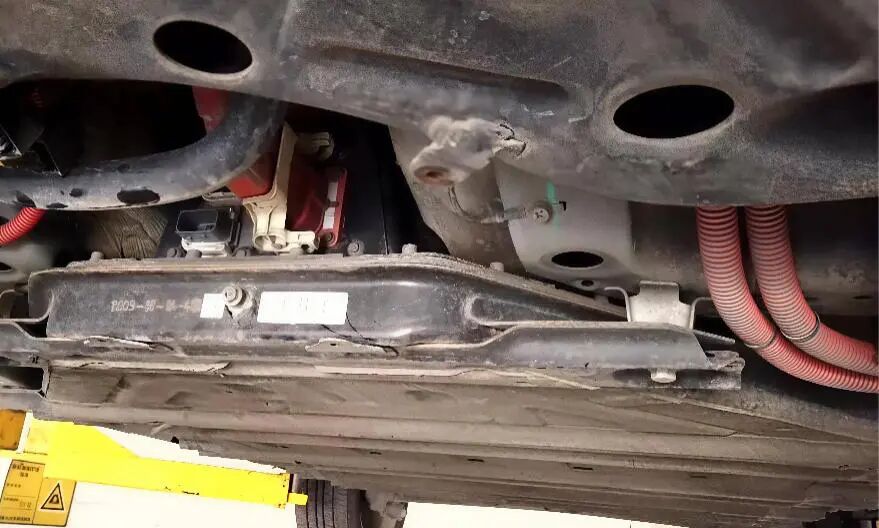
Simply put, 44.17% means that, on average, replacing the battery pack in a pure electric vehicle costs about 44.17% of the vehicle's total price. For example, replacing the battery on a 200,000-yuan vehicle would cost approximately 88,000 yuan. While specific models may vary, this data is still highly relevant.
For consumers, this replace-only model turns what could have been a few hundred yuan in repairs into thousands of yuan in expenses. From their perspective, they believe automakers are deliberately making repairs more expensive, especially when combined with the requirement to use 4S dealerships for warranty service, creating a vast profit chain.
After all, NEVs, especially pure electric models, do not require the same regular maintenance as gasoline-powered vehicles. NEV manufacturers cannot profit from this high-frequency service, but high-priced repairs and parts remain a lucrative part of after-sales service, making it necessary to protect this more profitable area.
Of course, the complaints from NEV owners are understandable. Until this year, many media reports have highlighted the repair restrictions and difficulties faced by NEV owners. Automakers are reluctant to share repair technology, and third-party repair shops are hesitant to work on NEVs due to technical barriers. Even if repairs are forced through a third party, it may void the vehicle's warranty, resulting in greater losses for the owner.
However, in June of this year, nine departments, including the Ministry of Commerce, jointly issued a document clarifying that automakers cannot deny "three guarantees" (repair, replacement, and refund) responsibilities simply because consumers choose third-party maintenance services. The document also requires automakers to authorize repair technologies and encourages "repair over replacement." Previously, there were also calls for automakers to disclose repair technical information and for battery manufacturers to provide necessary disassembly information to repair shops.
Even so, one thing remains unchanged: vehicle repairs must either be paid out of pocket or covered by insurance. Given the high costs, consumers generally choose to use insurance, triggering a chain reaction where high repair costs directly drive up insurance premiums. In 2025, the average insurance premium for NEVs was 4,360 yuan, about 1.7 times that of gasoline-powered vehicles, while the average risk cost for NEVs was 2.2 times higher.
Industry experts point out that the claim rate for NEVs is 70% higher than that of gasoline-powered vehicles, with payout rates about 10 percentage points higher. Insurers can only mitigate cost risks by raising premiums, which are ultimately borne by all NEV owners. This creates a vicious cycle: design leads to high repair costs, high repair costs lead to high payouts, high payouts lead to higher premiums, and higher premiums burden owners.
So, returning to the initial topic of rear design, should the focus be on aesthetics or practicality?
Editor-in-Chief: Yang Jing Editor: Wang Yue

THE END
-
![]()
The Data Centers of AI Giants Are Hitting a Wall Harder Than Chips
-
How Far Is AI from Independently Contributing a Nobel Prize-Level Achievement?
-
![]()
SU8 and SU9 Are on Their Way! Xiaomi Unveils a Fleet of New Vehicles
-
![]()
Settlement of Smart Horizon's 'Household Registration': First Independent Automaker Status Approved for Hongmeng Zhixing, Paving the Way for Listing
-
![]()
Why Not Opt for Price Reductions When Car Sales Are Sluggish?
-
![]()
Chang'an Automobile: Ushering in a New Era of 'Young Leaders'
-
![]()
What?! The Bumper is No Longer the First Line of Defense!
-
![]()
Who Can Achieve Big Results with AI During Double 11?"],"keywords":["Double 11, AI, Doubao, Qianwen, shopping recommendations"],"content":["During Double 11, Douyin and Alibaba attract users to use AI