Anthropic: Shedding the 'Money-Guzzler' Tag; Becoming a 'Mortgage Slave' Instead, with a Trillion-Dollar Long March Still Ahead
 10/27 2026
 394
On October 26, Anthropic finally laid its prospectus on the table. The first page reveals a stark contrast:
On one side, Q2 revenue hit $11.56 billion, a 14-fold year-on-year surge, achieving GAAP operating profitability for the first time;
On the other, nearly $1 trillion in computing power contracts signed over ten months, equivalent to 22 times its annualized revenue.
In our January report, 'Deep Dive into Minimax and Zhipu: Large Models, Computing Power Intensity, and Funding Endurance,' we posed a question: What kind of business is large-model development? The answer then was pessimistic—a capital-intensive business 'fully exposed on the income statement,' where revenue growth could never keep pace with escalating training investments.
Nine months later, Anthropic's prospectus offers the first 'caught up' example. But at what cost? This analysis addresses four key questions based on the prospectus:
1) What does Anthropic sell, and where does its money come from?
2) Is inference profitable? How does it compare to Zhipu and MiniMax?
3) How much revenue growth is needed to sustain trillion-dollar computing power bills?
4) Are funds from Amazon, Google, and Broadcom investments or pre-paid orders?
Here’s the detailed analysis:
1. ToB Business Core: Selling Token-Based 'Intelligence' with Volume-Based Pricing
Anthropic's business model is straightforward: selling 'intelligence' by the token (the unit for model text processing). Of its $16.3 billion H1 2026 revenue:
a. Usage-based revenue: $13.1 billion (80%) from consumption-based API (Application Programming Interface), Claude Code, etc.;
b. Subscription revenue: $3.2 billion (20%) from enterprise editions, Pro/Max subscriptions.
This ratio suggests two issues: a) High pricing attracts Key Account (KA) clients, who prefer usage-based models; b) Model loyalty remains uncertain—usage-based consumption doesn’t bind users to specific models, leaving them open to switch if better/cheaper alternatives emerge.
Client structure reflects this:
KA clients (annual payments >$100,000): Surged from ~20 in late 2023 to over 11,900 by September 2026, contributing 74% of H1 revenue. Among them, over 1,900 paid >$1 million, and ~250 paid >$10 million.
Fortunately, Opus's launch boosted client penetration and reduced concentration—top 5 clients' share dropped from ~36% in Q1 2026 to ~21% in Q3 2026.
2. 'Supermodel' vs. 'Supercloud': A Looming Showdown?
Channel Dynamics: Who holds the power—large models or cloud platforms? Cloud platforms' distribution strength is undeniable:
Channel distribution became increasingly vital in Anthropic's 2026 rise:
Revenue from Amazon Bedrock, Google Gemini Enterprise Platform, and Microsoft Foundry ('cash registers') jumped from 11% in 2023 to 48% in H1 2026, with 58% of receivables tied to cloud vendors.
As Anthropic signs contracts directly with end clients and is the 'primary obligor,' it books revenue gross, treating cloud vendors' commissions as sales expenses.
These 'toll fees' are substantial: We estimate channel fees as a % of cloud market revenue surged from ~16–18% in 2025 to ~35% in H1 2026.
Behind this shift: Supercloud vendors leverage long-term client relationships and massive cloud computing power reserves. Large models, as investment black holes, must focus limited resources on R&D, leaving client acquisition and computing power stockpiling underfunded.
However, with ample funding, Anthropic will likely attempt to build its own AI cloud token factories, strengthening official channels and backend computing power.
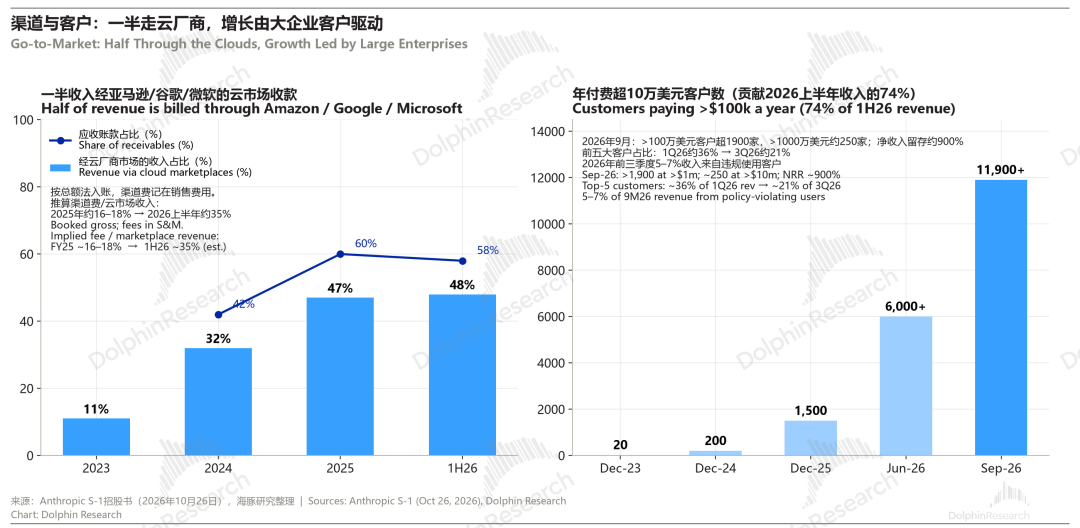
Figure 1: Channel and Client Structure
Note: Channel fee rates are estimates. H1 2026 'Sales, Marketing & Partnerships' expenses hit $3.168 billion, with channel fees up ~$2.7 billion YoY (vs. $120 million previously), corresponding to ~$7.8 billion in cloud market revenue (48% of $16.286 billion), or ~35%; 2025's rate was ~16–18%.
3. Inference Profits vs. Training Costs: 85% vs. 45% Gross Margins Tell the Real Story
The prospectus highlights a striking divergence:
Q2 2026 revenue soared +1,368% YoY, while computing power and infrastructure costs rose just +300%. Computing costs as a % of revenue plummeted from 251% in Q1 2025 to 48% in Q2 2026, with operating margin swinging from -249% to +8% (adjusted: +19%).
Among large-model public companies, Anthropic is the first to match revenue growth with training investments.
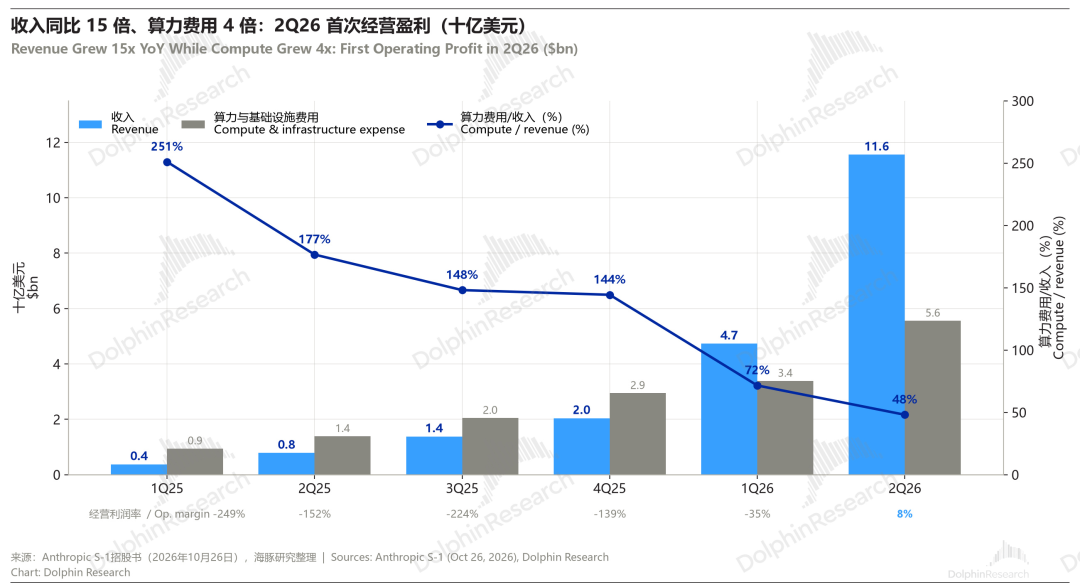
Figure 2: Revenue vs. Computing Cost Divergence
However, computing costs must be split: Training costs dominate R&D expenses, while inference costs (serving users) appear in operating costs.
Inference Revenue: H1 2026 inference costs (operating costs) for paying clients hit ~$2.4 billion, with an 85% gross margin—more than double 2025's 39.5%.
Training Costs: Of $9.7 billion in R&D, training accounted for $6.6 billion (40% of revenue). Excluding training/inference hard costs, gross margin was 45%.
Channel Impact: As noted, revenue includes 'channel water,' with sales expenses consuming $3.81 billion (~$2.7 billion in channel fees).
After R&D personnel costs, GAAP operating loss hit $690 million. Excluding $2.2 billion in stock-based compensation, adjusted operating profit turned positive at +$1.62 billion.
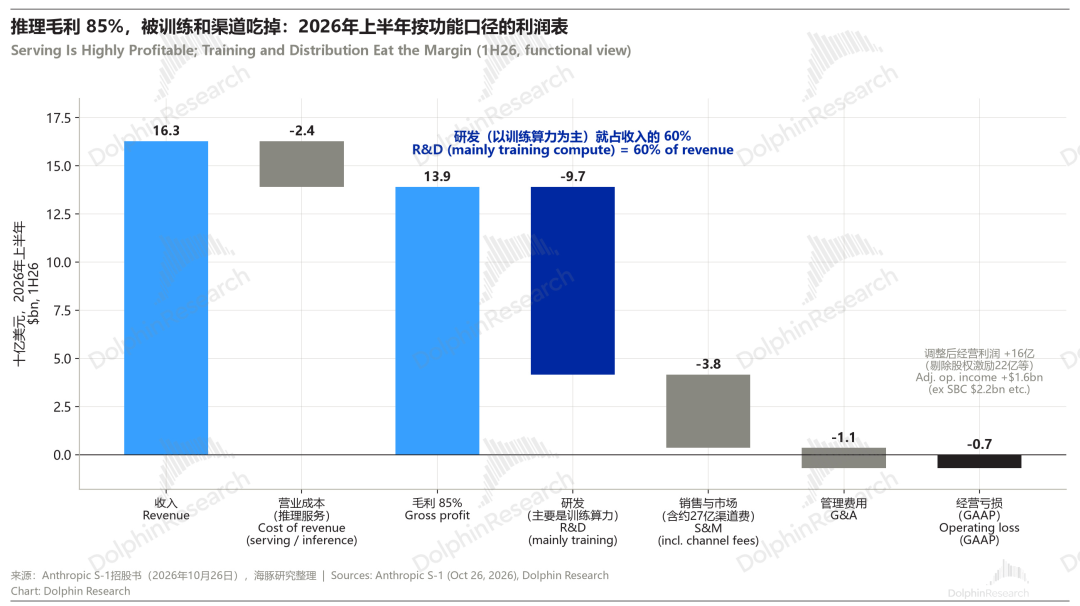
Figure 3: H1 2026 Profit Statement by Function
The business logic is clear: Inference gross margin alone is meaningless. Combining training and inference into a unified 'computing pool' signals the same message.
As long as model progress remains competitive and no single model dominates, categorizing these costs differently is deceptive. Model profitability hinges on a simple, brutal metric: Revenue growth must outpace rigid training/inference cost increases. High valuations depend on this metric being closely monitored every quarter.
4. Model Comparison: Where Do Anthropic, Zhipu, and MiniMax Differ?
We compare covered firms Zhipu and MiniMax with Anthropic:
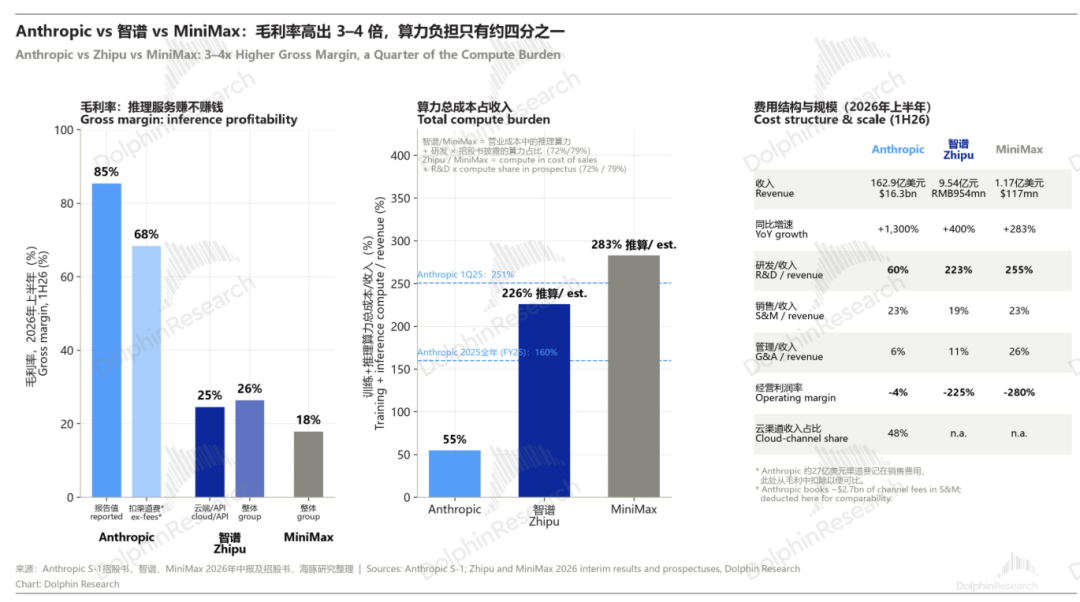
Figure 4: Standardized Comparison of Anthropic, Zhipu, and MiniMax
Gross Margin: One soars, two struggle. Anthropic hits 85.4%, but after deducting ~$2.7 billion in channel fees and free users' computing costs (booked under sales expenses), its comparable margin is ~68% (estimate).
Zhipu: 26.4% overall (24.6% for cloud/API, up from 0.4% last year via 101% price hikes and scale effects). MiniMax: 17.9%.
The gap stems from pricing power: Anthropic's SOTA ('State of the Art') 'supermodel' vs. cost-effective 'general models.'
Computing Burden: Chinese firms lag by ~1.5 years. Anthropic's H1 computing costs were 55% of revenue. For Zhipu and MiniMax (which don't break out R&D computing costs), we estimate:
Zhipu: ~226%, MiniMax: ~283%—roughly Anthropic's Q1 2025 level (251%).
Expense Structure: The gap lies almost entirely in training. Sales expense ratios are similar (19–23%, or ~10%+ excluding channel fees, lower than Chinese peers). R&D as a % of revenue: Anthropic 60%, Zhipu 223%, MiniMax 255%. Operating margins: 4%, -225%, -280%.
Anthropic proves 'intelligence premiums' can tame training costs. However, the comparison is somewhat unfair—DeepSeek, not listed here, would offer a true 'superperformance vs. supercost-efficiency' showdown against Anthropic.
5. Crucial Question: How Much Revenue Growth Can Sustain $1 Trillion in Computing Bills?
By late 2025, Anthropic's irrevocable computing commitments stood at $54.6 billion. By June 2026, procurement commitments hit $265.6 billion, plus $321.4 billion in signed but unleased contracts. After June, it signed another $245 billion in long-term and $21 billion in short-term contracts.
Adding unbooked floating portions—$125–150 billion in additional TPUs (Tensor Processing Units, Google's custom chips) for 2028–2031 and over $20 billion from AMD—the total hits ~$1.01 trillion (upper estimate).
In ten months, commitments skyrocketed nearly 20-fold from $54.6 billion to $1 trillion.
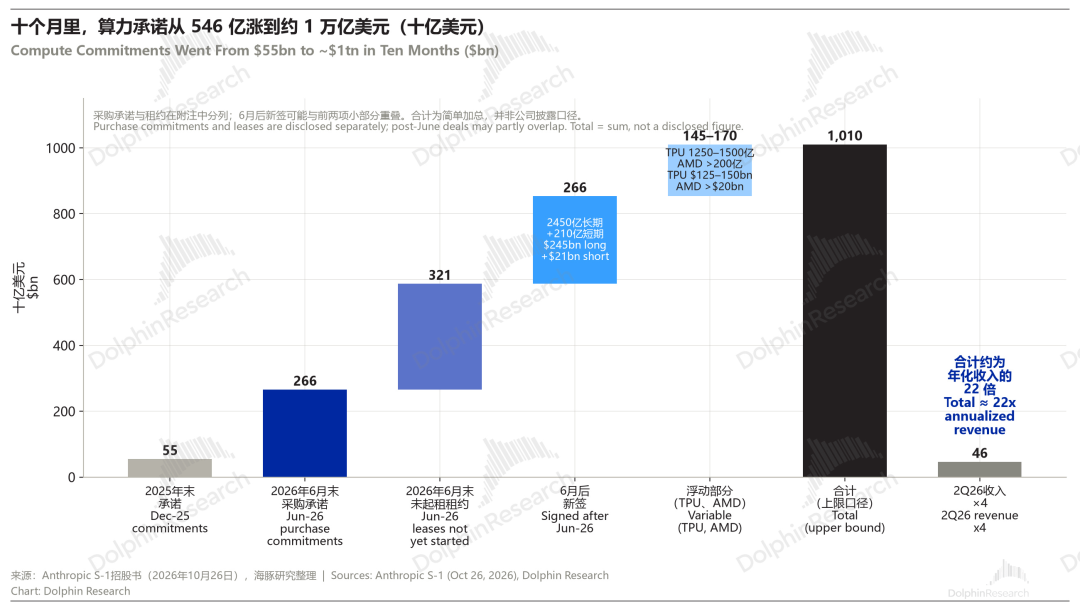
Figure 5: Cumulative Computing Commitments
Who's owed money?
Broadcom: ~$161.2 billion in TPU equipment financing leases;
Google Cloud: At least $114.5 billion (plus additional TPUs);
SpaceX AI: Up to $120.5 billion (~$3.1 billion monthly);
Amazon AWS: At least $110 billion;
Microsoft Azure: At least $44.9 billion;
AMD: Over $20 billion;
New Cloud: Nscale, Lambda: ~$86 billion combined.
Critically, contract terms are rigid:
Google, Amazon, and Microsoft contracts require payment 'regardless of usage' (take-or-pay). Only SpaceX AI's contract offers flexibility—cancelable with 90 days' notice after Q1 2027.
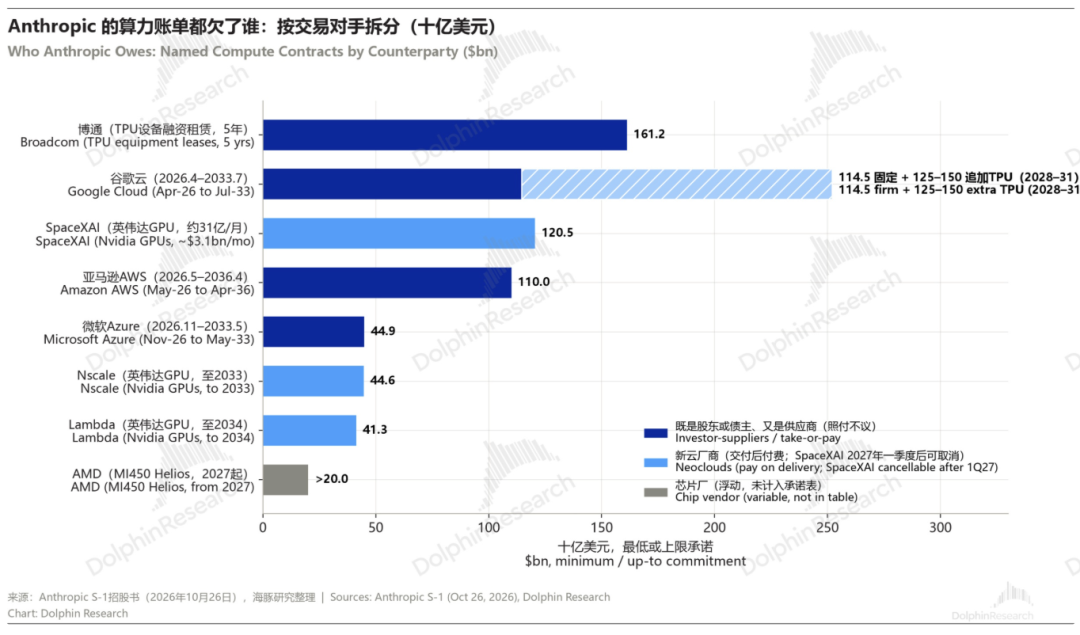
Figure 6: Computing Contracts by Counterparty
Key Question: What revenue level can sustain this bill?
We amortized named contracts linearly over their terms. Peak annualized costs hit ~$115 billion (estimate, excluding additional TPUs, AMD, and short-term contracts)—5x current computing expenses ($22.2 billion annualized in Q2 2026).
To maintain a ~55% computing cost ratio (break-even), annual revenue needs ~$210 billion. To return to Q2 2026's ~45–48% ratio, ~$255 billion is needed. Current Q2 2026 annualized revenue: $46.2 billion.
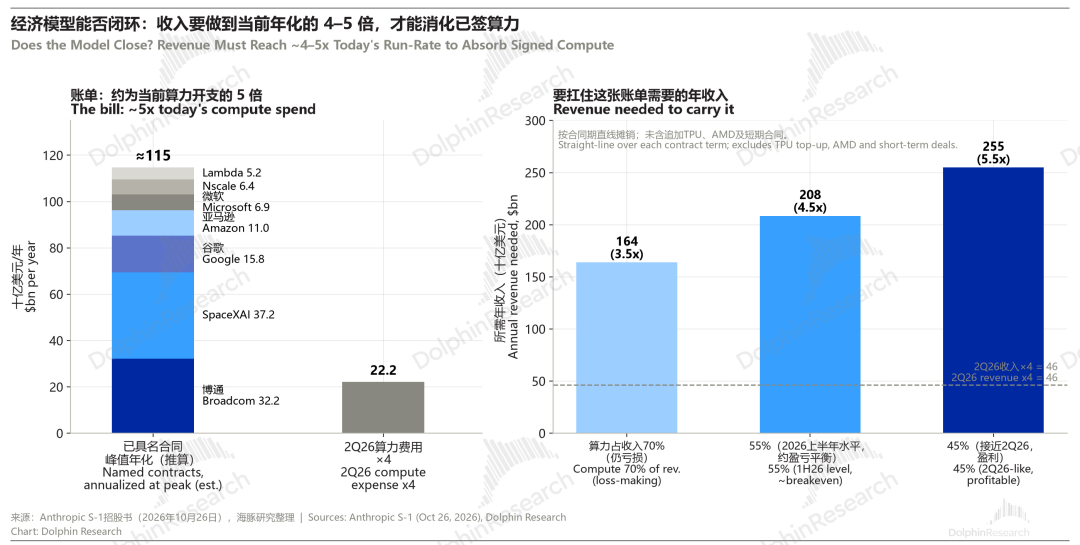
Figure 7: Economic Model's Break-Even Conditions
In short, revenue must grow 4–5x more. While revenue surged 15x over the past four quarters, another 4–5x rise isn't impossible—but contracts are rigid, while revenue isn't.
Management doesn't shy away: 'As substantial new computing capacity comes online, related expenses will precede recognized revenue, compressing operating and adjusted operating margins during these periods... Moreover, higher short-term computing utilization raises unit costs.'""Translation: Q2 2026's 8% operating margin may be the peak before another wave of computing capacity goes live.
VI. Is the Money from Big Companies Investment or Deposit?
Anthropic described its relationship with big cloud companies: cloud vendors are "simultaneously our investors, customers, distribution partners, and competitors"; Broadcom is "both a supplier and lessor."
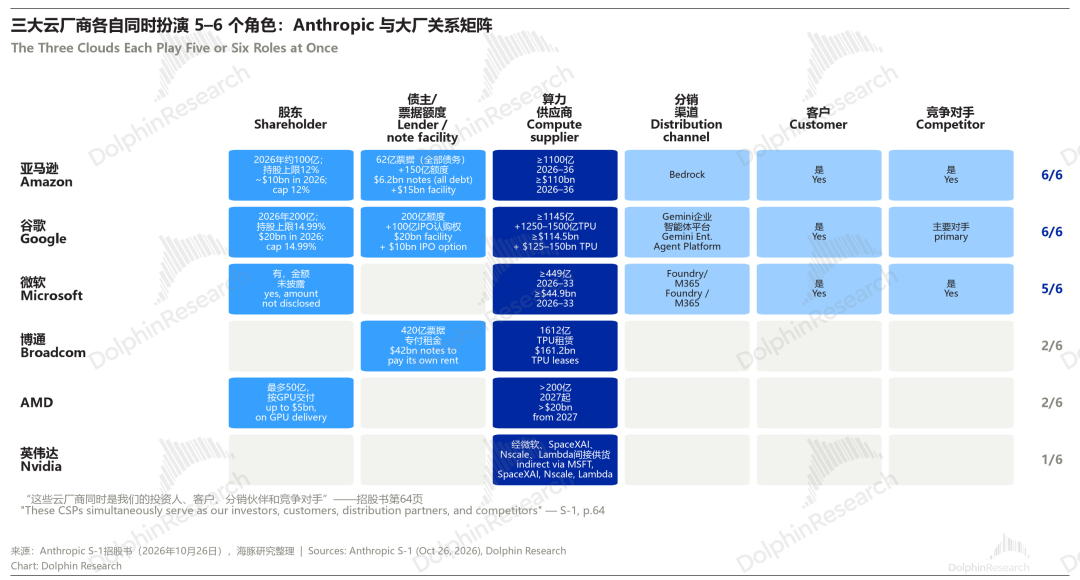
Figure 8: Relationship Matrix Between Anthropic and Big Companies
Let's examine each one:
Amazon: In 2023 and 2024, two rounds of $4 billion convertible notes each were issued; the remaining $6.2 billion in notes represent Anthropic's current total debt.
In 2026, an additional equity investment of approximately $10 billion was made, along with a $15 billion credit line—released in $5 billion increments according to "computing capacity milestones with Amazon"; the maximum shareholding is capped at 12%.
In return, Anthropic committed to purchasing at least $110 billion in computing capacity from AWS from May 2026 to April 2036; Amazon can even offset its note lending to Anthropic with "money owed to Anthropic."
Google: Early convertible notes worth approximately $3.3 billion have been fully converted to equity; in 2026, a $20 billion equity investment was made, along with an additional $20 billion credit line (drawdown conditions linked to third-party computing agreements and revenue targets signed by Anthropic), and up to $10 billion in subscription rights upon going public; the maximum shareholding is capped at 14.99%.
In return, Google Cloud contracts are worth at least $114.5 billion, with an additional $125–150 billion to be added from TPU providers like Google from 2028–2031.
Microsoft: There is an equity investment, but the amount is undisclosed; Azure contracts are worth at least $44.9 billion; Claude is also sold through Foundry and Microsoft 365.
Broadcom: The most "sophisticated" arrangement. A five-year TPU equipment finance lease generates approximately $161.2 billion in rental income for Broadcom; simultaneously, Broadcom lends Anthropic up to $42 billion in convertible notes, "specifically for paying quarterly rent on this lease," with 9% in-kind interest payments, convertible to stock at a 10% discount to the 30-day average price after going public.
Using Broadcom's money to pay Broadcom's rent, and ultimately converting the debt into Anthropic's stock.
AMD: Starting in 2027, it will supply MI450 Helios, with an initial batch exceeding $20 billion; AMD will also subscribe to up to $5 billion in non-voting stock in line with GPU delivery progress.
NVIDIA: No direct contracts, but its GPUs are indirectly supplied through Microsoft, SpaceXAI, Nscale, and Lambda, with the latter three contracts totaling approximately $206 billion.
Summing it up: Amazon, Google, Broadcom, and AMD have collectively provided or committed approximately $133.3 billion in funding to Anthropic, in exchange for approximately $405.7 billion in computing orders. For every $1 invested, roughly $3 in orders is received.
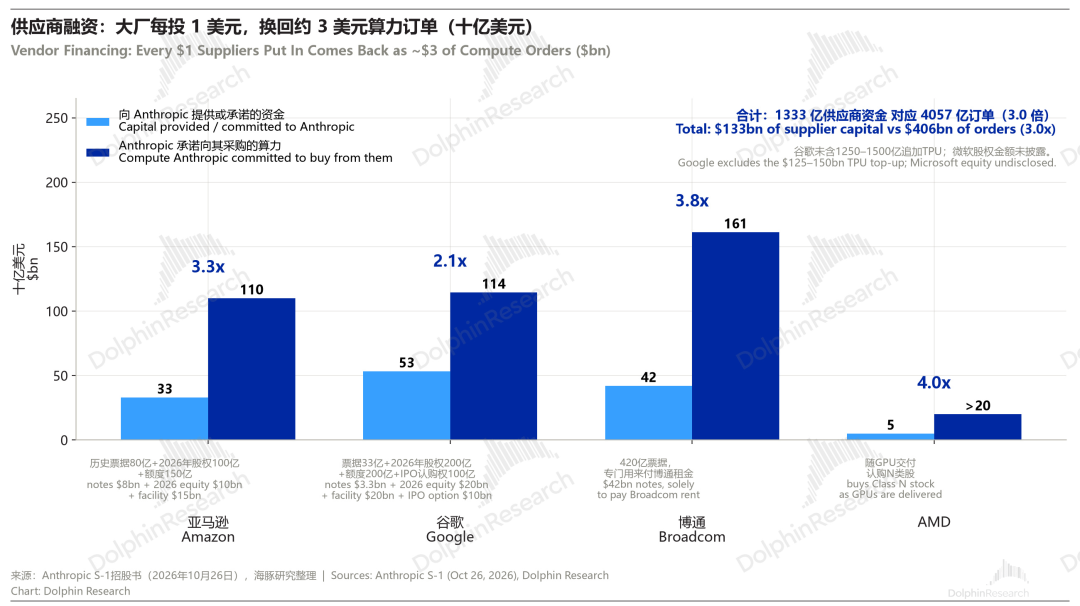
Figure 9: Supplier Funding and Computing Orders
So, is this money investment or deposit? From Dolphin Research's perspective: It's both.
This network allows Anthropic to lock in computing capacity far exceeding its own scale with minimal cash; it also enables big companies to turn their investments in Anthropic into orders for their own clouds and chips.
This ties together hyperscalers, cloud providers, and chip companies like grasshoppers on the same string—inextricably linked, with only one way out: AI must deliver results.
The benefits for Anthropic are clear: it no longer lacks money, with approximately $131.7 billion in cash and short-term investments as of late June, along with $77 billion in untapped strategic note allocations and a $15 billion revolving credit facility.
However, such rigid payment agreements mean Anthropic will inevitably cut prices if competitive conditions worsen, as seen in the third quarter: locked-in computing capacity must be fully utilized; if users can't consume it all, prices must be reduced to sell it; with capacity locked in, no one will prioritize price protection—penetration is key. Under this logic, the valuation pressure on cost-effectiveness models is immense.
VII. Several Special Reminders + Unique Equity Structure
In the prospectus, there are several points to note:
In the first three quarters of 2026, 5–7% of revenue came from customers violating usage policies; this will decline after stricter enforcement in August–September. The approximately 900% net revenue retention (NRR) reflects the transition from trial to scaling (scale-up) phase and is not extrapolatable. The net loss of $80.7 billion in the first half of 2026 was primarily due to fair value changes in convertible notes ($72.4 billion)—a non-cash loss driven by valuation increases, which should be ignored. Management explicitly stated: "Revenue growth will decline, and may decline significantly." In this version of the prospectus, Q3 revenue, cash as of late September, annual tables of committed payments, and big companies' shareholdings are all blank.
The equity arrangement is unique:
Control: Two non-economically beneficial, separated shares—one Trust T-share, entitled to elect 4/7 board seats; one Founder F-share, with fixed 50.1% voting rights. Big companies have no say: Amazon and Google hold N-class shares (no voting rights), and the prospectus does not disclose any board seats or observer rights for big companies; each will hold over 5% post-IPO. Public benefit arrangements: 847 million N-class shares (5% after full dilution) are injected into a public benefit fund, with up to 2% additional issuance allowed for every 50% stock price increase; the founder committed to donating 80% of their equity.
VIII. Conclusion: "Profit & Loss Statement Cash Burner" vs. "Balance Sheet Mortgage Slave"—Who Laughs Last Remains Uncertain
As Dolphin Research noted when tracking two major Chinese model companies, large models are a capital-intensive business "fully exposed on the profit and loss statement"; only when a single training run can be amortized over the long term, turning the model into a true "balance sheet business," does the model become viable.
Anthropic's prospectus demonstrates half of this path: through revenue scale, it has, for the first time, allowed the training cash burner to be supported by the profit and loss statement, achieving single-quarter operating profitability and 85% inference gross margins, far outpacing its domestic counterparts.
However, the hidden costs of scaling are clear: it has converted several years of future computing capacity into nearly $1 trillion in contracts and leases on the balance sheet, most of which are pay-no-matter-what obligations.
Previously, "losses were on the profit and loss statement"; now, "burdens are on the balance sheet." If revenue grows another 4–5x, this becomes a cash cow; if not, under this trillion-dollar bill, the ultimate winner will depend on whether AI models or cloud providers dominate the competitive landscape.
- END -
// Reprint Authorization
This article is an original work by Dolphin Research. Authorization is required for reprinting.
// Disclaimer and General Disclosure
This report is for general comprehensive data purposes only, intended for general reading and data reference by users of Dolphin Research and its affiliated institutions. It does not consider the specific investment objectives, investment product preferences, risk tolerance, financial status, or special needs of any individual receiving this report. Investors must consult independent professional advisors before making investment decisions based on this report. Any investment decisions made using or referencing the content or information in this report are at the investor's own risk. Dolphin Research shall not be liable for any direct or indirect responsibilities or losses arising from the use of the data contained in this report. The information and data in this report are based on publicly available sources and are for reference purposes only. Dolphin Research strives to ensure but does not guarantee the reliability, accuracy, or completeness of the information and data.
The information or viewpoints mentioned in this report shall not, under any jurisdiction, be construed as or deemed an offer to sell securities or an invitation to buy or sell securities, nor shall they constitute recommendations, inquiries, or endorsements of relevant securities or related financial instruments. The information, tools, and data in this report are not intended for or proposed for distribution to jurisdictions where distribution, publication, provision, or use of such information, tools, and data conflicts with applicable laws or regulations, or to citizens or residents of jurisdictions where Dolphin Research and/or its subsidiaries or affiliates would be required to comply with any registration or licensing requirements in that jurisdiction.
This report reflects only the personal viewpoints, insights, and analytical methods of the relevant creators and does not represent the stance of Dolphin Research and/or its affiliated institutions.
This report is produced by Dolphin Research, with copyright solely owned by Dolphin Research. Without prior written consent from Dolphin Research, no institution or individual may (i) produce, copy, duplicate, reproduce, forward, or create any form of copies or replicas in any manner; and/or (ii) directly or indirectly redistribute or transfer to other unauthorized persons. Dolphin Research reserves all related rights.
-
![]()
Anthropic Officially Files for IPO, Aiming for the Largest IPO in History
-
![]()
Anthropic: Shedding the 'Money-Guzzler' Tag; Becoming a 'Mortgage Slave' Instead, with a Trillion-Dollar Long March Still Ahead
-
From Radical Electrification to 'Quality Over Quantity': The Price and Redemption of Porsche's Strategic Shift
-
![]()
"DeepSeek and Its Peers" Prioritize Computing Power Over Meta's Ace
-
![]()
Is the Inner Screen of the 16,000-Yuan iPhone Duo Cracking After Less Than 20 Folds?
-
![]()
Apple’s Priciest Model Fails to Impress
-
![]()
Foxconn Worker Claims Apple Eased iPhone Duo Quality Checks; Insider Denies Reduction in Yield Rate Standards
-
![]()
How can a company that lost $80 billion in six months justify a valuation of nearly $2 trillion?