Is the Inner Screen of the 16,000-Yuan iPhone Duo Cracking After Less Than 20 Folds?
 10/27 2026
 575
On October 23, the iPhone Duo was officially released for sale.
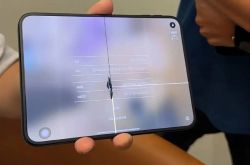
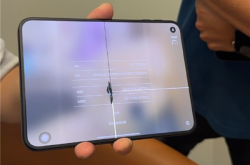
On the very first day that early adopters got their hands on the new phones, images of cracked inner screens started making the rounds on social media. These cracks predominantly ran along the fold line towards the center of the screen, displaying highly consistent patterns.
An Australian user reported that within about six hours of receiving the device, and after less than 20 folds, while showing a friend how to unfold it, they first noticed an anomaly beneath the inner hinge. This was swiftly followed by a distinct cracking sound, and the screen cracked along the hinge, with no signs of impact on either the inner screen surface or the outer hinge.
Some users in China also reported hearing a cracking sound during normal unfolding, which was then followed by a black vertical crack, approximately 3 centimeters long, appearing at the fold.
Early adopters who shelled out 15,999 yuan for the initial release now find themselves in a position where, on the very first day, they must undergo an evaluation process to determine whether the damage was caused by human error.
01
Apple Acknowledges the Issue, but Only for a 'Select Few' Devices
On October 27, Apple officially responded, admitting that a select few iPhone Duo devices had encountered inner screen issues and that affected users could reach out to AppleCare for replacements.
However, Apple did not reveal the exact number of devices affected or provide an explanation for the root cause of the inner screen failures.
The term 'select few' is a carefully chosen phrase, but iFixit's teardown offers a more precise insight.
When the phone is closed, the support rod at the center of the hinge fails to retract as intended, causing the protruding hard structure to press directly against the flexible inner screen. After repeated folding, this results in the screen being forcibly cracked.
Another potential contributing factor is that during folding, the hinge's curved guide rail sits higher than the surrounding components, creating localized pressure points.
iFixit also stressed that this is structural speculation and not definitive proof, but the locations of the damage highly align with the positions of the hinge components.
The hinge of a foldable screen must guide the screen to bend along a predetermined path, necessitating the internal support structures to work in harmony.
Any deviation in the assembly position or dimensions of a single component can cause the stress generated by repeated opening and closing to concentrate in specific areas.
This is not an issue that can be resolved with software, nor is it a sporadic failure that can be fixed by simply replacing the screen.
02
Did Apple's First Foldable Screen Falter on the Fundamentals?
Foldable screens are not a novel technology.
Samsung, Huawei, and Honor have already made significant strides in this category through multiple generations, refining the hinge support structures, screen bending radii, and dust-proof designs through several rounds of trial and error.
As a newcomer, Apple should theoretically be able to learn from its predecessors and avoid previously identified pitfalls.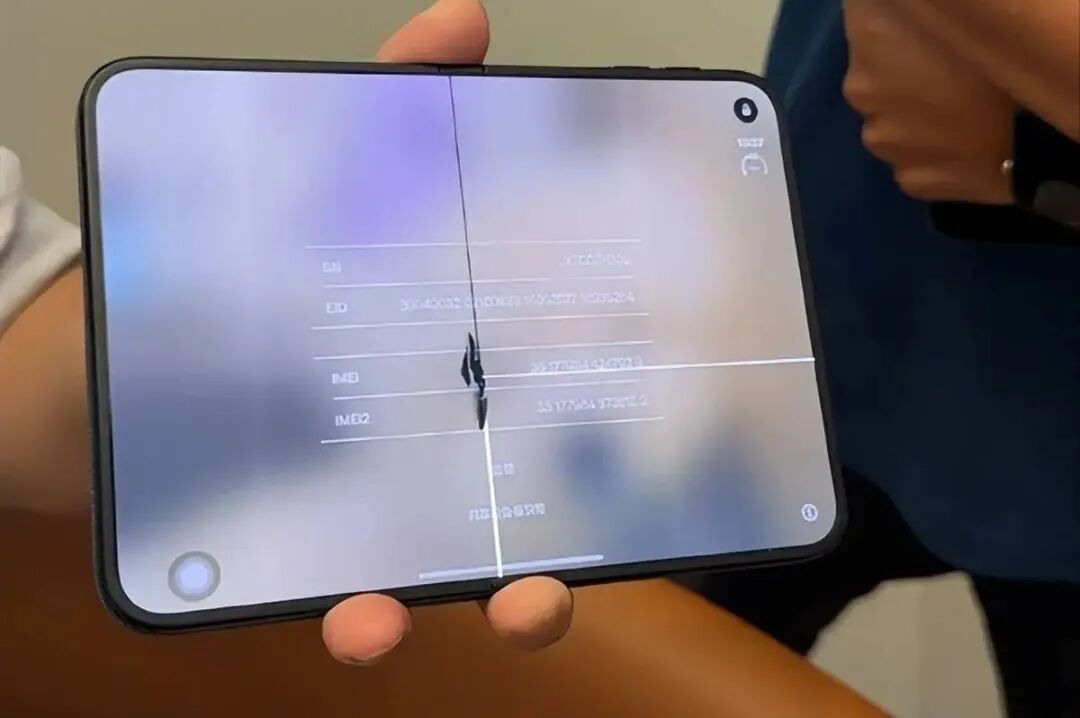
Image source: Internet
However, the issues exposed by the iPhone Duo precisely relate to the most fundamental aspect of foldable screens: the physical interaction between the hinge and the screen.
Prior to the release, a user named He tested 25 common apps and discovered that approximately 80% had not yet been optimized for foldable screens. The WeChat app, version 8.0.80, only initially adapted to the foldable screen interface on the day of release, and the official update log did not even list optimizations specifically for the iPhone Duo.
The delay in software ecosystem development is understandable, as the developer kit was only made public in early October, and many developers had to wait for actual devices to begin true adaptation.
However, the hardware issue of the hinge support rod failing to retract properly cannot be attributed to insufficient time. It indicates an oversight in the engineering verification process rather than the pace of ecosystem development.
Some analyses suggest that there is an inherent tension between the visibility of creases and the durability of foldable screens.
To manage creases visually, structural designs above the hinge must make compromises, which may translate into additional stress risks during repeated bending.
Apple chose to prioritize crease control, but the cost became evident on the first day of sales.
03
What Implications Does This Have for Early Adopters?
For users who have already experienced screen cracking, the most straightforward course of action is to contact AppleCare for a replacement.
However, replacement does not equate to a permanent solution.
If the design or assembly tolerance issues with the hinge support rod are not rectified, the new device may still be susceptible to cracking under similar usage conditions.
Apple has not yet announced any plans to modify the hinge structure.
For consumers still on the fence about purchasing, a more pragmatic basis for judgment is that the reliability of a foldable screen cannot be assessed solely by the visibility of creases or the feel of opening and closing. It also hinges on how much real-world product data the manufacturer has accumulated regarding hinge durability.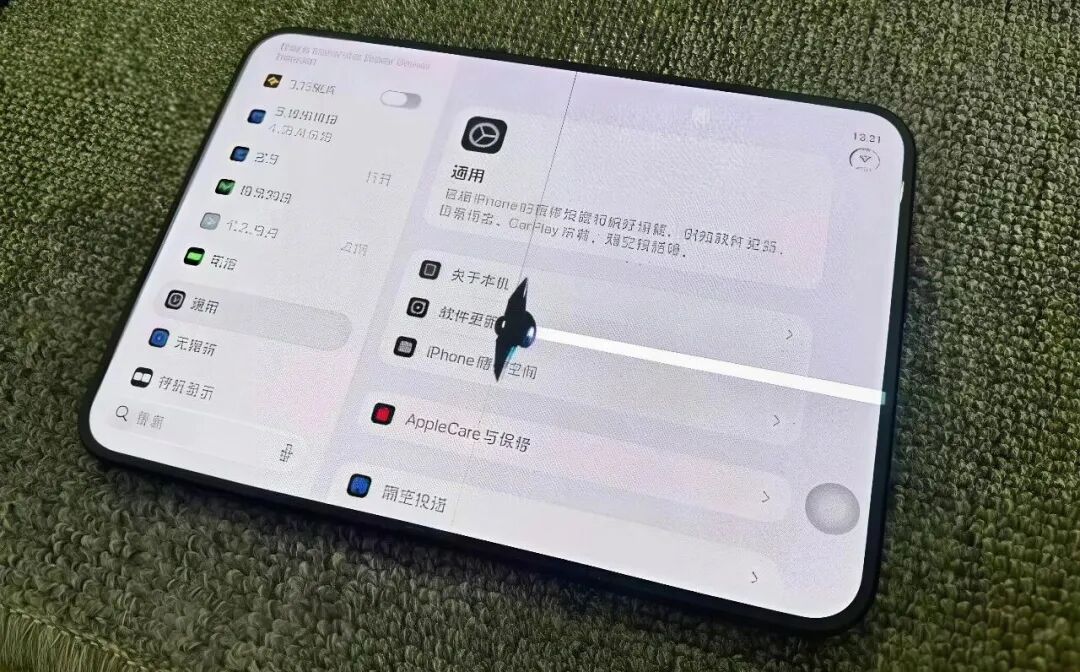
Image source: Internet
The Android阵营 (Android camp, here referring to Android phone manufacturers) has a longer track record of iteration in this regard, while the iPhone Duo is a first-generation product.
It is not uncommon for first-generation products to encounter issues, but it is unusual for the problem to lie in the most fundamental hinge support structure.
Spending 16,000 yuan on a foldable screen means investing in a large-screen experience and a set of precisely coordinated mechanical structures.
The screen can be replaced if it cracks, but if the cause of the crack is a support rod in the hinge that failed to retract in time, then what needs to be redesigned is not just the screen itself. #AppleFoldableScreen
-
![]()
Is the Inner Screen of the 16,000-Yuan iPhone Duo Cracking After Less Than 20 Folds?
-
![]()
Apple’s Priciest Model Fails to Impress
-
![]()
Foxconn Worker Claims Apple Eased iPhone Duo Quality Checks; Insider Denies Reduction in Yield Rate Standards
-
![]()
How can a company that lost $80 billion in six months justify a valuation of nearly $2 trillion?
-
![]()
FAW and GAC Strengthen Ties, Outlining Six Pivotal Cooperation Domains
-
[Insight] The airbag control unit (ACU) is a core component of automotive passive safety systems, with numerous market participants in China.
-
![]()
Grassroots Actors, the First Casualties of AI | Wave Trends
-
![]()
China’s Premier Provincial Capital, Guangzhou, Stages a Remarkable Comeback!