Apple’s Priciest Model Fails to Impress
 10/27 2026
 520
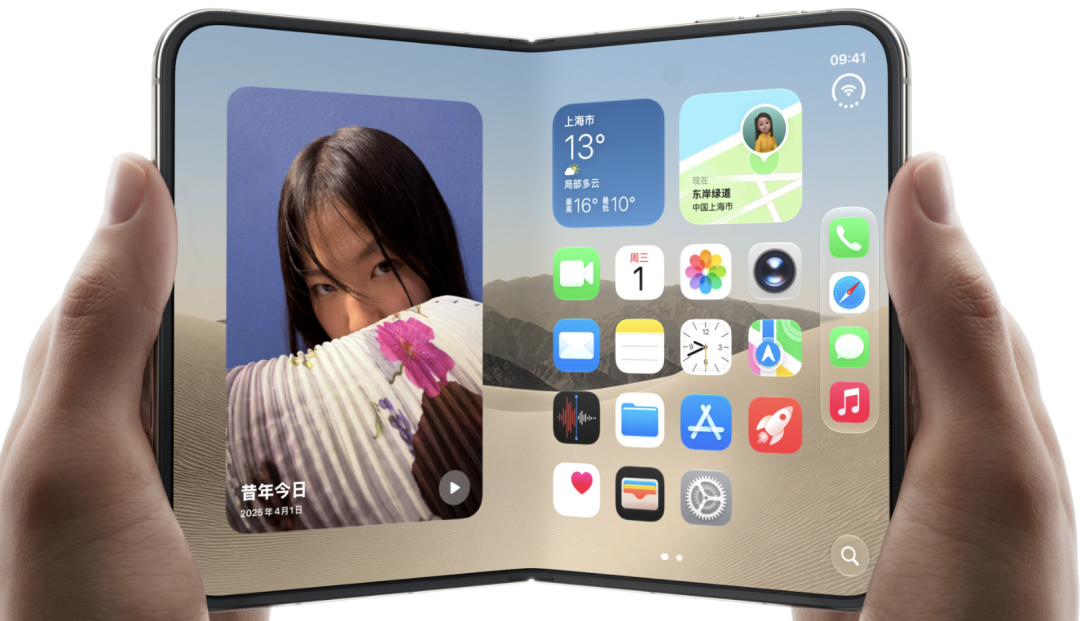
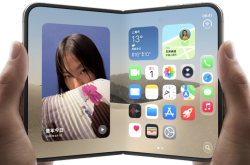
The release of the iPhone Duo has sparked debate: Has Apple nailed the execution, and is the price justified?
/
Text by Zheng Jiuyu Edited by Zhang Hongyi
Image Source | Apple Official Website
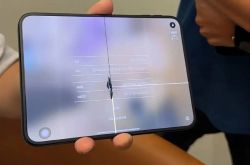
A phone priced at 15,999 yuan developed cracks after being opened and closed fewer than 20 times.
Apple described it as affecting only a "limited number of devices."
However, three key observations demand deeper scrutiny. First, on launch day, Apple issued guidelines for identifying a faulty hinge on this device. Second, within 48 hours of its release, resale prices dipped below the official retail price. And over a month earlier, Apple’s new CEO had claimed in Time magazine that rival foldable screens "felt cheap and poorly made."
The release of the iPhone Duo has sparked debate: Has Apple nailed the execution, and is the price justified?
01 Screen Cracks After Just 20 Folds
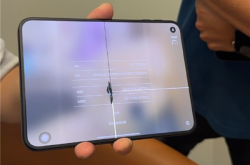
An Australian user shared photos on Reddit and provided specific details in an interview with The Verge: approximately six hours after receiving the device, and after fewer than 20 unfolding motions, a clear crack appeared.
He recounted:
"I was showing it to a friend, and as I unfolded it, I felt something unusual beneath the inner hinge, under the screen. Continuing to unfold, I heard a distinct snap, and the screen cracked along the hinge. There were no visible marks or damage on the inner screen or outer hinge to suggest pinching or breakage."
He promptly visited a local Apple Store and received a replacement.
Bloomberg verified the issue with over six users, all providing device photos or communication records with Apple customer service. The damage was consistently located along the fold, primarily on the lower half of the inner screen, accompanied by bright lines, white spots, and localized leakage.
It was also noted that Apple’s review units and another privately purchased device exhibited no such problems.
Apple stated: "Feedback from initial iPhone Duo users has been overwhelmingly positive, and developers are swiftly updating their apps... We are aware that a small number of devices have experienced inner screen malfunctions. Users facing screen issues can contact AppleCare for a replacement." The second sentence, however, contained a revealing phrase: affected devices will soon exhibit this defect.
This could imply that the issue was present from manufacturing but went undetected, rather than being a result of wear and tear.
Complicating matters was Apple’s own documentation.
On October 23, the launch day, Apple published a self-service repair manual for the iPhone Duo (document number FPZKLK, comprising 22 steps) and supporting materials. A troubleshooting page for hinge issues listed symptoms such as the device failing to fully open or close, making abnormal sounds when folded, having a loose hinge, a bent or broken hinge, or shell damage affecting hinge functionality.
The document outlined the following steps: remove the protective case and screen protector, check the hover angle, inspect for dust, and clean with a soft, slightly damp, lint-free cloth. If ineffective, replace the internal display assembly.
It also noted the absence of a diagnostic tool or software fix for hinge issues.
iFixit’s teardown revealed another detail: the parts catalog listed the inner screen and inner screen assembly separately, and the cover layer separately as well, but omitted a standalone hinge part.
In essence, if the hinge failed, the only official repair option was to replace the entire screen.
This directly contradicted Apple customer service’s earlier statement. On October 24, a representative told China Economic Net that some users had reported black and white lines on the screen, attributing it to a software UI issue that would be resolved in a future update.
Yet Apple’s own support document stated that no software solution existed.
Apple provided buyers with a device and, on the same day, instructions on identifying hinge failure, specifying that screen replacement was the only fix and that software could not resolve it.
This was not an after-sales strategy; it was a product verdict.
Apple did not explain the cause. When iFixit used CT scans, teardown imagery, and Apple’s patents to construct a 3D hinge model and aligned the crack locations, the evidence pointed to the hinge, not the panel. The foldable screen hinge relies on a central support bar: when closed, it must retract to accommodate the flexible screen’s waterdrop-shaped bend. Incomplete retraction presses the screen against the hinge, concentrating stress on the fold line.
iFixit noted that the fracture points clustered at the junction of the cross-flex cable channel and the central hinge support, where multiple structural planes meet and the support method changes, slightly below the cable’s hinge passage. Another potential failure point was the curved rail controlling the folding arc, which rises above surrounding components during folding and, if it doesn’t retract as expected, can also press against the screen.
iFixit emphasized that this was a hypothesis, not a confirmed conclusion. However, both hypotheses agreed on one point: the issue was mechanical, not panel-related.
A Foxconn employee shared similar insights with Jiemian News, adding a critical detail: during periods of tight production capacity, Apple has previously relaxed certain yield inspection standards to ensure supply, increasing the likelihood of defective products reaching the market.
The employee also mentioned that the production line had urgently replaced a batch of materials and that dealers reported a low frequency of defective devices. The same report cited channel sources estimating annual Duo inventory at around 7.5 million units.
While this remains unverified—and Apple has not confirmed it—it offers a plausible explanation for how "a small number" and "soon apparent" could both be true.
The design wasn’t inherently flawed; could inspections have been less stringent?
02 A 48-Hour Market Frenzy
When cracked screens are factored into the pricing trend, the decline was even swifter than the physical damage.
Pre-sales commenced at 8 PM on October 16.
The Apple website crashed, freezing for about 10 minutes; JD.com and Tmall’s initial inventory sold out in one minute; within 30 minutes, the official website’s shipping estimate shifted from October 23 to January, then to late January 2027. Flagship stores lacked immediate stock; customers had to pay online first to qualify.
From September to mid-October, speculation ran rampant.
On Dewu, absurd price quotes emerged as early as September 11: 256GB models listed at 59,999 yuan, 1TB models at 79,999 yuan. Proxy purchase services on Xianyu ranged from 299 to 1,000 yuan, with one 1,000-yuan listing attracting 2,141 interested buyers.
Sales began on October 23.
Early morning transactions included a 2,000-yuan markup; by 9 AM, it had fallen to 1,700-1,800 yuan; by 3 PM, the acquisition premium for the 256GB model was just 500 yuan. Dewu data showed the average transaction price for the 256GB model dropping from 20,560 yuan on October 16 to 18,237 yuan on the morning of the 23rd—a 50.9% decline in one week. Between 8 AM and 11:30 AM that day, it fell another 946 yuan in three and a half hours.
On October 25, prices fell below launch levels.
Media reports indicated that some channels offered the 256GB model at 15,799 yuan after subsidies—200 yuan cheaper than the official price. Some buyers stacked local subsidies to purchase it for 15,499 yuan; the 512GB model’s resale quote was 17,950 yuan, below the original price.
On October 26, when customer service was asked about the price drop, they replied that Apple’s official website prices were more stable and that third-party platforms might offer subsidies. The most telling part was their final remark: "Many customers have canceled their orders."
A scalper in Tianjin told the Evening News the most straightforward assessment: "On launch day, there were hardly any genuine buyers at the scene. Eight out of ten people picking up the device were scalpers who had bought the new phone to resell for a profit." A dealer in Zhengzhou had pre-locked 50 units, planning to earn 2,000 yuan per unit, but the buyer lowered the pickup price twice overnight, resulting in a total loss of 25,000 yuan after selling all of them.
The shortage was genuine, likely due to production capacity constraints. According to a Financial Sector report, a source close to Foxconn’s supply chain revealed that as of September 17, the final assembly yield was just over 60%, compared to over 97% for Apple’s mature models. Nearly 40% of units failed quality inspections. The hinge comprises hundreds of precision parts, some using 3D printing; the inner screen is exclusively supplied by Samsung Display, and the yield and delivery schedule for foldable OLED panels were also lagging. By August, daily production was in the hundreds of units.
This led to an unusually uniform shipping schedule: China, the U.S., Europe, and Japan all displayed estimated shipping dates pointing to late January 2027.
Some analysts estimated that 500,000 to 1 million units were assembled and shipped in Q3, with the first domestic batch in the tens of thousands. Analyst Jeff Pu reduced his 2026 shipment forecast from 7 million to 6 million, explicitly citing hinge production capacity—not demand—as the primary constraint. TrendForce estimated around 5 million units; Counterpoint believed 6 million was the upper limit.
For comparison, iPhone 18 Pro series shipments are expected to reach 72 million units by year-end, with the Duo accounting for less than one-twelfth of that. Counterpoint’s research director offered another demand-side calculation: The global iPhone installed base is around 1.4 billion units, and even if a tiny fraction of users were willing to try something new, the short-term potential buyer pool would be close to 6 million—exactly matching the production capacity limit.
This coincidence suggests that Apple’s first-year production roughly equals replacement demand at an extremely low conversion rate. With supply and demand balanced, any emotional fluctuation amplifies into a price wave.
Thus, most of the 50,000-yuan premium was driven not by demand but by the fear of missing out.
Once that fear subsided, so did the premium.
03 15 Years Later: The Thickest, Heaviest, and Priciest Foldable
Viewed through a 15-year lens, the Duo feels like a timely release despite inadequate preparation.
On September 30, 2011, Apple filed a patent titled "Flexible Electronic Devices," describing a device that could fold in half and fit into a pocket. It was granted in January 2015. Among the six inventors was John P. Ternus.
Fifteen years later, on September 9, 2026, the same individual—now Apple’s CEO—took the stage to announce the iPhone Duo. Time magazine later included it in its 2026 Best Inventions list, and in an interview, he explained Apple’s delay: "The other examples in the world felt kind of cheap and crappy."
In 2016, Apple engineers began seriously developing a foldable iPhone, initiated by then-hardware engineering head Dan Riccio, aiming for an iPad mini that could unfold into a larger tablet. In February 2019, Samsung and Huawei released the Galaxy Fold and Mate X four days apart, while Apple released nothing.
The turning point came in 2020. After a business trip to Asia, Tim Cook observed that Samsung and Huawei’s foldables had already gained local traction and pushed the project from technical reserve to official development.
Four challenges hindered the engineering team: whether creases would be visible, whether the hinge could withstand repeated openings and closings, how to make a flexible cover glass, and how to hide the cameras under the screen.
The first two are central to today’s cracked screen incidents.
The result was Apple’s late entry with a device measuring 11.3mm when closed, weighing 254g, and starting at 15,999 yuan.
The Huawei Mate X7, released in November 2025, measures 9.5mm when closed, weighs 235g, and starts at 11,999 yuan. By the first half of 2026, Huawei held over 70% of China’s foldable market share and 85% of the 10,000-yuan-plus segment, with cumulative foldable shipments exceeding 20 million units.
In the same size category, Apple created the thickest, heaviest, and most expensive device. According to official specs, it also removed the dedicated telephoto lens (48MP main + 48MP ultra-wide, 2x via sensor cropping), Face ID (replaced with side Touch ID), and physical SIM slot.
This is not criticism but a consequence of technical choices. Apple bet heavily on invisible creases, using dual UTG, ten-layer stacking, a 40% stiffer custom polymer, and nano-texture scattering. These investments are real, and crease control is indeed impressive.
But the cost was pushing engineering complexity into a mechanical structure with only 60% yield and hundreds of parts, then failing on tolerance where it mattered most.
Hardware engineering VP Tom Marieb made a crucial remark in a pre-launch interview with TechRadar. When discussing long-term crease evolution, he said, "Hold us accountable to that, please."
"Hold us accountable" and "others feel cheap and rough" both occurred in September. Ironically, a month later, it was the hinge being held accountable.
The advantage of being a latecomer assumes avoiding all the pitfalls predecessors faced. If you don’t, you’re just late. And the higher you stand, the louder "cheap and rough" echoes.
If the hinge is a hardware failure, this is a strategic one. On October 22, "iPhone Duo WeChat incompatibility" trended #1 on Weibo. When unfolded, WeChat was recognized as a regular iPhone, with the window fixed in the center and large black bars on both sides, lacking a tablet-style horizontal layout or support for dual accounts simultaneously.
On October 23, WeChat 8.0.80 was urgently released, specifically tailored to adapt to the aspect ratio and split-view functionality of the inner screen. Tencent customer service stated that this was a preliminary adaptation, with certain details still undergoing refinement.
Of course, Apple was well-prepared. On September 9, it launched a developer readiness page, held Group Labs sessions on September 16-17, and rolled out Xcode 27.1 beta in mid-to-late September. Around the product launch, popular apps such as QQ (9.3.77), Taobao, Weibo, Xiaohongshu, JD.com, Feishu, as well as overseas apps like ChatGPT, Telegram, X, and Netflix, were all adapted accordingly. Apple also organized 50 developer events across 20 countries to ensure widespread compatibility.
However, user experience is a different story. He Youxue and Film Storm independently tested 25 commonly used apps and discovered that approximately 80% had not been fully optimized for foldable devices. These apps either displayed content centered or uniformly scaled, failing to fully utilize the expansive 7.6-inch inner screen.
Games like Honor of Kings and Genshin Impact remained in their old compatibility modes, surrounded by black bars, a feature humorously dubbed the 'shared area' by netizens. Banking and travel apps fared even worse, with content either stretched or surrounded by large black gaps. Even Apple's own App Store exhibited left and right black bars when the device was unfolded.
The 80% figure speaks volumes, more so than any developer event. It suggests that Apple's efforts, while notable, have not fully addressed the challenges of foldable form factors within the iOS ecosystem. This indicates that foldable devices have long been a lower priority in Apple's development roadmap compared to their prominent presence in Apple's launch presentations.
Huawei, in contrast, has dedicated eight years to developing horizontal, vertical, wide, and triple-fold devices. With HarmonyOS's parallel vision and smart split-screen features as system-level defaults, Huawei ensures that its large screens are not just novelties but genuinely useful. This is a necessity for Huawei, as it must make large screens appealing to sell them. Apple, on the other hand, does not face the same pressure since the iPhone does not rely on foldable technology for its survival; the Duo is merely a new price tier in its extensive product lineup.
Ultimately, Apple resorted to administrative measures to address the compatibility issue. It mandated that starting from April 2027, iOS/iPadOS apps submitted to the App Store must be built using iOS 27 or later SDKs and include Duo-exclusive screenshots. Non-compliance would result in rejections.
Thus, the situation epitomizes Apple's approach: introducing new hardware with outdated software and an ecosystem driven by looming deadlines.
04 Whose ledger should this be recorded in?
The Duo has barely made a dent in Apple's financial statements. With six million units sold out of 257 million global shipments, it accounts for a mere 2.3%. Sales only commenced on October 23, after the fourth quarter of FY2026 (which ended on September 26), thus missing even that financial reporting window.
The real financial pressure lies elsewhere: in storage. AI data centers have consumed a significant portion of HBM capacity, driving up mobile memory chip prices by roughly 350% year-on-year. Memory's share of the 18 Pro's bill of materials surged from 10% to 34%. Apple responded by raising starting prices by $100 while absorbing some of the costs itself. Meanwhile, global smartphone shipments fell 22% year-on-year, hitting their lowest Q4 level in China since 2013.
This is the true reality of the Duo: a device designed to compete on unit price rather than volume in a shrinking market. While screen cracks may not directly impact financial reports, they erode something far more valuable—the perception that its high price is justified.
A ¥15,999 smartphone that cracks within 20 folds is not selling craftsmanship but rather relying on luck. And Apple's most valuable asset has always been its immunity to such unpredictability.
Apple's momentum remains strong: it captured a 22% global market share in Q3, breaking the 20% mark for the first time in a third quarter. Its stock hit $348.15 intraday on October 13, briefly reclaiming a $5 trillion valuation.
However, these three developments are occurring simultaneously:
First, the premium cycle is shortening. By the time the iPhone 17 was launched in 2025, the standard model offered no profit margin. By 2026, the resale premiums for the 18 Pro had halved from the previous year. With the Duo, official website stock sold out in 48 hours. The significance of scalpers retreating lies not in their losses but in the market's first systematic doubt that Apple launches are inherently scarce.
Second, three consecutive new form factors have underperformed. The Vision Pro, nearly a decade in development with estimated investments exceeding $10 billion, has sold approximately 600,000 units—a volume Apple achieves with iPhones in just 48 hours. The iPhone Air depreciated by an average of 44.3% over ten weeks, the worst in series history, with supply chain orders cut by 65-80%. The Duo marks the third strike in this regard.
The misalignments vary: the Vision Pro mispriced its form factor, the Air mismatched its positioning with its specs, and the Duo mismanaged delivery versus quality. The common thread? Using high unit prices and new forms to offset stagnant growth in mature markets. While financially viable, these strategies are product-wise flawed.
Third, Apple is being evaluated by new standards. One user noted, 'It's still exquisite (refined), but offers nothing particularly advanced over Xiaomi or Huawei's foldables.' The damage lies not in Apple's decline but in this critique using cost-effectiveness as the yardstick. Once consumers evaluate Apple in this manner, the company is already at a disadvantage.
The Duo marks Ternus' first major product as CEO, and he was one of six inventors on the 2011 folding patent. Taking office on September 1 and announcing the Duo on September 9 was widely interpreted as synchronizing with the foldable launch.
This device represents 15 years of his work, yet it trended on day 56 due to a support rod's tolerance issue.
Apple's response was telling: it waited for media inquiries, issued a statement without explanation, had customer service warn that visible creases and bulges indicate hazards, and remained silent toward iFixit. Execution was inconsistent—some stores replaced units immediately, others denied returns for screen bulges, while a Virginia user was told it was defective but left waiting due to stockouts.
Recall Samsung's 2019 Galaxy Fold screen failures, which delayed the launch and required hinge redesigns. Apple's real strength has always been providing convincing answers fastest after problems emerge.
This time, the answer hasn't arrived. Yet its own support documentation half-delivered one on launch day.
Remember the broader context: Is foldables still a good business?
Data shows that global foldable shipments in 2026 reached approximately 20.2 million units, up just 0.5% year-on-year. Excluding Apple, Android brands shipped approximately 15.2 million units, down over 20%. China's penetration rate stands at 4-5%, declining for three consecutive quarters, with Huawei capturing 72.7% of the market.
Undeniably, Apple enters a stagnant, high-priced market dominated by a single rival. Its projected 25% share relies not on product strength but on replacement cycles among its 1.4 billion existing users.
Now, let's examine these three invoices: In Mainland China, out-of-warranty inner screen repair costs ¥7,998, exactly half the ¥15,999 device price. In the U.S., inner screens cost $999, half of $1,999. Other damages cost $1,499 (75% of the device price). AppleCare+ costs ¥2,599 in China, with a ¥628 copay for inner screens.
Without insurance, a screen repair costs half a device. With insurance, you're essentially admitting the device likely needs repair. This isn't after-sales pricing but risk pricing—Apple has calculated the risks and repackaged them for consumers.
iFixit's assessment was restrained. The Duo is the easiest foldable they've tested to repair (5/10), with the best battery replacement design among foldables. However, the hinge and inner screen are highly integrated, with no separate hinge parts listed—a broken inner screen requires full replacement.
Repairability and affordability are two different things.
That crack at the beginning wasn't just a component failing. It was a seven-years-late product telling the market directly: Time can buy patents, but not craftsmanship; launches, but not ecosystems; pricing power, but not unquestioned trust.
But Apple still has time.
With 1.4 billion existing users, a market cap of approximately $4.62 trillion, and annual revenue exceeding $400 billion, Apple can afford to fix the machine, streamline second-gen products, and complete its ecosystem.
The real question is whether it has the patience—after Cook spent 15 years turning Apple into a precision cash printer—to accept that first-gen products are inherently imperfect.
Fifteen years only suffice for a prototype. That prototype's screen cracked after 20 folds. 'The End'
-
![]()
Is the Inner Screen of the 16,000-Yuan iPhone Duo Cracking After Less Than 20 Folds?
-
![]()
Apple’s Priciest Model Fails to Impress
-
![]()
Foxconn Worker Claims Apple Eased iPhone Duo Quality Checks; Insider Denies Reduction in Yield Rate Standards
-
![]()
How can a company that lost $80 billion in six months justify a valuation of nearly $2 trillion?
-
![]()
FAW and GAC Strengthen Ties, Outlining Six Pivotal Cooperation Domains
-
[Insight] The airbag control unit (ACU) is a core component of automotive passive safety systems, with numerous market participants in China.
-
![]()
Grassroots Actors, the First Casualties of AI | Wave Trends
-
![]()
China’s Premier Provincial Capital, Guangzhou, Stages a Remarkable Comeback!