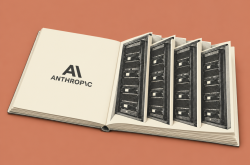
Breaking News! 'Anthropic' (ANT) Poised for Record-Breaking IPO, the Largest in History
 10/28 2026
 370
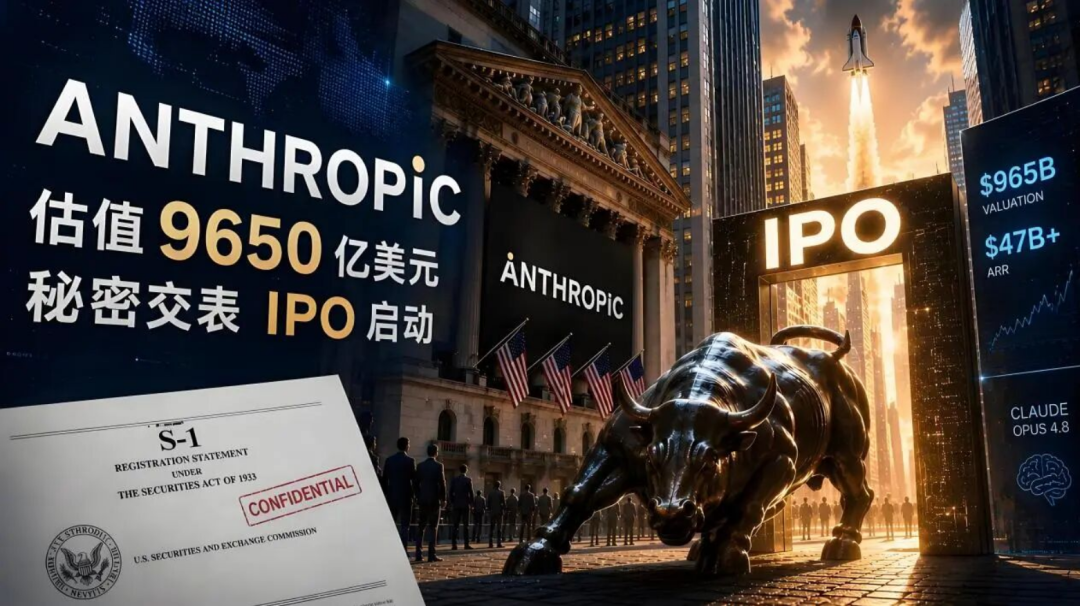 Image Source: Weibo
Let's clarify upfront: This ANT is not the Ant Group led by Jack Ma in China. Instead, it refers to Anthropic, the U.S.-based AI powerhouse behind Claude—a company comparable to DeepSeek, Doubao, and Qianwen in the AI landscape.
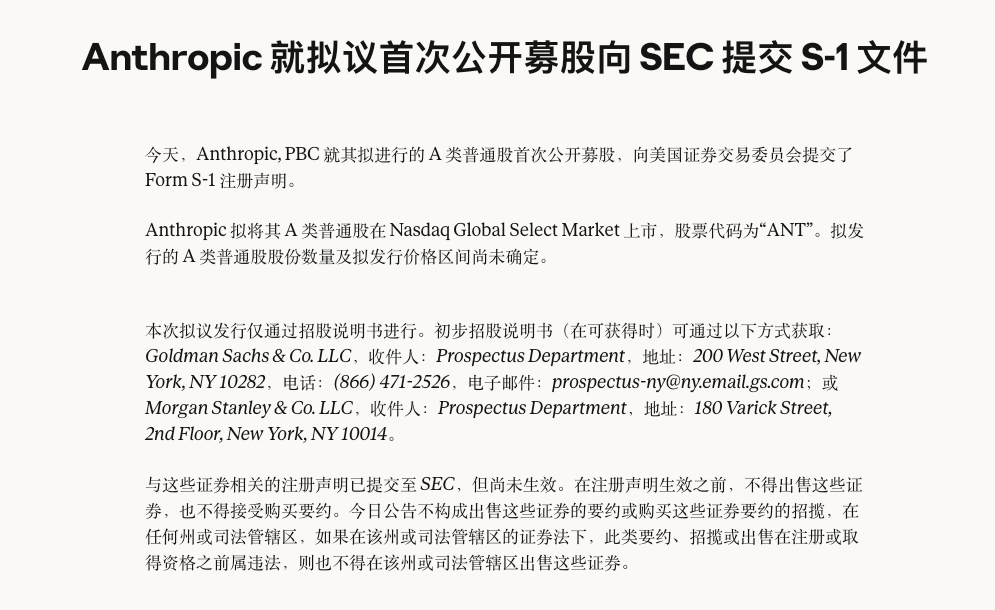
On the evening of October 26 (Beijing Time), Anthropic officially filed its S-1 prospectus with the U.S. Securities and Exchange Commission (SEC), paving the way for a Nasdaq listing under the ticker symbol ANT. This choice is more than symbolic: "ANT" means "ant" in English, and internally, Anthropic’s team has long referred to themselves as the "Ants."
Coincidentally, six years ago to the day—October 26, 2020—China’s Ant Group also submitted its IPO materials, aiming for what would have been the world’s largest IPO at the time. However, its listing was ultimately suspended and remains in limbo. Now, six years later, another "Ant" (ANT) is making a bid for the largest IPO in history on the same date.
Sources reveal that Anthropic’s plan seeks to raise up to $100 billion, with a valuation range of $1.5 trillion to $2 trillion. If realized, this would shatter records, surpassing SpaceX’s previous $85.7 billion final fundraising total to become the largest IPO in human capital market history. The offering price and share count have yet to be finalized.
Image Source: Weibo
On one hand, Anthropic boasts a god-tier fundraising scale and a trillion-dollar valuation. On the other, it carries a starkly contrasting label: a net loss of $80.748 billion on paper in six months, earning it the title of the most cash-burning AI company in history.
01 Revenue Surges 13x in Six Months, with "Accounting Tricks" Hiding Massive Losses
Anthropic’s early story was particularly surreal. In 2023, its annual revenue stood at just $41 million, yet its interest income from deposits reached $69 million that year—earning more from interest than from selling Claude models by 70%. Five years later, the narrative flipped: Revenue soared to $16.286 billion in the first half of 2026, up ~1,300% year-over-year, with Q2 alone surpassing $11.5 billion.
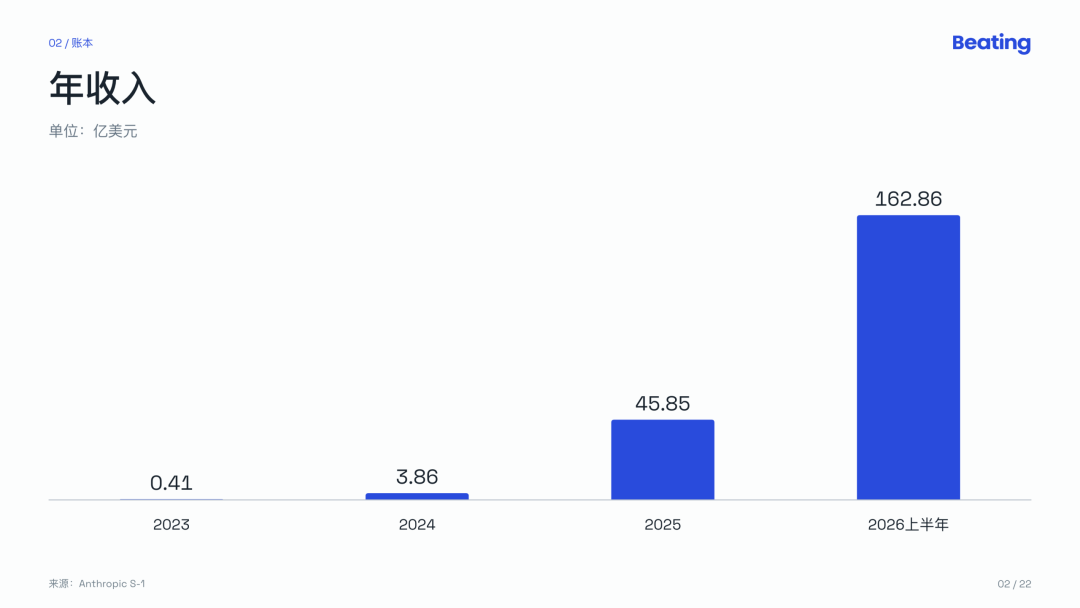
Anthropic's Annual Revenue Growth Image Source: Beating Insights
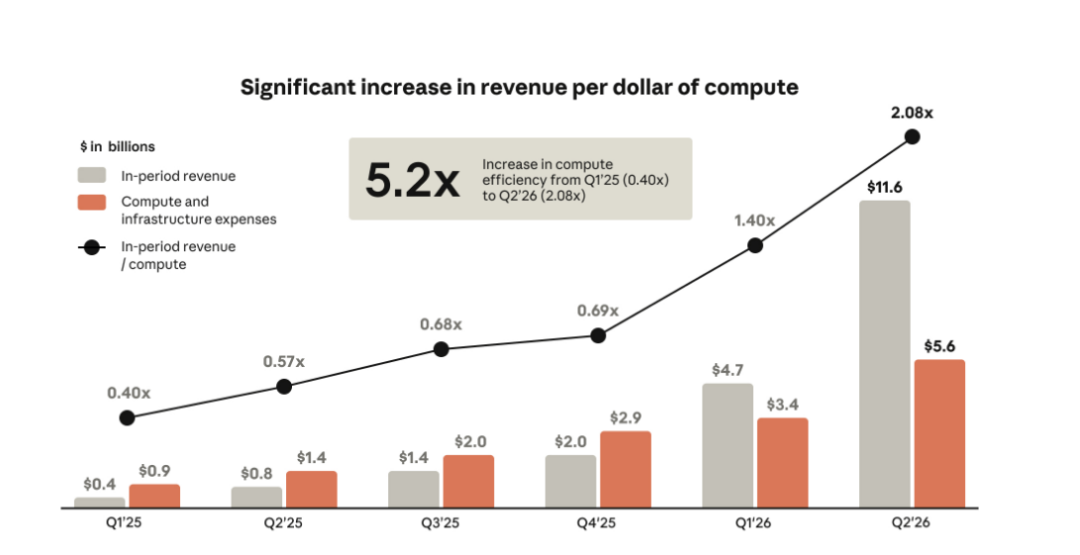
Anthropic's Quarterly Revenue Growth Image Source: Beating Insights
A more critical shift lies in the revenue-to-computing-power ratio: In Q1 2025, every $1 invested in computing power yielded just $0.4 in revenue; by Q1 this year, the ratio exceeded 1, reaching 2.08 in Q2—meaning $2 in revenue for every $1 spent on computing power. Operating profits also turned positive for the first time in Q2, hitting $974 million.
But with an $80.7 billion half-year loss, many are confused: If Q2 was profitable, where did the money go? Here lies a major misconception—most of this $80.7 billion isn’t actual cash burned. Of that, $72.388 billion stems from fair value changes in convertible debt, derivative liabilities, and SAFE agreements.
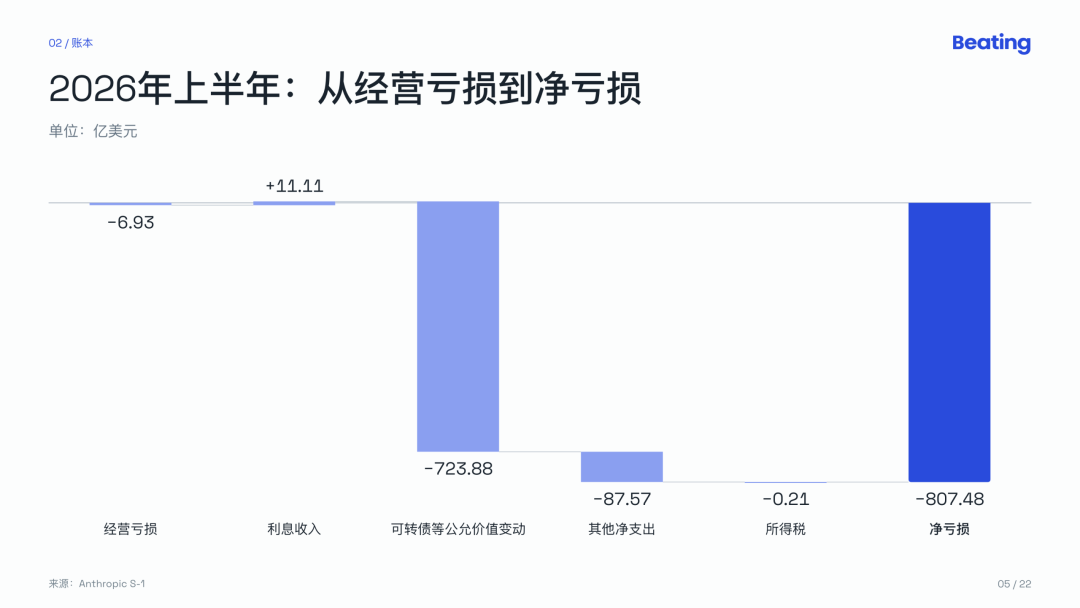
Anthropic's Loss Breakdown Image Source: Beating Insights
In plain terms: Early funding included significant convertible debt from investors like Amazon—essentially "low-price equity warrants." As the company’s valuation skyrocketed, these warrants became more valuable, and accounting rules require liabilities to be marked to market, recording gains/losses in the current period. The higher the valuation, the larger the "loss" on paper, though no cash actually leaves the company. Excluding this paper loss, adjusted net profit for the first half was positive at $2.671 billion.
The real cash drain is computing power. Spending on computing infrastructure reached $8.945 billion in the first half, up nearly 4x year-over-year. The most surreal chapter in this story is Anthropic’s transition from clashing with Musk to partnering with him—a stark contrast when viewed chronologically.
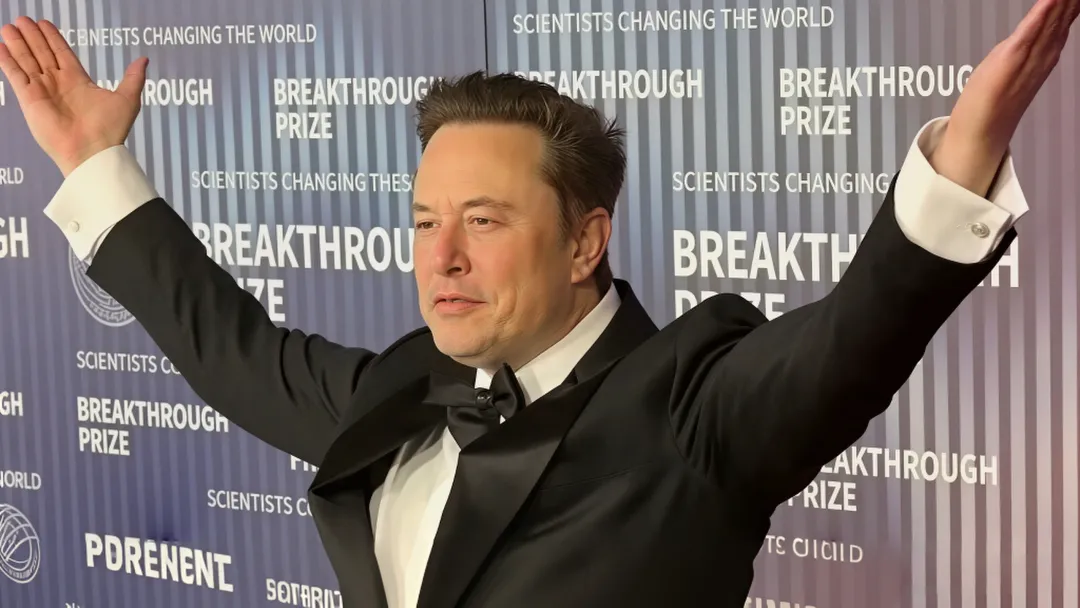 Image Source: Tech Finance Society
In January, Anthropic revoked xAI employees’ access to Claude via Cursor, forcing them to develop their own programming model. On February 12, Anthropic announced $30 billion in funding, prompting Musk to sharply criticize Claude in the comments, accusing it of bias.
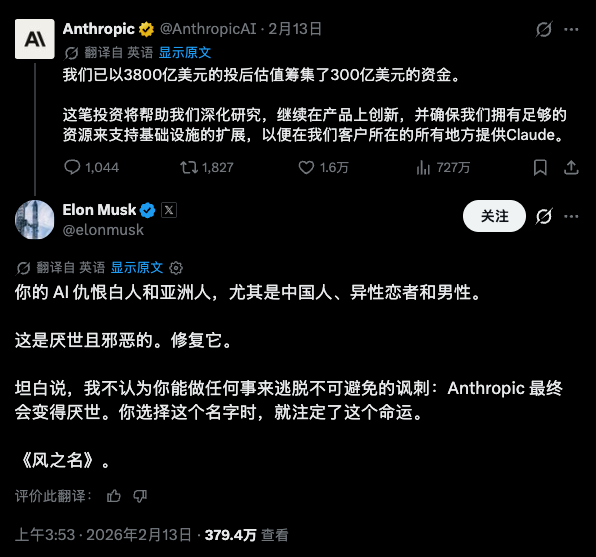 Image Source: X Social Platform
No one expected that just three months later, on May 6, Anthropic announced it would lease xAI’s entire Colossus 1 data center in Memphis, securing over 220,000 NVIDIA GPUs. Musk’s tone shifted instantly, praising Anthropic’s team as highly competent and genuinely committed to getting things right.
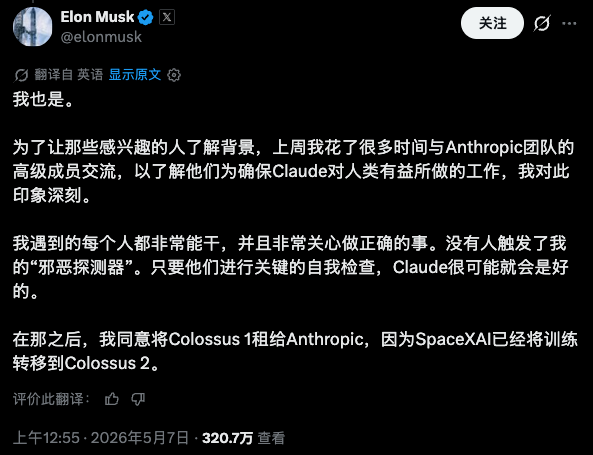 Image Source: X Social Platform
In Anthropic’s prospectus, the two sides revised multiple versions of computing contracts from May to October, targeting SpaceX.AI LLC (formerly X.AI LLC, the maker of Grok, now a SpaceX subsidiary). The maximum contract value is $120.5 billion, running through 2029. Assuming full computing delivery by December, Anthropic would pay Musk ~$3.1 billion monthly. For context: SpaceX’s entire AI business generated just $818 million in Q1 this year. Anthropic’s monthly computing fee is nearly four times that quarterly revenue. In short: Scold all you want, but business is business. In AI, there are no permanent enemies—only buyers perpetually short on computing power.
Musk’s $120.5 billion deal is just the tip of the iceberg. The prospectus lists a string of long-term computing orders, with some contracts extending to 2045:
- Google: Minimum $114.5 billion (April 2026–July 2033); additional TPU procurement intentions of ~$125–150 billion.
- Amazon: Minimum $110 billion (May 2026–April 2036).
- Microsoft: Minimum $44.9 billion (November 2026–May 2033).
- SpaceX.AI: Maximum $120.5 billion.
- AMD: Expected purchases exceeding $20 billion.
- Broadcom: 5-year equipment lease with total rent of ~$161.2 billion, non-cancellable.
Google, Amazon, and Microsoft’s contracts include a hardcore clause: regardless of actual usage—guaranteed payments must be made even if computing power isn’t fully utilized, with shortfalls requiring compensatory payments. This mirrors the energy industry’s take-or-pay contracts. In Anthropic’s books, computing power has become as essential as natural gas or electricity—a locked-in, rigidly delivered foundational resource. Fortunately, as of late June, it held $131.651 billion in cash, wealth management products, and short-term investments, covering short-term needs. However, multi-trillion-dollar long-term obligations loom overhead.
02 No Reliance on Ordinary Consumers: Enterprise Clients Drive Growth
While OpenAI focuses on individual subscriptions, Anthropic takes the opposite approach, with revenue primarily coming from enterprises (~80% from API usage, 20% from subscriptions). The prospectus reveals quirky details: In 2024, suspense novelist Andrea Bartz led a lawsuit against Anthropic for training Claude on pirated books, resulting in a $1.5 billion settlement. Additionally, 5–7% of revenue comes from banned clients, with no refunds upon account termination.
Client data is highly valuable (as of September 30):
- Over 11,900 clients contributing $100,000+ annually.
- Over 1,900 major clients spending $1 million+ annually.
- ~250 top-tier clients spending $10 million+ annually.
- ~40 million small-scale users.
More strikingly, the net revenue retention rate (NRR) is ~900%—existing clients generated 9x the revenue this year compared to last year’s same period. This figure is absurdly high for enterprise SaaS, where elite performance typically hovers around 120%.
Anthropic has penetrated elite circles globally: Over half of Fortune 500 companies and over one-third of Global 2000 firms are paying clients, with all top 10 Fortune giants on board. However, these enterprises use Anthropic’s services superficially: Fortune 500 clients spend less than 0.1% of their total IT budgets on Anthropic, highlighting growth potential—but with most clients on flexible pay-as-you-go plans without long-term commitments, revenue could plummet if budgets tighten.
03 Retaining Control Post-IPO: $7 Buys Voting Rights in a Trillion-Dollar Company
The IPO’s most intriguing aspect is its equity structure. Google and Amazon invested billions but received mostly non-voting Class N shares. True control rests with seven co-founders: Each contributed $1 to subscribe to 1 share of special Class F stock, which carries no economic benefits (dividends, asset distributions) but locks in 50.1% voting rights, undilutable by new share issuances. The prospectus defines them as "mission guardians."
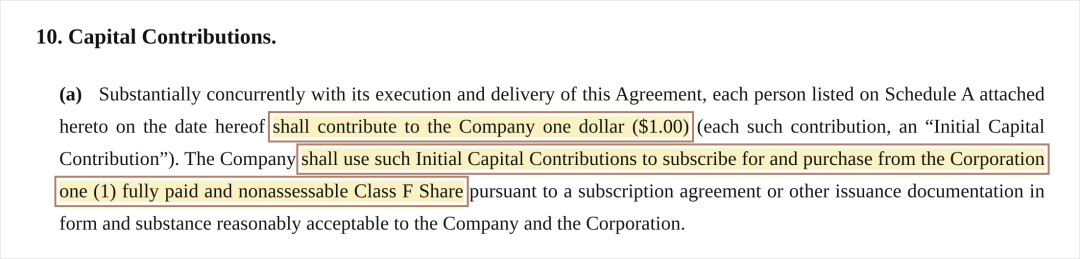
Here’s a nuanced detail: The prospectus lists CEO Dario Amodei’s official resume as a Ph.D. in biophysics from Princeton, with stints at Google Brain and OpenAI as VP of Research, omitting his early career at Baidu. However, in public interviews, he acknowledged that while working under Andrew Ng at Baidu’s Silicon Valley AI Lab in late 2014, he first observed that "more data leads to more stable model performance"—the earliest inspiration for the Scaling Laws. Many discuss this deliberate omission.
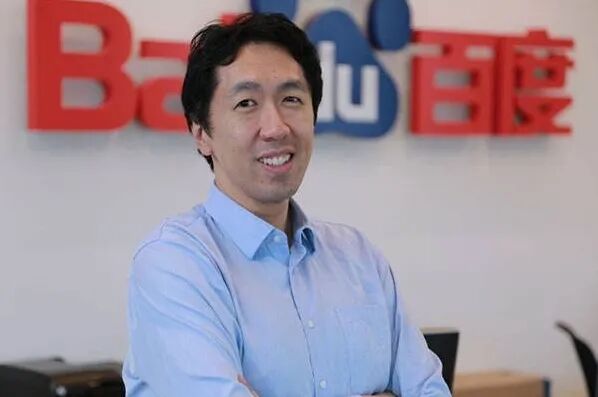
Andrew Ng directing AI at Baidu Image Source: Weibo
Additionally, the Long-Term Benefit Trust (LTBT) holds Class T shares and can elect a majority of the board, specifically to oversee AI safety baselines. Under these rules, Anthropic is classified as a controlled company post-IPO—even with a $2 trillion valuation, strategic direction and model safety decisions remain with the founding team. The founders also made philanthropic pledges: ~5% of shares go to a public welfare fund initially, with up to 2% more added for every 50% sustained stock price increase. All seven founders committed to donating 80% of their shares, totaling ~22% of equity (~$200+ billion in value) for public causes.
Its backer lineup is Silicon Valley royalty: Cumulative funding reached $157.51 billion since inception, with $110.4 billion raised in just two rounds (G and H) in H1 2026. Founder compensation has soared: CEO Dario and President Daniela (siblings) earned ~$18 million and ~$16.4 million respectively in 2025.
04 Clashing with OpenAI: The AI Race Reaches a Turning Point
Anthropic’s IPO timing collides with rival OpenAI. Reuters reported that OpenAI is rushing to close a $30 billion funding round to lock in institutional capital before Anthropic’s November listing. The two giants take starkly different approaches: Anthropic focuses on enterprise APIs and safety-first principles; OpenAI bets on consumer-facing interfaces and multimodal models.
How extreme is this valuation? Based on ~$32.6 billion in annualized H1 revenue, the $1.5 trillion valuation implies ~46x price-to-sales (P/S), while $2 trillion implies ~61x. This assumes sustained hypergrowth. If growth slows or open-source models poach clients, the valuation logic could collapse.
There’s also a very realistic statement: In this AI capital carnival, the winners with the highest certainty are not model makers like Anthropic, but upstream vendors selling chips, computing power, and cloud services. Hundreds of billions of dollars in computing power orders have already firmly landed in their pockets.
Conclusion
Anthropic’s IPO this time is essentially a high-stakes gamble. It has proven with solid data that companies are willing to pay for user-friendly large models, and AI is no longer just a laboratory toy. However, it also exposes the industry’s biggest pain point: there is no such thing as marginal costs approaching zero for large models. The more they are used, the higher the computing power costs become. To grow, continuous massive investments are required. Next, OpenAI’s capitalization is also on the way. When it goes public, we will be able to make a horizontal comparison of the real costs, profits, and cash flows of these two leading companies.
It has the potential to claim the title of the largest IPO in history, but it is also a huge question mark. Is the $2 trillion valuation the right price for the AI infrastructure
-
![]()
Anthropic Also Eyes Cloud Provider Partnerships
-
![]()
Can the ZON 09, Priced from 169,900 Yuan, Strike a Balance Among Model 3, Xiaomi SU7, and Itself?
-
![]()
What's Ailing XPENG?
-
![]()
From Recommendation to Mandatory: The Countdown Begins for C-V2X's 'Birth Certificate'
-
![]()
The Auto Market Price War: A Call for an Immediate Halt
-
![]()
A Century-First: Audi Unveils Dual-Brand Strategy, with Chinese Tech Pioneering Its Future
-
![]()
Chery Sets Sights on North American Market
-
![]()
A Staggering 4 Billion 'Deficit' Looms Large: Haima Automobile Faces Severe Challenges in Q3