Chery Sets Sights on North American Market
 10/28 2026
 357
Lead
Introduction
Chery has progressed its potential for establishing a manufacturing plant in Canada, moving from mere "discussions" to "serious consideration."
Chinese automakers once saw the North American market as an insurmountable barrier, akin to a tiger attempting to eat the sky with no place to start. However, a glimmer of opportunity has now emerged.
Recently, according to foreign media reports by Bloomberg, Chery is "seriously considering" building a plant in Canada. This news surfaced during Chery's 2026 Global Innovation Conference held in Wuhu.
It is reported that Zhang Guibing, Executive Vice President of Chery Automobile, explicitly stated in an interview that Chery is seriously considering establishing a local production base in Canada, with plans to officially enter the Canadian market in 2027.
If this plan is successfully implemented, Chery will become the first Chinese automaker to achieve localized vehicle production in Canada, potentially opening a pathway into the otherwise fortified North American market.
01 Gaining Entry is the First Step
Chery's opportunity arises from the relaxation of Sino-Canadian automotive trade policies.
In January 2026, Canadian Prime Minister Mark Carney announced adjustments to tariffs on Chinese electric vehicles during his visit to China: the 100% surtax implemented in 2024 was abolished, and instead, an annual import quota of 49,000 Chinese electric vehicles was granted, with most-favored-nation tariff treatment of 6.1% within the quota.
This quota mechanism officially took effect on March 1, 2026. The quota year begins annually on March 1. Furthermore, the quota volume will increase annually by a factor of 1.065.
Additionally, on February 5, Mark Carney announced Canada's new electric vehicle strategy, planning to invest 2.3 billion Canadian dollars over five years, aiming to achieve 75% electric vehicle sales by 2035 and 90% by 2040. The strategy explicitly proposes "strengthening cooperation with China" to promote local production and export of electric vehicles in Canada. This provides a realistic foundation for Chery's plant construction plans.
The relaxation of policies is attributed to a series of comprehensive factors and Mark Carney's industrial ambitions.
Undoubtedly, the core factor is the pressure from U.S. policies. Canada exports about three-quarters of its products to the United States annually, reflecting its high dependence on the U.S. after being forced to accept the "poison pill clause" (the United States-Mexico-Canada Agreement, or USMCA) in 2018. However, in recent years, Canada's willingness and actions to reduce its over-reliance on the U.S. have been strengthening.
In October 2025, Carney explicitly proposed "doubling exports to non-U.S. markets by 2035." Additionally, analysts point out that Canada is facing pressure to transform its traditional automotive industry and needs to introduce new capital and technology to activate idle production capacity. Chinese automakers, at the forefront of the times, are the most willing and capable participants to bring incremental growth.
Qiu Huifang, an associate professor at the School of Economics at Huazhong University of Science and Technology, also believes that as Canada collectively says "no" to U.S. trade bullying policies and the "poison pill clause," along with the decline of exclusive potential in the North American economic circle and adjustments in Canada's external economic relations structure, Sino-Canadian economic cooperation will inevitably face significant opportunities. Undoubtedly, for Chinese automakers, including Chery, that want to collectively enter the North American market, this opportunity is once in a lifetime.
In terms of implementation, Chery's current options include taking over idle capacity at existing local factories or jointly investing in production with local partners. It is reported that Zhang Guibing is also in contact with investors in Canada, although the specific partners have not been disclosed.

In addition to Bloomberg, Zhang Guibing also mentioned in an interview with Reuters in Wuhu that the brand plans to enter the Canadian market in early 2027. This time, if plant construction progresses simultaneously, Chery will leapfrog the traditional overseas expansion rhythm of "export first, then build a plant" and directly enter the North American market as a localized producer.
However, for Chery, the adaptability of its pure electric products still needs to be tested. Although it has accumulated some experience in extremely cold markets like Russia, including vehicle reliability and usage adaptation in low-temperature environments, this experience mostly comes from fuel and hybrid vehicles.
Therefore, Chery is also making thorough preparations. According to media reports in the first half of the year, Chery has optimized the battery thermal management system for new vehicles exported to Canada to address the issue of range decline in low temperatures, targeting the country's severe cold climate. Additionally, it has completed rigorous certifications in compliance with Canada's CMVSS automotive safety standards, as well as established localized after-sales teams and parts supply systems.
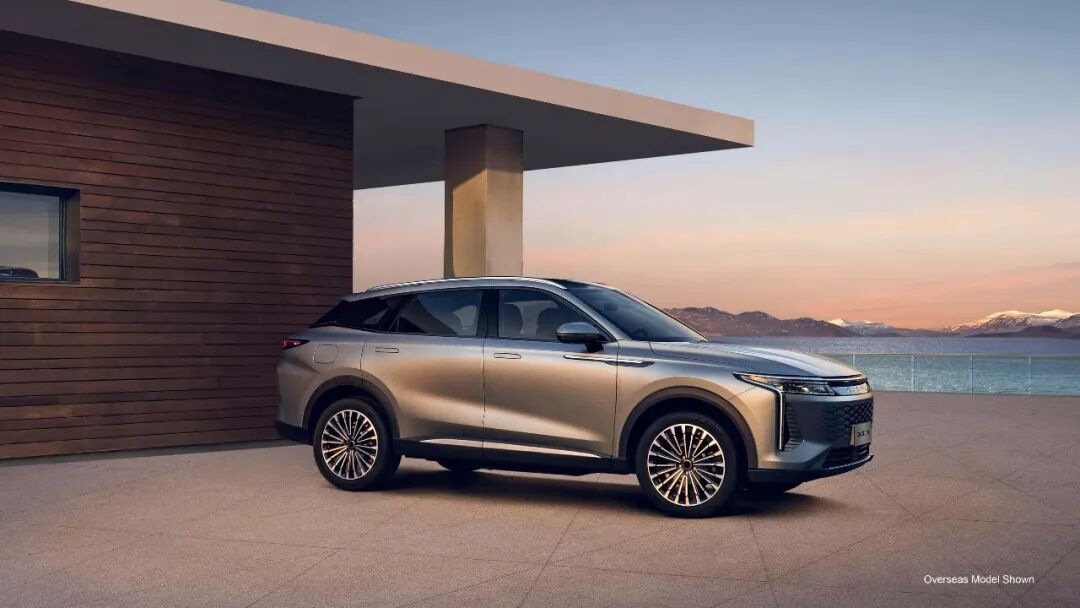
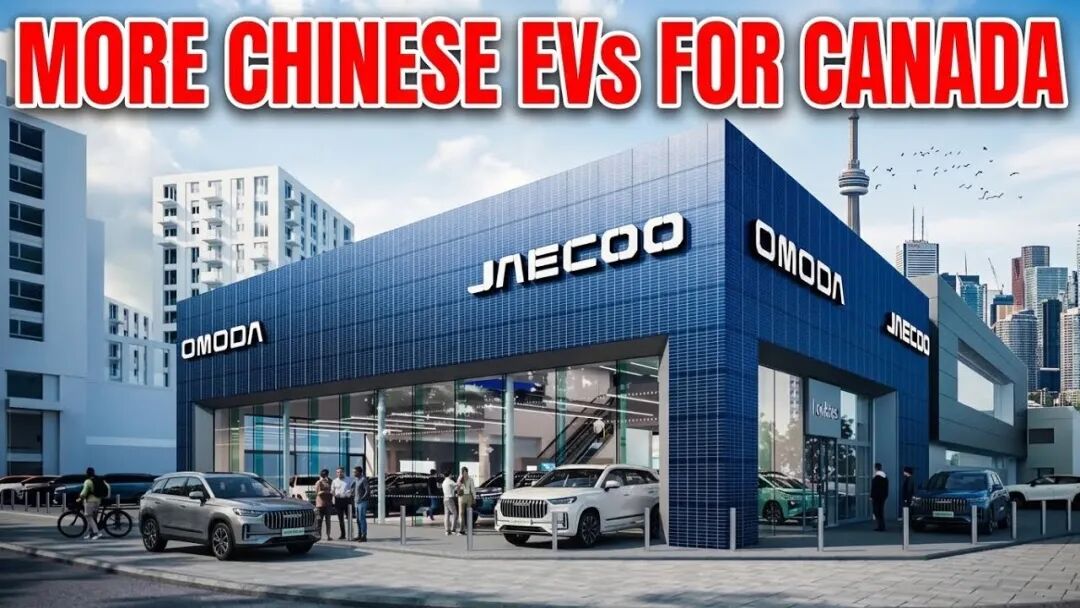
Furthermore, Chery has begun concentrated recruitment for positions in regulatory certifications, EEA architecture, ADAS, and connected vehicle services, and is building North American organizational capabilities with Toronto as a hub. Chery's product launch actions are also in full swing. Multiple groups of high-end models from OMODA, JAECOO, and Exeed have been publicly road-tested in Toronto, covering a full range of plug-in hybrid, pure electric, and high-end flagship products.
Of course, Chery's current statement only advances the possibility of plant construction from "discussion" to the "serious consideration" stage.
It is worth noting that Zhang Guibing also stated, "Even without the U.S. market, Canada is still a market worth establishing a plant for production." This statement is not simple. Besides implying that Chery does not simply view Canada as a "springboard" for entering the U.S. market but bases its decision on the commercial value of the Canadian market itself, it is also a political statement.
After all, the possibility of using Canada as a "springboard" exists and is desired. Once Chinese automakers achieve localized production in Canada, the path to entering the U.S. market by leveraging the tariff arrangements of the USMCA may be opened.
Therefore, once Chery initiates plant construction, it may face questions from the United States and must carefully weigh the pros and cons in advance. Deliberately positioning Canada as an independent market also provides some room for maneuver to a certain extent.
02 Chinese Automakers Collectively "Break Through"
Speaking of quotas, Canada granted an import quota of 49,000 units for 2026, but the current implementation has fallen short.
Currently, out of the initial 24,500 permits for the first six-month window, only 15,603 have been used. As of October 9, 33,069 permits remain unused. Tesla, having preemptively secured a large portion of the quota and exhausted it, has now voluntarily stepped aside and recently suspended orders for the low-config Model 3 produced in Shanghai for the Canadian market (the U.S.-produced Model 3 is unaffected).
It is noteworthy that the quota policy will continue to tighten. Starting from the second quota year on March 1, 2027, at least 10% of the FOB price of imported vehicles must not exceed 35,000 Canadian dollars, with this proportion gradually increasing to 50% by 2030.
If Chery starts sales in early 2027, it may coincide with this tightening. Therefore, the biggest advantage of Chery choosing local plant construction is that its products will no longer occupy import quotas.
Chery is not the only Chinese automaker eyeing Canada. In June of this year, during Canadian Federal Industry Minister Mélanie Joly's visit to China, it was disclosed that the three automakers she engaged with—BYD, Geely, and Chery—were all willing to explore the establishment of joint venture vehicle assembly plants in Canada.
From Geely's perspective, its plan is to rely on the existing channels of Volvo and Polestar to enter the Canadian market through the Zeekr brand, officially starting vehicle sales in Canada next year.
BYD, on the other hand, insists on independent operations and rejects the joint venture model. Bloomberg reported in late August that BYD had contacted the mayor of Brampton, Ontario, about half a year ago to inquire about taking over Stellantis' Brampton Assembly Plant for local bus production.
Additionally, BYD plans to enter the Canadian market by the end of this year, with the initial launch of over 20 dealer stores covering areas such as Toronto, Vancouver, Montreal, and Calgary. Stella Li, Executive Vice President of BYD, has also previously stated that feasibility studies for plant construction in Canada are actively underway.
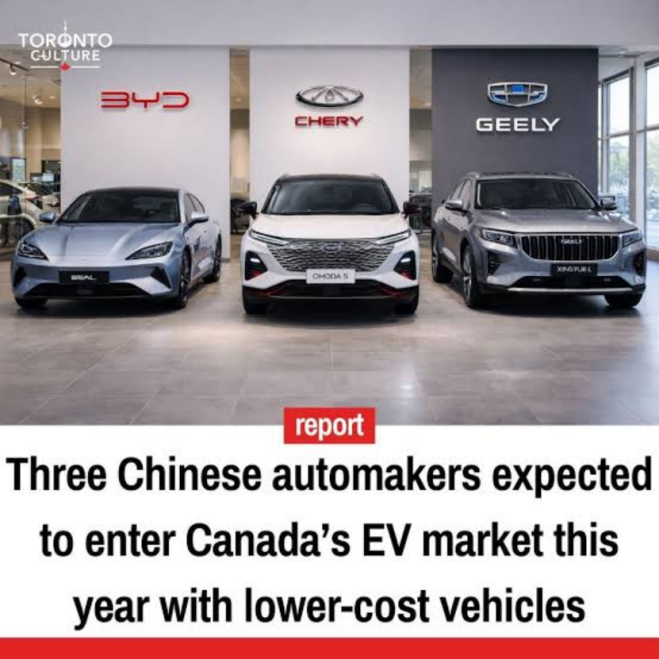
However, for Chery, Geely, and BYD, Canada itself is not a massive market. According to data released by market consulting firm DesRosiers Automotive Consultants Inc., automobile sales in the country reached 1.9 million units in 2025, representing a mere 2% year-on-year growth. Meanwhile, brand competition is highly concentrated, with General Motors, Ford, Toyota, and Hyundai-Kia accounting for over half of the market share.
Moreover, as a high-threshold market, Canadian consumers are more sensitive to brand reputation, product quality, and after-sales systems. Although Canada's advantages lie in its transparent market regulatory system and credible technical standards, the difficulty of entry for Chinese automakers remains quite high.
It cannot be denied that the Canadian market is still in the "0 to 1" stage for Chery. Therefore, "haste makes waste," and Chery is unlikely to be too aggressive in building a plant. Based on its past overseas expansion habits, Chery will likely first consider entering the market through vehicle exports, then establish a channel network through dealer systems, and finally assess whether to advance localized production or joint venture plant construction based on market demand and policy environment.
Chery, which exports a vehicle every 23 seconds and has been China's top passenger vehicle exporter for 23 consecutive years, dares to consider heavy asset layout in Canada probably because it has a clear premonition of entering the Canadian market and the new energy landscape in the coming years.
According to industry analysts, by 2027, Chinese automakers will transition from "import sales" to "North American local manufacturing." Within the next five years, relying on Canada's low-tariff quotas and localized production capacity, Chinese automakers will be able to radiate across the entire North American market, completely breaking the blockade against Chinese new energy vehicles.
An era of Chinese automotive counterattack is unfolding. The once insurmountable peak of the global automotive industry, the high ground and core hinterland that seemed out of reach for Chinese automakers, will be comprehensively broken through and the landscape rewritten. From testing the waters with vehicle exports to proactively establishing local plants, from passively accepting rules to deeply participating in the reconstruction of the North American industrial chain in the future, all Chinese automakers like Chery need to do is stay steady, take deeper roots, and go further.
Editor-in-Chief: Li Sijia Editor: He Zengrong

THE END
-
![]()
Anthropic Also Eyes Cloud Provider Partnerships
-
![]()
Can the ZON 09, Priced from 169,900 Yuan, Strike a Balance Among Model 3, Xiaomi SU7, and Itself?
-
![]()
What's Ailing XPENG?
-
![]()
From Recommendation to Mandatory: The Countdown Begins for C-V2X's 'Birth Certificate'
-
![]()
The Auto Market Price War: A Call for an Immediate Halt
-
![]()
A Century-First: Audi Unveils Dual-Brand Strategy, with Chinese Tech Pioneering Its Future
-
![]()
Chery Sets Sights on North American Market
-
![]()
A Staggering 4 Billion 'Deficit' Looms Large: Haima Automobile Faces Severe Challenges in Q3