From Recommendation to Mandatory: The Countdown Begins for C-V2X's 'Birth Certificate'
 10/28 2026
 472
Let's start with a question: When buying a car, would you pay extra for a safety feature that you can't see or touch?
The answer from most automakers is: No. As a result, over the past few years, the C-V2X (Cellular Vehicle-to-Everything) Internet of Vehicles terminal has faced an awkward situation in China—while it is technically recognized as a valuable tool for enhancing safety, national standards have been voluntary. Not installing it does not affect car sales, and in the first half of the year, the pre-installation rate in passenger vehicles was only around 4%. The value of having it installed in a vehicle is far less tangible than, say, having a large screen.
This situation is now changing. On October 26, industry insiders revealed to the media that the development of a mandatory national standard for the installation of C-V2X in vehicles has begun, with a working group established and dozens of organizations participating. This component is set to shift from 'optional' to 'mandatory.'
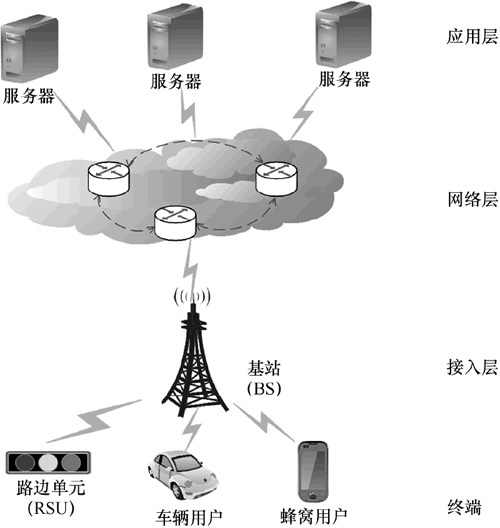
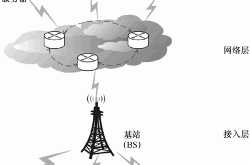
C-V2X Internet of Vehicles Architecture
There were actually early signals, but the real constraints come from two documents.
The first is the mandatory national standard 'Operational Safety Technical and Management Requirements for Commercial Vehicles,' which the Ministry of Transport publicly solicited comments on in July. It clearly outlines a timeline: 25 months after the standard's implementation, all newly added commercial passenger vehicles, freight vehicles, and Traction train (traction trains) in China must be equipped with LTE-V2X direct-connected vehicle terminals at the factory.
Some more challenging items have three transition periods: 13 months, 25 months, and 37 months. If finalized, this will mark the first time C-V2X terminals are pre-installed in mass production under a mandatory national standard.
The second document is the C-NCAP 2027 evaluation protocol from the China Automotive Technology and Research Center: The number of C-V2X test cases has been increased from 3 to 6, covering scenarios such as occluded crossings and head-on collisions—natural blind spots for vision and radar systems. The threshold for active safety scoring has been raised from 70% to 80%.
On one hand, there is mandatory installation; on the other, stricter evaluations have turned soft persuasion into hard push.
This is because the majority of accidents are attributed to commercial vehicles. In the past three years, freight vehicles have accounted for over 80% of major traffic accidents, with nearly half occurring at night. Incidents like multi-vehicle collisions on the Yellow River Bridge and disasters on the Meizhou-Dabu Expressway highlight the same weakness: when visibility is low or road conditions suddenly change, a vehicle's own sensors cannot see the danger.
C-V2X addresses precisely this gap.
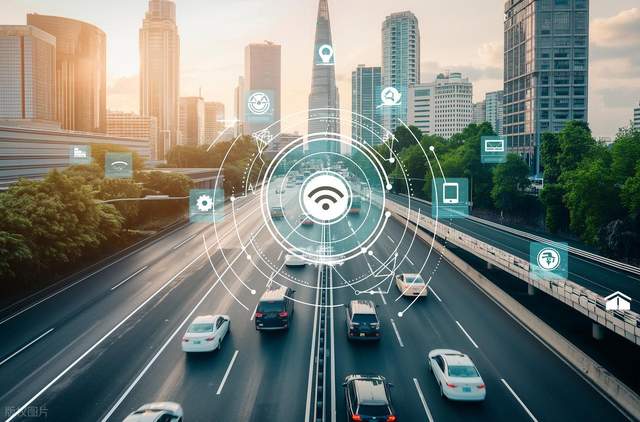
By organically integrating traffic participants such as people, vehicles, roads, networks, and clouds, it provides more communication opportunities for low-visibility road users like pedestrians and cyclists with their surroundings. On the other hand, it supports vehicles in obtaining more information than single-vehicle sensing can provide, promoting the large-scale implementation of vehicle-road coordination applications.
While cameras and radars have limited range, C-V2X does not—sudden braking by the vehicle ahead of the vehicle ahead, road collapses two kilometers away, or vehicles crossing blind spots can all be communicated in advance through direct vehicle-to-vehicle and vehicle-to-road connections.
Fan Ju, Deputy General Manager of CICT Intelligent Connectivity, put it well: The cost of pre-installation has dropped significantly, but the safety value it brings is immeasurable.
Commercial vehicles, with their fixed routes and mature regulatory systems, are the logical choice to lead the way.
Looking ahead, mandatory pre-installation in passenger vehicles is also just a matter of time—India has already announced that all motor vehicles will be required to install C-V2X starting in October 2028, the United States has a national deployment plan, and European automakers like BBA and Volkswagen have all chosen this technical route. This installation race is global.
The greatest significance of mandatory pre-installation is providing the industrial chain with a guaranteed order.
Once demand is unlocked, the entire chain comes to life: upstream chips and communication modules, midstream vehicle terminals, and downstream vehicle integration. Currently, over a dozen automakers, including FAW, SAIC, BYD, and NIO, have more than thirty C-V2X-equipped mass-production models. NIO even rolled out C-V2X functionality to older models via OTA updates this year.
At last week's World Intelligent Connected Vehicles Conference, fourteen groups and twenty-six companies in the vehicle-road-cloud integration industrial chain completed commercial signings. Academician Li Keqiang provided a mass-production timeline: functionality will first be introduced through in-vehicle applications this year, with deep integration with intelligent driving systems by 2027.
On the roadside, over 11,000 intelligent roadside units have been deployed nationwide, and sensing equipment and cloud control platforms have been established from scratch in 20 pilot cities. With vehicles equipped and roads being upgraded, all that's needed is the 'mandatory' push.
Of course, the mandatory standard for commercial vehicles is still in the comment solicitation phase, and the official implementation timeline has not been set; the 25-month countdown will only begin once the standard is published. Moreover, 'factory installation' does not equal 'functional activation.' How to integrate the terminal with the vehicle's advanced driving assistance systems requires serious efforts from automakers in their electronic and electrical architectures.
An even more critical challenge lies on the roadside: the 11,000 roadside units are concentrated in 20 pilot cities, with no nationwide coverage network yet in sight. Whether roads can keep pace with vehicle installations will determine whether this 'invisible component' ultimately becomes a standard safety feature or remains mere ornamentation.
The shift from recommendation to mandatory—a change of just four words—represents a watershed moment for an industry transitioning from pilot demonstrations to large-scale commercialization. The day this component is installed in vehicles is when true vehicle-road coordination can begin.
-
![]()
Anthropic Also Eyes Cloud Provider Partnerships
-
![]()
Can the ZON 09, Priced from 169,900 Yuan, Strike a Balance Among Model 3, Xiaomi SU7, and Itself?
-
![]()
What's Ailing XPENG?
-
![]()
From Recommendation to Mandatory: The Countdown Begins for C-V2X's 'Birth Certificate'
-
![]()
The Auto Market Price War: A Call for an Immediate Halt
-
![]()
A Century-First: Audi Unveils Dual-Brand Strategy, with Chinese Tech Pioneering Its Future
-
![]()
Chery Sets Sights on North American Market
-
![]()
A Staggering 4 Billion 'Deficit' Looms Large: Haima Automobile Faces Severe Challenges in Q3