After Perusing Anthropic's Prospectus, I Can't Help But Worry About the Future of China's Domestic Large-Scale Models
 10/28 2026
 446
Chaoyong AI Editorial Team
When it comes to forecasting the course of the AI industry, many tend to focus on model capabilities, pitting benchmark scores against each other and tracking who's catching up to GPT and Claude.
However, an even more crucial limiting factor than model capabilities is the number of companies the market can realistically sustain.
Objectively speaking, the US AI market provides arguably the most favorable conditions globally.
Enterprise users have long embraced the SaaS model, being accustomed to paying monthly or usage-based fees. Only a minority of data-sensitive industries require localized models. 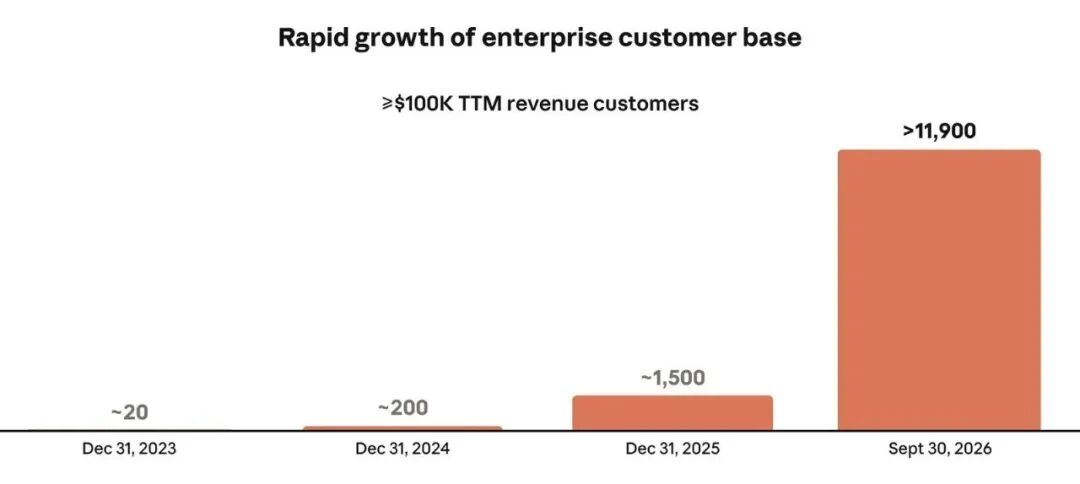
Rapid Growth in Enterprise Users
Source: Anthropic's Prospectus
Individual users, too, are accustomed to software subscriptions and are willing to pay for useful tools.
Even for Anthropic, individual users contribute only around 20% of its total revenue.
From talent to computing power to capital, there are virtually no hard constraints beyond the physical production capacity.
Moreover, US model companies are not solely reliant on the US market; with the exception of China, they serve clients worldwide.
Yet, even in such a high-quality market environment, only two and a half pure model companies have managed to survive so far.
OpenAI and Anthropic count as two, while Musk's Grok might be considered half.
Google and Meta, on the other hand, continue to rely on their search, advertising, and social media businesses to support their models, which primarily serve their own ecosystems.
Anthropic's newly released prospectus aptly illustrates this point.
In the first half of the year, Anthropic generated approximately $4.5 billion in overseas revenue, accounting for nearly 30% of its total revenue.
Such a market can indeed support a pure model company to reach profitability.
In the second quarter, revenue reached $11.56 billion, with operating profit hitting $974 million, and operating cash flow turning positive in the first half. Reports indicate continued profitability in the third quarter on an adjusted basis.
Even more impressive is its net revenue retention rate of approximately 900%, meaning customers who spent $1 a year ago are now spending an average of $9 during the same period this year, excluding subscription user data. 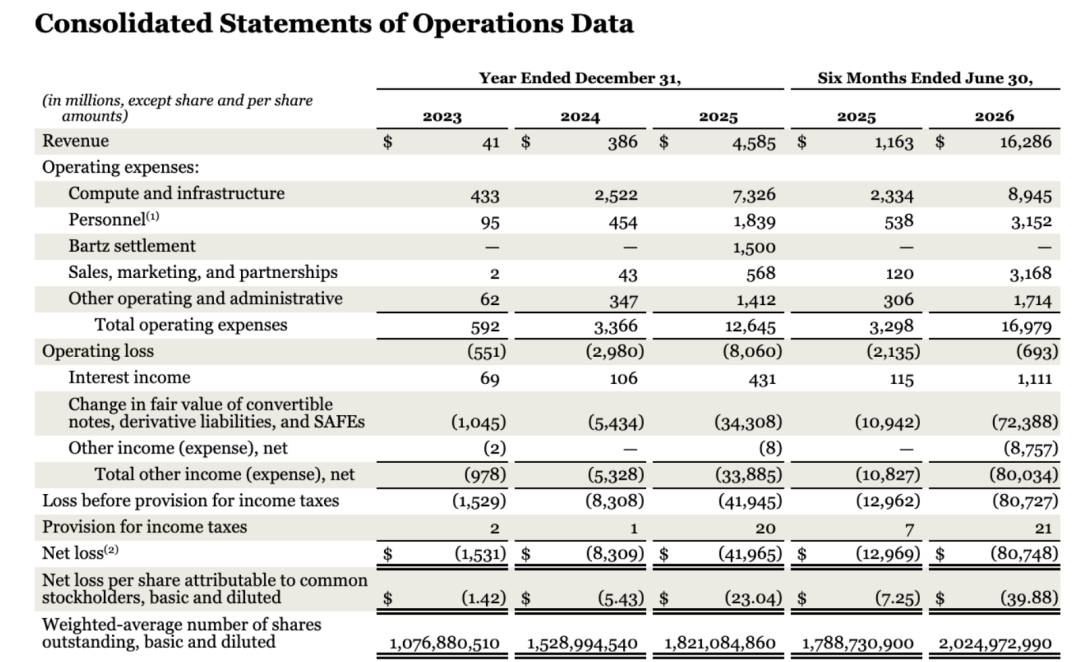
Anthropic's Prospectus
However, even a favorable market has its limits.
According to previously leaked financial data, OpenAI reported an operating loss of $20.9 billion in 2025 and has postponed its IPO until next year. xAI was acquired by SpaceX through a share swap in February this year and now relies on Starlink's cash flow for survival, barely qualifying as half a company.
Now, let's shift our focus back to China.
Zhipu, MiniMax, Yuezhi'anmian, DeepSeek, along with models from ByteDance, Alibaba, and Tencent, outnumber their US counterparts.
However, enterprise clients in China prefer localized deployments, with such setups accounting for over 70% of Zhipu's 2025 revenue. Individual users have been spoiled by free offerings from tech giants.
Combined revenue for Zhipu and MiniMax in the first half of the year amounted to just over $200 million, roughly one-sixtieth of Anthropic's revenue during the same period. DeepSeek, which recently raised approximately $15 billion, has further compressed pricing across the market through open-source and low-cost strategies.
Even more awkwardly, even when paying users emerge, domestic companies may struggle to handle them.
On October 24, Kimi released K3.1 Pro, whose programming test scores nearly matched Claude Opus 5.5. Just two days later, the company publicly apologized to members: due to traffic limits and abnormal quota consumption, each member would receive a 25% compensation on their monthly quota.
This was not the first time.
After K3's release in July, Kimi suspended new user subscriptions as its clusters approached capacity limits.
In mid-October, DeepSeek's API experienced a nearly five-hour outage. With Anthropic securing multi-billion-dollar computing contracts yet complaining about hardware shortages, the plight of domestic companies is evident.
If the domestic market falls short, companies turn overseas.
Kimi's overseas revenue surpassed domestic revenue as early as February this year, while MiniMax generated 60% of its first-half revenue overseas. 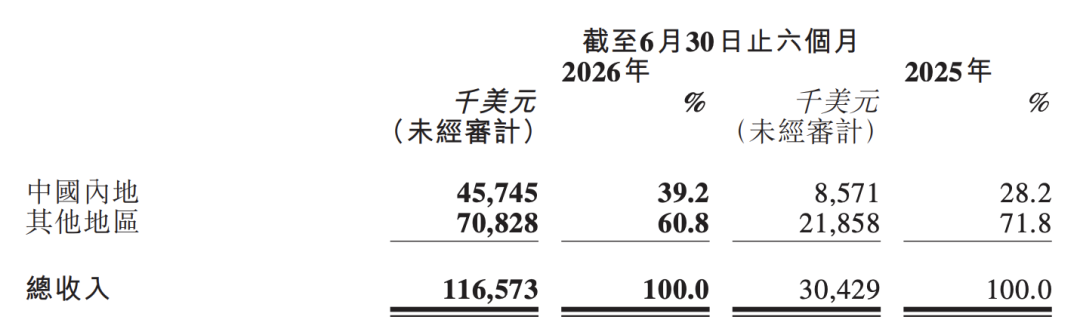
MiniMax's Mid-2026 Financial Results
The problem is that the overseas markets domestic large models target are also the home turf of OpenAI and Anthropic—markets that are now closing their doors.
The prospectus reveals that 5-7% of Anthropic's revenue this year came from clients violating usage policies, mostly domestic model firms using Claude to distill their own models.
Based on approximately $33 billion in revenue for the first three quarters, this amounts to between $1.6 billion and $2.3 billion.
While skepticism remains regarding the evidence for these claims, Anthropic's stance is clear: new protective measures launched in October claim to block 90-99% of distillation traffic, even at the cost of sacrificing some revenue.
Ultimately, perhaps the key issue is that China does not need—nor can it sustain—so many pure model companies.
Currently, everyone is chasing ARR (Annual Recurring Revenue) metrics, rushing to secure funding and line up for IPOs. While this creates a bustling appearance, it merely shifts the burden of sustainability to the secondary market.
Becoming a top-tier model company is undoubtedly glamorous, with trillion-dollar valuations potentially just the starting point. However, when it comes to actual financial performance, model capabilities, strategic choices, resource endowments, and even market conditions are all indispensable factors.
Domestic model firms are undoubtedly working hard, but after reviewing Anthropic's "extraordinary" prospectus, it's hard for anyone not to heave a sigh.
-
![]()
Anthropic Also Eyes Cloud Provider Partnerships
-
![]()
Can the ZON 09, Priced from 169,900 Yuan, Strike a Balance Among Model 3, Xiaomi SU7, and Itself?
-
![]()
What's Ailing XPENG?
-
![]()
From Recommendation to Mandatory: The Countdown Begins for C-V2X's 'Birth Certificate'
-
![]()
The Auto Market Price War: A Call for an Immediate Halt
-
![]()
A Century-First: Audi Unveils Dual-Brand Strategy, with Chinese Tech Pioneering Its Future
-
![]()
Chery Sets Sights on North American Market
-
![]()
A Staggering 4 Billion 'Deficit' Looms Large: Haima Automobile Faces Severe Challenges in Q3