Fengshou Capital's Li Feng: The Hotter AI Gets, the More We Must Separate the Technology Cycle from the Capital Cycle
 11/02 2026
 370
Chaoyong AI Editorial Team
Is AI really in a bubble?
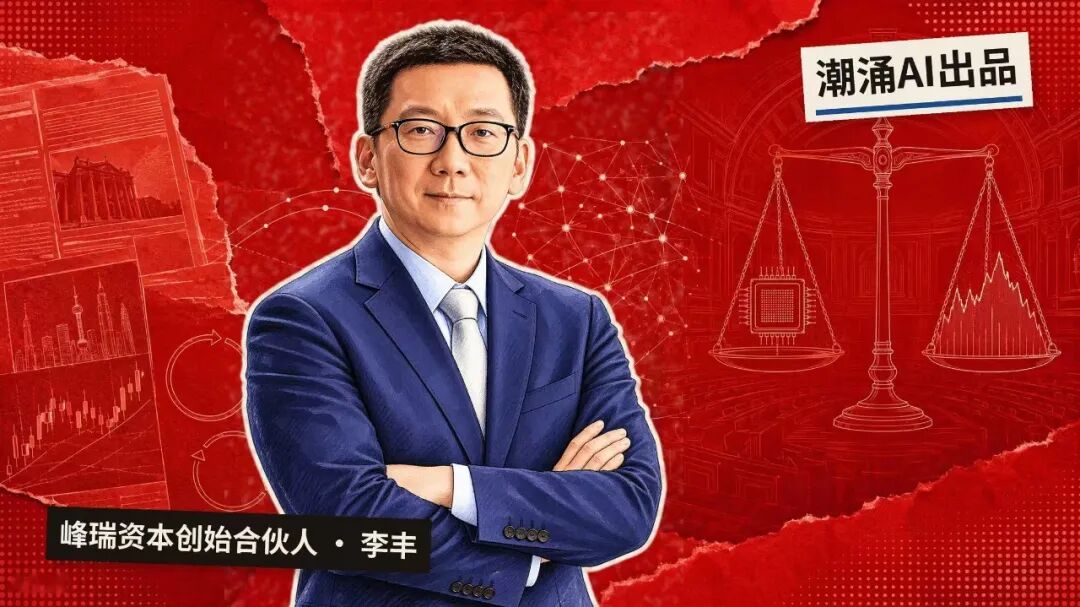
On October 28, Li Feng, founding partner of Fengshou Capital, took the podium at Peking University's "AI Entrepreneurship and Investment" lecture and did not offer a simple "yes" or "no."
He split the question into two lines: the capital cycle determines valuations, wealth effects, and resource allocation, while the technology cycle determines how far capabilities can ultimately go. The two lines happened to overlap, producing this round of unprecedented attention on AI—but a capital ebb does not mean technology stops advancing.
Li Feng's experience spans entrepreneurship, investment, and the Peking University alumni network. He entered the Department of Chemistry at Peking University in 1991, later earned a master's degree in chemistry from the University of Rochester, worked at New Oriental for seven years, co-founded Miaozhen Systems, later served as a partner at IDG Capital, and founded Fengshou Capital in 2015. Early investment cases include Bilibili and Three Squirrels, and in recent years he has focused on consumer and deep tech.
Precisely because he has both founded companies and long done early-stage investment, when he talks about AI he cares more about two questions: why money is pouring in at this moment, and on what basis technology can continue to land after the bubble.
Two things to clarify first:
1. This article is an oral transcript organized by Chaoyong AI based on Li Feng's Peking University speech. The speech date was October 28, 2026, and it has not been reviewed by the speaker; it is presented in the first person, and some colloquial expressions have been condensed and smoothed.
2. We have core-included key judgments on capital cycles, large model evolution, data challenges in the physical world, AI business models, as well as the roundtable and on-site Q&A; slide transitions, on-site pleasantries, and some repetitive expressions have not all been retained.
The core content of this oral transcript:
Li Feng starts from post-2020 global liquidity and explains why this round of AI boom is a superposition of a technology cycle and a rare capital cycle;
Using the internet bubble and the repeated ups and downs of new energy vehicles and autonomous driving, he explains that technologies with truly far-reaching impact usually must go through multiple cycles;
Tracing downward from the sources of corpus, he proposes two hurdles for AI entering the physical world: insufficient high-precision data, and how probabilistic models handle deterministic causality;
Finally, he lands on token costs, on-device models, sensors, AI for Science and service industry applications, as well as the directions he will focus on in the coming year.
The following is the main text of the speech transcript——
Why AI Is So Hot: The Technology Cycle Superimposed on a Capital Cycle
AI is so closely watched today not only because it is an important technology in itself, but also because it is superimposed on a capital cycle.
To put it mildly, it is superimposed on a rather significant bubble.
As a result, it erupts with a huge wealth effect beyond technology, attracts enough attention and resource injection, and also draws considerable attention from both China and the United States.
How do you judge whether a cycle has a bubble?
I often summarize it in two sentences: in the first half of a cycle, the most typical feature is that everyone in finance is studying technology; in the second half, a very obvious feature is that people in technology are all studying finance.
When models were first being discussed, people who understood technology and those who did not all had to figure out what large models were about, what features the new versions had, and where the extension of capabilities lay.
In the second half, everyone cares about whether the company's stock price can still rise, whether options can still be worth something, and whether after listing it will be worth one trillion dollars or two trillion dollars.
This is the first half and the second half of the cycle.
The capital cycle and the technology cycle each develop on their own, sometimes coincidentally adding together, and sometimes staggering.
These two things must be viewed separately.
After the Bubble, Technology Still Has to Pass Through Several Cycles
The most commonly used analogy for the previous round is the internet bubble.
The company with the highest valuation at the end of that round was not today's "Magnificent Seven," but Cisco.
Why ultimately Cisco? Because everyone thought that no matter which dot-com companies lived or died, for the internet to become widespread, optical fiber had to be laid and switches made first. This was indispensable infrastructure.
Cisco's market value once reached about $570 billion. Today, U.S. M2 is many times larger than around 2000, and global capital is also greater, and the company with the highest market value now is close to $6 trillion.
This comparison does not mean that $6 trillion is the top, but gives everyone an observational dimension.
This AI cycle attracts attention because it is superimposed on an unprecedented capital cycle. Putting the two things together in a narrative is simple, but a simple narrative does not equal the real logic of how things happen.
Some people say that today all AI companies have long-term agreements and products are in short supply.
I will give two counterexamples.
Chips and photovoltaics are both cyclical industries. Every time they approach the top of a cycle, there are long-term purchase agreements of more than three years and supply shortages in the market, without exception.
When the internet bubble burst, companies such as Cisco and Nortel that made switches and optical cable infrastructure also held tens of billions of dollars in long-term contracts.
Later, many contracts were not executed, either because the buyer gave up or because the company was gone.
The narrative of the primary market in a technology cycle usually has several stages:
In the first stage, everyone invests in whoever can tell the most imaginative story;
In the second stage, everyone invests in whoever can turn the story into the most imaginative application, but the most imaginative application often also means it is hard to land.
When the bubble approaches its end or bursts, whether in the primary or secondary market, things ultimately move toward landing. It is just unfortunate that by the time real landing is discussed, the valuation bubble is often already gone.
Every technology with enough impact on humanity, whether the steam engine, electricity, or the internet, will not go through only one cycle. It has to go through several rounds of "investment—bubble—pullback—application diffusion." Each round relies on capital investment to advance R&D, and then relies on the stage after the bubble recedes to let technology take root and sprout in applications, proving that someone is willing to use it and willing to pay.
If we finished AGI within this one capital cycle, that would usually mean this AGI's capabilities are not that powerful. A technology with truly great capability, influence, and application scope must ultimately go through several cycles.
New energy vehicles and autonomous driving have already demonstrated this kind of repetition. NIO received strategic investment from Hefei during a trough and later, as new energy vehicle penetration rose, entered a new stage of development. Autonomous driving became hot around 2014, went through multiple ups and downs in the middle, and today has reached L3, yet one still cannot say the cycle is over.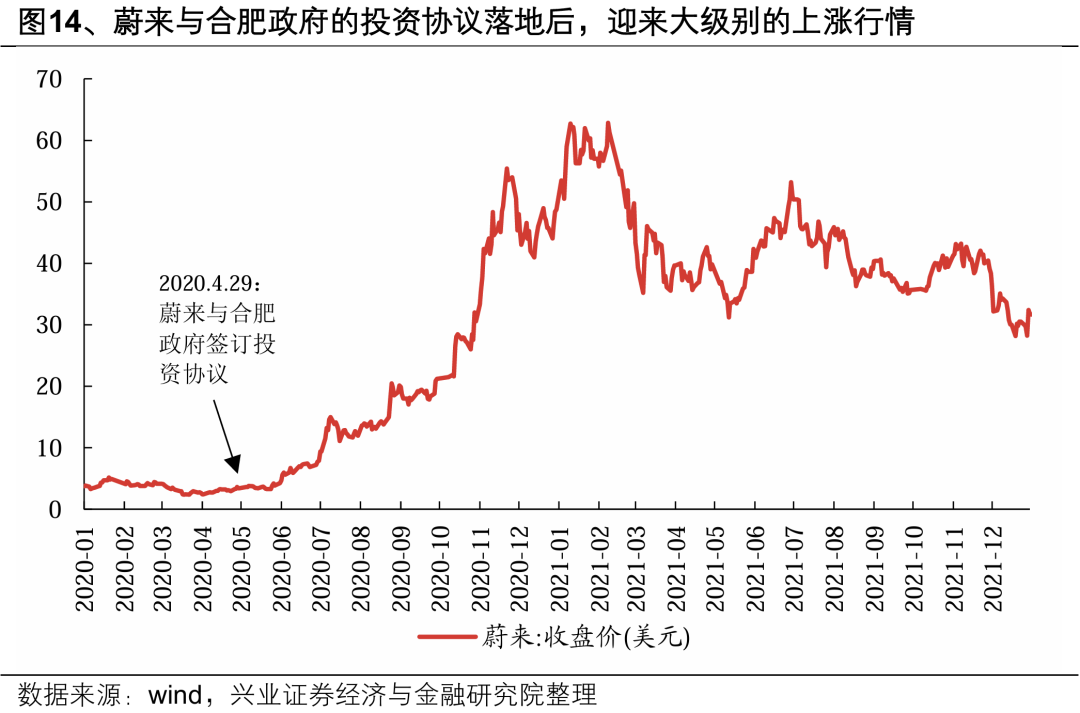
Tesla is also very good at using capital market narratives.
The Shanghai factory, FSD, robots, AI, space computing—different stages have different stories. Musk is a great entrepreneur, but even he is affected by capital market cycles.
Large Models Did Not Appear Suddenly, and Investment Is Not Chasing Buzzwords
I had a very painful experience with large models.
Today, in every AI direction, we have portfolio companies ranked in the first row, and most were invested from the angel round, except that we did not invest in large models.
In 2021, I went to look at Zhipu, when its valuation was less than RMB 500 million.
Why did I go?
Because after BERT came out, I wanted to see whether there was a new model for natural language processing.
At that time Zhipu was still doing knowledge graphs, and its business model was technology intelligence analysis, doing information extraction, retrieval, and classification for clients with different needs.
This business model might have been too small, and after hesitating back and forth, I did not invest.
So, at least before the end of 2022, people who invested in Zhipu, to put it brightly, were investing in people; to put it in my darker little mind, were indeed just lucky.
At that time, the matter could not yet be connected in a straight line with today's large models.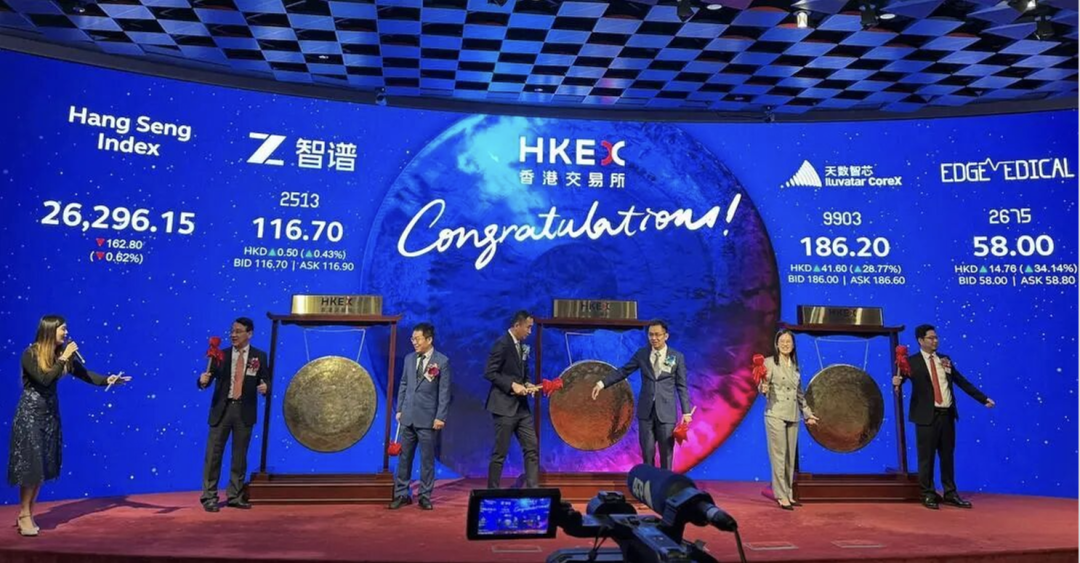
Zhipu listing
There is another even crueler thing.
I count as one of the earlier investors in big data in China, and since 2010 I have invested in several important big data companies.
Looking back, large models did not suddenly pop out. Before them there were stages such as big data, data middle platforms, and facial recognition, as well as technical accumulations such as BERT and Transformer.
It is just that investing in AI today has one very painful thing: every three months a new term pops up.
It seems that if you do not mention new terms, you appear unprofessional. But many terms do not mean they all differ significantly from one another.
What really matters is tracing downward: before large language models formed the so-called Scaling Law, what they relied on most, besides computing power and technical capability, was data.
Where does internet text data come from?
It was jointly created by consumers around the world over the past decades after the popularization of keyboards, mice, PCs, and internet infrastructure. This is precisely one of the most important data foundations for today's models.
From Language into the Physical World: First Pass the Two Hurdles of Data and Causality
Today everyone is very eager to explore the upper limits of AI models. But in many fields, besides technology and capability, there are other challenges.
When robots were at their bubbliest, countless companies doing "brains" appeared. Having so many companies doing robot brains shows one problem: robot brains still do not work very well.
Why do they not work very well? First return to the source of internet text data.
Sensors such as keyboards and mice, plus PCs and networks, became widespread enough among enough consumers, and people used them for a long enough time, creating almost all possible diverse combinations between words.
But what robots need is data carrying high-precision information about space, dimensions, and state changes. This kind of data did not have comparable accumulation in the past. When you were writing on forums back then, piecing together your master's thesis, you did not think, "I want to contribute corpus to future large models."
That data could appear because the sensors creating the data first became cheap, widespread, and useful to you.
We did not invest in real-human data collection, and we may also have missed some opportunities.
Why did we not invest?
I think they are useful, but one can make an analogy: in order to build a language large model, because the corpus was insufficient, you find ten thousand people around the world to help the model write all kinds of short essays.
Let us not consider the cost structure and bubble changes for now; the data production process is roughly like this.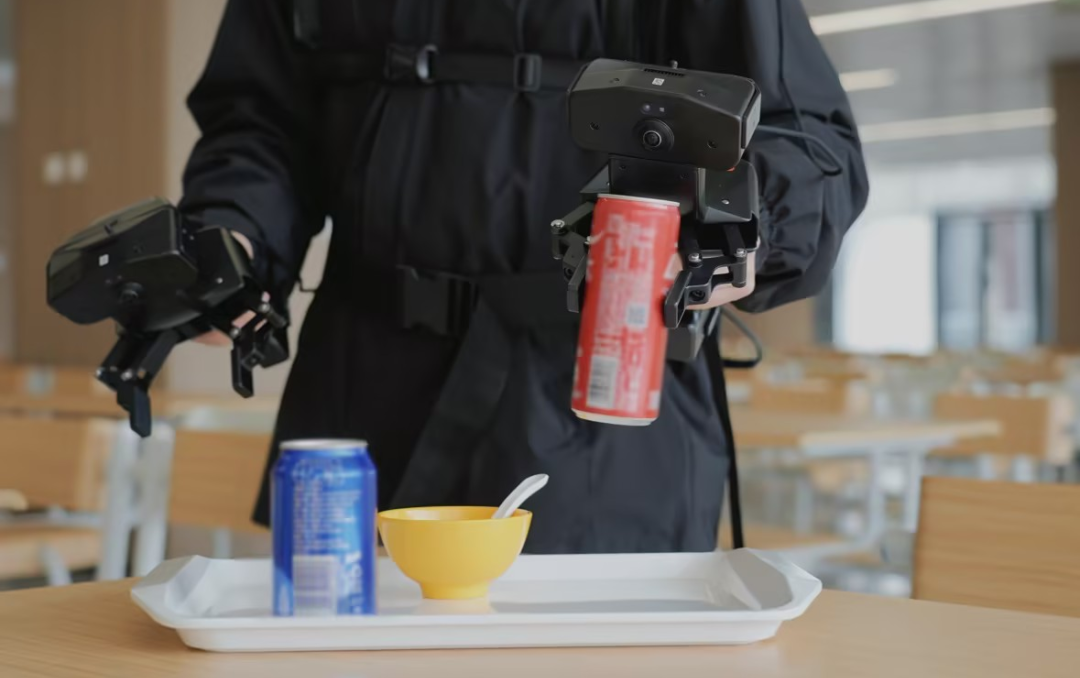
Real-human data collection
If the problems to be handled today are more complex than language in high-dimensional spatial relationships, that means you need orders of magnitude more data. Hiring ten thousand people to write essays may not solve it.
The second hurdle is probability and causality.
Today's large language models are probabilistic models, but many problems in the physical world have deterministic causal relationships and absolute constraints.
Whether an object can be grasped is not "possibly graspable" or "roughly graspable"; in many cases it is 0 or 1. A hand also cannot pass through a table, although I very much want to do so.
So when it comes to the physical world, besides lacking data, we are also not sure whether the original model architecture, or a statistically probabilistic model, can handle needs in which absolute constraints account for a relatively high proportion.
3D images and interactive worlds in the digital world are relatively easier to handle. When truly entering the physical world, the model may need to change in architecture, capability, and methodology.
Today several types of solutions can be seen.
One is generating simulated data to reduce the cost of data production, and then solving the sim-to-real problem;
One is trying zero-shot, doing it directly without data, which I call "defeating magic with magic." Whether data can be bypassed, I am not very sure;
Another approach is to add operators and modify structures at the bottom layer, embedding the absolute relationships of the physical world into the model, and even experimenting with new architectures that are not necessarily Transformer-based.
Will models ultimately evolve along today's architecture? I don't think so.
Autonomous driving has already been through many iterations—rule-based, pure data-driven, white-box, black-box. It is still a relatively simple AI scenario in the physical world.
More complex problems may ultimately not have just one path, nor may they be a straight-line extension of today's route.
To find new opportunities, look where data is generated
We also have a different answer: go back to history and see how data is actually generated.
Why did Douyin and Kuaishou come into being? Because good, cheap optical cameras were put into mobile phones, consumers found them useful, and began producing video on a large scale. Once video data became abundant enough, recommendation engines that did not rely on keywords were needed. This is the same logic as keyboards and mice bringing text data back then.
AI for Science is similar.
Today there is AlphaFold. Tracing backward, protein structure data is needed; further back from protein structure data, high-precision equipment such as cryo-electron microscopes is needed. To predict structure from gene sequences, large-scale genomic data is also needed, and genomic data depends on gene sequencing equipment. Only when data is sufficient, and then combined with technology and computing power, is it possible to achieve later breakthroughs.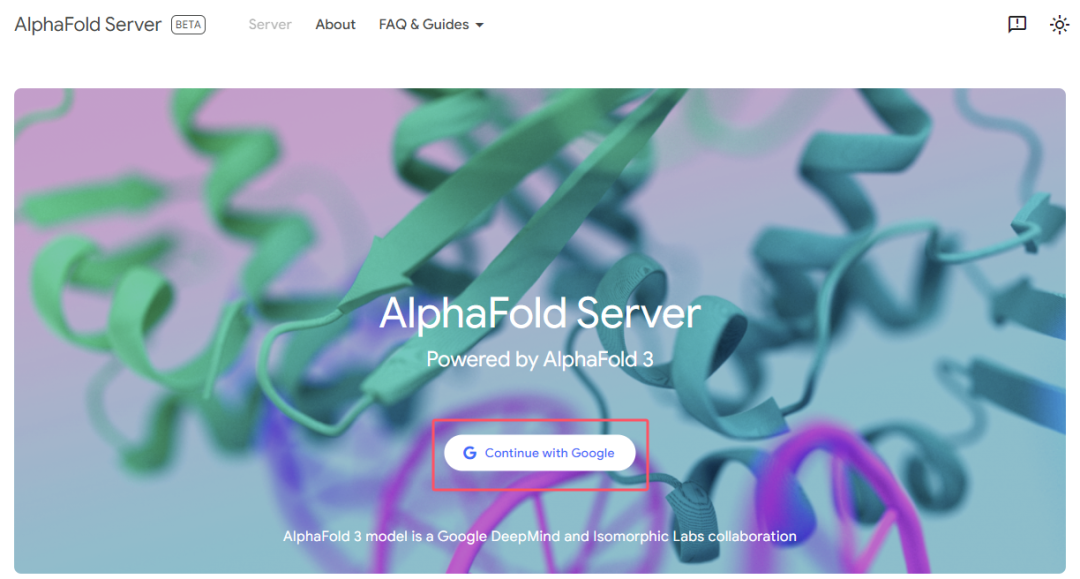
So, when you want to solve complex problems outside the digital world, besides model structure, you also have to ask: where does that kind of data come from? Do you need a new kind of device to first turn information into data? When we projected the stone in 2014, Liu Jingkang's team was still very small; it only took them twenty minutes to find us. At the time the valuation was 20 million RMB, and we invested 4 million.
Later I told him that behind the success of Insta360 and DJI, there is an important factor: after 2008, the upgrading of China's precision manufacturing and smartphone industry made cameras good, cheap, and small. Combined with technologies such as image stitching, panoramic cameras and later various handheld imaging products emerged.
Make a special sensor small, cheap, and highly precise, then layer on technology to form products that can solve new needs; such products and data will then be produced in large quantities. Looking back at DJI, Illumina, and the development of many smart hardware companies, they all followed a similar path.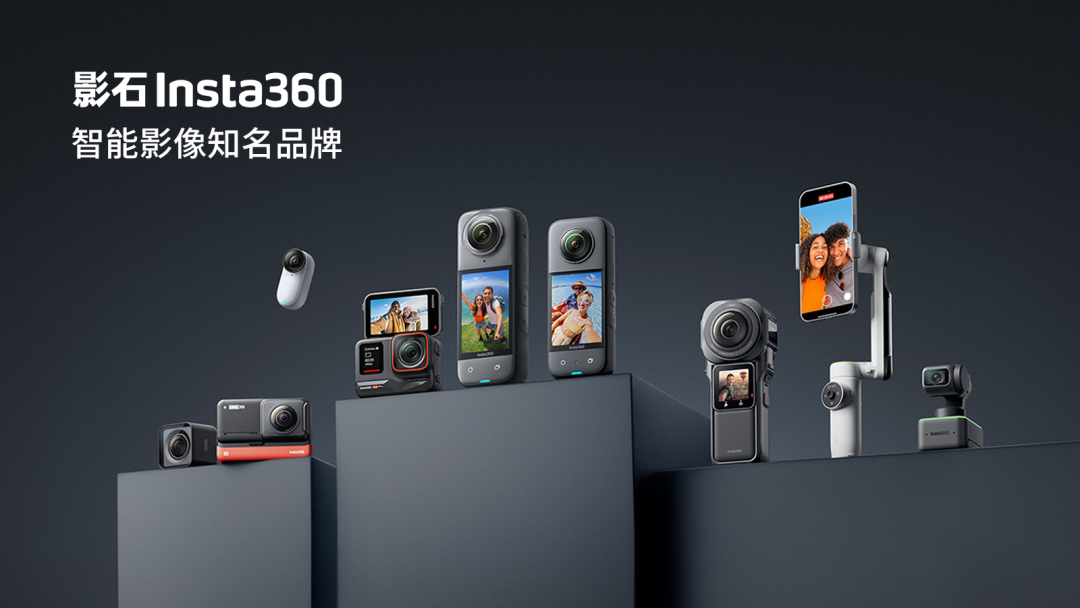
What sensors do is turn information into data.
For large models to solve more problems in the future, one possible precondition is that more and more sensors will appear on and around people. It is hard to guess today in what product forms they will appear, but the change in how data is generated is itself an investment direction.
Once AI is used, how should costs and revenue be calculated?
There is also a common-sense question that many people in the capital market choose to ignore: today's AI services have different cost structures from single-user services in the internet era.
Most internet services are based on databases or static data. Apart from factors such as concurrency, even if the marginal cost is not zero, it is very low. From serving ten thousand people to one million people, costs do not increase linearly with the number of users.
Today's cloud large models are not like that. Every time a person asks a question, the question has to be computed anew; if you are as talkative as I am, the context also has to be computed again. If a second talkative person appears, it is computed once more. It is not a business with marginal cost close to zero.
If one day the capital market demands that foundation model companies make money quickly and reduce losses, what will happen? One direct choice is to charge by token.
But after charging by token, would you still be willing to use large models as search engines the way you do today? If you are unwilling to pay per use, and the platform has to cover costs with advertising, how many ads would need to be loaded? Today's single-user service cost is far higher than traditional search, so simply adding a few more ads may not be enough.
At present, the problems that large models have clearly solved relatively well are natural language dialogue, coding, and mathematics. They all belong to symbolic expression systems.
Natural language has relatively weak logic, while formal logic is more rigorous; programming is a formal language for computers, and mathematics is a symbolic language for mathematicians. Large language models have already proven their ability on this kind of problem.
But once infrastructure enters hyperscale, it is hard to maintain high gross margins over the long term, otherwise not enough applications can grow on top of it. When computing infrastructure is pushed downward, a very important cost is energy. In the past, energy competition revolved around oil, gas, and coal, and transportation and regional distribution shaped the world order; if more value is output in the form of tokens in the future, the relationship between wealth and energy may also change.
If tokens are going to be charged for, AI will more easily enter services where users can afford token prices and the substitution value is high enough. Coding may be one of them, and there are other scenarios worth further discussion.
Ordinary consumers are another matter.
I want to keep using AI search because I can ask in one sentence without racking my brains to cut keywords, and I also want voice input; but if you make me pay one cent every time I ask, I probably will not do it.
Consumers want to keep their usage habits and also want it free. One answer is to move models down to the device side, at least achieving device-cloud collaboration.
Take intelligent driving as an analogy.
If every single decision called a cloud model and was charged separately—one cent for overtaking, two cents for changing lanes—you probably would not use it.
Today's intelligent driving is more like an on-device model, completing real-time decisions locally, and then interacting with the cloud at the model and data levels when parked.
Although this analogy is absolute, it can explain why device-cloud collaboration will become a business model.
China's opportunity lies in applications, industrial chains, and services
Over the past decade or so, whether in autonomous driving, facial recognition, or big data, China has had a very typical characteristic in technological competition: in the zero-to-one original stage, we are usually catching up; once it reaches the application layer, technology begins to be driven by specific scenarios, and China has a chance to change its position.
At IDG I pushed for Megvii.
The reasoning at the time was simple: as cameras became widespread, image data would become extremely abundant; text data went through portals and vertical portals, and eventually became so abundant that search engines were needed to organize it. Image data would also need new recognition and search methods, so we should invest in facial recognition.
Before 2016, many people thought China's facial recognition technology could not catch up with the United States. Later applications spread rapidly, and after that Chinese teams took an important position in academic research related to image recognition. This is application in turn driving technology.
Why does China have an advantage once it reaches the application stage? Because there are many scenarios, many links in the industrial chain, and the chain is long, and policy is also promoting applications. The complexity and completeness of the industrial chain are relatively high, meaning there are more windows for technology to be tried.
On the consumer side there is another bigger beta: services.
In China, whether producer services or ordinary food, drink, and entertainment, development will continue. One of the biggest challenges for services in the past was that per capita service cost was hard to reduce, and scaling was not easy; many high value-added services are also highly dependent on professional knowledge, such as finance, education, and health.
Delivering professional knowledge in the form of natural dialogue is in theory very suitable for language model intervention. What language models are most likely to help with is reducing the per capita cost of professional services and improving scalability.
Just as when Taobao appeared, China's consumer retail itself was going to develop, and it just happened to meet the internet; today China's service industry is going to develop, and it just happens to meet large models.
New consumer hardware will also appear.
Many new sensors became cheap because they were first driven up by another large industry.
For example, the cost decline of LiDAR was largely driven by the spread of new energy vehicles. When sensor costs fall and other demand is layered on top, new applications and hardware forms will emerge. These relationships are not linear, but they are worth tracing downward.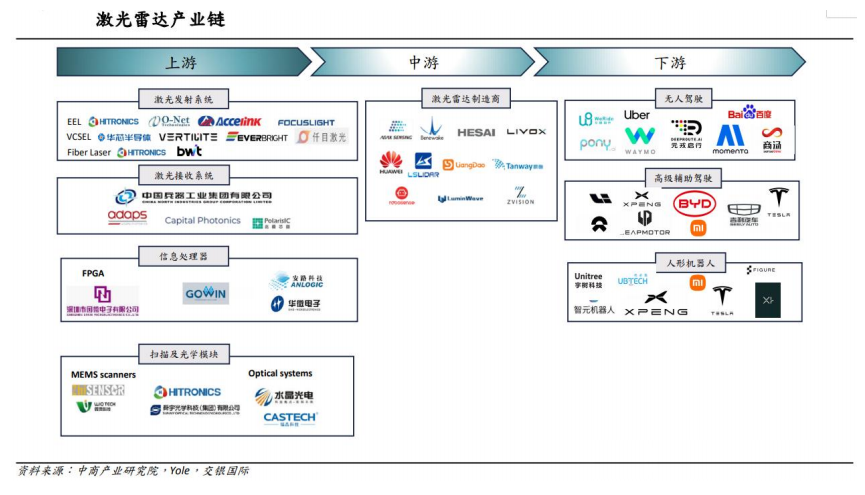

Ask the question concretely: enterprises, ordinary people, and young people
What will I focus on in the next twelve months?
I will look at three categories:
First, directions that must solve action problems, and solve them technologically, not just through business model innovation.
Second, new data types and new methods of generating data, including AI for Science entering specific fields. We have invested in companies such as XtalPi and JITAI before, but AI for Science is hard to invest in, because there are model problems, data problems, and also the question of what exactly is sold in the end. Selling services and selling models may both be difficult; in the end, specific products must be delivered.
Third, changes in the models themselves, and opportunities on the device side. Once consumer and application habits form, they will persist; changes in cost and payment methods will drive new on-device solutions.
Can China produce a company like Palantir?
Frankly speaking, it is relatively difficult.
Let us first set aside the differences between Chinese and American To B enterprises themselves and look only at the industrial chain structure: the United States has retained fewer but higher value-added industrial links, and a large part of management work is managing high value-added people. Software and the internet also spread over a longer period, so the To B software ecosystem is better.
China's industrial chain is very long, and a large number of links are low-to-medium value-added or medium value-added. The most urgent problems for enterprises are not necessarily the management problems of highly educated, high human-capital value-added teams.
As for Palantir and SpaceX, they also have military attributes. When observing such companies, besides their business, one also has to factor in American politics and capital cycles. This is not stock trading advice, just an angle on how the macro connects to the micro.
How can ordinary people discover AI consumer demand?
Let us set consumer hardware aside for now. On To C I have only one suspicion, without full confidence: China's past retail formats were different from those of the United States and Japan.
When retail demand was growing rapidly, China met the spread of the internet but did not first popularize credit cards. These conditions together shaped today's e-commerce and payment systems.
Similarly, AI consumer applications will not necessarily replicate overseas models; they must be found along China's own demand, industrial structure, and usage habits. China's biggest beta is very likely in services, especially services driven by professional knowledge that were previously difficult to reduce in cost and scale.
How can people who cannot afford membership fees use AI?
There are two questions here.
One is labor skill migration.
After technology enters every link, some migration is active and some happens passively. This is a relatively unfortunate and hard-to-avoid aspect of the technology development cycle.
The other is still cost.
Most people want to use AI, but their needs are not necessarily high value-added or high-value needs. The gap between these two things can ultimately only give rise to product forms that are as cheap as possible, which may be smart hardware or on-device solutions.
Before unlimited monthly data plans existed, many Bilibili users first cached videos locally before watching.
Consumers do not not want to use it; they need to find a way to use it that they can afford.
AI for Science can replace part of high-cost research work, but ordinary people asking daily questions cannot possibly pay a high price separately by token every time.
Following the needs of most people means products must be cheaper.
As models become stronger, why still figure out where they will fail?
A very important direction next is defining the boundaries of models, not just chasing the upper limit.
AI-generated digital content will become more and more abundant, and faster than humans.
Short video and other platforms already require a large amount of moderation today. If AI content increases enormously, it cannot rely only on human moderation; technology must be used to solve the safety problems brought by technology.
Autonomous driving is also an example.
You know what it can do, but the things it cannot do are often referred to as corner cases.
They are called corner cases because, beforehand, you do not know that it cannot do them.
No matter what level of autonomy is achieved, if boundary conditions remain unknown, it is difficult to truly build a reliable system.
Therefore, both China and the United States will increasingly prioritize safety governance. The upper limit of a model determines how far it can go, while the boundary defines where it may fail. Both are equally important.
As laboratories and scientific research resources grow stronger and stronger, do young people still have opportunities to start businesses?
There are opportunities, but you have to find your own starting point. After investing in Bilibili in 2013, I initiated an event called "post-90s entrepreneurs."
At that time, many people in the investment community completely failed to understand why, when you could not see the video, you would still watch the flashing text on the screen. Later, there were Liu Jingkang with Insta360, Guo Lie with Faceu, and a group of young entrepreneurs including those from Inke and Bilibili.
They are the internet-native generation. They started using the internet in middle school or even earlier, and their usage habits differ from those of adults who came into contact with the internet later in life.
What they do is often an extension of their own lives. Guo Lie created Faceu, Liu Jingkang focused on outdoor sports, extreme sports, and panoramic cameras, and Xu Yi founded Bilibili; all of these were related to lifestyles they were familiar with.
So what young people are best at doing is the stuff that belongs to their own lifestyle.
Going straight to solving a very mature and very serious scientific or model problem in one's early twenties—I do not think that will be so easy.
The usage habits that you take for granted today but that the previous generation cannot understand may be your starting point.
-
AI Enters the Deep Water Zone: The Logical Shift from Parameter Competition to Industry Integration
-
![]()
Inside Tesla's Cybercab "Unboxed" Approach: A New Manufacturing Logic for L4 Robotaxis, Working Backward from Production to Design
-
![]()
The Era of Rising Memory Prices: The "Sea of Phones" Strategy Recedes
-
![]()
Over 50,000! Xiaomi Auto's October Report Is Here — but the Annual Target Is Now Out of Reach
-
![]()
Xiaomi Pengcheng Seats Criticized for "Cheap Feel" as Bloggers Analyze Multiple Small Issues
-
![]()
Bizarre! After AITO's "In-Car Toilet" Patent, Deepal's "In-Car Foot Bath" Patent Exposed
-
![]()
Li Kaifu Scores Another Big Win? 01.AI Secures Hundreds of Millions in Investment from Two Levels of State-Owned Capital as Pre-IPO Strategy Accelerates
-
![]()
Fengshou Capital's Li Feng: The Hotter AI Gets, the More We Must Separate the Technology Cycle from the Capital Cycle