Over 50,000! Xiaomi Auto's October Report Is Here — but the Annual Target Is Now Out of Reach
 11/02 2026
 572
Early on the morning of November 1, Xiaomi Auto released its October delivery report card: monthly deliveries exceeded 50,000 units, setting a new high for 2026 and crossing the 50,000 mark for the first time this year.
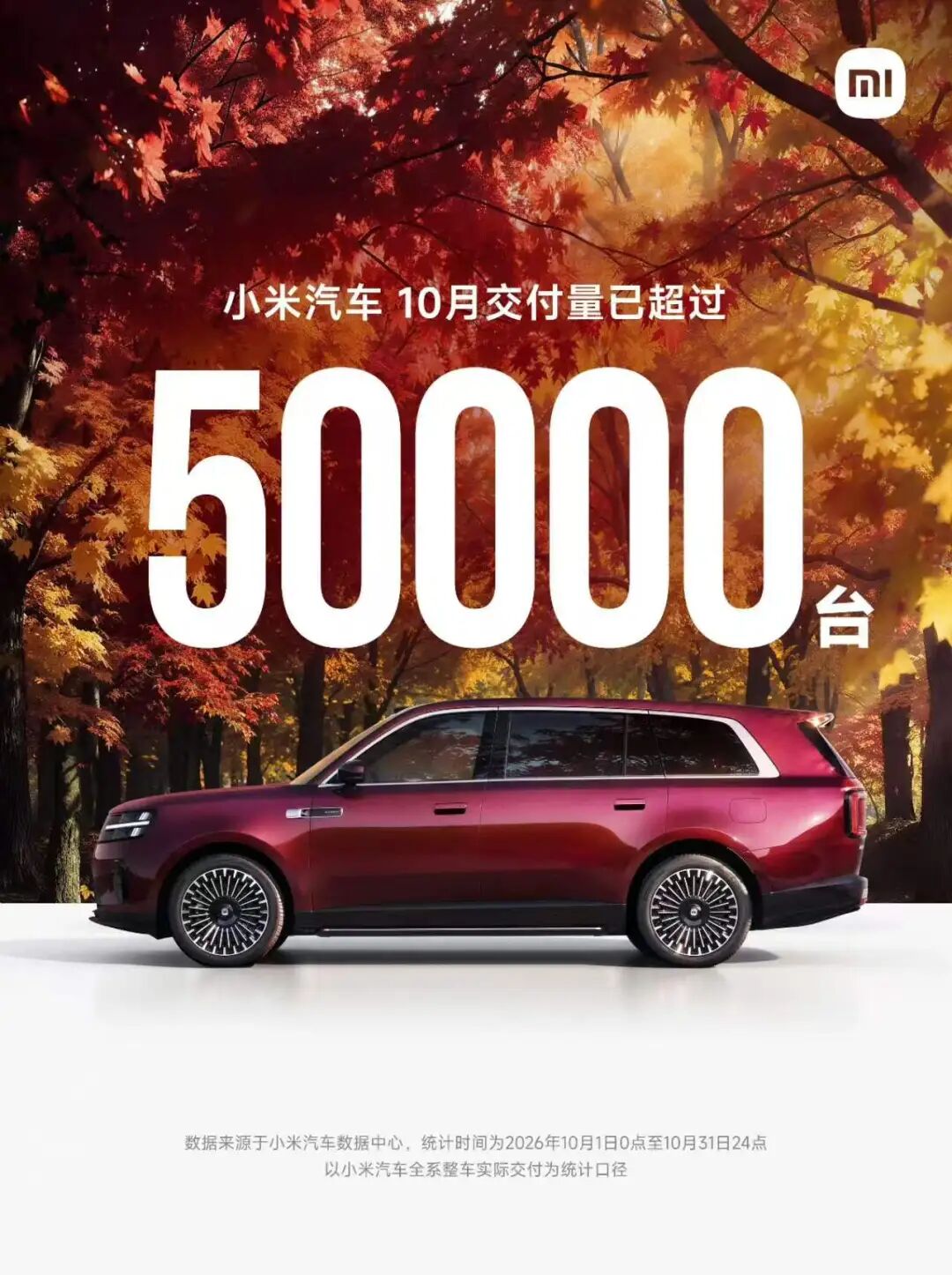
Image source: Weibo
The growth curve is clear: 30,000+ in August, 40,015 in September, and over 50,000 in October — a three-step leap with a month-on-month increase of about 25%. Cumulative deliveries in the first 10 months reached 336,490 units, with monthly figures as follows: 39,000, 20,000, 21,000, 36,000, 32,000, 34,000, 31,000, 30,000, 40,000, and 50,000.
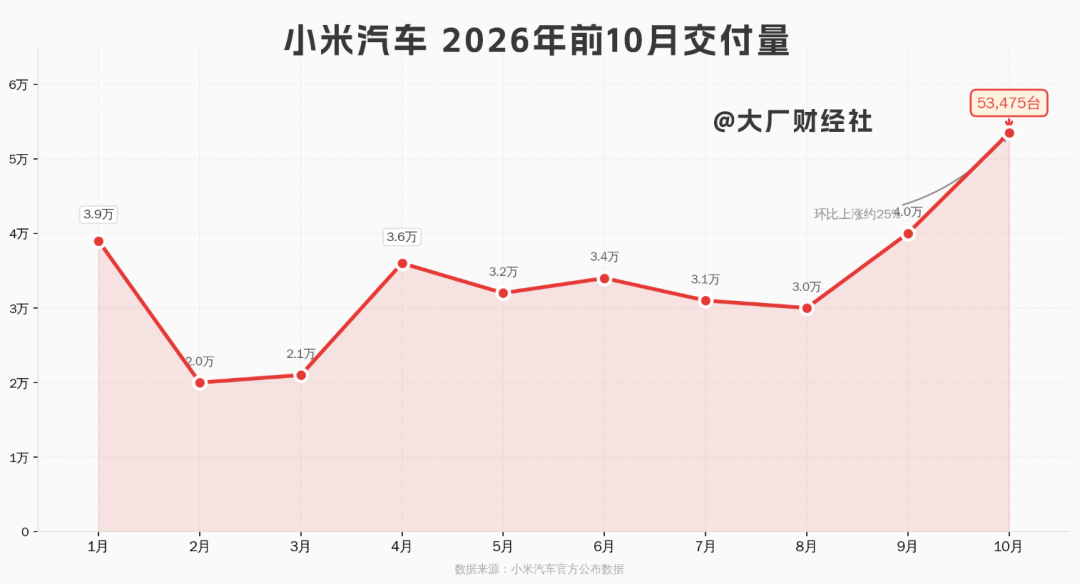 Image source: Dachang Finance Society
This result is all the more impressive given the chill hanging over the car market. The China Passenger Car Association predicts that domestic passenger car retail sales in October fell 28.9% year on year, with the overall market under pressure and many brands resorting to passive price cuts to drive volume — yet Xiaomi bucked the trend and firmly held the 50,000 level. It is worth noting that Xiaomi Auto's average transaction price is relatively high, its volume structure is healthy, and it has yet to enter overseas markets.
On overseas platforms, Xiaomi Auto remains highly popular, especially the SU7 Ultra, which continues to go viral on YouTube and TikTok. Xiaomi's phone business splits sales roughly evenly between domestic and overseas markets, and its mature overseas channels, localized teams, and compliance experience can all be reused for the auto business — leaving considerable room for incremental growth once it goes overseas.
Behind the 50,000 deliveries, Pengcheng has filled Xiaomi's biggest gap
The core contributor to this breakthrough is the Pengcheng series, which has just begun scaling up. The Pengcheng N70 and N90 went on sale in September, and October was their first full delivery month, filling Xiaomi's previous shortcoming of offering only pure electric models and struggling to appeal to family users worried about range. The extended-range architecture, paired with a large battery and the ability to run on either electricity or fuel, targets precisely the largest home SUV segment.
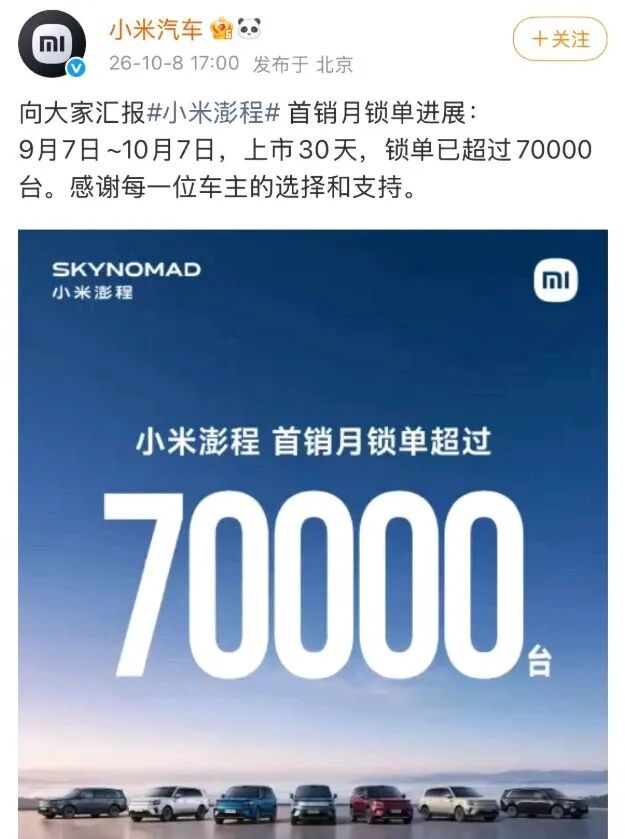
Image source: Weibo
Four major pillars of growth:
1. Pengcheng fills the product gap. Starting at 209,900 yuan, it targets family users, and its expandable large space solves the pain point of low space utilization in traditional SUVs, hitting practical car-buying demand;
2. The production capacity bottleneck has been cleared. The long wait for the YU7 is now history. Phases 1 and 2 of the Beijing factory have completed ramp-up, with 700 robots rolling a car off the line every 76 seconds; the Wuhan base dedicated to Pengcheng reached full production in October, compressing the delivery cycle from 10 months to two weeks, with some in-stock cars available for same-day pickup;
3. The pure electric base is solid. The SU7 firmly holds the top spot among pure electric sedans above 200,000 yuan, and the YU7 ranks first in NPS among mid-to-large SUVs. The two pure electric models steadily hold a base of about 30,000 units, while Pengcheng represents new incremental volume;
4. The human-car-home ecosystem and channels continue to expand. Ecosystem stickiness is hard to replicate, and stores have covered 119 cities and 402 locations.
The report also announced a limited-time policy for the Pengcheng N70: from November 1 to November 30, placing an order for the N70 offers up to 60,000 yuan in car-buying benefits, with in-stock cars eligible for either 3-year 0-interest financing or a 6,000 yuan insurance subsidy — using delivery momentum to keep orders coming.
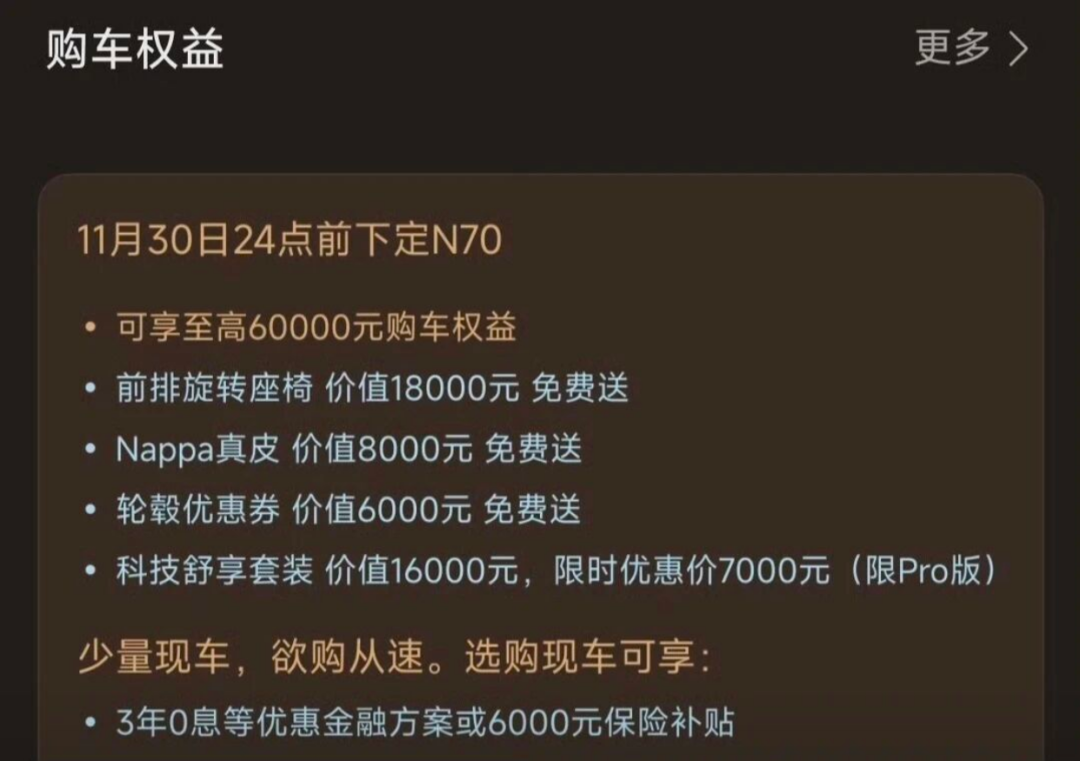 Image source: Weibo
Xiaomi's product line layout is becoming increasingly clear: the SU7 and YU7, together with the two Pengcheng extended-range SUVs, cover the high-end performance and family segments with four models. The next step is likely to launch a large sedan focused on rear-seat space, completing the matrix. According to industry information, the Xiaomi main brand will not make models under 200,000 yuan in the short term. Later, it may independently incubate a new brand, replicating the Redmi approach to enter the value-for-money market and open another layer of growth space. Against the backdrop of peaking growth in the phone business, autos are becoming the core second growth curve for Xiaomi Group.
Among the new forces, Xiaomi still has one formidable rival: HIMA. HIMA has achieved a monthly delivery high of 81,864 vehicles (November 2025), and the simultaneous launch of five brands should not be underestimated. Such a luxury architecture has yet to be built by a second company, and Huawei's technology and brand foundation will not disappear because of the slight decline in recent months.
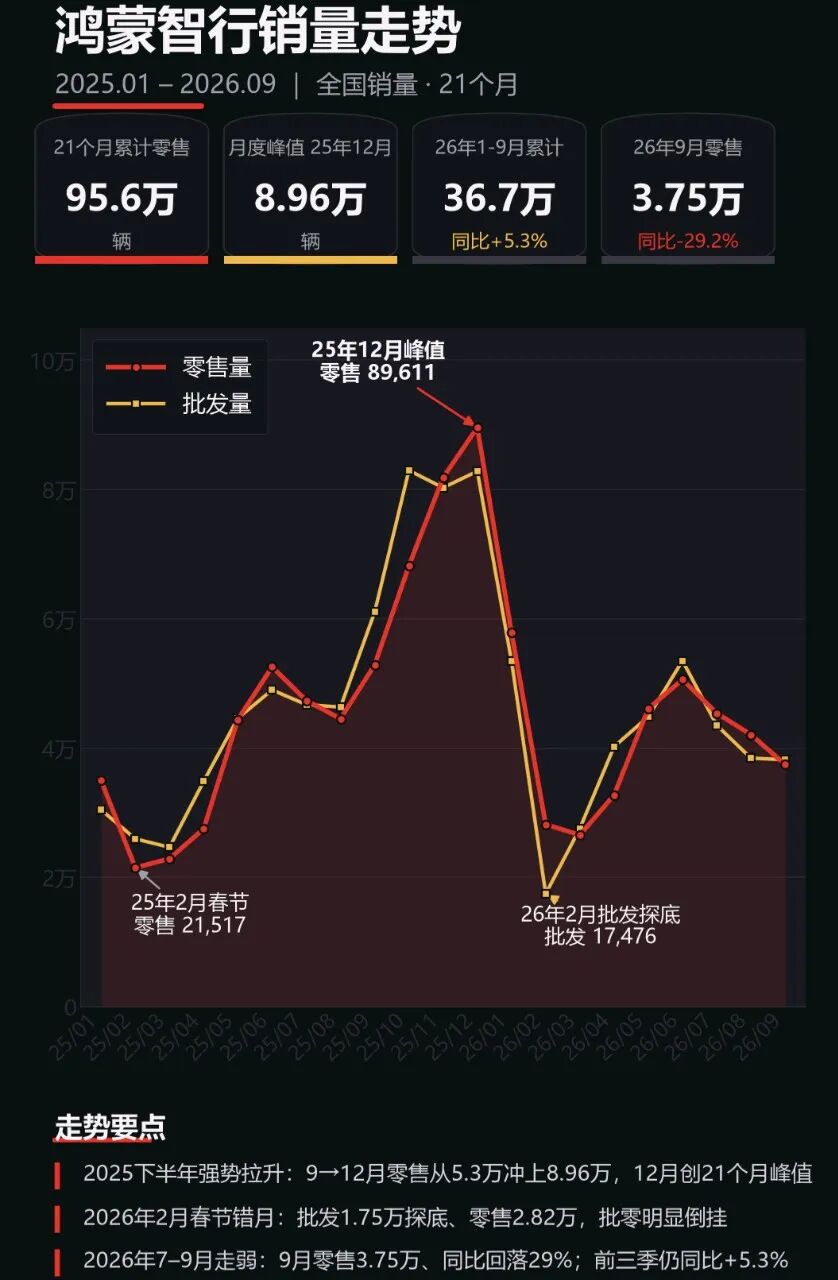
Image source: Weibo
In the past two months, HIMA has launched several heavyweight models, including the Luxeed V9, Stelato G9, Luxeed RX, Stelato V8, and AITO M8, none of which have yet entered volume deliveries. Once these new cars gain traction, the morale of the entire HIMA lineup will be greatly boosted. But October is still likely to be "one Xiaomi beating five HIMA brands."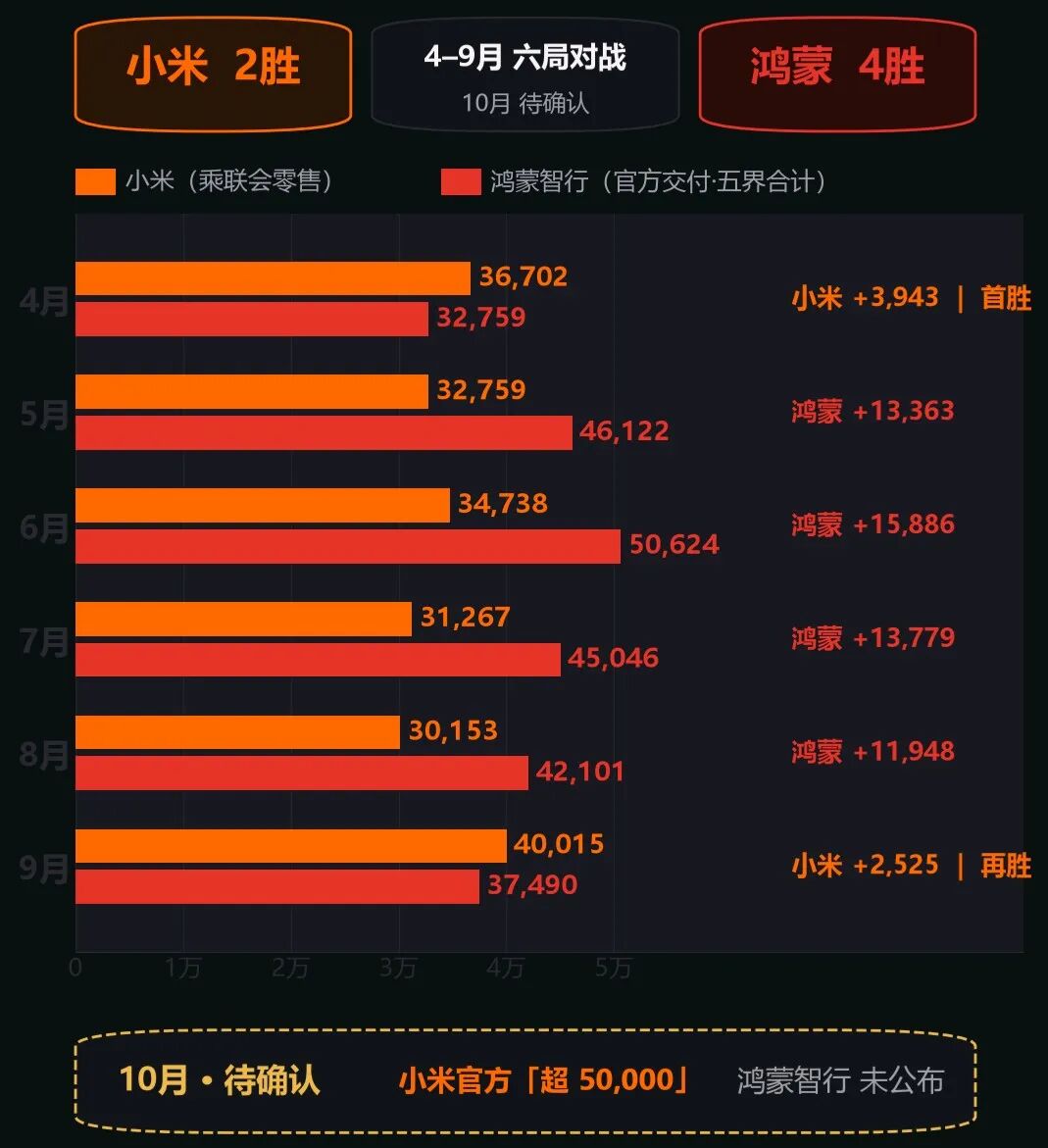 Image source: Weibo
Sales hit a new high, but the annual target is basically out of reach
Beneath the dazzling data, the full-year target of 550,000 units set at the beginning of the year is now basically hopeless. A simple calculation: cumulative deliveries in the first 10 months were 336,490 units, and the remaining two months would require a total of 213,500 units — averaging more than 100,000 per month, which is extremely difficult given the current volume of 50,000.
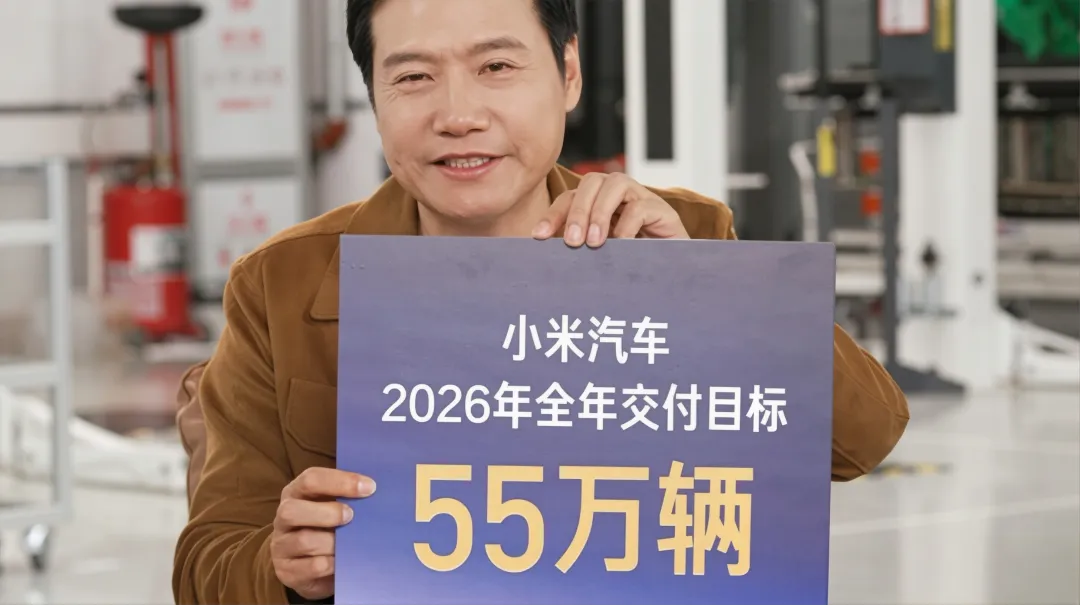 Image source: Lei Jun's Weibo
Objectively speaking, the 550,000 target was itself optimistic when set at the beginning of the year, when Pengcheng had not yet launched and the extended-range increment had not yet materialized. Even if the target is missed, this delivery level remains in the first tier among the new forces. The industry evaluates the scale Xiaomi Auto has achieved in two and a half years as something many automakers need five years to accomplish. The market expects that after Pengcheng's production capacity is released, November deliveries are expected to challenge 60,000 units and later move toward 70,000 — but this still cannot close the gap with the annual target.
Behind the high single-month growth is also a microcosm of the brutal competition in the car-making industry. As the market cools, consumers are becoming more pragmatic, and pure marketing gimmicks can hardly convert into orders. Xiaomi's current surge is essentially the concentrated release of real demand after products were completed and production capacity caught up.
Finally, a question for everyone: given Pengcheng's order momentum and year-end volume-boosting policies, how many units do you think Xiaomi Auto will ultimately deliver in all of 2026?
Disclaimer: This article is only a Dachang Finance commentary and does not constitute any investment advice. The corporate data and regulatory events mentioned in the article all come from public information and are for reference only; the official release shall prevail. Images are from the internet. If there is any copyright issue, please contact us for deletion.
-
AI Enters the Deep Water Zone: The Logical Shift from Parameter Competition to Industry Integration
-
![]()
Inside Tesla's Cybercab "Unboxed" Approach: A New Manufacturing Logic for L4 Robotaxis, Working Backward from Production to Design
-
![]()
The Era of Rising Memory Prices: The "Sea of Phones" Strategy Recedes
-
![]()
Over 50,000! Xiaomi Auto's October Report Is Here — but the Annual Target Is Now Out of Reach
-
![]()
Xiaomi Pengcheng Seats Criticized for "Cheap Feel" as Bloggers Analyze Multiple Small Issues
-
![]()
Bizarre! After AITO's "In-Car Toilet" Patent, Deepal's "In-Car Foot Bath" Patent Exposed
-
![]()
Li Kaifu Scores Another Big Win? 01.AI Secures Hundreds of Millions in Investment from Two Levels of State-Owned Capital as Pre-IPO Strategy Accelerates
-
![]()
Fengshou Capital's Li Feng: The Hotter AI Gets, the More We Must Separate the Technology Cycle from the Capital Cycle