"China's Buffett" Goes All-In on AI and Crashes Hard! Turns Into a "0.6 Yuan Fund" in Just 4 Months
 11/06 2026
 445
In this brutal A-share correction, even Dan Bin, known as "China's Buffett," could not escape.
The latest fund NAV report shows that as of October 30, the unit NAV of Dongfang Harbor Hongyuan Phase 2 had fallen to 0.6282 yuan, officially making it a "0.6 yuan fund." According to channel sources, a week earlier (as of October 23), the unit NAV of this product had already dropped below 0.7 yuan.
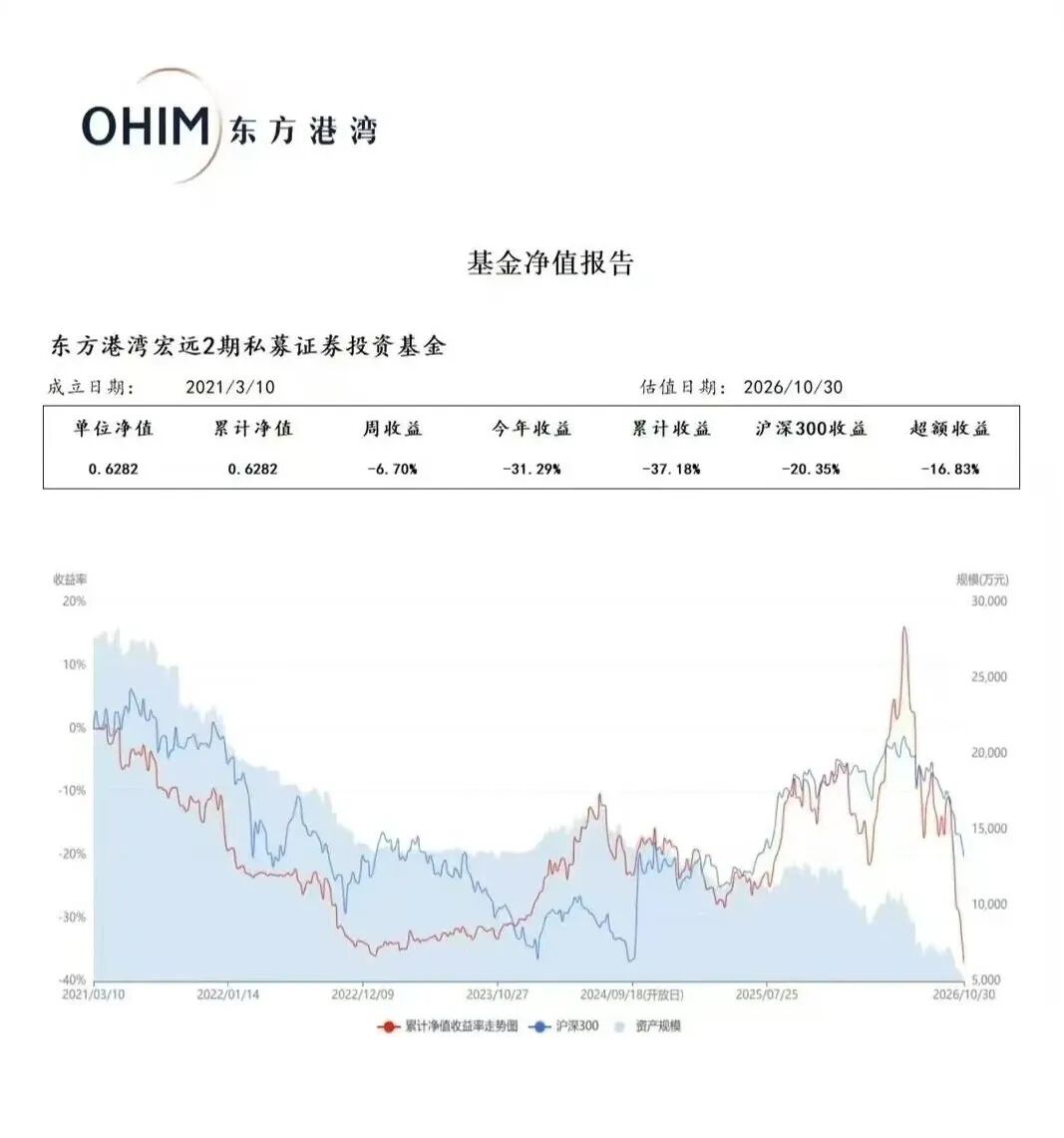
Looking at its year-to-date performance, Dongfang Harbor Hongyuan Phase 2 had once gained nearly 20%, but after following the AI sector's valuation selloff in July, its year-to-date drawdown reached 31.29%.
Taking a longer view, this product, established in March 2021, has accumulated a loss of 37.18% since inception, underperforming the CSI 300 by about 16.8 percentage points. In terms of product scale, it has shrunk from a peak of about 300 million yuan to just over 50 million yuan.
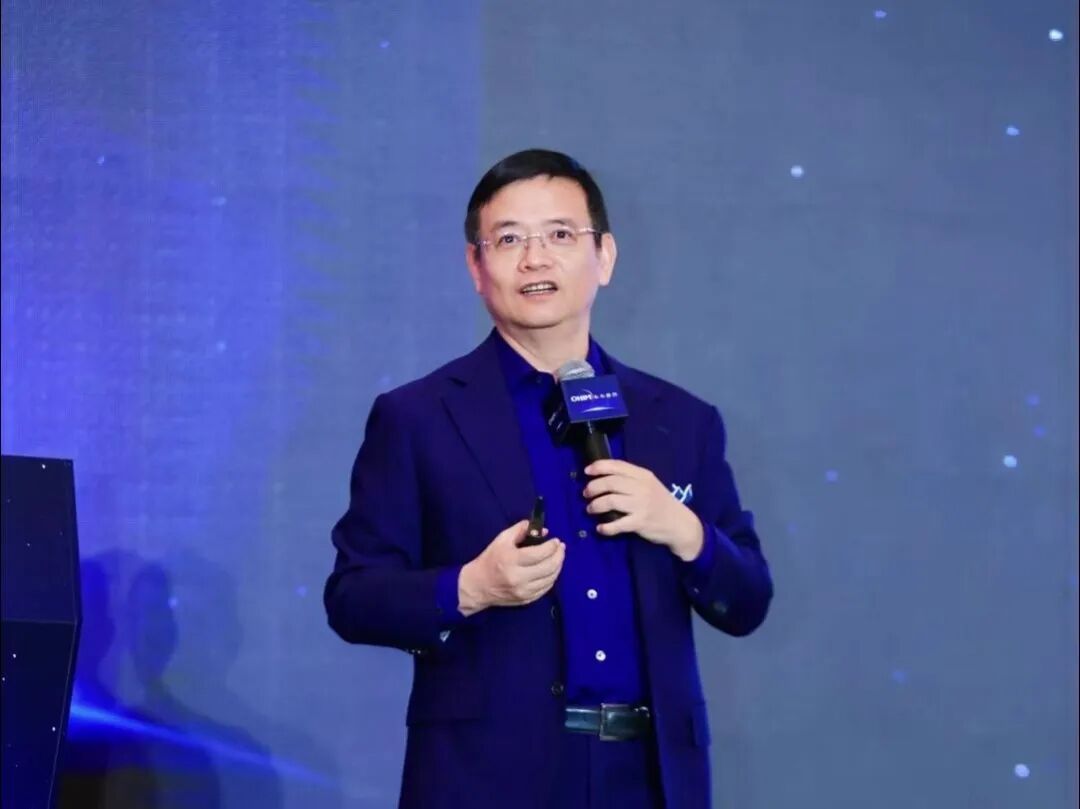
Facing the NAV slide, Dan Bin explained externally that different products are constrained by contractual investment scopes and can only invest in A-share and Hong Kong stock targets, which are more volatile; he remains bullish on the domestic AI industry chain, and the product maintains full positions.
01
"0.6 Yuan Funds" Emerge in Clusters
But Dongfang Harbor is not the only one suffering severely. Under this round of sharp correction in technology stocks, a large number of well-known private equity firms once sought after by the market have also fallen into NAV quagmires simultaneously. Various "0.6 yuan funds" have emerged in clusters, becoming a glaring industry spectacle in the fourth quarter of this year.
One of the worst examples is Jiayue Yuefeng Investment Chuangshi Hao managed by Wu Yuefeng. Also as of October 30, the product's NAV had fallen to only 0.55 yuan, nearly halved, with a year-to-date maximum drawdown of 74.39%.
It is worth noting that in June this year, the product's year-to-date return had once surged to an astonishing 257%; just four months later, the year-to-date return flipped to -8.5%, with cumulative floating losses since inception reaching 45%.
Position information disclosed by channels shows that the product is almost entirely bet on the AI computing power chain: computing infrastructure, storage chips, semiconductor equipment, and optical modules. It is a typical case of extreme sector concentration. When the market is favorable, returns explode; once the trend reverses, the drawdown is equally devastating.
For the same reason, multiple top quantitative private equity firms have also faced recent performance pressure.
Data from Simuwang shows that as of October 30, the C-class shares of Longqi Technology's Longqi Dividend Technology Rotation Balance No. 2 have seen a year-to-date drawdown of nearly 30%, with cumulative NAV falling to 0.707 yuan, while the A-class shares of Longqi Quantitative Long No. 15 have seen cumulative NAV fall to 0.7365 yuan. During the same period, the Banyang Quantitative Select Aggressive No. 3 private securities investment fund has seen a year-to-date drawdown of 37.44%, with cumulative NAV falling to 0.7886 yuan.
Industry insiders said that the cluster emergence of "0.6 yuan funds" is mainly due to market volatility, especially products with layouts or greater exposure in the technology sector, which have been hit more obviously.
02
The Drawbacks of Overly Concentrated Holdings Become Prominent
Under this sudden market shock, the drawbacks of overly concentrated holdings in private equity products have been fully exposed, drawing heavy criticism from holders.
Taking Dongfang Harbor as an example again, also managed by Dan Bin, products mainly invested in US stocks that can allocate to overseas AI leaders such as Nvidia and Google generally have drawdowns controlled within 5%; while Hongyuan Phase 2 and Hanyun Phase 1, which can only invest in A-shares and Hong Kong stocks, generally have drawdowns exceeding 30%.
Different products under the same investment philosophy have completely different results, which is hard for holders who put in real money to accept. The drawbacks of extremely concentrated bets on a single sector are fully evident in private equity firms' position choices.
This round of batch drawdowns in star products also leaves investors with three clear lessons.
First, when choosing private equity, one cannot only look at the star products displayed externally by the manager; one must independently verify the contract constraints, investment scope, and historical maximum drawdown of the specific product one buys. Under the same private equity firm, product risk-return profiles can differ vastly.
Second, being optimistic about an industry does not equal going all-in on a sector. No matter how solid the industry logic is, one must respect valuations and volatility. The cost of concentrated holdings is extremely high drawdowns.
Third, long-termism has preconditions: the duration of funds must match product volatility. If a sum of money cannot withstand a 40% level drawdown, then even if the sector prospects are excellent, it is not suitable.
·END·
-
![]()
Is Toyota Cutting Ties with the Rest of the World for China?
-
![]()
"China's Buffett" Goes All-In on AI and Crashes Hard! Turns Into a "0.6 Yuan Fund" in Just 4 Months
-
![]()
The Pain Points of Lingguang as a Personal Agent: Xiaohongshu and Rokid Join Forces to Fill the Gaps
-
![]()
Yu Chengdong "Takes Advice": the "Crown Prince" Returns as the New AITO M8 Rolls Back into Huawei Stores
-
![]()
Hongguo Short Dramas Takes on Doubao—Even Jack Ma Can't Sit Still?
-
![]()
Breaking! AITO Secures Major Orders for Smart Policing and Official Vehicles
-
In the AI Era, the Real Competition Is Not Just AI Itself
-
![]()
Toyota's Half-Year Report: New Cars and Robotics as New Business Lines underpin "Stabilization" and "Survival" Transformation