Is Toyota Cutting Ties with the Rest of the World for China?
 11/06 2026
 452
Introduction
Toyota's most radical strategic pivot yet.
"Where there's a road, there's a Toyota." In today's sweeping narrative of China's new energy vehicles, does this slogan—carrying the memories of generations of the Crown and Corolla—still live up to its name?
From January to June 2026, Toyota's global cumulative sales reached 5,008,900 units, down 2.9% year-on-year. In China, cumulative sales totaled 694,700 units, a full 17.1% decline year-on-year.
Among them, GAC Toyota sold 341,100 units in the first half, down 6.3% year-on-year; FAW Toyota sold 274,100 units, down 27.4%; Lexus sold 71,900 units, down 16%.
Clearly, China's auto market was sluggish this year, and Toyota felt the impact considerably.
But to simply declare "Toyota is finished in China" is far too naive.
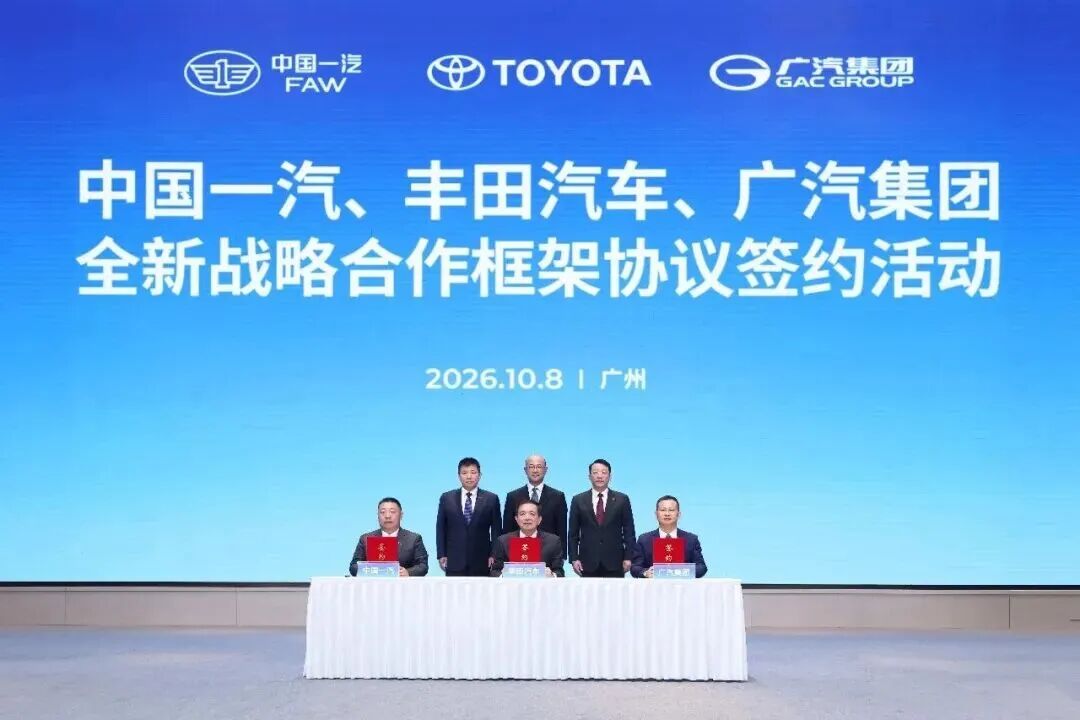
On October 8, China FAW, Toyota Motor, and GAC Group officially signed a strategic cooperation framework agreement in Guangzhou.
Under the agreement, GAC plans to acquire 50% equity in FAW Toyota held by China FAW through the issuance of shares. FAW Toyota will continue to exist as an independent operating entity, and China FAW will become an important strategic shareholder of GAC Group.
Note that this is not simply an asset division or a carving up of the pie. It involves not only the restructuring of FAW and GAC, but also Toyota's participation in the convergence of the north and south Toyota operations.
Beyond the imperative of "major alliances and mergers" among China's state-owned and central-owned automakers, for Toyota, ending the years-long split between north and south Toyota is deeply significant in itself—
As north and south Toyota bid farewell to fighting separately and move toward unified coordination, Toyota's narrative in China shifts from the past product era of "where there's a road, there's a Toyota" to a new stage of industrial coordination, joint technology creation, and counter-offensive on the global stage.
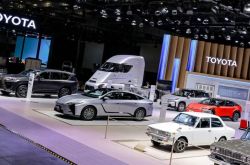
And the strategic adjustment signal of "ONE TOYOTA in China" is especially strong at the node of Toyota's ninth consecutive appearance at the China International Import Expo.
01 Nine Consecutive Appearances: Toyota Makes More Chinese Cars
The CIIE is a compelling window. From the first edition to the ninth, Toyota has never been absent—a true "perfect attendance" player. Looking back at previous years, Toyota's CIIE stories were mostly about introducing mature overseas models and showcasing hybrid and hydrogen technologies.
But 2026 is different.
At this CIIE, Toyota is trying to translate this "ONE TOYOTA" new strategy into tangible technologies and solutions and put them on display.
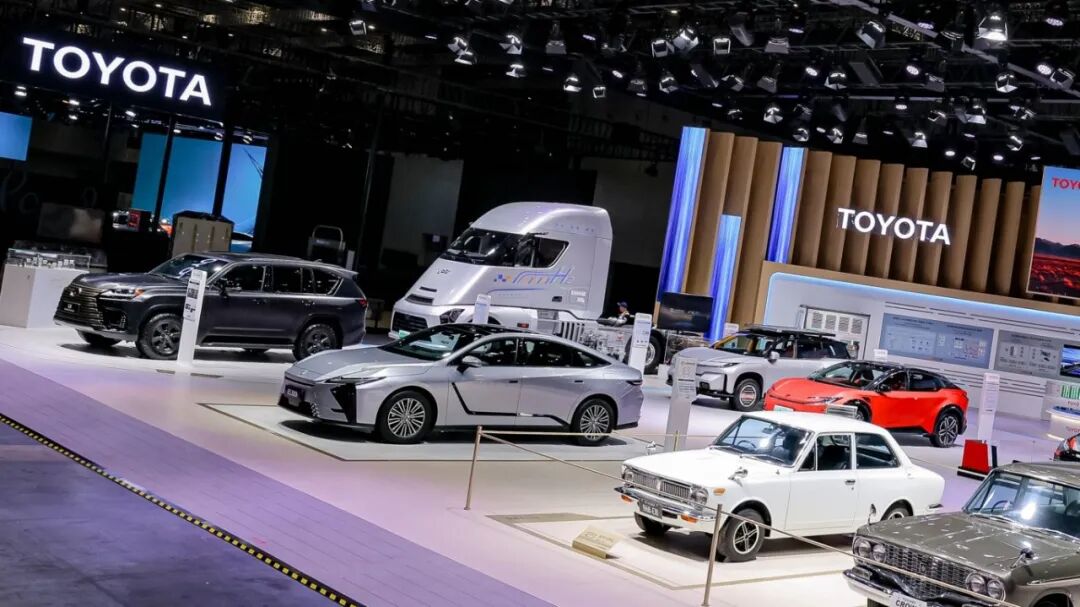
Under the theme "with China, for China, co-creating together," Toyota presented three major sections: "Classic Model Heritage," "Automotive Culture Co-creation," and "Localization Symbiosis."
On one hand, Toyota exhibited its traditional strengths in hydrogen and hybrid solutions; on the other, it highlighted the Bozhi and bZ series pure electric models developed under the leadership of the China Chief Engineer (RCE) system.
The core breakthrough of this system is delegating model development decision-making power from Japanese headquarters to local Chinese teams—product definition, supplier selection, and intelligent configuration are all decided in a closed loop in China, no longer requiring long waits for layer upon layer of Japanese approval.
By making these the centerpiece of this CIIE, Toyota is almost "making it explicit"—for global autos, look to Toyota; for Toyota's pure electric, look to China.
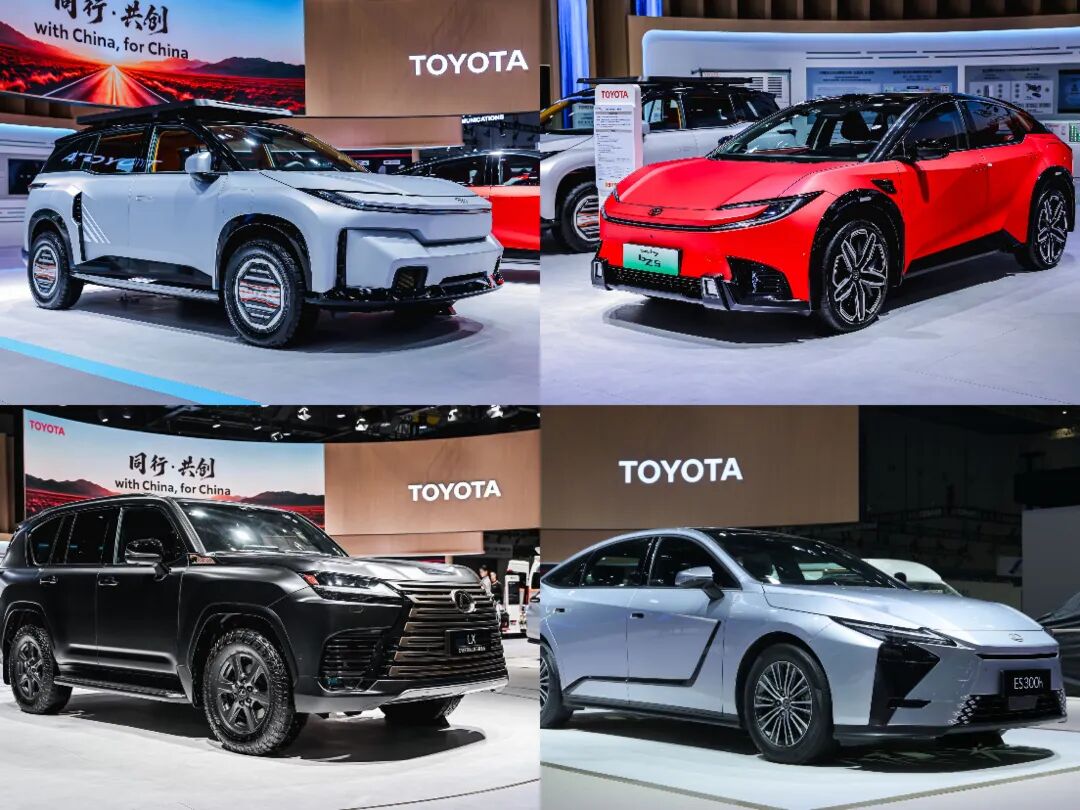
Today, Toyota's bet on China is not just about sales share; the core goal is technological discourse power in global electric and intelligent vehicles.
The Shanghai Jinshan Lexus project is the heaviest piece in Toyota's strategic pivot.
Lexus (Shanghai) New Energy Co., Ltd., wholly owned 100% by Toyota, is Shanghai's second wholly foreign-owned new energy vehicle project after Tesla, and Shanghai's first Japanese-brand vehicle project.
As of today, the wholly-owned Lexus plant in Shanghai Jinshan is nearing completion, entering the stage of machine debugging and worker recruitment. Next year, Lexus's first domestically produced pure electric SUV will be mass-produced here.
In fact, it's not just the Lexus plant's settlement; the latest changes in Toyota China's organizational structure are equally intriguing.
On November 5, the opening day of the CIIE, Toyota announced: Shigeta Ota, former head of Lexus Sales and User Promotion Department, will become head of Toyota China Headquarters and head of Toyota Motor (China) Investment Co., Ltd., effective January 1, 2027.
Shigeta Ota is a rare executive with both hands-on experience in FAW Toyota joint venture sales and global brand management experience with Lexus.
Whether it's Toyota placing the first manufacturing base for its new-generation Lexus pure electric platform in China, or handing over the China market to Ota, who has dual backgrounds in Lexus and the China market, both point to the same thing:
Toyota, firmly bullish on China, is "adapting to the times," turning the China market from a sales endpoint into a new starting point for Toyota's global electrification.
02 The Japanese Brand Dividend Is Receding—Electrification Is Still the Answer
Looking at the global dimension, Toyota's increased bet on China is an active defense forced by crisis.
On paper, Toyota remains a top global sales player, with solid foundations for hybrid and fuel models in Southeast Asia, the Middle East, North America, and other markets. Relying on a global supply chain and lean manufacturing, Toyota can still maintain considerable profits.
But the underlying foundation is loosening, with two major challenges pressing in simultaneously:
First, the global expansion of Chinese new energy vehicle makers is directly eroding Toyota's base.
Southeast Asia, Latin America, and the Middle East—once the "comfort zones" of Japanese cars—are rapidly becoming the main battlegrounds for BYD, Geely, Chery, and Changan.
The North American market has trade barriers as a buffer, and the European market has anti-subsidy investigation barriers, but barriers can only delay the impact, not reverse the electrification trend. In unprotected emerging markets, Toyota is facing generational gap pressure from same-priced products.
Second, the structural collapse in the China market.
Japanese brands' domestic market share has fallen from a peak of 23% to less than 11% today, and Toyota cannot escape the dilemma of declining sales and collapsing pricing systems.
Former benchmark models like the Highlander and RAV4 continue to see expanded terminal discounts; the Bozhi 3X has pushed joint venture pure electric SUVs down to a starting price of just over 90,000 yuan—these are all signs of Toyota being forced to abandon its premium and enter hand-to-hand combat.
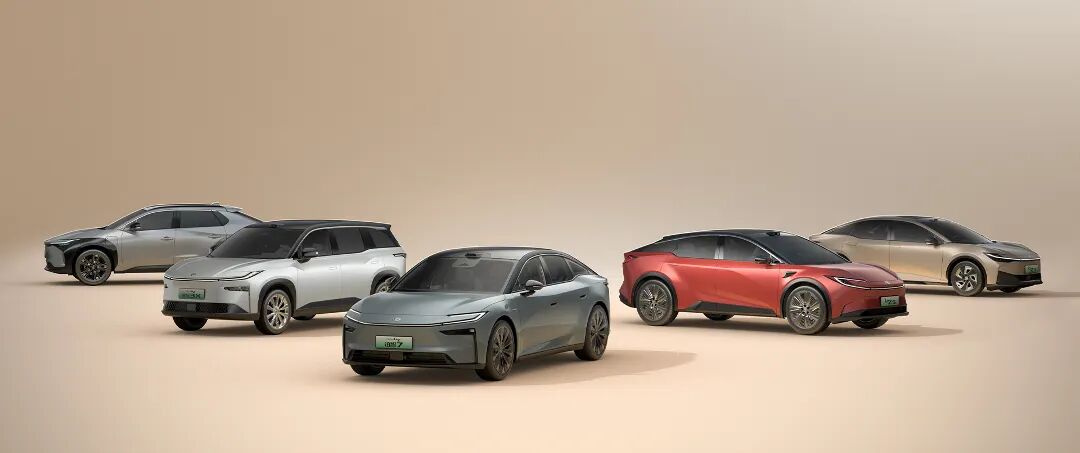
Facts have proven that hybrids cannot save Toyota's share in China.
In the domestic market where new energy penetration has exceeded 60%, users are no longer voting primarily on "fuel-efficient, reliable, retains value," but on intelligent driving, cockpit experience, battery solutions, and whole-vehicle OTA iteration capability.
But these are precisely the weak spots of Japan's domestic industrial chain.
Honda and Nissan chose to contract, wait and see, and cut domestic product lines; Toyota did not follow suit but instead doubled down on investment, integrated joint venture resources, and established a wholly-owned high-end EV plant.
Not because making money in China is easy, but because China is the only place that can help Toyota shore up its shortcomings in electrification and intelligent technology.
Toyota's rivals are no longer just legacy multinational automakers like Volkswagen and GM, but an entire new energy vehicle manufacturing paradigm defined by China's industrial chain—short-cycle development, rapid software-hardware iteration, integrated cockpit and intelligent driving, and supply chain cluster coordination.
This standard is being exported outward, and Toyota must either learn this methodology or be defeated in increasingly more markets.
03 "with China, for World"
It's a crisis, but also an opportunity.
Toyota still possesses global manufacturing quality control, diverse hybrid/hydrogen routes, a global channel network, and a massive user base; its weaknesses are intelligent software, pure electric platform iteration speed, and local digital ecosystems.
And the capabilities of the China market are exactly what can shore up Toyota's weaknesses.
Many people simplistically interpret the north-south Toyota merger and the Lexus Shanghai plant as "Toyota trying to reverse its declining sales in China"—that's too narrow a view.
Toyota's ultimate goal with this layout is not to sell more cars in China, but to establish a new cycle of "developed in China, harvested globally."
Today's China auto market is no longer simply a consumer market—it is the global epicenter of new energy vehicle technology.
Batteries, motors, electronic controls, automotive large models, urban NOA, cockpit operating systems, high-voltage platforms, integrated die-casting—the iteration center for almost every core new energy track is here.
Developing models here allows Toyota to directly access first-tier domestic suppliers and iterate in sync with China's intense competitive rhythm, rather than building cars behind closed doors in Japan, separated by the supply chain.
So the next step after "with China, for China" must be "with China, for World."
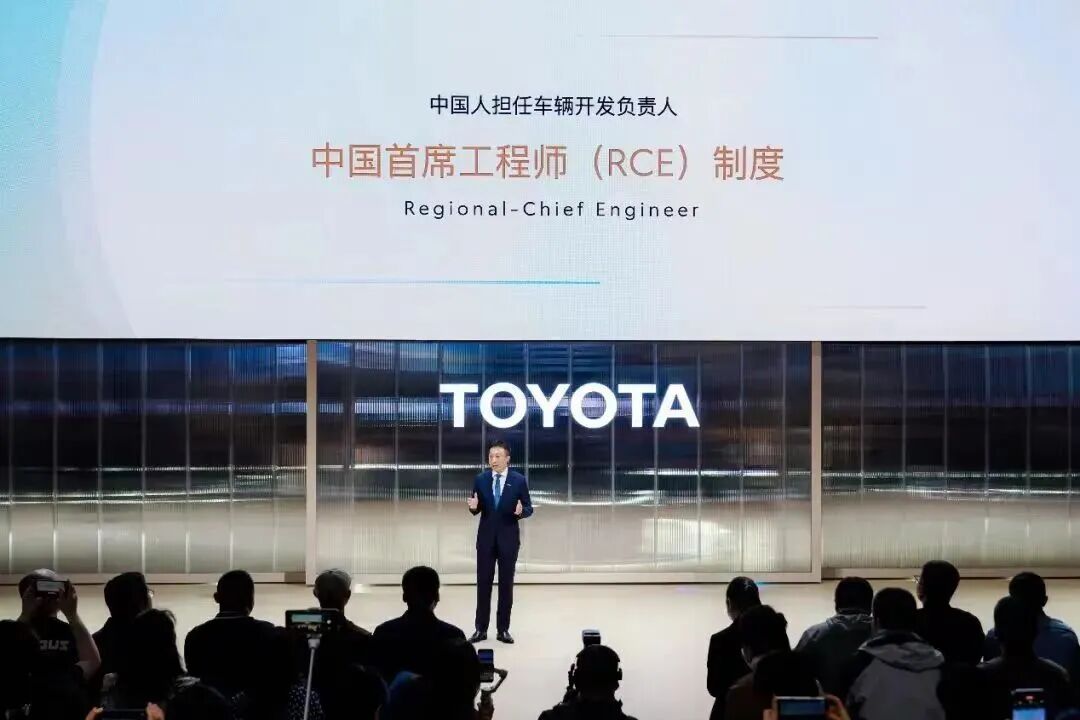
The RCE China Chief Engineer system will serve as the hub of this cycle.
For models like the Bozhi 3X and bZ5, everything from product definition, software-hardware calibration, to supply chain composition is led by Chinese teams; after development is complete, they enter Toyota's global system for validation and compliance adaptation, and mature solutions are then exported to overseas markets.
In the past, Toyota developed in Japan and adapted globally; now it's developing in China and reusing globally. The Shanghai Lexus plant will be built into the benchmark for this reverse output.
The plant is located in Shanghai, leveraging the Yangtze River Delta supply chain to build Lexus's new-generation pure electric platform. Models will not only be supplied domestically but also exported back to Japan and shipped to other overseas markets.
In the future, some Lexus high-end pure electric vehicles will be "Chinese-style smart EVs," bearing the Lexus badge, carrying domestic intelligent driving and battery solutions, and sold globally.
So rather than saying "Toyota is cutting ties with the global market for China," it's more accurate to call it "Toyota in China, building a template for the global market."
Of course, this path also carries risks.
Embedding into China's supply chain means Toyota needs to balance Japanese quality control standards, global compliance requirements, and the rapid iteration of domestic suppliers; delegating R&D authority means headquarters needs to give up some of its long-accustomed centralization.
And it must also face a reality: the technology learned in China—domestic independent brands themselves are the creators of this technology and are also going global.
But how could Toyota fear risk?
As the old global automotive industry order increasingly "collapses," Toyota can only secure its ticket to the next era by betting on China's electrification.
Editor: Cao Jiadong | Editor: He Zengrong

THE END
-
![]()
Is Toyota Cutting Ties with the Rest of the World for China?
-
![]()
"China's Buffett" Goes All-In on AI and Crashes Hard! Turns Into a "0.6 Yuan Fund" in Just 4 Months
-
![]()
The Pain Points of Lingguang as a Personal Agent: Xiaohongshu and Rokid Join Forces to Fill the Gaps
-
![]()
Yu Chengdong "Takes Advice": the "Crown Prince" Returns as the New AITO M8 Rolls Back into Huawei Stores
-
![]()
Hongguo Short Dramas Takes on Doubao—Even Jack Ma Can't Sit Still?
-
![]()
Breaking! AITO Secures Major Orders for Smart Policing and Official Vehicles
-
In the AI Era, the Real Competition Is Not Just AI Itself
-
![]()
Toyota's Half-Year Report: New Cars and Robotics as New Business Lines underpin "Stabilization" and "Survival" Transformation