Huawei Doesn't Build Robots, Yet 80% of Robot Companies Run on Its Cloud
 11/17 2026
 549
This is the 170th original article from Thinking AI Society
The full text runs about 1,012 words, with an estimated reading time of 3 minutes
On November 16, Huawei Cloud held a launch event. No dancing robots took the stage—just a screen and a wall of parameters.
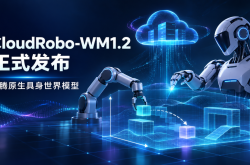
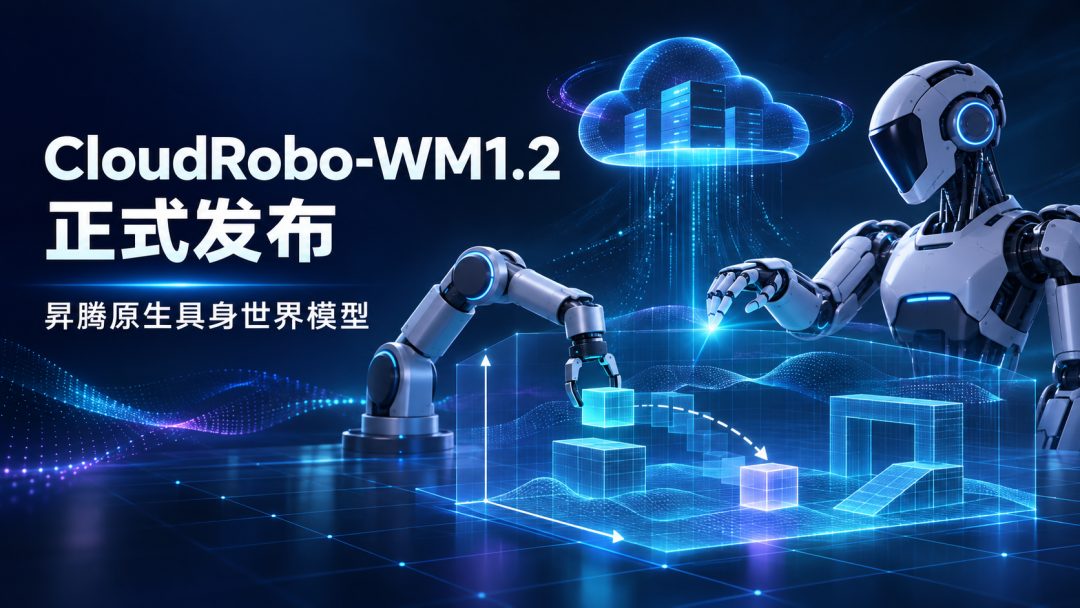
What they unveiled was CloudRobo-WM1.2, the first Ascend-native embodied world model, with weights, inference, and training code all open-sourced.
It marks the first time domestic computing power has run end-to-end on the "training side" of embodied intelligence—and the model itself is merely a prop setting the stage for this move.
What truly deserves attention is a number repeated throughout the event: 80%.

"Blind the Moment Something Blocks the View"—The Problem Isn't the Eyes
Wu Xiaodong, President of Huawei Cloud's Embodied Product Line, opened by raising an old industry pain point: robots can perform delicate work in the lab, but turn clumsy the moment they step outside.
Traditional vision models learn "what something looks like from a certain angle," not "what this thing is."
Once the lens is blocked or the angle shifts, performance falls off a cliff—target occlusion can drop detection F1 from 68% to 28%, and viewpoint changes can send accuracy tumbling from 62.72% to 7.62%.
Even more critical is data. Real-machine collection costs 500 to 2,000 yuan per hour; to accumulate 10,000 hours, one must first budget 5 million to 20 million yuan—and even then, not all of it may be usable.
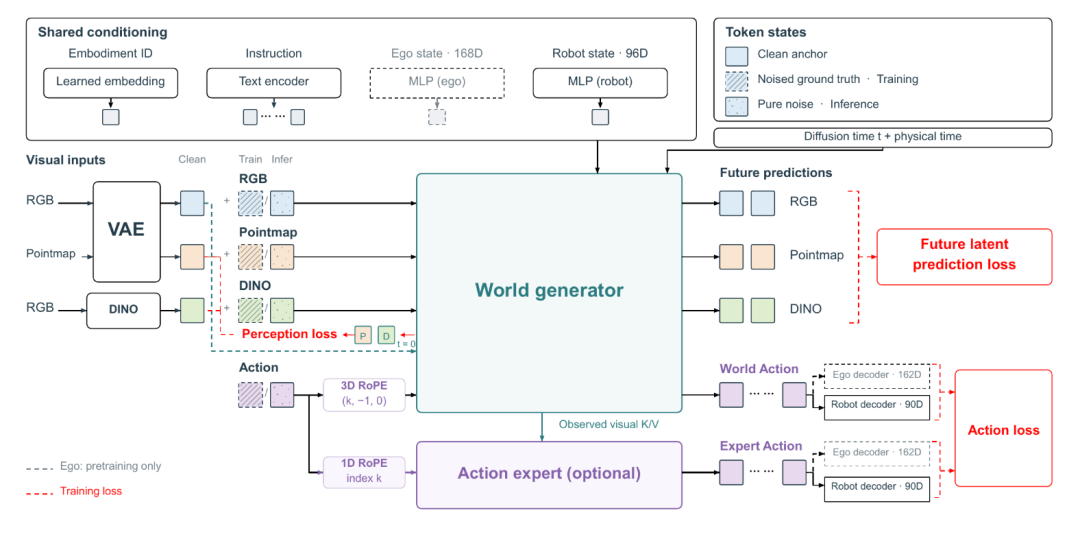
Overall framework of CloudRobo-WM-1.0
What Huawei changed is not the model size, but the relationship between "seeing" and "doing"
The old approach was stitching: the world model handled "understanding," and the action module handled "execution." Tight coupling preserved physical intuition but introduced high latency, while loose coupling offered low latency at the cost of success rates.
WM1.2 follows a natively integrated approach. Its PPA architecture upgrades static recognition to 4D dynamic physical understanding—when it sees a cup, it not only recognizes its position but can also predict that it will fall if it hits the edge of the table. The phrasing at the event was that it shifts from "understanding a photo" to "understanding an action movie as it unfolds."
On the action side is DualAct, a dual-channel design: one channel directly outputs high-precision actions from the world model, while the other is routed to action experts for low latency.
Data uses multi-granularity supervision, so the model can also train on data lacking depth or annotations; cross-embodiment relies on "embodiment semantic fidelity," providing a unified action translator for single-arm, dual-arm, and wheeled systems.
The result is rapid data scaling: early pretraining covered about 8,000 hours, and it has now expanded to 27,500 hours, connecting 20 data sources and 33 embodiments.
Open Source Is the Bait; Ascend Cloud Is the Pond
The model ranks first on both the RoboTwin 2.0 and LiberoPro 2.0 benchmarks—that is Huawei Cloud's own claim. But more critical than the ranking is that the model is trained on domestic Ascend computing power.
Previously, overseas embodied brains such as Google Gemini Robotics 2.5 and NVIDIA GR00T 2 essentially grew within NVIDIA's GPU ecosystem. Domestic computing power had been used mostly on the inference side, while the training side remained an open question; this time, that question has been answered to some degree.
Then there is that 80%: 80% of China's embodied intelligence enterprises have chosen Ascend Cloud, with essentially full coverage among key universities. The CloudRobo platform launched in June 2025 and now counts more than 16,500 developers.
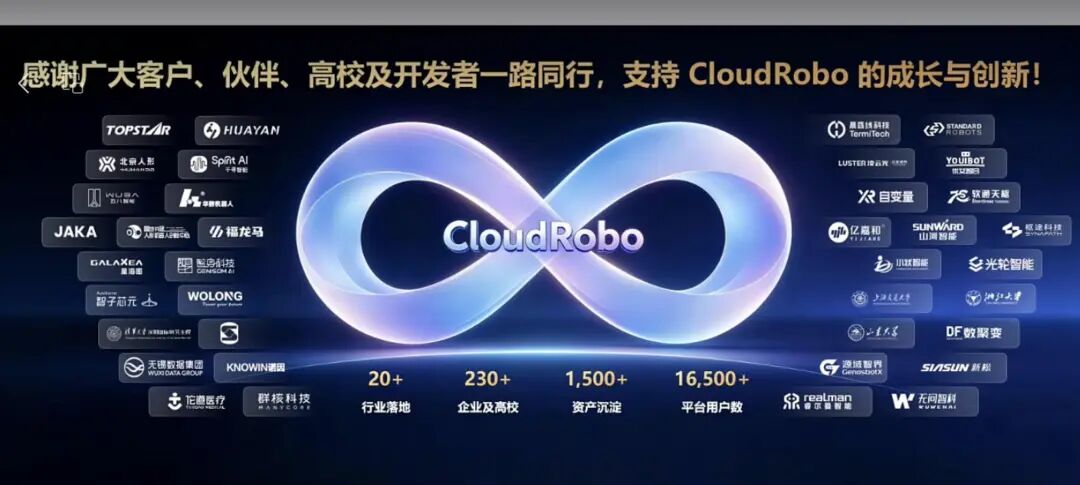
Huawei Cloud repeatedly emphasized: it does not make robot bodies, only computing power, models, and development platforms. The ecosystem roster includes listed companies such as Yijiahe, Topstar, and Fulongma, as well as body manufacturers such as JAKA, Qianxun, and Star Sea Chart.
The implementation showcase is Fulongma. The next-generation intelligent sweeping robot jointly developed by the two parties has started presales and will be released in Shanghai in December. In September this year, Fulongma announced that it had signed a 200 million yuan sanitation autonomous driving technology development contract with Huawei Cloud. Projects that successfully pass approval also receive up to 1 million yuan in computing power support.
Two benchmark firsts prove model capability, but those are public benchmarks, not real production lines. Whether the sweeper can run a stable lap on the road at four in the morning will have to wait until December.
The bet behind this launch event is not "my model is the strongest," but "from now on, when training embodied models, Ascend is the default." The 80% figure sounds like a report card today, but it is actually a starting point.
Do you think the foundation of the robotics industry will end up like mobile phone operating systems, with only two or three players left?
All content in the article is compiled from public information and represents only personal views. If interested, you can click the business card to follow.
-
![]()
XPeng: Cash Generation from Vehicle Sales Picks Up — How Long Before the Chinese Tesla's AI Dream Comes True?
-
![]()
Is Chery Eyeing a British Brand Acquisition? Could Jaguar Land Rover Be the Target?
-
![]()
Dealerships' Plea: Survive, Make a Profit, Live with Dignity
-
![]()
GAC Group Sells 143,687 Vehicles in October: How Should Aion and the Joint Ventures Redistribute Roles?
-
![]()
2.5x More Light Intake: Why Mobile Phone Cameras Need to Retire the 1974 Filter
-
![]()
What Chinese Automakers Look Like in the Eyes of European Policy Circles
-
![]()
Huawei Doesn't Build Robots, Yet 80% of Robot Companies Run on Its Cloud
-
![]()
Breaking! Changan Automobile Sells 10% Avatr Stake for 3.2 Billion Yuan—What's the Real Reason?