Is Chery Eyeing a British Brand Acquisition? Could Jaguar Land Rover Be the Target?
 11/17 2026
 349
Introduction
In the current landscape, deepening its footprint in a market like the UK matters more to Chery than acquiring a brand.
Overseas media recently reported that Chery may invest in—or even acquire—a storied British sports car or luxury brand.
The UK's The Times broke the story first on November 7: Chery is evaluating a major deal ranging from hundreds of millions to several billion pounds, and also plans to relocate its international design center to the UK. The report did not name the target, but all eyes almost instantly locked onto Jaguar.
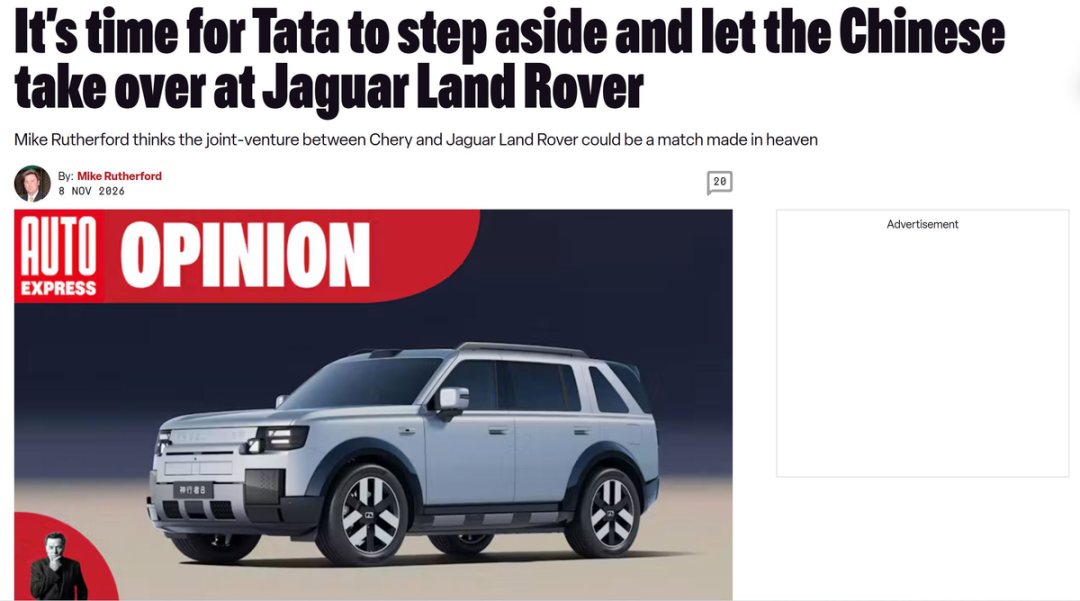
Forbes followed up by asking: Does this mean Chery is considering a full acquisition of Jaguar Land Rover? Auto Express commentator Mike Rutherford bluntly titled his piece "Time for Tata to Step Aside and Let the Chinese Take Over Jaguar Land Rover." That is how speculation spreads—but speculation is not the answer.
In fact, Yin Tongyue's remarks at the time should be understood as an aspiration to "revitalize a British brand," not a direct declaration of intent to acquire.
After consulting auto industry figures and synthesizing several foreign media reports, Auto Commune's conclusion is neither "yes" nor "no," but rather: it cannot be ruled out, but is far from certain; what is more likely is deepened cooperation, investment, licensing, or a minority stake, rather than a direct purchase of Jaguar Land Rover.
The most in-depth article was not about judging "whether Chery will acquire a British car brand," but about answering another question—why Chery evokes this association, and to what extent an acquisition is feasible.
And what we learned from it is that Chery's determination to deeply cultivate an important market is no less important than acquiring a brand.
01 Revival ≠ Acquisition
Many industry observers recalled Geely's acquisition of Volvo in 2010.
Chery and Geely are similar—both are leading Chinese auto brands, and both are currently among the top three with annual sales of around 3 million vehicles; Jaguar Land Rover and Volvo are both global second-tier luxury brands, and both were once under Ford... Everything seems to follow logically, as if history is repeating itself.
However, whether from revelations by auto industry figures or reports by The Times and Forbes, we can see that this is actually not the same story.
Let's start with the public reports. As Forbes and other media subtly phrased it, Yin Tongyue did not directly announce that he "wants to buy," but laid out a great deal of groundwork.
"I personally have deep feelings for the UK. That is why I want to revive a British brand. For example, can we find a sports car company that we can help?" At the Wuhu headquarters, facing visiting British journalists, what Yin Tongyue said was not a polite formality. He did not make a definitive statement, but the implication carried enough weight.
The original text explicitly noted that this could mean investment or cooperation, not necessarily ownership. But he also gave enough reasons for people to keep asking: wanting to revive a British brand, wanting to move the design center headquarters to the UK, and wanting to complete the entire value chain of design, engineering, and production in the UK.
His enthusiasm for the UK has a basis. "In Chery's early days, we received a great deal of help from British suppliers. They were very open and professional. I still remember the expertise and professionalism of those who helped us in the early days."
This history helps explain why his proposed UK layout includes both talent and capabilities, as well as the potential appeal of acquiring a brand familiar to a global audience.
More importantly, he was not just talking about sales. "I believe British design leads global trends. In the future, I am also considering moving the headquarters of Chery's design center to the UK." He revealed that he is in talks with some master designers but could not disclose names for now.
"Design, engineering, and production—the entire value chain. This will give our brand a unique identity in the UK."
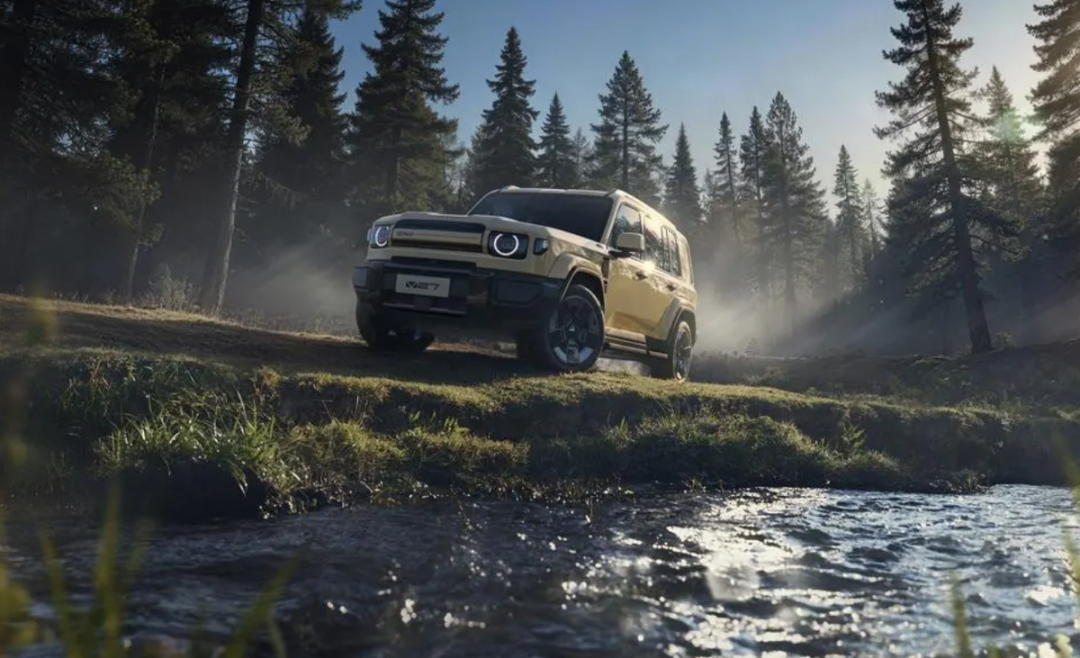
Chery already understands the appeal of British styling. The Jaecoo models look quite similar to the Range Rover, and the boxy iCAUR model (known as iCar in China) soon to be launched in the UK also evokes the Defender, with a touch of the Mercedes G-Class and Toyota FJ Cruiser.
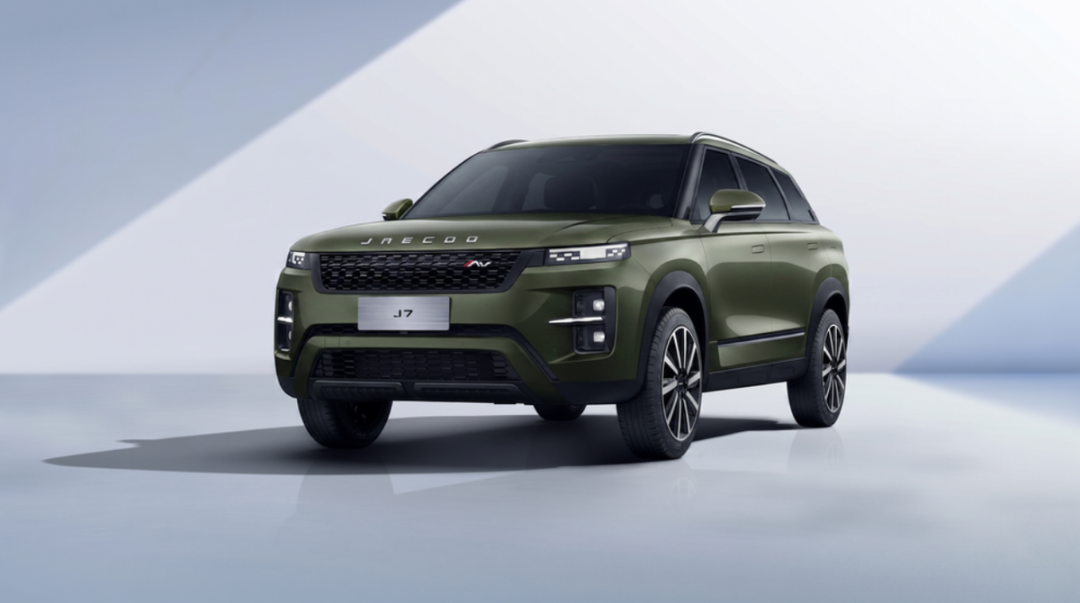
But unlike the Freelander, which involves extensive JLR participation, the Jaecoo and iCAUR are only superficially similar and do not share JLR engineering. British media gave the Jaecoo a rather unflattering nickname—"Temu Range Rover." Temu is the overseas version of Pinduoduo, equivalent to what TikTok is to Douyin, focused on low prices, fast response, and volume. The meaning is blunt: it looks like a Range Rover, but underneath it is something else entirely.
Yin Tongyue does not like this label. "I personally don't like this nickname," he replied. "This is also one of the reasons we want to set up a design center in the UK. In the future, we can develop vehicles with excellent styling that appeal to British customers, and this will become our brand DNA. I really hope we have products designed, engineered, and produced in the UK."
He denied that criticism of the similarity explains his preference for the UK: "From the very beginning of Chery's founding, we also obtained equipment from the UK, cooperated with British companies, and learned a lot. Perhaps there are some similarities from a design perspective, but this has nothing to do with my commitment to the UK."
For Chery, owning a British brand could change the conversation. SAIC has MG, Geely has Lotus and Volvo, and Chery lacks a brand that can tell a story of British heritage. No matter how well the Jaecoo sells, it is only "like"; acquiring a British brand would solve the question of "whether it is."
But the same goal could also be achieved through licensing and cooperation, which Chery has already done through its JLR joint venture.
02 Sixteen Years of Dating, Wedding Date Still Not Set
Perhaps only the first stroke of the character has been written. The possibility of acquisition cannot be completely ruled out at present, first because Chery and JLR are not strangers.
The two sides have had a 16-year joint venture relationship, and the Freelander has already proven that the combination of "JLR design + Chery technology" can work. The new Freelander is an independent brand; JLR licensed the name to a 50:50 joint venture, using Chery's vehicle architecture as the foundation.
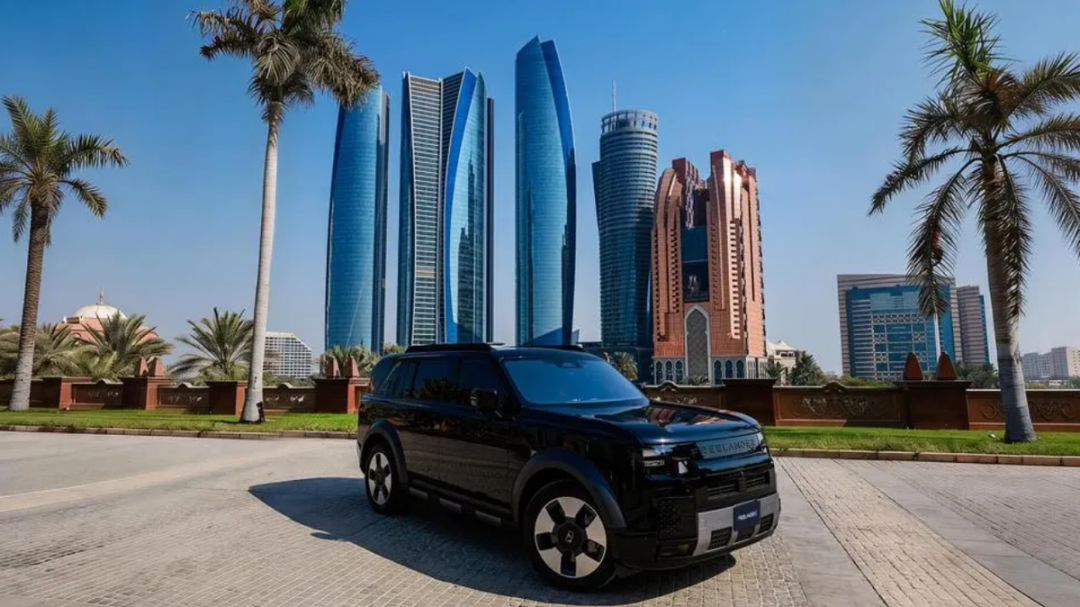
This is not simple badge engineering. It is the first time JLR has licensed a brand to a joint venture, with Chinese technology as the foundation and British design setting the tone. The fact that Freelander can work means the combination of "Chery technology + British brand" has already been validated once.
Yin Tongyue readily acknowledged what Chery has gained from it.
"First of all, for our success in the UK so far, I need to thank JLR. We have cooperated with JLR for more than 16 years and received a great deal of help in terms of brand and technology. JLR has contributed to our success in the UK. Advice at the highest level continues. I am in contact with JLR's CEO every week. We hope to find more capabilities in engineering, handling dynamics, and design in the UK, so we will continue to deepen cooperation."
When asked whether the cooperation might eventually become one team, Yin Tongyue did not clearly specify the various possibilities.
"Our cooperation with JLR is deep in many respects, but I cannot share too much. If we are going to share anything, we should share it with JLR. We are also discussing how to help JLR restore its previous scale. More broadly, as UK domestic production declines, the UK supply chain also needs help. That is why I think our cooperation with JLR goes beyond automobiles themselves. I wish I could share more with you."
This passage is subtle. It neither denies the possibility of deeper binding nor confirms an acquisition. It steers the topic toward cooperation, the supply chain, and JLR's scale recovery—all of which are more realistic than "buying JLR."
But the reasons for "far from certain" are also laid out one by one. Yin Tongyue did not confirm any acquisition intent.
Tata Motors still holds JLR, and there is no indication that it wants to sell. Financially, JLR's 2025 revenue was 29 billion pounds (about 39 billion US dollars), while Chery's 2025 revenue was about 43.5 billion US dollars. The two are close in size, and the original article judged that manufacturing cooperation or investment is more likely than acquisition.
The Freelander itself also proves that ownership is not the only path—a 50:50 joint venture, brand licensing, and Chery architecture as the foundation have already worked once.
What is more subtle is Yin Tongyue's own reflection on "scale." He proactively brought up his old goal of making Jaguar China's fourth first-tier luxury brand (BBAJ), admitting that "we pursued sales volume too much and neglected value creation."
Now the wording has become: "I don't want to just be a big company; I want to be a great company." A person who is reflecting on scale is unlikely to turn around and pursue an acquisition whose purpose is scale. What he repeatedly talks about is the supply chain, the need to help as UK domestic production declines, and "becoming part of the British automotive industry."
So Chery and JLR are more like a couple that has been dating for sixteen years: the cooperation is deep, they need each other, but the wedding date has not been set. The wording of that Auto Express commentary is worth pondering—"They have been dating for several years," "It's time to set a wedding date."
Between dating and marriage lie property agreements, family opinions, and a pile of unsettled accounts. Yin Tongyue is talking about dating; he has not closed the door to marriage, but he has not offered a ring either.
03 Becoming > Buying
So, back to the original question: Did this latest foreign media report confirm whether Chery will acquire a British car brand?
No. What it did was break open the action of "acquisition" so you can see how many possibilities are inside: investment, cooperation, licensing, joint ventures, minority stakes, and the least likely of all—a full buyout.
Yin Tongyue himself left room: "If we are going to share anything, we should share it with JLR." The subtext is that any major arrangement involving JLR is not something Chery can announce unilaterally. Tata is still there, and JLR is still in Tata's hands. Tata has shown no intention of selling, and Chery's 43.5 billion US dollar scale cannot swallow JLR's 29 billion pounds. There is no need to force a swallow.
The most likely path is to continue along the road already paved by the Freelander: deeper manufacturing cooperation, involvement in the UK supply chain, relocation of the design headquarters, and, at some point, binding the relationship more tightly through a minority stake or joint venture.
The wording of that Auto Express commentary is worth pondering—"They have been dating for several years," "It's time to set a wedding date." Between dating and marriage lie property agreements, family opinions, and a pile of unsettled accounts. Yin Tongyue is talking about dating; he has not closed the door to marriage, but he has not offered a ring either.
And this is exactly where the most worthwhile layer of meaning in the original article lies: deeply cultivating a market may be more important than acquiring a brand.
Acquiring a British brand buys a piece of the past—history, badges, recognition, customer emotion. These things are valuable, but they do not automatically become engineering capability, supply chain trust, and local identity.
When a Chinese company buys an old British brand, what follows is brand integration, unions, dealers, regulation, and the question, "What gives you the right to represent British automobiles?" Buying Jaguar Land Rover would be a headline, but a headline is not the same as putting down roots.
What Yin Tongyue repeatedly talks about is actually something else. He says he wants to become a British brand, move the design center headquarters to the UK, complete the entire value chain of design, engineering, and production in the UK, help the UK supply chain, and "become part of Europe, part of the UK, part of Brazil, wherever we operate."
These words point not to a transaction, but to long-term embedding: putting R&D in, connecting the supply chain, growing brand DNA, and tying in the local economy and employment. This is much slower and heavier than writing a check, but once achieved, it is no longer a question of "whether it looks like" but a question of "whether they can do without you."
Buying a brand buys the past; deepening a market builds the future. An acquisition can quickly obtain a name, but a name does not automatically become a foundation. What Chery really needs to do in the UK is most likely not to put Jaguar Land Rover into its financial statements, but to gradually grow design, engineering, manufacturing, and the supply chain into the British automotive industry. By then, whether or not to buy a brand will matter less.
The sentence he added—"as UK domestic production declines, the UK supply chain also needs help"—is more worthy of serious attention from the British side than any acquisition hint.
A Chinese automaker willing to help the supply chain, build a design center, and move the entire value chain over, and a Chinese automaker holding a checkbook wanting to buy Jaguar Land Rover, are two completely different stories for the UK. What Chery is telling now is the former.
Will Chery acquire Jaguar Land Rover? There is no answer now, only a judgment framework. The focus of Chery's UK story may not be on "whether to buy," but on "whether to take root."
Cultivating a market in depth matters more than acquiring a brand—a statement that applies to Chery more aptly than to any other Chinese automaker.
Editor in charge: Du Yuxin; Editor: He Zengrong

THE END
-
![]()
XPeng: Cash Generation from Vehicle Sales Picks Up — How Long Before the Chinese Tesla's AI Dream Comes True?
-
![]()
Is Chery Eyeing a British Brand Acquisition? Could Jaguar Land Rover Be the Target?
-
![]()
Dealerships' Plea: Survive, Make a Profit, Live with Dignity
-
![]()
GAC Group Sells 143,687 Vehicles in October: How Should Aion and the Joint Ventures Redistribute Roles?
-
![]()
2.5x More Light Intake: Why Mobile Phone Cameras Need to Retire the 1974 Filter
-
![]()
What Chinese Automakers Look Like in the Eyes of European Policy Circles
-
![]()
Huawei Doesn't Build Robots, Yet 80% of Robot Companies Run on Its Cloud
-
![]()
Breaking! Changan Automobile Sells 10% Avatr Stake for 3.2 Billion Yuan—What's the Real Reason?