XPeng: Cash Generation from Vehicle Sales Picks Up — How Long Before the Chinese Tesla's AI Dream Comes True?
 11/17 2026
 530
XPeng released its Q3 financial report on November 16, 2026 (Beijing time), after the Hong Kong market close and before the U.S. market open. Overall, this quarter's results came in well above expectations: revenue, vehicle gross margin, and net loss all beat consensus; and on the all-important Q4 guidance, both the volume and revenue midpoints landed above market expectations. The details:
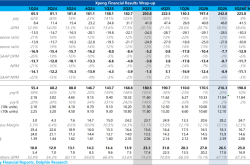
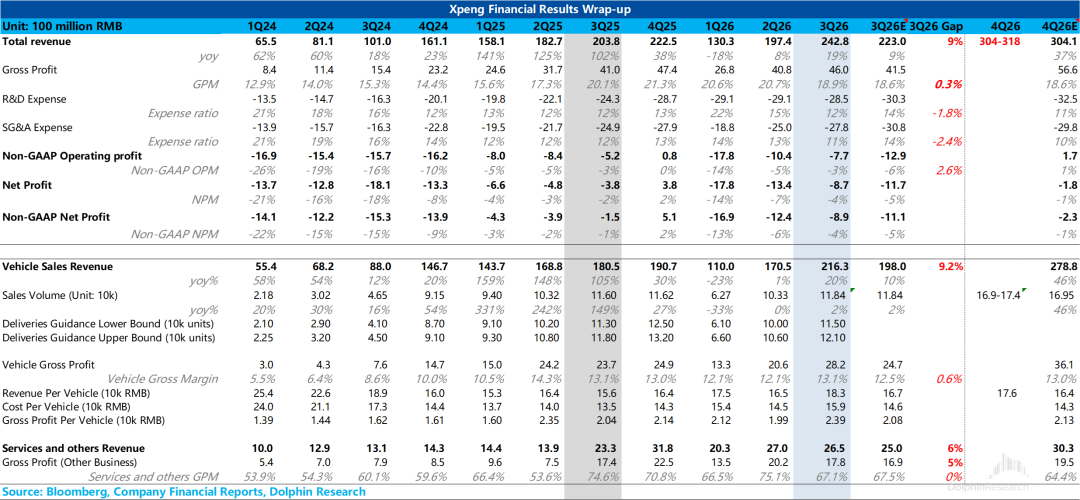
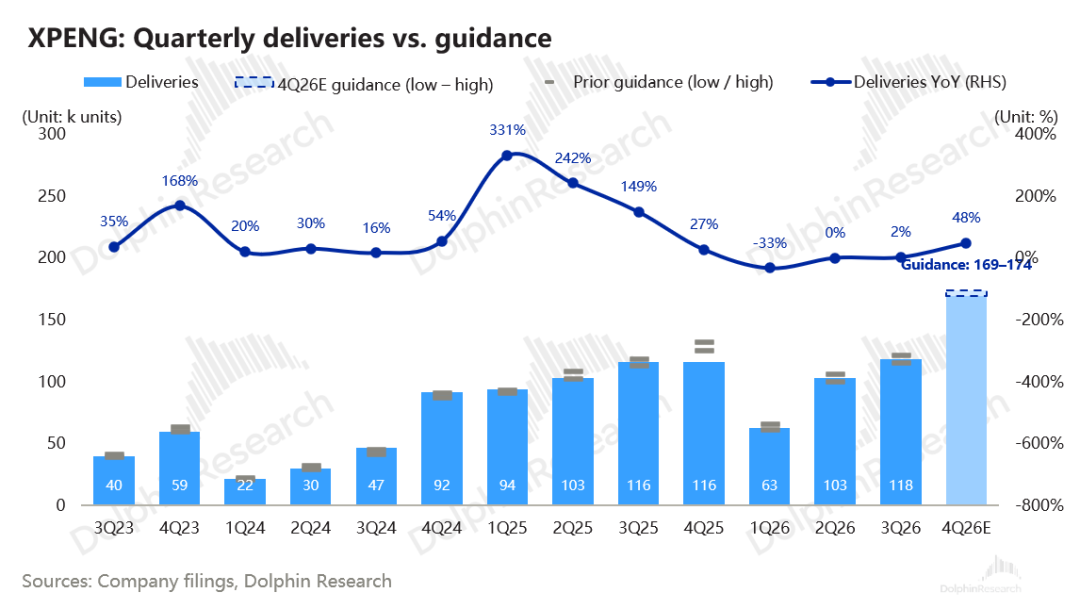
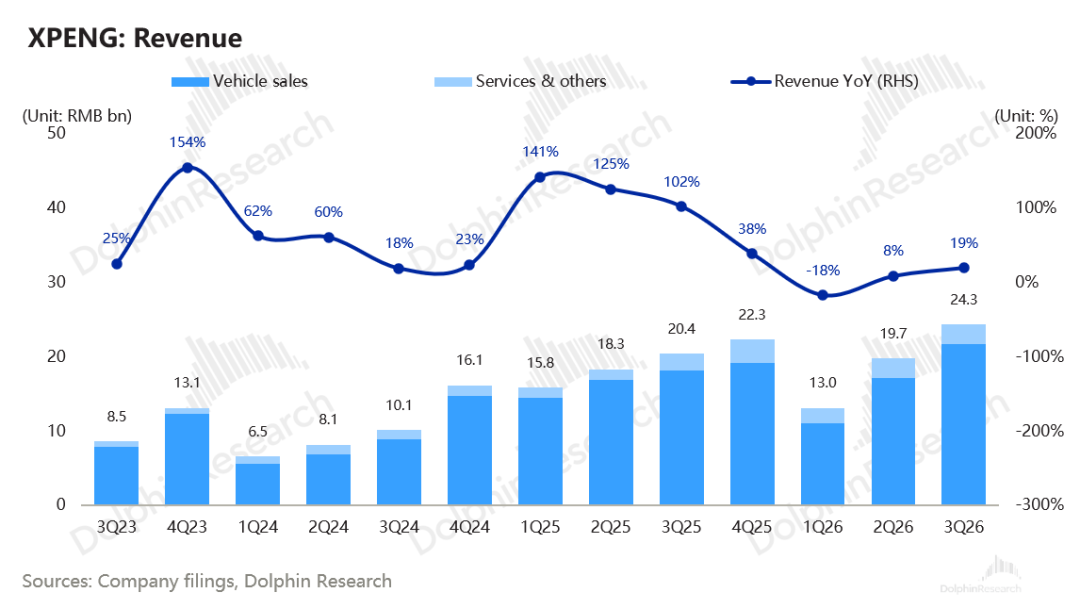
1) Total revenue beat: Q3 revenue was RMB 24.28 billion, up 19% year over year — roughly 7% above the RMB 22.7 billion consensus and also above the top end of the company's own RMB 21.7–23.4 billion guidance range.
Within that, services and other revenue was RMB 2.65 billion, down just RMB 50 million quarter over quarter and ahead of the RMB 2.50 billion consensus. Milestone revenue from Volkswagen technology R&D services was tapering off, but carbon credit revenue picked up and filled part of the gap.
2) Vehicle revenue and average selling price (ASP) per vehicle rebounded sharply: vehicle sales revenue was RMB 21.63 billion (+20% year over year), about 9% above the RMB 19.8 billion consensus. ASP per vehicle was RMB 183,000, up RMB 18,000 quarter over quarter and well above the RMB 168,000 consensus.
The price increase came mainly from model mix: the high-priced GX entered its first full delivery quarter, with its share rising from about 7% in Q2 to about 18%; overseas share also climbed from about 19% to about 24%. Although the lower-priced Mona series also gained share, its drag was smaller than the lift from higher-priced models.
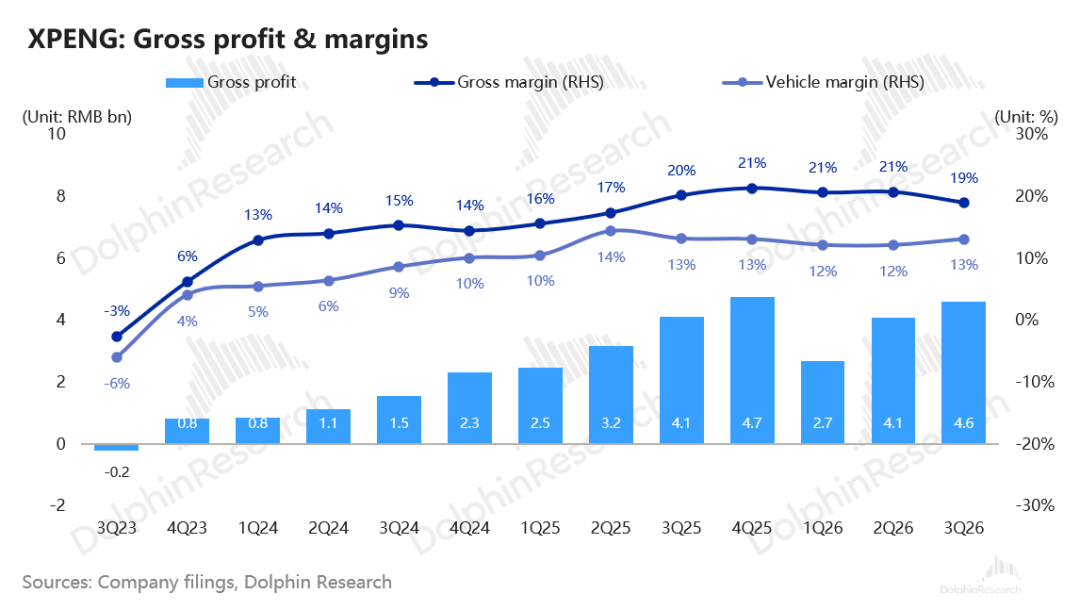
3) Vehicle gross margin continued to recover and beat expectations: Q3 vehicle gross margin was 13.1%, up 1.0 percentage point quarter over quarter, above the 12.5% consensus and flat year over year.
Cost per vehicle was RMB 159,000, up RMB 14,000 quarter over quarter, mainly reflecting the mix shift toward higher-priced vehicles. Importantly, however, the cost increase was smaller than the price increase, as economies of scale (deliveries +15% quarter over quarter) and cost savings from the self-developed Turing chip offset rising memory chip and battery prices, as well as the early-stage ramp-up costs of the L03.
Gross profit per vehicle therefore rose to about RMB 24,000, roughly RMB 4,000 more quarter over quarter — a recent high over the past few quarters.
4) Overall gross margin declined as the Volkswagen service "windfall" faded: overall gross margin was 18.9%, down 1.8 percentage points quarter over quarter but slightly above the 18.6% consensus.
The decline came mainly from the services business: recognition of high-margin technology R&D service revenue decreased, services gross margin fell from 75.1% to 67.1%, and services gross profit dropped by about RMB 250 million quarter over quarter — partly offset by the recovery in vehicle gross margin.
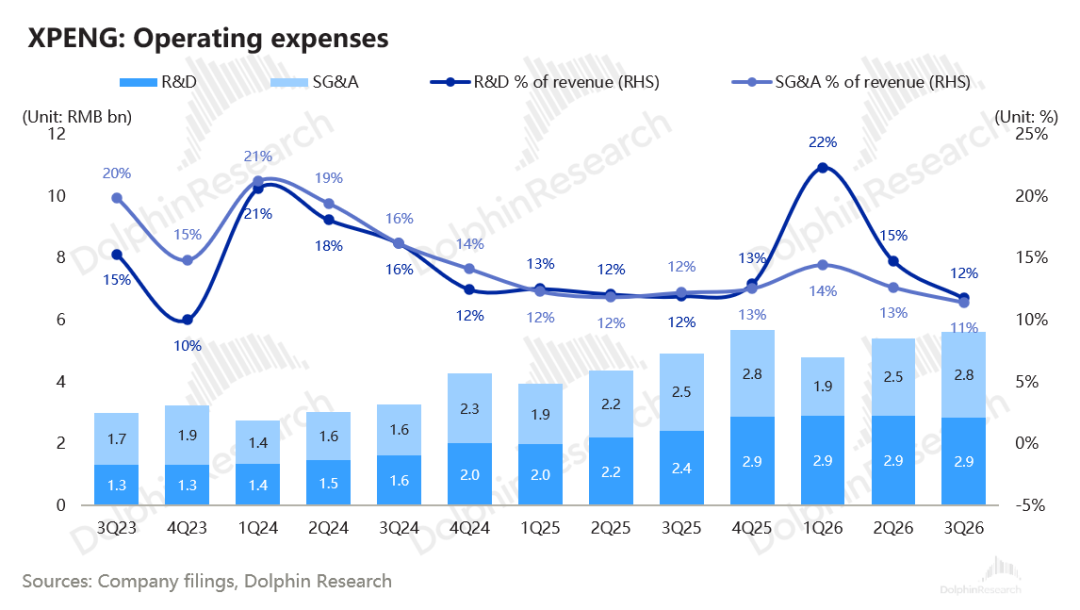
5) R&D expenses declined quarter over quarter, while selling and administrative (S&A) expenses rose on new model launches: R&D expenses were RMB 2.85 billion, down 2.1% quarter over quarter and below the RMB 3.03 billion consensus, with the R&D expense ratio falling from 14.8% to 11.8%.
S&A expenses were RMB 2.78 billion, up about RMB 280 million quarter over quarter, mainly due to higher commissions paid to franchised stores as sales volume increased, as well as marketing spend ahead of the G9L and Mona L05 launches.
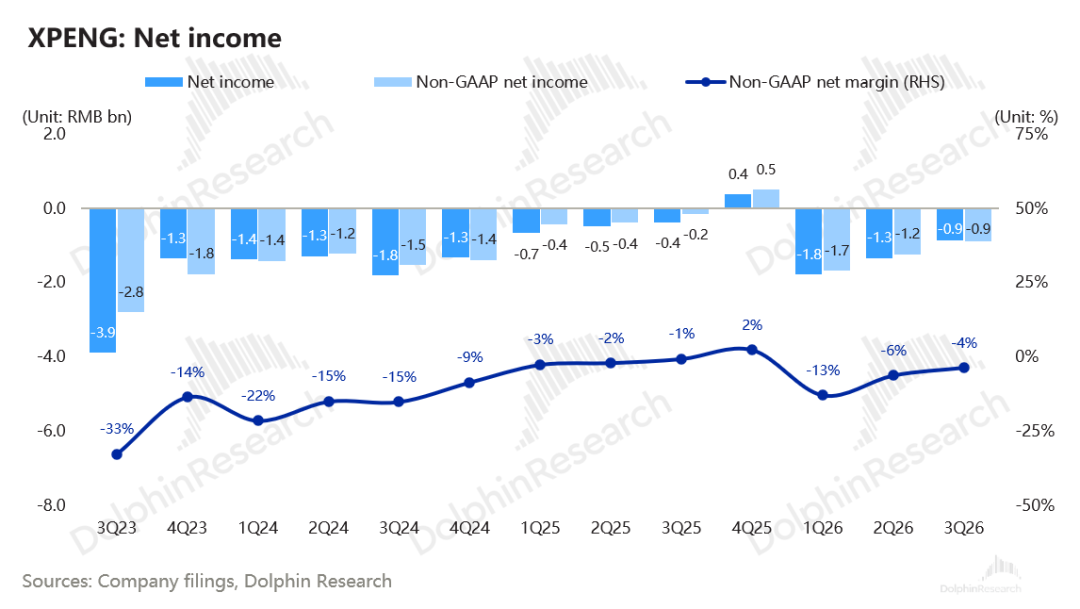
6) Loss narrowed: Q3 net loss was RMB 870 million, narrowing by about RMB 470 million quarter over quarter and better than the RMB 1.17 billion consensus. The main driver was a roughly RMB 770 million quarter-over-quarter increase in vehicle gross profit, which offset the decline in services gross profit and the rise in S&A expenses.
Dolphin Research view:
Overall, XPeng's results this quarter came in well above expectations, and the critical Q4 guidance also beat consensus.
Since Q3 deliveries (118,000 vehicles) had already been announced, the focus of this earnings report was gross margin and guidance.
The market had originally expected the decline in Volkswagen service revenue to pull overall gross margin down from 20.7% to 18.6%; and although vehicle gross margin would get a lift from the GX, it was expected to recover only slightly, to 12.5%, given rising memory chip and commodity prices.
In the event, both came in better than expected — and the beat came from the vehicle business itself. The impact of fading service revenue was in line with expectations, while the mix improvement driven by the GX, economies of scale, and cost savings from self-developed chips more than offset raw material price increases.
On the profit side, services gross profit fell by about RMB 250 million and S&A expenses rose by about RMB 280 million, but vehicle gross profit rose by about RMB 770 million — so core operating loss actually narrowed from RMB 1.33 billion to RMB 1.03 billion.
This shows that even as the "service revenue propping up gross margin" model fades, the profitability of the vehicle business itself is improving — the most important signal this quarter.
On the critical Q4 guidance:
1) Volume guidance beat: Q4 delivery guidance is 169,000–174,000 vehicles, with the midpoint above the 169,500 consensus. October already delivered 50,000 vehicles, implying average monthly deliveries of 59,000–62,000 in November and December — consistent with management's earlier statement of "monthly deliveries exceeding 60,000 vehicles."
Incremental growth comes from improved L03 supply (about 20,000 vehicles/month achievable from October), the first full delivery quarter of the G9L, the Mona L05 launched on October 29, and the start of overseas deliveries of the L03.
That said, the waiting period for the L03 pure electric version is still as long as 17–22 weeks, and 11–16 weeks for the extended-range version; supply of memory chips and the self-developed Turing chip remains a bottleneck; and guidance holding at "around 60,000 monthly sales" also indicates lingering supply-side constraints.
2) Revenue guidance also beat: Q4 revenue guidance is RMB 30.4–31.8 billion, with the low end already at consensus. Based on services revenue of about RMB 2.65 billion, this implies a vehicle selling price of about RMB 165,000–168,000, down about RMB 15,000 quarter over quarter: the volume ramp-up of the L03 and L05 will dilute the mix benefit from high-priced vehicles.
Accordingly, XPeng's full-year 2026 sales are expected to be about 453,000–458,000 vehicles (up about 6%–7% year over year), of which:
Overseas expansion is the core growth engine: October monthly overseas deliveries hit a new high of 13,000 vehicles, and management targets 40,000 overseas deliveries in Q4 and about 90,000–100,000 for the full year (doubling year over year); the L03 has started overseas deliveries, and the GX, G9L, and L05 will expand overseas in Q1 next year.
Domestically, four new SUVs provide support: the GX, L03, G9L, and L05 have all been launched, covering mainstream SUV segments — but given the aforementioned supply bottlenecks, there is a risk of order losses.
On AI, XPeng is pushing capabilities from R&D toward commercialization:
a. Smart driving upgraded again: OTA 6.3.0, pushed in September, features the second-generation VLA, with vehicle-side model parameters up 3.5x and response speed improved by 300%, plus Master Agent onboard; localization in Germany was completed in about a week, with the goal of obtaining European regulatory approval in the first half of 2027. The self-developed Turing chip has fully replaced externally sourced smart driving chips.
b. Robotaxi obtained L4 demonstration operation qualification: on October 26, XPeng was approved to conduct L4 Robotaxi demonstration operations across Guangzhou; pre-installed mass-production vehicles had previously completed more than 2,000 internal test rides in Guangzhou, and the plan is to launch passenger operations without safety officers in 2027, while partnering with mobility platforms to expand into domestic and overseas cities.
c. Humanoid robots sprinting toward mass production: the first automated humanoid robot production line went into operation in September, IRON is sprinting toward year-end mass production, with a launch event planned for Q1 2027 and external deliveries and revenue contribution starting in Q2; the robotics subsidiary Pengxing completed about US$900 million in financing, at a post-money valuation of US$6.3 billion.
Based on expectations of 453,000–458,000 vehicle sales and RMB 87.5–88.9 billion revenue for full-year 2026, XPeng's current market capitalization is about RMB 59.7 billion, corresponding to about 0.68x 2026 P/S.
However, with only one and a half months left in 2026, the market's pricing anchor has shifted to 2027: Dolphin's conservative assumption is about RMB 95.7 billion revenue in 2027 (less than 10% year-over-year growth), corresponding to about 0.6x 2027 P/S at the current market cap.
At the industry level, China's new energy vehicle penetration rate has exceeded 60%, price wars and raw material price increases are still ongoing, and valuations across the NEV startup sector have shifted lower overall, with peers mostly at 0.4–0.8x 2026 P/S. XPeng sits in the upper half of that range, with the premium mainly coming from AI options such as robots and Robotaxi.
Among these, the robotics subsidiary has a post-money valuation of US$6.3 billion. Assuming XPeng holds about 73.8% and applying an 80% liquidity discount for unlisted equity, the value attributable to XPeng is about US$3.7 billion (about RMB 24.9 billion, at US$1 = RMB 6.70), accounting for about 42% of the current market capitalization.
But Dolphin believes the secondary market will not fully price in this RMB 24.9 billion:
a. US$6.3 billion is the pricing of a single primary-market financing round, and investors usually have protective terms such as liquidation preference and redemption rights, so the value actually enjoyed by ordinary shareholders is lower;
b. The robotics business currently has no revenue, only R&D investment, and after consolidation it drags on XPeng's profit;
c. Mass production and external deliveries have not yet been realized.
Until IRON achieves mass-production delivery, or the robotics business is spun off and listed to provide public pricing, the market is more likely to price it in as a discounted "option."
In the short term, valuation repair depends on: whether monthly deliveries in November–December can firmly hold at 60,000 vehicles, whether IRON can be mass-produced on time by year-end, whether vehicle gross margin can hold at 12.5% amid the Q4 price decline, and management's guidance on 2027 sales and break-even.
Medium-term upside comes from external deliveries of IRON, Robotaxi moving from demonstration operations to paid operations, VLA landing in Europe, and the volume ramp-up and overseas expansion of the four new SUVs — validating that the "AI option" is beginning to translate into revenue.
Further financing or a spin-off listing of the robotics business would give the secondary market a public reference price, enabling robots to move from "discounted valuation" to "full valuation" — the most direct trigger for the optimistic scenario.
The following is a detailed analysis
I. Vehicle gross margin beat expectations
Q3 deliveries were 118,000 vehicles, within the middle of the company's guidance range of 115,000–121,000, so the market was more focused on vehicle revenue and gross margin. The market had originally expected vehicle gross margin of about 12.5%, a slight increase from 12.1% in Q2.
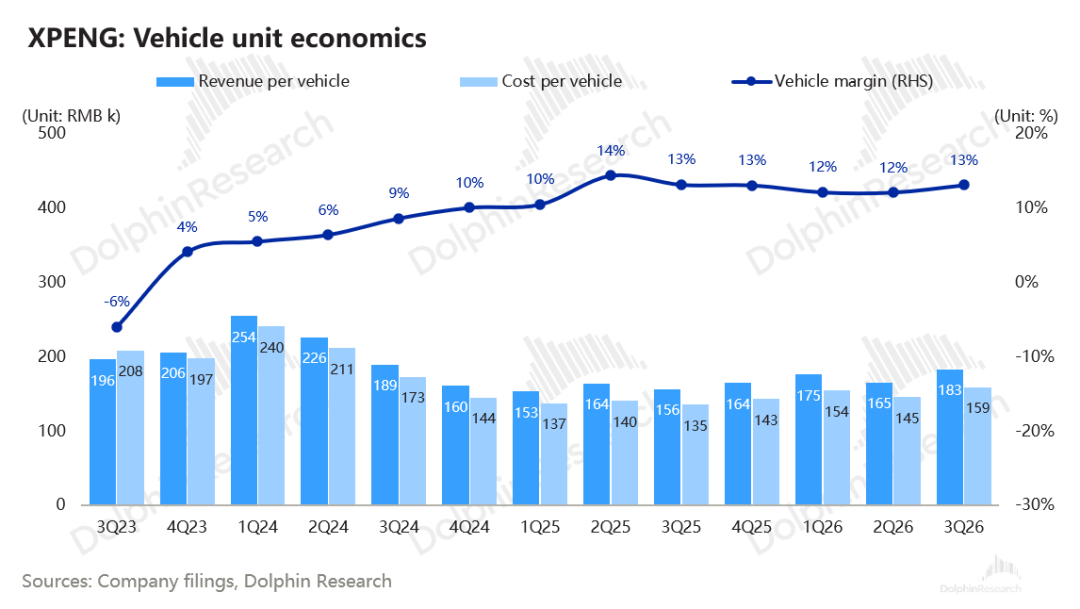
Actual vehicle gross margin was 13.1%, about 0.6 percentage points above market expectations, mainly because ASP came in significantly higher than expected (RMB 183,000 vs. RMB 168,000), while the increase in cost per vehicle was smaller than the increase in selling price.
Looking specifically at per-vehicle economics:
a) ASP per vehicle: rebounded sharply on the GX
ASP per vehicle was RMB 183,000, up RMB 18,000 quarter over quarter, which the company attributed to improved model mix:
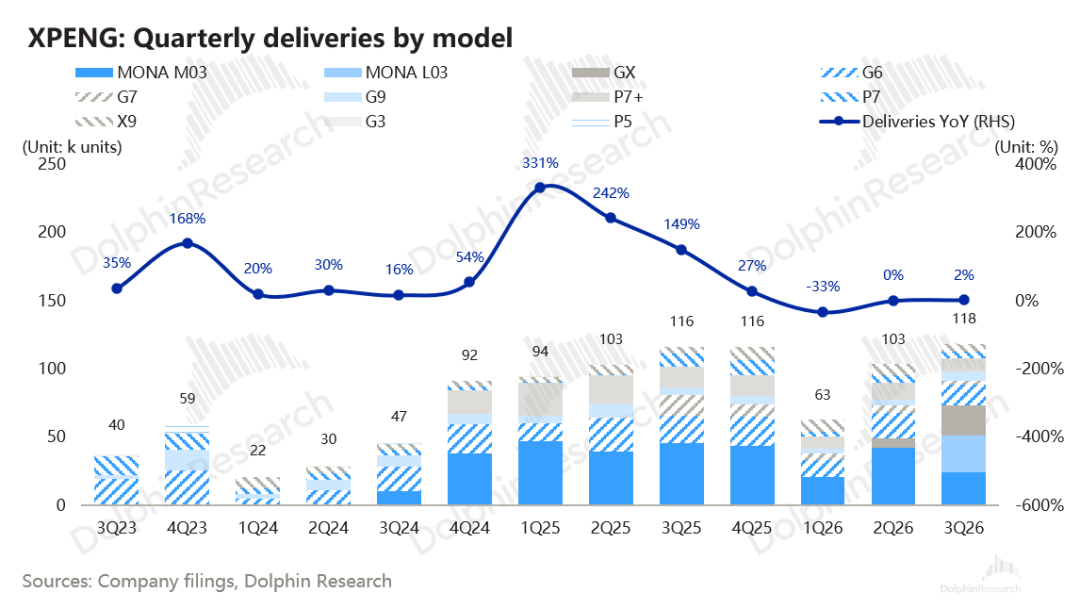
① Model mix upgrade: the GX entered its first full delivery quarter, with its share rising about 11 percentage points quarter over quarter to about 18%, offsetting the drag from the Mona series (M03 + L03 launched in July) rising to about 43%;
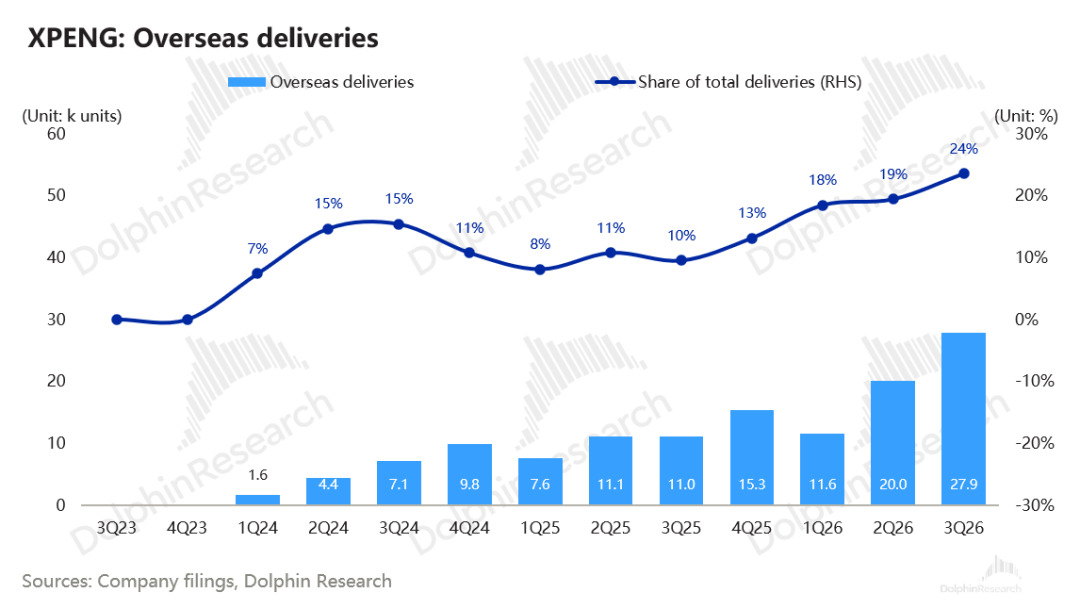
② Higher overseas share: monthly overseas deliveries hit a new high of 10,055 vehicles in September, and overseas share in Q3 was about 24% (19.4% in Q2); overseas models have an ASP of more than EUR 40,000, providing support for the average price.
b) Cost per vehicle: structural increase, with economies of scale and self-developed chips offsetting price increases
Cost per vehicle was about RMB 159,000, up about RMB 14,000 quarter over quarter:
① Structural increase: the share of high-priced vehicles rose, and cost per vehicle rose accordingly; this is not cost deterioration;
② Raw material pressure persists: memory chip prices continued to rise in the second half (also the source of the L03 supply bottleneck), combined with battery and aluminum price increases, as well as yield and production line amortization in the early ramp-up of the L03.
But this was partially offset by two factors:
③ Economies of scale: deliveries +15% quarter over quarter, further diluting fixed costs;
④ Self-developed chips: Turing chips replaced externally sourced smart driving chips across all models, reducing the cost of core components.
c) Gross profit per vehicle recovered to approximately RMB 24,000
Gross profit per vehicle came in at about RMB 24,000, up roughly RMB 4,000 quarter over quarter and ahead of the market consensus of approximately RMB 21,000.
II. Both Q4 guidance items beat expectations
a) Volume guidance exceeded expectations, though the L03 supply bottleneck persists
Q3 deliveries reached 118,400 vehicles, up 15% quarter over quarter. Within that total, L03 climbed from fewer than 3,000 vehicles in July to more than 10,000 in September, while GX held steady above 7,000 vehicles per month.
Q4 delivery guidance stands at 169,000–174,000 vehicles, up 43%–47% quarter over quarter. The sources of incremental growth and the supply bottlenecks have been outlined above. Notably, the newly launched Mona L05 (RMB 140,000–172,000) is positioned against the BYD Sea Lion 06 and the Leapmotor C11.
b) Revenue guidance slightly ahead of expectations, though implied average selling price declines
Q4 revenue guidance is RMB 30.4–31.8 billion, up 37%–43% year over year. As calculated above, this implies a vehicle selling price decline of roughly RMB 15,000 quarter over quarter.
Dolphin believes that with the volume ramp-up of L03 and L05, a Q4 price decline is all but certain, and Volkswagen service revenue remains at a low level. As such, Q4 overall gross margin will likely land at 17%–19%. The key questions are whether vehicle sales gross margin can hold after the price decline, and whether economies of scale can dilute expenses.
III. Overall gross margin declined as the service business "red envelope" ebbed
Total revenue in Q3 was RMB 24.28 billion, above the expected RMB 22.7 billion. Overall gross margin was 18.9%, slightly higher than the expected 18.6%. The gross margin decline mainly stemmed from a decrease in high-margin service revenue, while vehicle sales gross margin rebounded quarter over quarter.
① Total revenue exceeded expectations
Vehicle sales revenue was RMB 21.63 billion (+20% year over year, above the expected RMB 19.8 billion), mainly driven by a recovery in average selling price thanks to a richer mix of high-priced models.
Services and other revenue was RMB 2.65 billion, down RMB 50 million quarter over quarter (+13.7% year over year):
a. Technology R&D service revenue declined. Following the launch of the two co-developed models with Volkswagen, the ID. UNYX 08 and 09, milestone revenue recognition during the development phase decreased, and the company noted a large concentration of milestone revenue recognition in the previous quarter.
However, the decline was smaller than market expectations, mainly because:
b. Carbon credit trading revenue increased, which was also the main driver of the year-over-year growth in service revenue;
c. Parts and after-sales service revenue grew alongside the increase in the vehicle parc.
② Gross margin slightly higher than expected, dragged by the decline in service gross margin
Changes in vehicle sales gross margin are shown in Part I. The gross margin of services and other businesses was 67.1%, down 8.0 percentage points quarter over quarter and broadly in line with the market expectation of 67.5%. The decline reflected a lower share of high-margin technology R&D services, with service gross profit decreasing by about RMB 250 million quarter over quarter to RMB 1.78 billion.
IV. The three expense categories continue to build momentum for physical AI and new model launches
Intelligence is XPeng's core moat, and AI-assisted driving, robots, and new platform R&D all require high-intensity investment. Revenue grew relatively fast in Q3, and the expense ratio dropped significantly, though the absolute expense amount remained high.
1) R&D expenses: RMB 2.85 billion, a slight quarter-over-quarter decline
R&D expenses increased 17.5% year over year, with an R&D expense ratio of 11.8% (14.8% in Q2), mainly invested in:
① Intelligent driving upgrades:
On the hardware side, the Turing chip has been mass-produced across the full lineup: the L03 Max version runs a single chip at 750 TOPS, and the Ultra SE version runs dual chips at 1,500 TOPS, bringing 1,500 TOPS into the RMB 150,000-class SUV for the first time; the G9L is equipped with 3 Turing chips (2,250 TOPS).
On the software side, the "sense of time" upgrade of the second-generation VLA includes 30-second temporal memory and a world model that can simulate the next 6 seconds, among other features, and was pushed via OTA 6.3.0 on September 22, while VLA 2.0 Lite was also launched to cover low-compute platforms.
② Robotaxi (L4 autonomous driving):
The front-loaded mass-production Robotaxi adopts a four-chip redundant architecture, with the vehicle BOM significantly below RMB 200,000. It has obtained the qualification for driverless road testing, and the cloud-based remote takeover platform has completed development. In terms of business model, XPeng provides vehicles and the technology platform, charges service fees or revenue sharing, and operates in cooperation with domestic and overseas mobility platforms.
③ Humanoid robot IRON:
IRON has 76 degrees of freedom in the whole body and 21 degrees of freedom in a single hand, and is equipped with 3 Turing chips (2,250 TOPS). Core components such as joint modules, actuators, and precision structural parts have completed design wins, and the first batch has been deployed in XPeng stores and campuses, with monthly capacity reaching several thousand units.
This round of financing for Pengxing was led by external institutions, with Tencent and Alibaba as strategic investors. XPeng holds approximately 68.4%–73.8% (depending on the incentive pool and exercise of warrants), continues to consolidate the business, and plans to complete the injection of robot assets 18 months after the completion of the first subscription.
④ New model R&D:
The Mona L03 was launched on July 16 (starting at RMB 123,800), the G9L was launched on September 17 (pre-sale starting at RMB 259,800), and the Mona L05 was launched on October 29. All four new SUVs have now been launched.
2) Selling and administrative expenses: RMB 2.78 billion, mainly due to increased marketing and commissions for new models
The selling and administrative expense ratio was 11.4% (12.6% in Q2). In addition to the commissions and new model marketing mentioned above, overseas channels are also being accelerated (about 150 dealers in Europe).
In terms of stores, by the end of Q3 there were 731 stores covering 253 cities, a net decrease of 9 stores and 4 cities from the end of Q2, as channels entered a period of optimization and adjustment; self-operated charging stations increased to 4,035 (3,780 at the end of Q2).
V. Operating loss narrowed
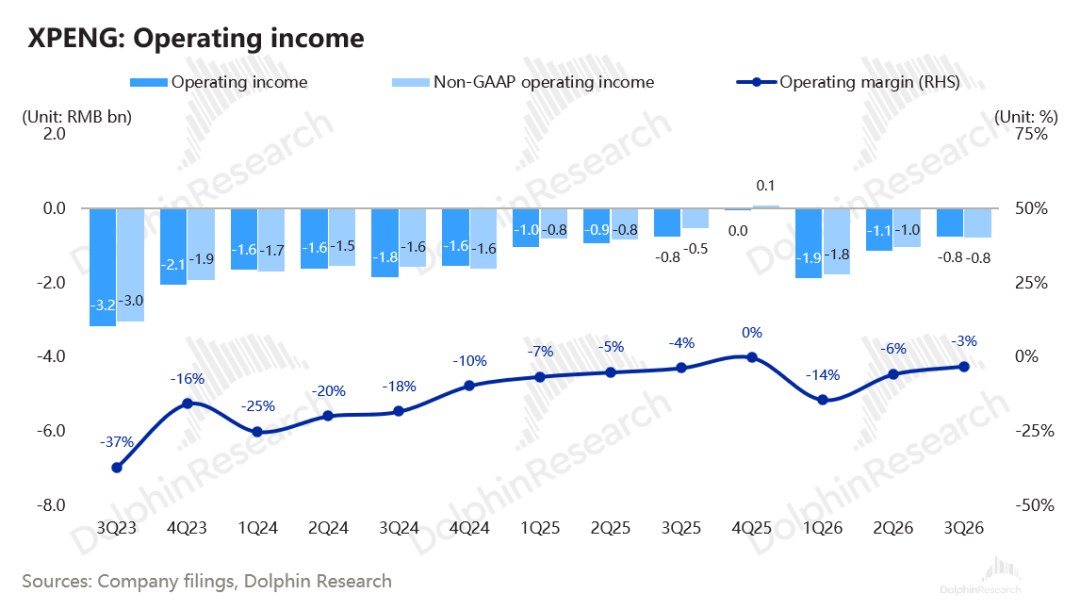
Net loss in Q3 was RMB 870 million (RMB 1.34 billion in the previous quarter, RMB 380 million in the same period last year); GAAP operating loss was RMB 750 million, better than the market expectation of RMB 1.21 billion.
In addition to the improvement in vehicle sales gross profit, a RMB 160 million fair value gain on contingent consideration related to the acquisition of Didi's automotive business and RMB 110 million in other income also provided some support for the narrowing of the operating loss.
Excluding these items, core operating profit (gross profit minus core operating expenses), which better reflects the main business's ability to generate cash, was -RMB 1.03 billion, narrowing by about RMB 300 million from the previous quarter, with the drivers discussed above.
- END -
// Reprint permission
This article is an original article by Dolphin Research. For reprints, authorization must be obtained.
// Disclaimer and general disclosure notice
This report is for general comprehensive data purposes only, intended for general reading and data reference by users of Dolphin Research and its affiliates, and does not take into account the specific investment objectives, investment product preferences, risk tolerance, financial condition, and special needs of any person who receives this report. Investors must consult independent professional advisers before making investments based on this report. Anyone who makes investment decisions based on the use of or reference to the content or information mentioned in this report must bear the risk themselves. Dolphin Research shall not be liable for any liability or loss that may be directly or indirectly caused by the use of the data contained in this report. The information and data contained in this report are based on publicly available materials and are for reference only. Dolphin Research strives for but does not guarantee the reliability, accuracy, and completeness of the relevant information and data.
The information mentioned or views expressed in this report shall not, in any jurisdiction, be treated or regarded as an offer to sell securities or an invitation to buy or sell securities, nor do they constitute advice, solicitation, or recommendation regarding the relevant securities or related financial instruments. The information, tools, and materials contained in this report are not intended or intended to be distributed to citizens or residents of any jurisdiction where the distribution, publication, provision, or use of such information, tools, and materials would conflict with applicable laws or regulations or would cause Dolphin Research and/or its subsidiaries or affiliates to be subject to any registration or licensing requirements in that jurisdiction.
This report reflects only the personal views, opinions, and analytical methods of the relevant creators and does not represent the position of Dolphin Research and/or its affiliates.
This report is produced by Dolphin Research, and the copyright is solely owned by Dolphin Research. No institution or individual may, without the prior written consent of Dolphin Research, (i) produce, copy, reproduce, duplicate, forward, or otherwise make any form of photocopy or reproduction in any way, and/or (ii) directly or indirectly redistribute or transfer it to other unauthorized persons. Dolphin Research reserves all related rights.
-
![]()
XPeng: Cash Generation from Vehicle Sales Picks Up — How Long Before the Chinese Tesla's AI Dream Comes True?
-
![]()
Is Chery Eyeing a British Brand Acquisition? Could Jaguar Land Rover Be the Target?
-
![]()
Dealerships' Plea: Survive, Make a Profit, Live with Dignity
-
![]()
GAC Group Sells 143,687 Vehicles in October: How Should Aion and the Joint Ventures Redistribute Roles?
-
![]()
2.5x More Light Intake: Why Mobile Phone Cameras Need to Retire the 1974 Filter
-
![]()
What Chinese Automakers Look Like in the Eyes of European Policy Circles
-
![]()
Huawei Doesn't Build Robots, Yet 80% of Robot Companies Run on Its Cloud
-
![]()
Breaking! Changan Automobile Sells 10% Avatr Stake for 3.2 Billion Yuan—What's the Real Reason?