Apple Enters Foldable Phone Arena: A New Dawn or the Twilight of Smartphones?
 09/18 2026
 546
546
Layout | Xiaoxi
Apple has always commanded respect, but this time, it seems to have deliberately stepped down from its pedestal, no longer at the forefront of the tech revolution.
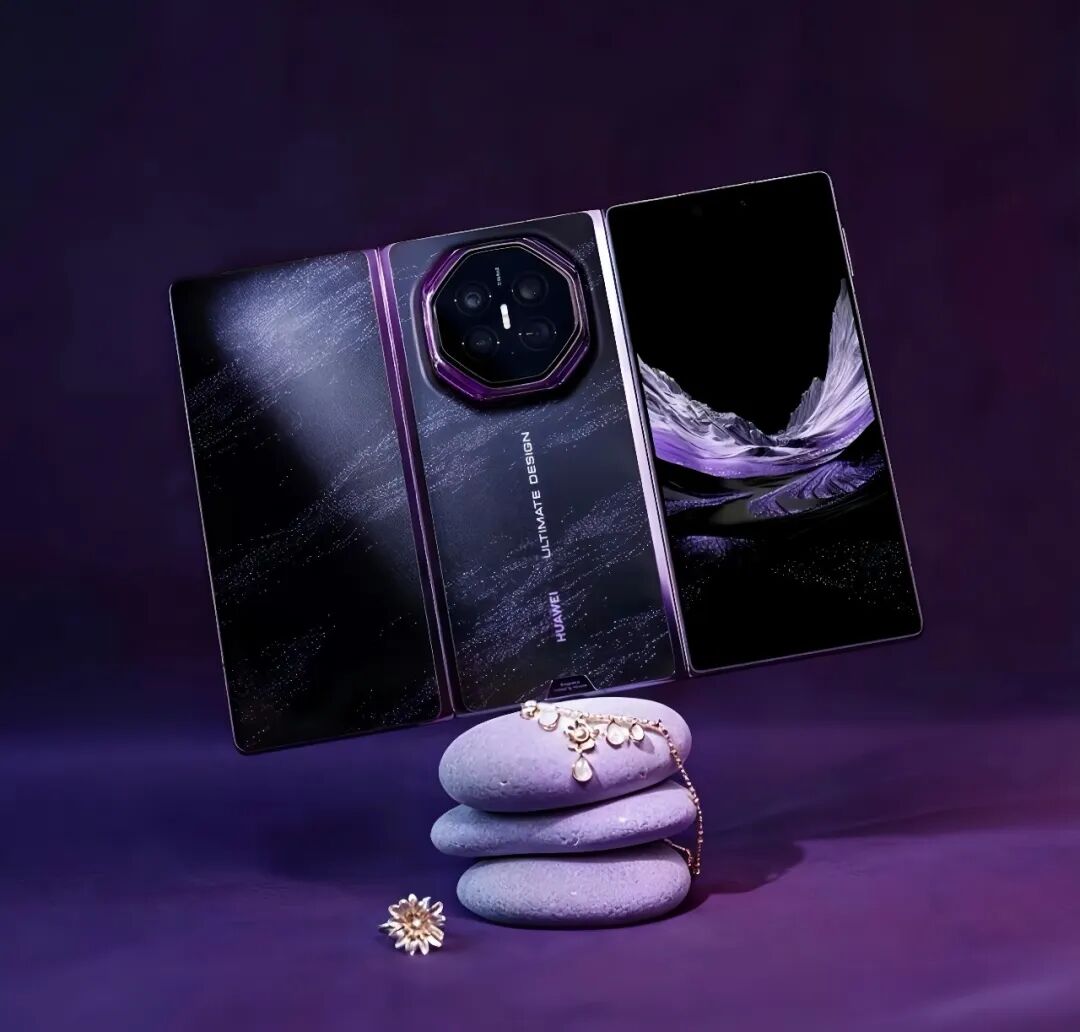
On September 12, Huawei unveiled its triple-fold Mate XT 2, priced at a starting point of 19,999 yuan. Within seconds of going on sale, it sold out, and its resale price on second-hand platforms skyrocketed by approximately 2,500 yuan.
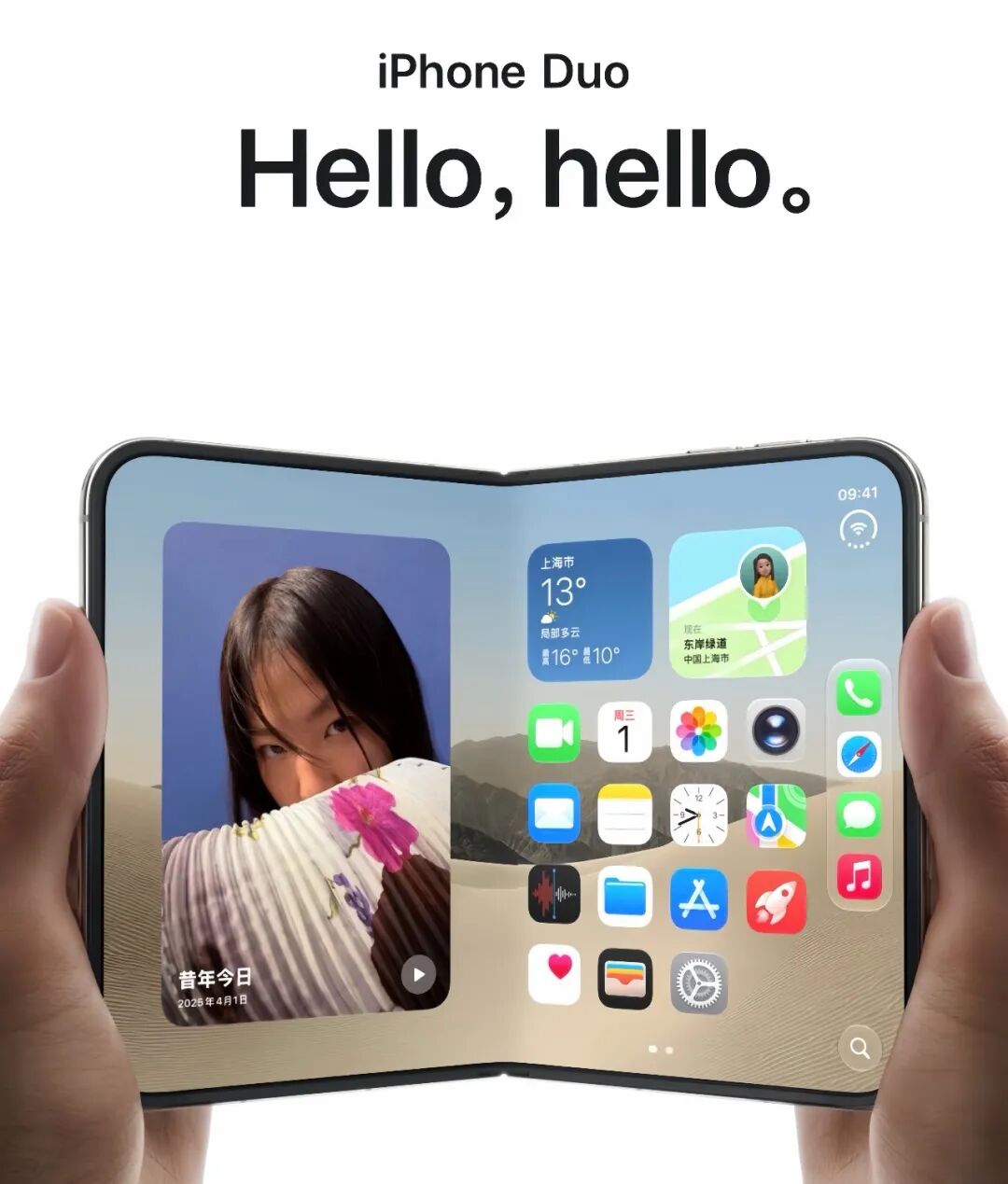
A few days later, Apple launched its inaugural foldable phone, the iPhone Duo, starting at 15,999 yuan, with resale prices reaching even more astronomical heights. At one juncture, some resellers were demanding 49,999 yuan, with the highest listed price nearing 100,000 yuan, and JD.com pre-orders surpassing one million.
However, after just three days, the iPhone Duo's price plummeted to around 25,000 yuan following a brief period of speculation by scalpers.
The two sets of 'premiums' are not comparable. Huawei's 2,500 yuan represents a genuine cash increase in the spot market post-sale; Apple's 34,000 to 84,000 yuan are merely futures quotes during the pre-sale phase.
So, has Apple set a new market ceiling for foldable phones? Or is this merely a premium derived from brand scarcity?
Apple has undoubtedly calculated its business strategy. China's supply chain boasts robust production capabilities, Huawei, Xiaomi, and other manufacturers have spent years educating the market, and there's the initial scarcity premium. However, with the shrinking foldable phone market, Apple's move seems more like a declaration of its intention to dominate.
| The Supply Chain on Standby |
Before Apple's entry, the production capacity for foldable screens was already well-established. BOE's 8.6-generation AMOLED production line, with a total investment of 63 billion yuan, commenced mass production in June this year; Apple's UTG supplier, Lens Technology, initiated bulk shipments at the end of the second quarter, and Biel Crystal Manufactory's production lines have been operating at full capacity for months. Lens even stated directly: 'The company has sufficient capacity to meet optimistic sales demand for this year and beyond.'
However, Lens Technology's 2026 interim report did not reflect this ease.
Lens Technology's 2026 interim report revealed revenue of 28.866 billion yuan in the first half, down 12.42% year-on-year; net profit excluding non-recurring items was 278 million yuan, a significant drop of 70.45% year-on-year. Foreign exchange losses and inventory write-downs totaled over 900 million yuan, directly eroding profits. The only silver lining was the realization of high-value components, with bulk shipments of foldable UTG and other structural parts commencing in the second quarter, leading to a rebound in gross margins and a return to profitability in Q2 net profit compared to the previous quarter. In essence, Apple's foldable phone is not a new growth avenue for the supply chain but the last high-value order in the existing market.
Apple's value proposition lies in leveraging a mature supply chain that has already undergone several cycles. It's not constructing a new supply chain but integrating panels, UTG, hinges, flexible circuits, and precision structural parts into its products. From the currently disclosed supply chain information, Samsung Display provides the foldable panels, Lens and Biel supply UTG, Amphenol and Shin Nippon participate in the hinges, LY Technology handles precision structural parts, and companies like Avary Holding and Rongqi Technology are involved in various supporting segments.
Suppliers gain new orders and certification opportunities, while Apple benefits from lower trial-and-error costs.
Apple has already experienced the pitfalls of 'stocking up first, then demand cooling.' In January 2024, Vision Pro pre-sales sold out in 18 minutes, with 160,000 to 180,000 units sold in the first weekend. Scalpers marked up prices by tens of thousands of yuan, with some quotes reaching 70,000 yuan, similar to today's iPhone Duo scalper prices. However, this product, initially hailed as the 'next iPhone,' ultimately sold only about 600,000 units globally, far below internal expectations.
Apple's orders can indeed light up Lens's production lines but may also shift the risk of demand misjudgment onto Lens and others.
After Apple's first foldable phone debuted in the early hours of September 10, A-share Apple supply chain stocks exhibited counterintuitive divergence. Lens Technology closed down 3.73%, BOE A fell 1.62%, and Yi'an Technology, the exclusive supplier of liquid metal hinge spindles, plummeted over 13% during the session; on the same day, Unimicron and Chiason Technology hit their daily limits, one relying on eSIM and better-than-expected interim results, the other on PCB price increases, with little to do with foldable orders. LY Technology was an exception, nearly hitting its daily limit after being confirmed to supply core precision parts like hinges. But this rise only lasted three trading days. Capital indeed lies in wait before the launch and cashes out on the release day, but overall, Apple's foldable phone did not ignite capital's imagination. Lens and others do risk being left out in the cold.
| The Overestimated 'Scarcity' |
According to Omdia, global foldable shipments were approximately 18.2 million units in 2025, with growth slowing to 6%; its data shows a 21.6% year-on-year decline in shipments in the first half of 2026. TrendForce predicts about 20.2 million units for the whole of 2026, with growth of only 0.5%. The two agencies' metrics differ, but both concur that foldables have moved past the high-speed expansion phase.
Apple's launch of a foldable phone injects new life into this small, slowing high-end market, rebranding the user education completed by Android manufacturers with its own label. For competitors, it raises the reference price for high-end foldables and boosts market heat.
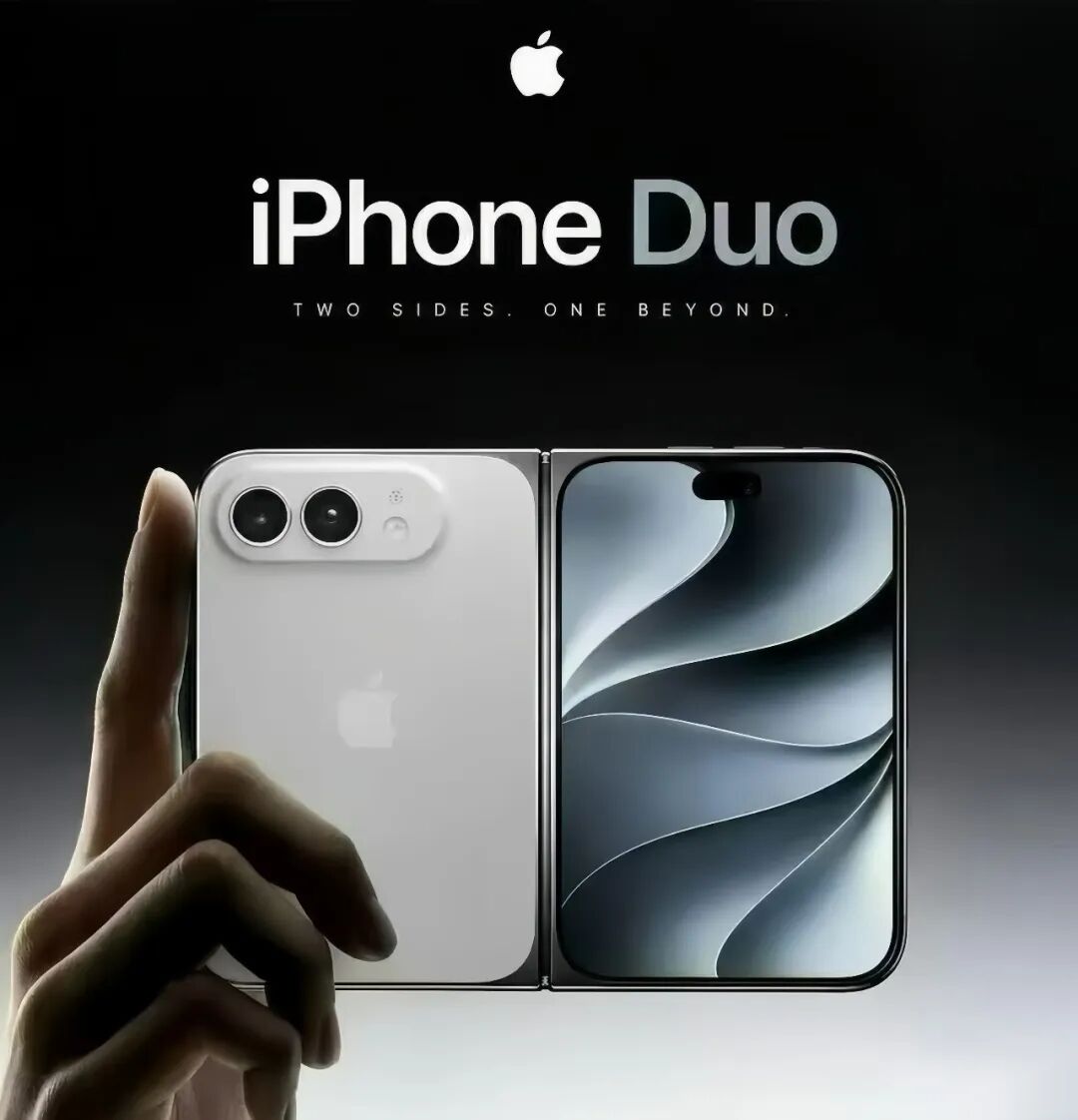
The iPhone Duo features a dual-screen foldable structure, with a 7.6-inch Super Retina XDR display when unfolded, a nano-texture surface layer on the inner screen, Grade 5 titanium for the bezels and hinge cover, and an IP68 rating; the A20 Pro chip, dual-battery system, up to 31 hours of inner screen video playback, and iOS 27's split-screen and stand-up calling functions essentially transplant Apple's mature software and hardware ecosystem directly into the foldable phone.
Professional reviews of Huawei and Xiaomi foldables are relatively consistent, noting that screens and hinges now meet daily use needs, with the real gaps lying in software adaptation, camera stability, battery life, maintenance, and long-term depreciation. Apple's strengths lie precisely here, with iOS, App Store, Mac, and Apple Watch synergy, global after-sales, and stronger chip performance.
Additionally, there's a backdrop to Apple's high premiums this round. With phone growth slowing, manufacturers need new reasons to justify high-end phone prices; memory, storage, computing power, and on-device models are bundled into a new upgrade narrative, with rising costs and functional imagination passed on to consumers together. The 'AI tax' also provides a rationale for high premiums on foldables.
Apple's leadership change has given the market a fresh narrative. Capital seeks new growth curves, scalpers need a target with low supply, high prices, and easy resale, and consumers crave an identity label that others can recognize. Apple's foldable phone precisely meets all three conditions—it has a high unit price, limited initial supply, and is eye-catching when unfolded.
With these factors combined, foldables are no longer just hardware products. They represent a new growth story as the overall phone market slows, a high-priced vehicle for the AI tax to find a foothold, and a limited commodity that scalpers can resell.
When Huawei's first-generation triple-fold launched, the second-hand market saw markups of over 10,000 yuan, dubbing it 'electronic Moutai.' After the second generation launched, supply and yield improved, and the spot premium dropped to about 2,500 yuan. This demonstrates that initial scarcity can create prices but cannot sustain them indefinitely.
The real demand for foldables lies beyond the premiums. Counterpoint's survey shows that users unfold the inner screen only 3.1 times a day on average, with 76% never using the hover function; Xiaomi President Lu Weibing stated at a launch event that 80% to 90% of traditional large-fold users only use the outer screen. The large screen that users pay two to three times more for mostly remains folded in their pockets.
User repurchase data is equally unoptimistic. Industry research shows that foldable users have a repurchase rate of less than 13%, far below the 65% for straight-screen flagships; second-hand platform data indicates that foldables have an average holding period of only 13 months, compared to 24 months for traditional flagships; their residual value is only 30% to 40%, falling nearly 70% in a year.
After a brief period of speculation by scalpers, the iPhone Duo's price quickly halved, indicating that the market's willingness to pay for Apple's ecosystem advantages is not high. Thus, Apple's entry into foldables seems more like heating up the market than harvesting it.
| When Will Apple's AI Interaction Revolution Arrive? |
This Apple launch placed significant emphasis on AI. Apple equipped the iPhone Duo with the A20 Pro and a dual 16-core neural engine, utilizing on-device models for Smart Take auto-group photos, Visual Intelligence to recognize text and objects in front of you, and adding photo cleanup, expansion, and writing tools to the system. The Duo's large screen also reserves a larger Siri AI dialog window, enabling split-screen to complete tasks like researching and writing emails.
But Siri AI's progress remains sluggish. Apple's website notes that the new Siri AI will launch first in English, with features still in the iOS 27 beta; Apple's support page for China states, 'Apple Intelligence is not currently available,' and Apple has not provided a launch date for China. When Chinese users can use it depends on the Chinese model, regional services, and regulatory approvals all being in place.
AI will have a revolutionary impact on smartphones, transforming them from 'machines to be operated' to 'agents that act proactively.' In the AI era, the entrance changes from icons to intentions—you can tell the phone your goal, and it will break down tasks, execute across apps, remember your habits, and even prepare the next step before you speak. Doubao and Amazon are both redoing phones that understand humans, rewriting the underlying contract of human-machine relations.
Yet the focus of this iPhone generation's upgrade remains the foldable structure, screen, hinges, battery life, and ecosystem. AI has boosted the A20 Pro's specs and added a few new tricks to the camera and system but has not formed a killer function that Chinese users can use today. For the Duo, AI's value will only become truly attractive when Siri can understand personal information, call multiple apps, and present results on the 7.6-inch inner screen in a Chinese-language environment.
Apple's entry does give the foldable phone market a breath of life. But it also tears off the 'innovation' label, packing a mature supply chain, old identity consumption, and a set of unfulfilled AI promises into the same phone.
Apple has thoroughly ceased taking risks, even with a new leader. This carefully planned move to find new growth curves for financial reports may also make Apple the scapegoat for the foldable market's decline, the most tragic result after the innovation symbol shatters.
Images sourced from the internet, rights reserved for removal upon request.
-
![]()
Huawei Takes a Step Back, AITO Steps into the Spotlight
-
![]()
A Photo Retouching Company with 37 Employees Fetches $2 Billion in Acquisition
-
![]()
The Automotive Industry Steps into the 'Era of Collaboration': Will BAIC and Li Auto Join Forces?
-
![]()
Selling Cars Isn't Profitable: What Will XPENG Rely On to Reverse Its Losses in the Future?
-
![]()
Doubao Phone: A Vision Yet to Be Realized
-
![]()
Doubao Phone: A Vision Yet to Be Realized
-
![]()
Apple Enters Foldable Phone Arena: A New Dawn or the Twilight of Smartphones?
-
![]()
Commercialization Paths for Eye Tracking, ToF, AI Glasses, and Metalens Become Clearer