The Automotive Industry Steps into the 'Era of Collaboration': Will BAIC and Li Auto Join Forces?
 09/18 2026
 446
446
Introduction | Lead
BAIC's visit to Li Auto may signify more than just a routine exchange between automakers. In the new energy era, the substantial investments and rapid advancements in areas such as batteries, intelligent driving, chips, and electronic architectures are making it increasingly challenging for companies to operate independently.
This article is produced by Heyan Yueche Studio
Written by Zhang Dachuan
Edited by He Zi
Full text: 2,858 characters
Reading time: 4 minutes
FAW and GAC are planning significant asset restructuring, stirring up the industry. Faced with sudden shifts in the automotive market, some automakers are pursuing mergers and restructuring, while others are engaging in deep cooperation. In an increasingly competitive market, operating independently is becoming more difficult, and a trend of collaboration is emerging in the automotive industry. Many automakers are now seeking partnerships.
On September 10, BAIC Group visited Li Auto for discussions. According to public reports, both sides have explicitly mentioned plans to collaborate in areas such as batteries and intelligent driving technology.
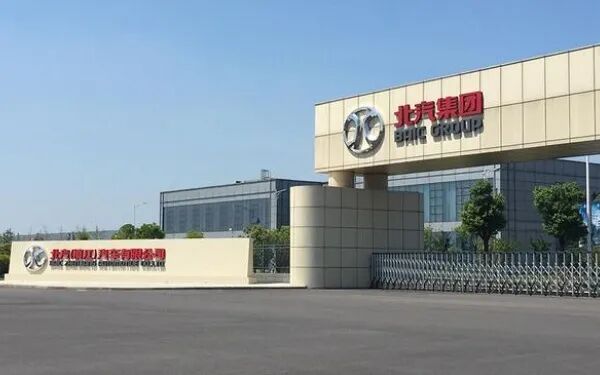
△ BAIC Group may seek collaboration with Li Auto
For BAIC and Li Auto, there is indeed substantial potential for complementarity. Li Auto delivered approximately 193,500 vehicles in the first half of this year, but its revenue declined during the same period, recording a loss of about RMB 3.99 billion. Currently, Li Auto is at a critical juncture, transitioning its product lineup, shifting towards pure electric vehicles, and expanding globally. It faces significant pressure in terms of technology and cost efficiency. In contrast, BAIC's core platform for new energy vehicle business, BAIC BluePark, incurred a loss of nearly RMB 2 billion during the same period. Both Arcfox and Xiangjie are still in the stages of continuous product and brand development, as well as gradual market expansion.
Li Auto Holds the Core Technologies That BAIC 'Covets'
In the fields of batteries and intelligent driving, Li Auto has taken a leading position among domestic automakers.
In batteries, Li Auto is transitioning from procuring from battery companies like CATL to directly participating in the supply chain. According to company disclosures, it has developed capabilities in 5C battery cells, packs, and BMS. On September 4, Li Auto invested RMB 2.65 billion to increase its stake in Sunwoda Electric Vehicle Battery, becoming its second-largest shareholder and the largest shareholder among automotive OEMs (vehicle manufacturers) with an 11.17% stake. By further extending upstream, Li Auto can leverage Sunwoda's R&D and manufacturing capabilities to continuously improve battery energy density and ultra-fast charging capabilities while optimizing costs.
△ Li Auto will achieve self-developed and self-manufactured batteries
Intelligent driving is an area where Li Auto has invested even more heavily and accumulated deeper expertise. Over the past three years, Li Auto's annual R&D investment has exceeded RMB 10 billion, forming a complete technological system covering advanced driver-assistance systems (ADAS), intelligent cockpits, electronic architectures, and OTA updates. It has also accumulated experience in large-scale mass production and continuous iteration. Notably, Li Auto is advancing the development of its self-designed intelligent driving AI inference chip, the M100, which uses a 5nm process and delivers a single-chip computing power of 1280 TOPS. It has already been deployed in the latest MEGA model. Li Auto's advantage lies not only in self-developed algorithms and end-to-end technology but also in the complete closed loop formed by algorithm development, data training, vehicle integration, and OTA iterations, laying the foundation for future technology exports to other automakers.
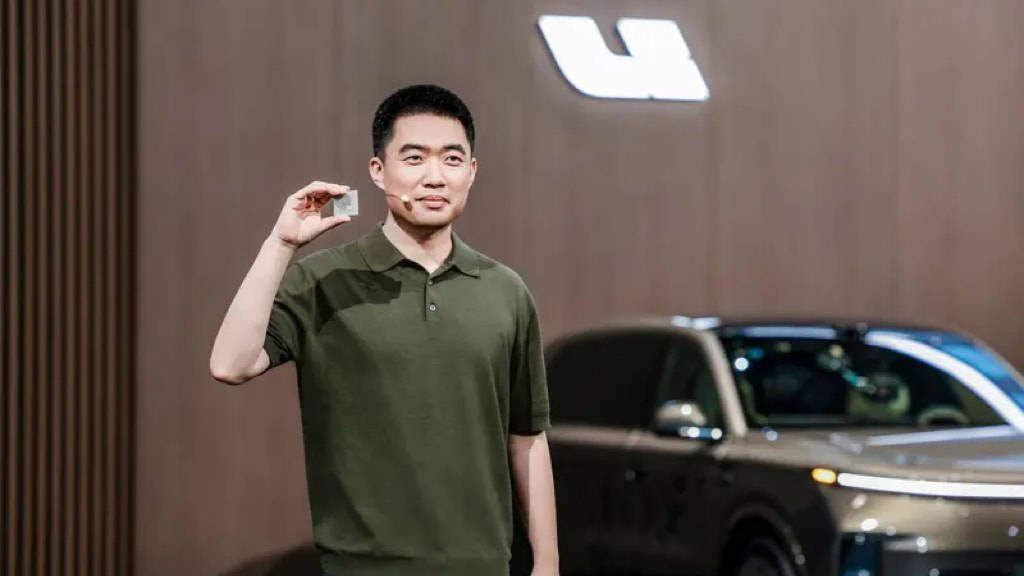
△ In intelligent driving, Li Auto is among the top tier in China
Against this backdrop, BAIC's discussions with Li Auto around batteries and intelligent driving may not merely represent a simple technological collaboration but also reflect BAIC's need to further expand its technological ecosystem. BAIC is not seeking to distance itself from Huawei but rather to introduce additional technological and industrial resources on top of its existing deep cooperation, reducing reliance on a single partner. Especially in the fields of batteries and intelligent driving, which increasingly determine the competitiveness of new energy vehicle models, collaborating with Li Auto can provide BAIC with more technological pathways, product definitions, and supply chain options while enhancing its technological integration and bargaining power. Therefore, rather than saying BAIC is 'balancing Huawei,' it is more accurate to say that BAIC is further building a diversified technological ecosystem beyond its cooperation with Huawei. For Li Auto, if it can export its battery, intelligent driving, and software capabilities, it means its business model has the opportunity to extend beyond mere 'vehicle manufacturing' to 'technology empowerment.'
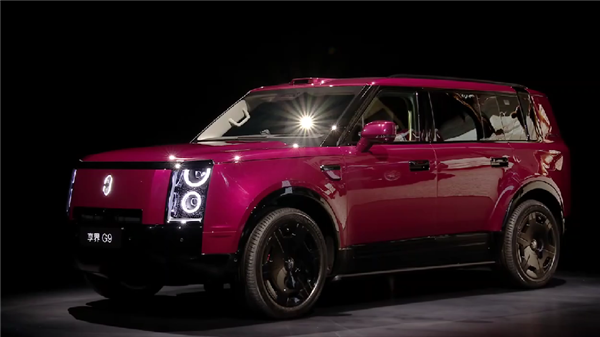
△ Beyond Huawei, BAIC will further expand its demand for a technological ecosystem
What Can Li Auto Gain?
If a collaboration with BAIC can be achieved, it holds significant value for Li Auto, which is currently in a stage of transformation and expansion.
Technology exports bring new revenue models. Referring to cases such as Volkswagen's adoption of XPeng's electronic architecture and numerous automakers using Huawei's intelligent driving technology, if BAIC were to introduce Li Auto's intelligent driving technology in the future, Li Auto could generate new revenue through technology licensing, software services, and subsequent iterations. If extended further to hardware areas like batteries, it could also create product and component revenue. More importantly, this would further commercialize Li Auto's substantial R&D investments, diluting R&D costs by expanding the scale of technological applications and driving its business model to extend from 'vehicle + after-sales' to 'vehicle + software + technical services + components.'
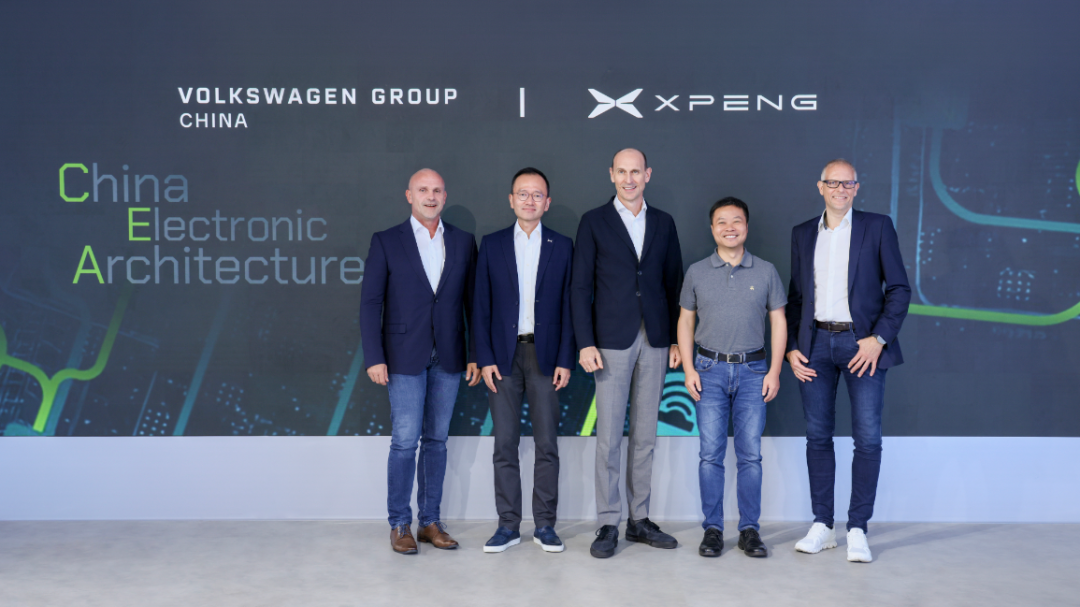
△ XPeng has profited significantly by exporting its electronic architecture to Volkswagen
Leveraging BAIC to accelerate overseas expansion. As competition in China's new energy vehicle market intensifies, overseas markets have become a crucial growth space for Li Auto. Currently, Li Auto's overseas business is still in the expansion stage, while BAIC has established a relatively mature overseas channel and operational system. In 2025, BAIC Group exported 308,000 vehicles, a year-on-year increase of 26%. In the first half of 2026, it exported 184,000 vehicles, a year-on-year increase of 30.8%, with products entering more than 130 countries and regions globally. If both sides can share overseas channels, supply chains, and after-sales networks, Li Auto can reduce the capital and time costs of building its own overseas systems and even jointly explore emerging markets using BAIC's existing networks, accelerating the transition from 'product exports' to 'brand exports.'
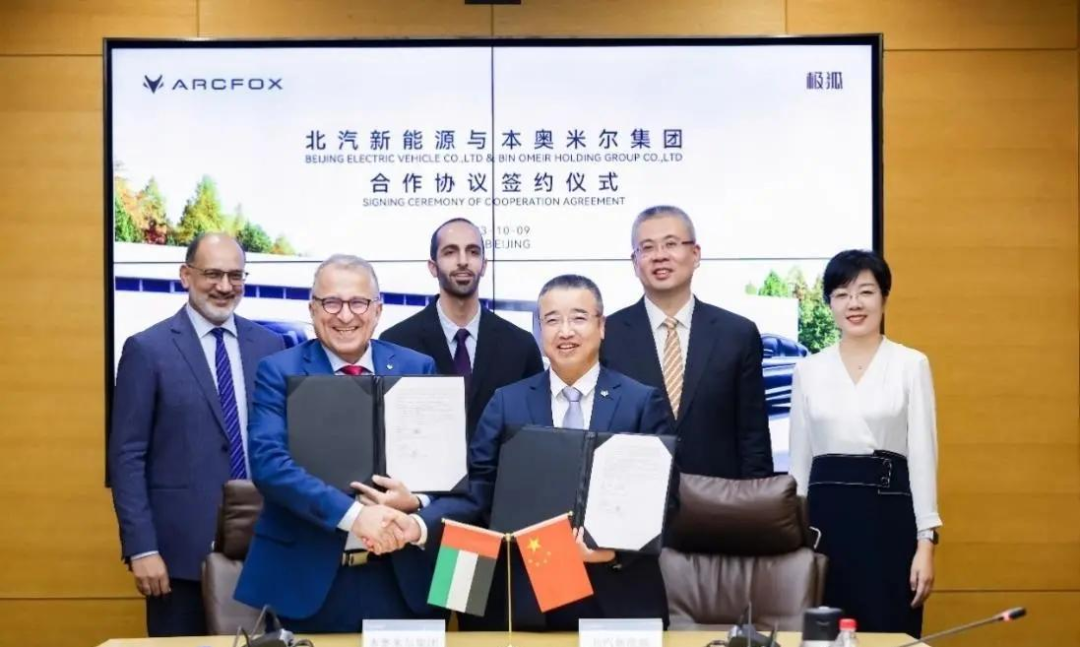
△ BAIC's overseas sales channels will significantly aid Li Auto's global expansion
Expanding the scale of technological applications. Technologies such as batteries, chips, and intelligent driving software have high R&D costs but relatively low marginal replication costs. If Li Auto's technologies can extend from its own models to more BAIC models, it can further amplify the commercial value of its R&D investments. BAIC could thus become an important incremental channel for Li Auto's technology commercialization.
Overall, BAIC needs Li Auto's technological capabilities, while Li Auto can leverage BAIC's manufacturing systems, overseas channels, and industrial resources to achieve technology commercialization and scale. If cooperation further extends from batteries and intelligent driving to electronic architectures, software, components, and overseas markets, its significance will transcend mere technological collaboration, becoming an important attempt at resource complementarity between the two sides.
The Automotive Industry Moves Toward a Win-Win Collaboration Era
From an industry perspective, BAIC's discussions with Li Auto are not an isolated event but a microcosm of changes in the automotive industry's division of labor, which is expected to become increasingly common in China's automotive industry in the future. In the era of new energy vehicles, R&D investments in core technologies such as batteries, intelligent driving, chips, and electronic architectures are becoming increasingly high, with faster iteration speeds. It is difficult for a single automaker to maintain leadership in all areas simultaneously, making the acquisition of external technological capabilities through collaboration an industry trend. Even large automakers with strong full-stack R&D capabilities, such as BYD and Geely, are actively seeking external cooperation in certain areas. For the vast majority of automakers, improving R&D efficiency through specialized division of labor and technological collaboration may have become a more realistic choice.
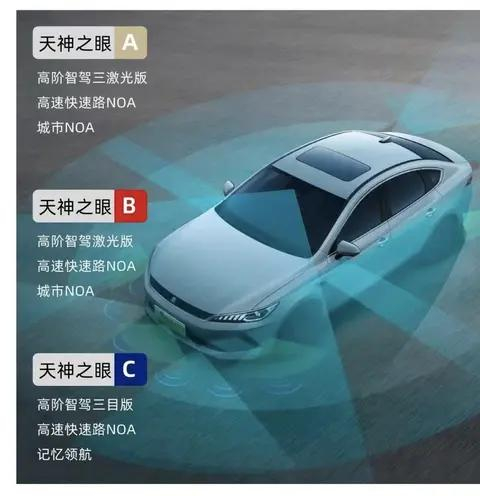
△ The acquisition of external technological capabilities through collaboration is becoming an industry trend
At the same time, the automotive industry's value chain is extending from hardware supply to technology capability output. By August 2026, Huawei's ADAS and HarmonyOS cockpit installations had each surpassed 2 million units, with 25 cooperating automakers and over 60 models. Momenta has also collaborated with Mercedes-Benz, BMW, SAIC, Toyota, and other automakers. This indicates that the future competitiveness of automotive companies may not solely depend on 'how many vehicles they can sell themselves' but also on 'how many vehicles can incorporate their technologies.' For leading companies, exporting intelligent driving, software, batteries, and other technologies can not only create new revenue streams but also dilute R&D costs by expanding the scale of applications.
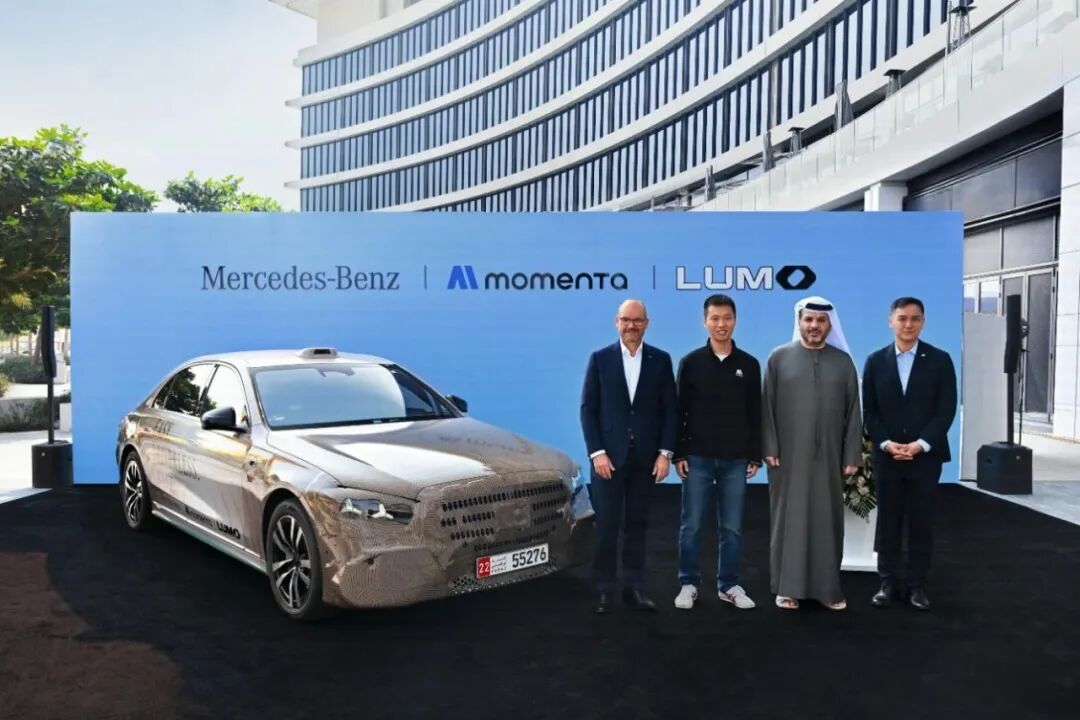
△ The automotive industry's value chain is extending from hardware supply to technology capability output
Furthermore, the globalization of China's automotive industry is further reinforcing this logic of collaboration. From January to August 2026, China exported 7.153 million vehicles, a year-on-year increase of 66.7%, including 3.435 million new energy vehicles, a year-on-year increase of 124.3%. As domestic competition intensifies, overseas markets have become new growth spaces, but building channels, supply chains, and after-sales systems requires significant time and investment. Therefore, future collaborations among automakers may extend beyond single technology procurement to manufacturing, supply chains, and overseas channels. From this perspective, BAIC and Li Auto are just a microcosm: China's automotive industry is gradually shifting from 'market competition' to 'sharing technology, integrating resources, and jointly expanding markets,' with the boundaries between automotive companies becoming increasingly blurred.
Commentary
In the future automotive industry, it is unlikely that a single automaker will dominate all core technologies as an 'all-rounder.' Technologies are becoming increasingly specialized, meaning the industrial division of labor will become more refined. Today's competitors may become tomorrow's partners in specific technological areas. Notably, technologies such as intelligent driving, batteries, and software are transforming from 'vehicle manufacturing capabilities' into industrial resources that can be independently traded and monetized. Automakers are shifting from 'showcasing their own capabilities' to 'competing in integration capabilities.' Those who can efficiently combine technologies, supply chains, manufacturing, and global market resources are likely to gain more opportunities in the next phase of competition.
(This article is original to Heyan Yueche and may not be reproduced without authorization.)
-
Has the FCC靴子 Finally Landed? Can Domestic Optical Module Companies Breathe a Sigh of Relief?
-
![]()
From Purchasing Cells to Defining Cell Specifications: The Shifting Power Dynamics in the New Energy Industry Chain
-
![]()
If ByteDance Goes Public, Could It Become China’s Largest Company by Market Capitalization?
-
![]()
Revenue Drops, Net Profit Plunges by 56%: Is Supcon Technology Navigating Through Growing Pains in Its Transformation?
-
![]()
Huawei Takes a Step Back, AITO Steps into the Spotlight
-
![]()
A Photo Retouching Company with 37 Employees Fetches $2 Billion in Acquisition
-
![]()
The Automotive Industry Steps into the 'Era of Collaboration': Will BAIC and Li Auto Join Forces?
-
![]()
Selling Cars Isn't Profitable: What Will XPENG Rely On to Reverse Its Losses in the Future?