Doubao Phone: A Vision Yet to Be Realized
 09/18 2026
 525
525

The Importance of Traffic—Why Should It Make Way for Doubao?
Author: Ding Shan
Editor: Xiaobai
Illustrations: AI-Generated
Produced by: Qiangdiao Next
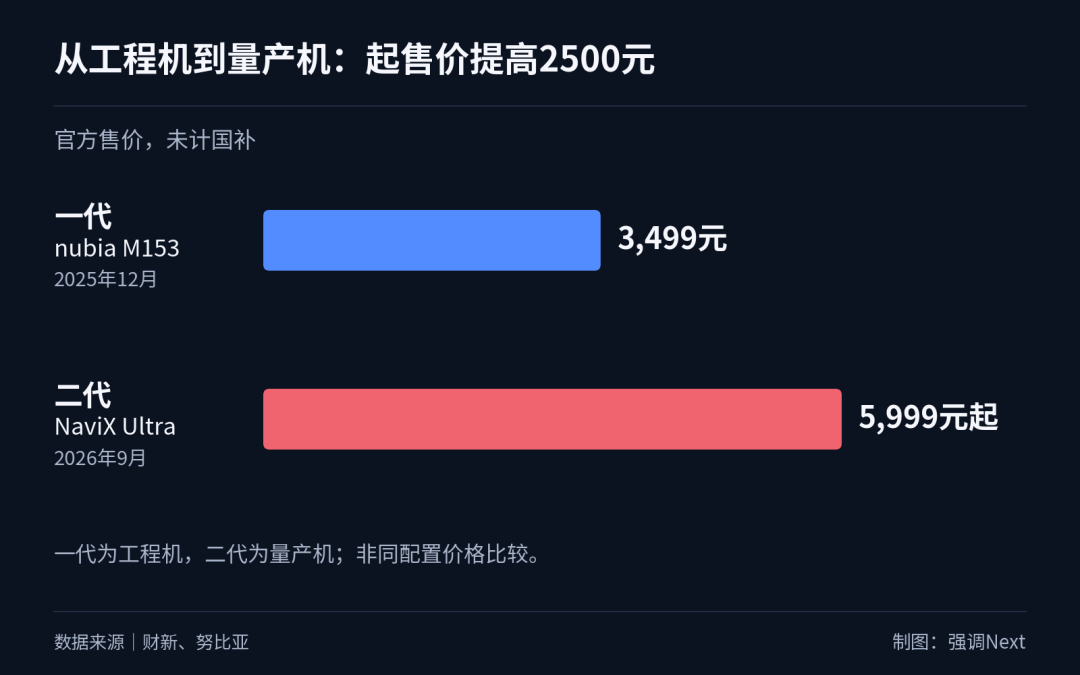
On September 16, the Nubia NaviX Ultra officially hit the shelves. With a starting price of RMB 5,999 (or RMB 5,499 after national subsidies), Nubia announced that sales surpassed RMB 100 million within the first second of availability. Dubbed the "second-generation Doubao Phone," this consumer-oriented device once again brought the concept of "phones handling tasks on behalf of users" to the forefront of public attention.
However, some expectations were met with disappointment upon actually using the apps. Media outlets, such as National Business Daily, conducted real-world tests with actual devices, attempting to use the assistant to open WeChat and post to Moments. While the assistant could launch the app, it failed to complete in-app actions. Activities like shopping on JD.com, posting on Xiaohongshu, placing orders on Meituan, or shopping on Taobao were all restricted.
A joke began to circulate: "A pure ByteDance-exclusive machine." The unfunny part? It turned out to be true.
From the initial engineering model priced at RMB 3,499 to the second-generation consumer model starting at RMB 5,999—a price increase of RMB 2,500—the promise of cross-app functionality remained unfulfilled. Consumers who purchased the phone still found themselves manually handling the most commonly used services.
Doubao aims to operate the entire phone on behalf of users, but the platforms integrated within the phone have their own agendas. Simply because the model can identify buttons doesn't mean ByteDance has the authority to press them on behalf of users. Even if phone manufacturers are willing to collaborate, it doesn't guarantee that WeChat, Taobao, or Meituan will follow suit.
The vision for the Doubao Phone is appealing: users voice their needs, and AI navigates across apps to get things done. The reality, however, is harsh: the steps it aims to eliminate are precisely where platforms exert control over users, allocate traffic, and generate revenue.
First Generation Faces Challenges in Four Days; Second Generation Begins Establishing Rules
On December 1, 2025, the technical preview version of the Doubao Phone assistant was released, debuting on the limited-release Nubia M153 engineering model priced at RMB 3,499, which sold out on the same day. ZTE's stock price surged to the daily limit. Two days later, users reported abnormal WeChat logins. On the evening of December 3, Doubao announced the removal of the WeChat operation feature from its phone assistant.
On December 5, Doubao further announced standardized adjustments, affecting scenarios such as incentive abuse, financial apps, and gaming. From its release to the proactive narrowing of its operational scope, only four days had passed. The seamless path depicted in demo videos encountered obstacles in the real internet, where a single app could set up a barrier.
Nine months later, the second-generation Doubao Phone responded by codifying app preferences into rules. On September 14, Doubao introduced the Screen Automation Operation Declaration Protocol (SAEP), allowing third-party apps to declare whether they accept GUI agent operations. The rules unfold in two phases: during the 30-day public comment period, apps are not operated by default and must opt-in to enable operations; after the period, apps that haven't explicitly refused via email or protocol will have corresponding operational capabilities enabled. Apps that explicitly refuse will not be automatically operated.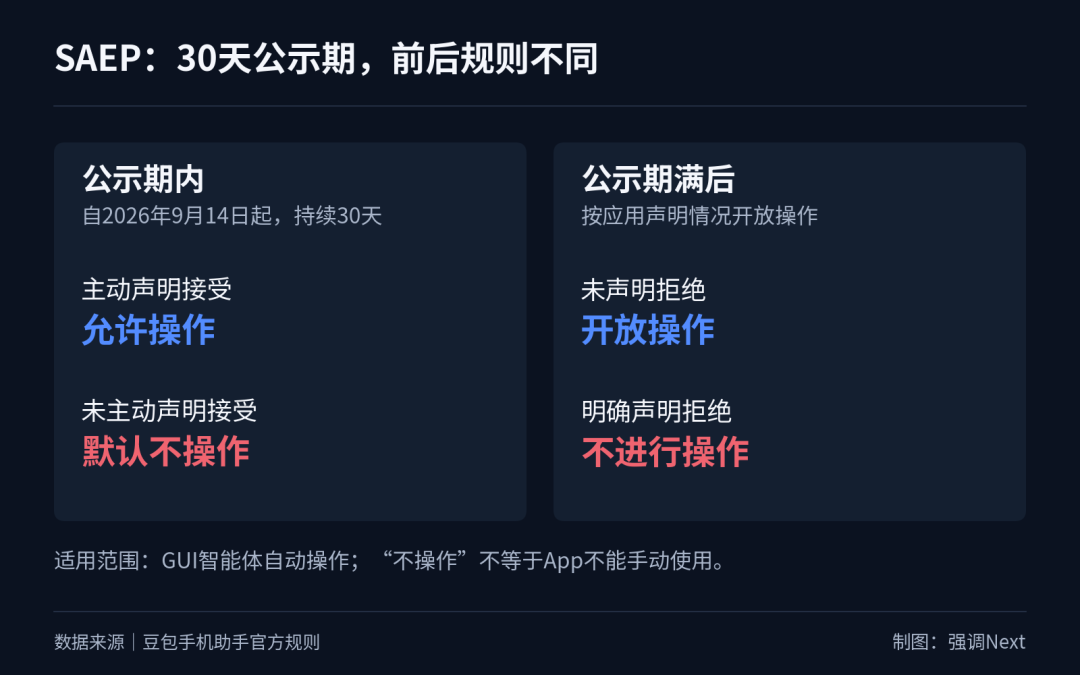
These rules provide a clear negotiation window for all parties and reveal how Doubao's product capabilities are shaped: ByteDance is responsible for building the functionality, while apps decide whether to allow it to run.
The initial restrictions include default arrangements during the public comment period, but the long-term extent of usability still hinges on the attitudes of app platforms.
For users, this means the most attractive selling point of the Doubao Phone must still be delivered through ongoing collaboration and progress.
Apps Seek Orders, Not Compromised Entry Points
Restrictions between phone manufacturers and apps are not absolute. On July 13, StepOn released the STEPX terminal brand and STEPX Neo phone solution, announcing initial ecosystem partners including Ctrip, Alipay, Didi, Meituan, JD.com, and WPS.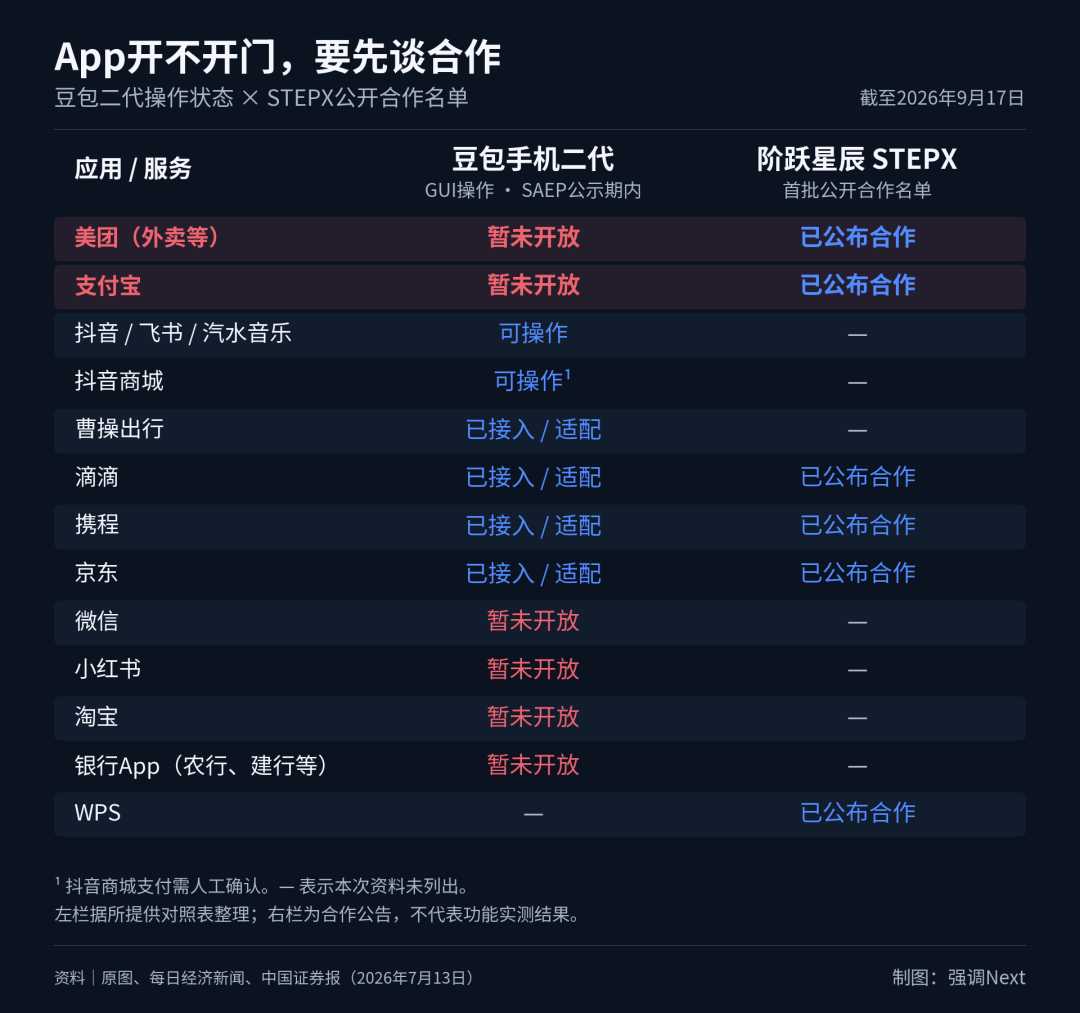
In June of this year, WeChat also began collaborating with Huawei, Honor, Xiaomi, OPPO, and Vivo on A2A capabilities. According to media reports, Honor's YOYO can now initiate WeChat audio/video calls and send messages to specified contacts.
These cases demonstrate that app platforms are open to AI participation in services, but the scope and methods of AI involvement must be negotiated first.
App platforms welcome an additional channel that brings orders but are reluctant to accept an intermediary that allocates orders for them.
When a user says, "Help me buy a pair of headphones under RMB 300," the AI assistant can either enter a designated platform to use its provided products and sorting or search across platforms to compare prices, brands, and after-sales service before deciding where to place the order. The steps saved involve a few clicks, but what's transferred is the most valuable decision-making power before a transaction.
The essence of advertising relies on this decision-making power. Tencent's marketing service revenue grew by 22% year-on-year in Q2 2026, with AI-driven advertising efficiency improvements within the WeChat ecosystem being a key growth driver. Internet companies are leveraging AI to sell their traffic more effectively, naturally calculating the cost of external assistants taking over user choices.
ByteDance is a uniquely significant negotiator. With e-commerce and local services already established behind Douyin, Doubao gaining access to shopping needs, budgets, and preferences creates another pathway to influence transaction flows. For other platforms, granting operational permissions simultaneously strengthens a competitor—an obvious contradiction.
Doubao aspires to be users' primary assistant, but internet platforms prefer it to remain a single service channel. The core conflict lies in who decides the next step after a user voices a need.
This negotiation won't end automatically with increased model parameters. ByteDance must present transaction growth, allocation rules, and collaboration terms that make financial sense for platforms.
382 Million Monthly Active Users Can't Guarantee System Permissions
Given these significant resistances, why is ByteDance pushing ahead with a second-generation phone? QuestMobile data shows that Doubao had 382 million monthly active users in June 2026, more than double Qianwen's 167 million. Yet, no matter how large its user base, Doubao remains constrained by system permissions and app collaboration conditions within phones.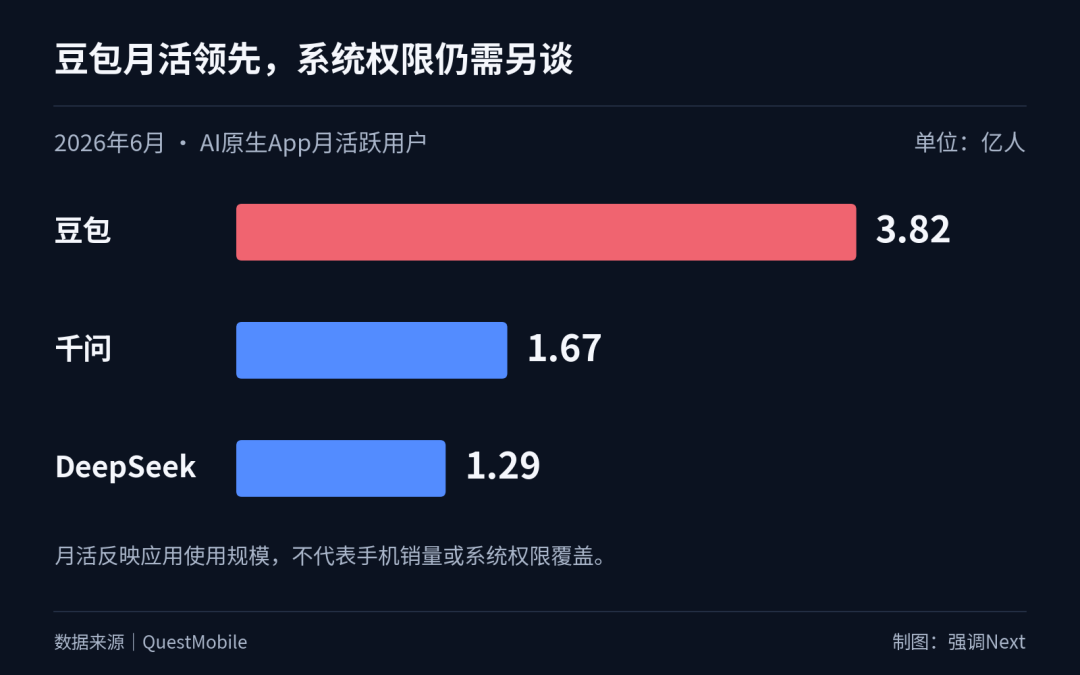
A chat app can wait for users to open it before answering questions. A task assistant must be summonable at any time, understand task progress, operate across different services continuously, and take over when errors occur. Whoever controls the system decides how these capabilities integrate into users' daily routines.
Collaborating with ZTE on this Doubao Phone provides ByteDance with an experimental arena: where the assistant is summoned from, how tasks are executed, and how preferences are remembered can all be deeply involved in design. What ByteDance seeks is the right to define next-generation phone interactions. Otherwise, even if Doubao models enter more phones, they might only serve as suppliers behind manufacturers' proprietary assistants.
The problem is that phone manufacturers are also vying for this position.
AI assistants that learn user habits, connect devices, and allocate services are tools for manufacturers to differentiate their products. Procuring Doubao models can enhance their own assistants, but ceding the default assistant position to Doubao would let ByteDance more directly control users.
App platforms guard service entry points, while phone manufacturers guard system entry points. Doubao must pass through at least these two gates to directly control user choices.
Nubia provides a window, but its terminal scale remains small. According to media reports, Doubao AI phones have around 200,000 units in stock, with initial batches under 100,000. IDC data shows that the top six smartphone vendors in China accounted for about 96% of shipments in Q2 this year: Huawei (22.6%), Apple (18.1%), OPPO and Vivo (16.0% each), Xiaomi (12.4%), and Honor (11.3%). Even calculating ZTE's entire market share, it's only 0.3%.
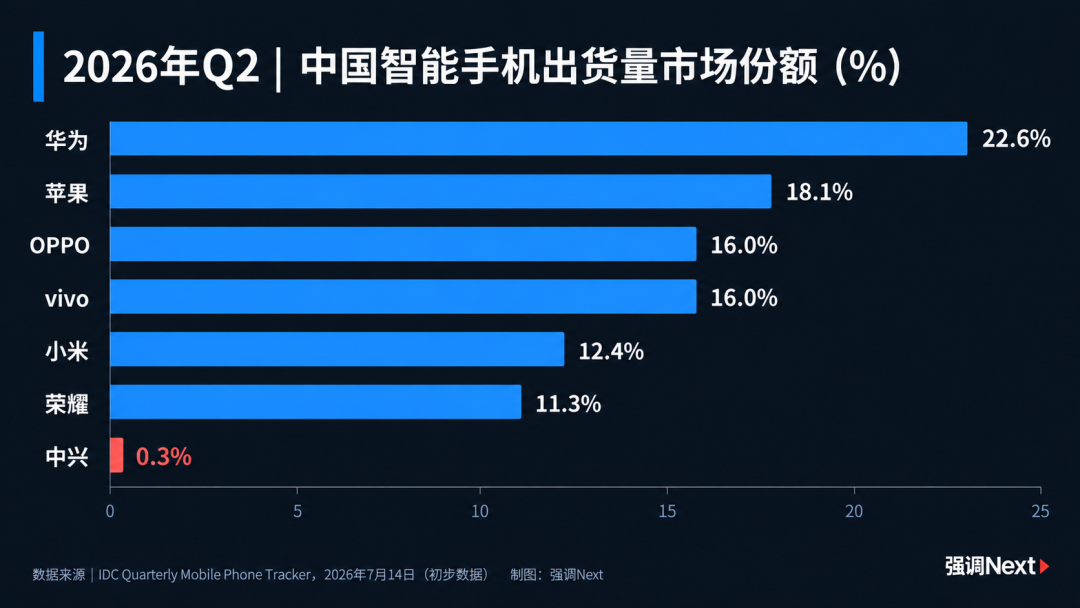
This poses a dilemma for ByteDance: services must be comprehensive to give users stronger reasons to switch phones. Only with enough users will service providers invest in adaptation. While Doubao has 382 million monthly active users on its app, this doesn't directly translate to phone users. WeChat's 1.4 billion users don't guarantee the viability of WeChat-customized phones either.
ByteDance can subsidize hardware to attract users, but WeChat's social graph, Meituan's supply network, and Taobao's merchants won't arrive with a single hardware subsidy.
Users Aren't Obligated to Wait for Negotiations to Succeed
Even if all apps cooperate, consumers might not immediately gain a reliable task assistant. Another challenge for Doubao is how much it can truly save users from doing.
AndroidDaily research released in May showed that among 350 daily tasks across 94 real Android apps, the strongest participating model succeeded in only 62% of cases. This benchmark highlights the difficulty of continuous operations: identifying a button differs greatly from completing an entire task.
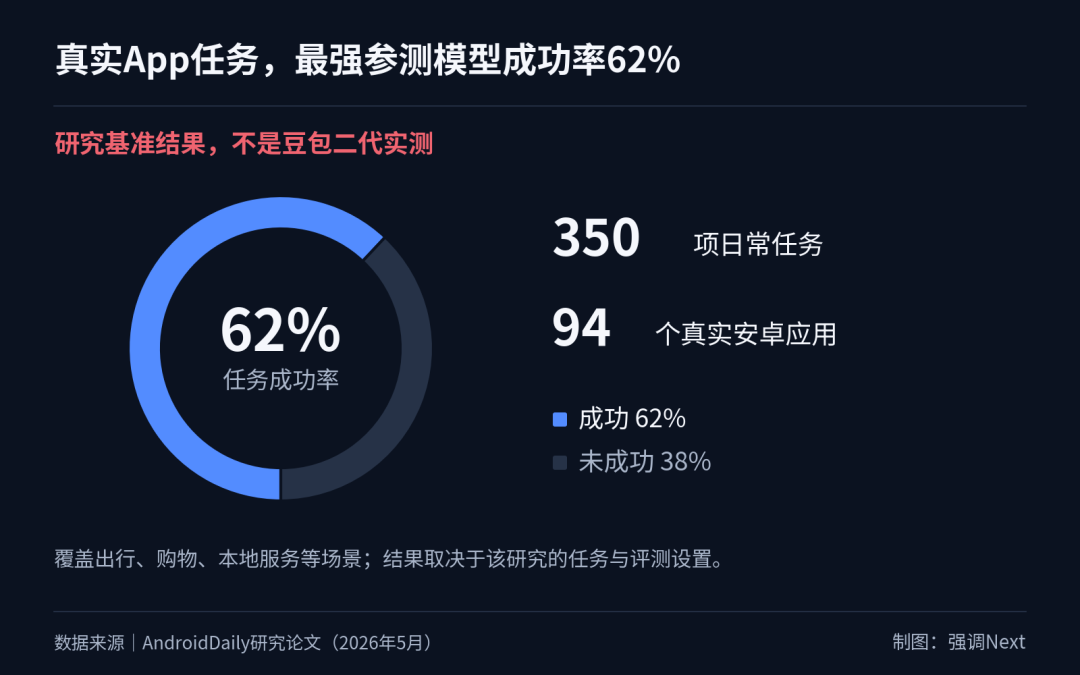
No tickets available, ambiguous product specifications, or unusable coupons all require the assistant to re-evaluate. Users don't care how many steps it completes; they only care whether the final purchase or booking is correct and more convenient than doing it themselves.
In real-world tests of the second-generation Doubao Phone, payment and identity verification steps still required manual user intervention. For the product, smooth handoffs and error corrections matter just as much as app accessibility in determining the experience.
As collaborations increase, another constraint emerges: the assistant's choice range depends on the collaboration scope.
The same request—"Help me book a hotel"—can be fulfilled by comparing prices and cancellation policies across multiple platforms or by selecting from only partnered channels. Users tap the screen fewer times but might not get better options.
If Doubao can only operate within negotiated collaboration scopes, it must prove that this scope fulfills the promise of a "universal assistant."
From the first to the second generation, the Doubao Phone has showcased the intensity of competition for AI entry points: system permissions must be earned, platform interests must be aligned, and task execution must be reliable. ByteDance can view these investments as costs for securing the future, but consumers are paying for today's product.
A phone starting at RMB 5,999 should convince users with tasks it can already complete. First-day sales exceeding RMB 100 million within the first second generated buzz, but whether users can reliably use WeChat, shop, or order takeout afterward will determine how many stick around.
The Doubao Phone's vision is beautiful—letting users navigate the entire internet with a single phrase. But first, it must resolve why internet companies should let it cross their domains.
Note: Data in this article comes from public sources and does not constitute investment advice.
- END -
-
![]()
Revenue Drops, Net Profit Plunges by 56%: Is Supcon Technology Navigating Through Growing Pains in Its Transformation?
-
![]()
Huawei Takes a Step Back, AITO Steps into the Spotlight
-
![]()
A Photo Retouching Company with 37 Employees Fetches $2 Billion in Acquisition
-
![]()
The Automotive Industry Steps into the 'Era of Collaboration': Will BAIC and Li Auto Join Forces?
-
![]()
Selling Cars Isn't Profitable: What Will XPENG Rely On to Reverse Its Losses in the Future?
-
![]()
Doubao Phone: A Vision Yet to Be Realized
-
![]()
Doubao Phone: A Vision Yet to Be Realized
-
![]()
Apple Enters Foldable Phone Arena: A New Dawn or the Twilight of Smartphones?