Apple, Once Seen as "Lagging," Begins Limited Rollout of AI
 10/21 2026
 366
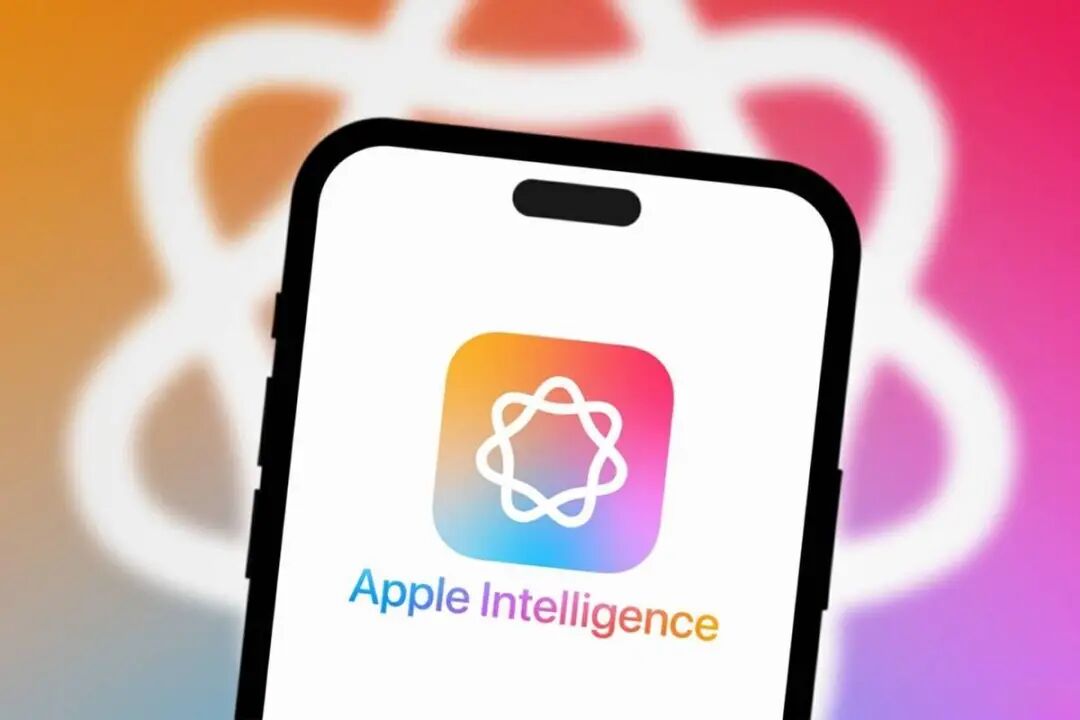
Apple's AI offering for the Chinese market is finally making its debut.
Recently, I observed a line of fine print in official press releases and at the bottom of the Apple Intelligence (hereinafter referred to as "Apple AI") product page: Certain AI functions that rely on server-side models will be subject to daily usage limits, with additional access potentially available through paid services in the future.
This move marks Apple's initial step in treating AI as a limited resource, signaling that Apple AI, after more than two years of delays, is finally ready for launch. Apple Executive Chairman Tim Cook recently disclosed that testing for the Chinese version of Apple Intelligence (hereinafter referred to as "Apple AI") will commence in late October.
However, he only confirmed the release of the "first-generation" Apple AI, with the latest iteration of Siri AI still pending.
Managing Apple AI's Capabilities with Supply Chain Tactics
Meanwhile, AI giants are collectively applying the brakes.
Public data indicates that Microsoft has canceled leases for data centers with hundreds of megawatts of capacity; Meta has laid off approximately 8,000 employees in the first half of the year; at Anthropic's Investor Day event on October 14, attendees reported that its latest valuation stood at $1.5 trillion, a 25% decrease from its previous peak of $2 trillion.
The underlying cause is an oversupply of AI capabilities. Market and investor concerns are centered on the substantial debt burdens that some tech companies have incurred to finance AI infrastructure.
S&P estimates that six major U.S. hyperscale cloud providers—Amazon, Microsoft, Alphabet, Oracle, Meta, and SpaceX—will collectively invest over $7 trillion in data centers and other AI-related capital expenditures between 2025 and 2030, remaining in negative free cash flow at least until next year.
Over the past two years, the valuation logic for AI has been that "investment equals faith": Capital markets have rewarded companies that heavily invested in GPUs and data centers with high valuations.
Yet, financing costs are on the rise, and revenue growth cannot indefinitely sustain its rapid pace. The market's focus has shifted from who can spend the most cash to who can generate profits and maintain stable cash flow.
Apple, often criticized for being "slow to adopt AI," appears to have turned this perceived disadvantage into an advantage, capitalizing on the current situation. Its annual AI-related expenditures are estimated at $11-13 billion, significantly less than the tens of billions spent by its rivals.
Some analysts argue that due to its relatively modest AI capital spending, Apple has been viewed as a "safe-haven asset" amid the tech stock sell-off. Concurrently, strong demand for its first foldable phone has further bolstered investor confidence.
This has propelled its stock price up by about 25% in 2026, with its market capitalization reaching $5 trillion, just $148 billion behind Nvidia. In contrast, the stock performances of other "Magnificent Seven" tech giants have been mixed, with Tesla, Microsoft, and Meta still showing year-to-date declines.
While competitors focus on AI infrastructure investment, Apple is taking a different approach by controlling AI supply: limiting functions, regions, and even daily usage quotas.
Its most direct tactic is procurement. Over the past decade, Cook has established a robust supply chain system, ensuring stable supply, reducing inventory, and maintaining bargaining power by securing multiple suppliers for even the smallest components, such as screws.
Apple applies the same supply chain expertise to manage its "AI brain," setting specifications and overseeing delivery for model providers.
Google is at the forefront of Apple's AI supplier list. At WWDC26, Apple introduced five third-generation Apple Foundation Models (AFM), with some running locally and others deployed in the cloud.
The most powerful cloud model, Cloud Pro, operates on Google's servers, powered by NVIDIA chips. This marks Apple's first foray into outsourcing AI computing to a third-party cloud.
For the Chinese market, Apple has partnered with two companies: Alibaba provides model capabilities, including its Tongyi Wanxiang and Qwen models, while Baidu contributes search and Siri-related functions.
Take Alibaba as an example. It overcame three major hurdles—qualification, adaptation, and boundary compliance—to join Apple's supply chain. Apple imposes stringent rules on model providers, dictating which apps models can interact with, what data they can access, and which chips they run on.
However, a fundamental principle of Apple's supply chain management is that core components cannot rely entirely on external procurement. Apple focuses its self-developed efforts on on-device AI. Among the five models, Apple invests most heavily in on-device solutions, with the cloud serving as a complementary platform.
For instance, the on-device flagship model, AFM 3 Core Advanced, with 20 billion parameters, utilizes a sparse architecture. The model primarily resides in flash memory, activating only a small portion of parameters per request.
This approach, which trades flash memory for RAM, is challenging for Google or OpenAI to replicate directly, as it requires deep chip integration—a domain where Apple excels.
As a short drama might phrase it: "With core components secured, outsourcing the AI brain feels less perilous."
Limited Supply as a Business Strategy
Moreover, Apple has hired Microsoft AI Vice President Amar Subramanya to lead its model business. Subramanya, who spent 16 years at Google and led the Gemini team, exemplifies Apple's strategy: If you can't acquire the best model, hire the people who build them.
As some observers have noted, Apple AI's competitive advantage lies not in computational scale but in its hardware and software ecosystem and user data.
Under Apple's precise segmentation, the free and paid versions offer vastly different experiences. Real-time translation, writing tools, and notification summaries run locally, costing Apple nothing and facing no limits. However, cloud-dependent functions like photo editing and expansion have usage quotas, requiring payment for excess use.
This strategy follows Apple's well-established playbook: Limited supply creates scarcity, and scarcity drives willingness to pay. For example, iCloud offers 5GB of free storage, with additional storage available for a fee; Apple Music provides three free months before charging $10 monthly.
AI is just another commodity on Apple's shelves, representing a multibillion-dollar business opportunity.
According to Apple's financials, in the first quarter of FY2026 (ended December 27, 2025), total revenue reached $143.756 billion, with iPhone sales contributing $85.27 billion (nearly 60%) but only 40.7% of gross margin. Software services generated $30.01 billion in revenue with a 76.5% gross margin.
However, the largest share of service revenue—the "Apple tax" (App Store commission)—is shrinking, as global backlash against its strict commission rates has led to policy-driven price caps.
Starting March 15, 2026, the standard commission in mainland China dropped from 30% to 25%, with the Small Developer Program and auto-renewing subscriptions after the first year reduced to 12%. The U.S. was even more stringent: In April 2025, a court ruled in the Epic case that external link commissions could be set to zero.
Cook and Ternus. Source: Internet
In my opinion, selling limited AI is about adding a new revenue stream to services. This is a more reliable fee-based model than the Apple tax. Selling tokens, a standard practice in the AI industry, enjoys higher user acceptance and greater pricing flexibility for Apple.
Apple is already testing the waters. Apple Creator Studio costs $38 monthly, and Numbers' previously free Magic Fill feature has been moved to a paid tier, charging per use.
As the Chinese version of Apple AI approaches launch, Cook and Ternus aim to sell more iPhones and other hardware while rapidly defining AI as a controllable commodity for users' phones.
Judging by the progress, Apple has "won" again. According to tech industry bloggers, from October 5 to 11, cumulative sales of the iPhone 18 Pro series reached about 4.0809 million units, marking the fastest growth for a recent Apple flagship launch.
This remains Apple's capital to stay competitive in the AI arena.
Moreover, in a year of AI oversupply, Apple's "slow is fast" AI strategy has proven effective: Relying on the iPhone ecosystem, it can command premium prices even with limited AI functionality.
-
![]()
Apple, Once Seen as "Lagging," Begins Limited Rollout of AI
-
Beyond Rankings: What Kind of “Report Card” Do AI Companies Truly Need?
-
Is the Turning Point Here for AI Companies' Financing? Even Big Players Now Face 10% Interest Rates
-
![]()
Will the 2026 Auto Market See New Champions Emerge?
-
![]()
Caught Between Policies and Competition: Is Ascend the Future for Chinese Models?
-
![]()
Reviving Classic Designs: European Automakers' Nostalgic Gambit Amidst Chinese Competition
-
![]()
"Little Blue Light" Steps Out of the "Lockdown Room"!
-
![]()
Struggling in the Domestic Market? The Future Lies in Global Expansion—The 'Second Half' of China's New Energy Vehicle Industry