"Little Blue Light" Steps Out of the "Lockdown Room"!
 10/21 2026
 541
Introduction
Introduction
Revisiting "Pseudo-Innovations" in Cars as the "Official" Era Begins
As 2026 draws to a close, the official cleanup of industrial malpractices is accelerating.
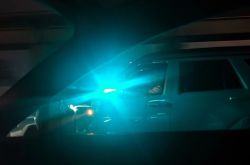
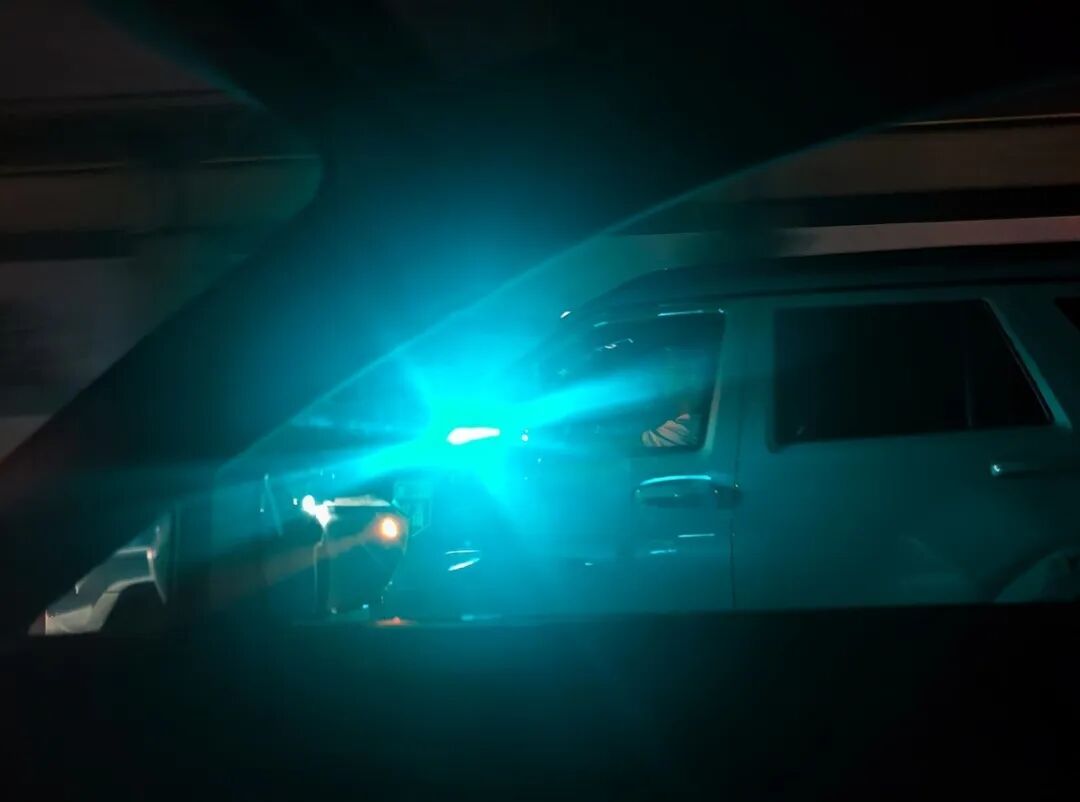
On October 20, the MIIT publicly solicited opinions on five mandatory national standards. In the fourth revision scheme of GB 4785, the intelligent driving little blue light, once rumored to be banned, not only gains official status but is also defined as a key indicator of autonomous driving.
Because lighting up the blue light signifies the vehicle entering autonomous driving mode, the new plan sets a red line: only vehicles equipped with L3 or higher autonomous driving systems can optionally install ADS marker lights on the front, rear, and sides. These lights automatically illuminate and remain on when the function is activated, extinguishing when the system exits, with no manual switching allowed.
Given that the standard is scheduled to take effect on New Year's Day next year, and L3 permits have not yet been released, new cars equipped with advanced driving assistance systems will not be eligible for this blue light in the near future. Older vehicles unlikely to upgrade to L3 will probably have the blue light disabled via OTA updates.
The same draft also tightens regulations elsewhere. Except for illuminated emblems, exterior vehicle lighting must not display any text, and illuminated patterns must not resemble human faces, animal faces, or other anthropomorphic graphics. Gesture-controlled lighting and voice-activated light shutdowns are prohibited. Turn signals must not be mixed with brake lights or rear fog lights, and the same applies to reverse lights. Variable intensity signal lights must adjust brightness uniformly across the entire light source, not just partially.
In other words, emerging exterior lighting social screens, along with light language text projections and emoticon lights, are being restricted.
Rewinding four years. In 2022, the Ideal L9 first mass-produced and installed this feature, followed by Seres, XPeng, and NIO. From flagship SUVs priced at 450,000 yuan to family sedans at 100,000 yuan, it became an unspoken standard for intelligent driving models. Yet, its legal basis never existed. Current GB 4785 specifies only white, red, yellow, and amber for civilian vehicle exterior lighting, with blue reserved for special vehicles. The list of lighting types is closed, with no provision for intelligent driving status indicators.
For three years, policy gaps and automaker enthusiasm ran in parallel. The little blue light is not the only feature called out this year; hidden door handles, screen shifters, zero-gravity seats, and light language projections are also implicated. Most of these will likely exit the market under the new national standard, albeit in different ways.
01 Some Issues Are Caught by Accidents, Others by Costs
First, we must clarify that the little blue light was halted this year not due to accident reviews but risk anticipation.
To date, no publicly recognized casualty accident has been attributed to the little blue light. The China Automotive Standardization Institute cites glare and light pollution, arguing that lighting this lamp may subtly influence surrounding drivers, making vehicles more prone to being cut off or closely followed, thereby inducing accidents.
The truly accident-prone feature is hidden door handles, which have a real casualty list—
In April 2024, a mid-to-large New energy SUV (new energy SUV) in Yuncheng, Shanxi, rear-ended a maintenance vehicle and caught fire, killing three, including a toddler. Footage showed the door handles did not deploy;
In March 2025, on the Deqing-Shangrao Expressway in Tongling, Anhui, a new energy sedan burst into flames after a collision, killing three female college students;
In October 2025, on Tianfu Avenue in Chengdu, a new energy sedan rear-ended another vehicle and caught fire. Over a dozen bystanders used fire extinguishers and wrenches to try to open the doors. Some reached into the windows but got no response. Firefighters could not pry them open and finally used cutting tools. The driver was already lifeless.
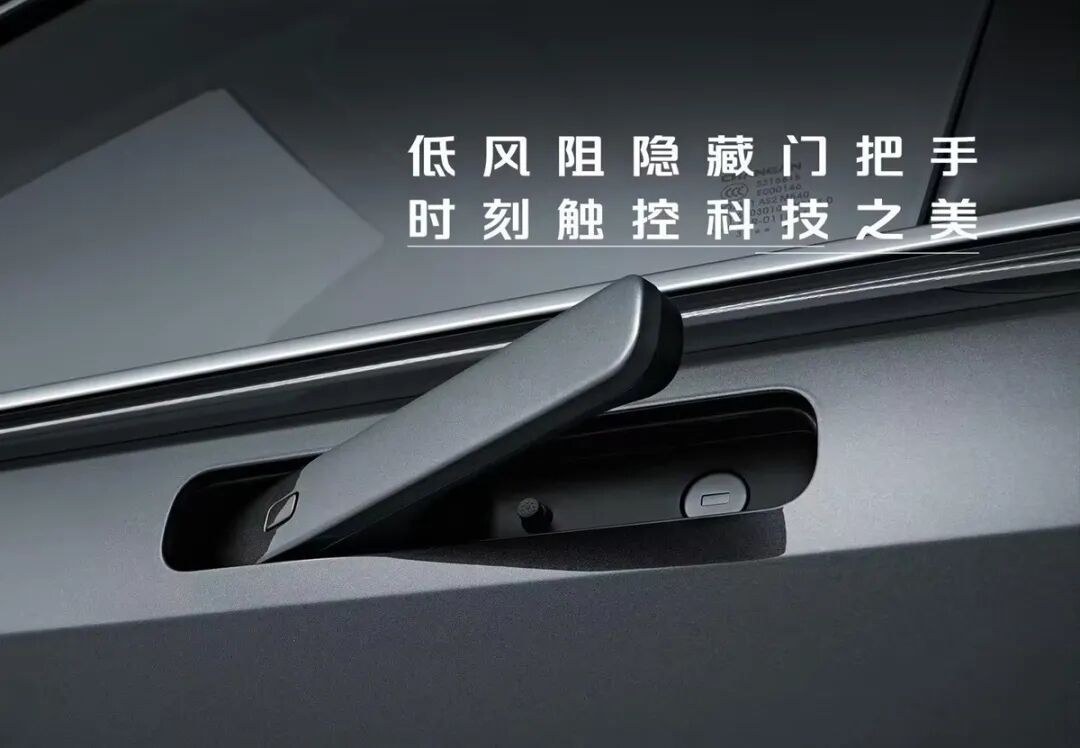
Figure: The irony is palpable when juxtaposed with corporate advertising slogans
While no evidence directly links hidden door handles to fatalities in these accidents, the inability to open locked doors during severe accidents is the most critical issue.
Especially in the March 2025 Anhui accident, the vehicle had a semi-hidden door handle design, but its internal locking mechanism was not mechanical and required power from the low-voltage battery to function. Forensic analysis later confirmed that the low-voltage system power outage (lost power) after the collision, disabling the external handle release within nine seconds of impact.
Although most automakers claim that hidden door handles will forcibly deploy upon collision detection, China Insurance Research Institute side-impact tests show only a 67% success rate for electronic door handles, compared to 98% for traditional mechanical handles. The substance (substance) of exposing occupants to 31% additional risk is the desire to further optimize aerodynamics and reduce energy consumption during the design phase of new energy vehicles. Ultimately, users bear the consequences of manufacturers' initial aspirations.
On January 28, 2026, the mandatory national standard GB 48001—2026, "Safety Technical Requirements for Automobile Door Handles," was approved and released, mandating mechanical release mechanisms for both interior and exterior handles on every door. Seven months later, on August 21, the State Administration for Market Regulation issued nine recall notices for automakers in a single day, totaling 4.276 million vehicles—the largest domestic recall for a single issue. One foreign brand accounted for nearly 2.97 million of these. The reason: interior emergency mechanical pulls were similar in color to the interior trim, potentially affecting escape and rescue when low-voltage systems failed during collisions.
Compared to the uproar over door handles, other issues, while complex, are generally smaller in scale and only become annoying when encountered directly. The most typical example is the integrated die-casting process, which has proliferated rapidly.
Since 2022, domestic automakers have adopted chassis die-casting processes, quickly scaling up to ultra-large die-casting lines with tens of thousands of tons of clamping force. Replacing dozens or even a hundred-plus chassis components, originally welded, with integrated die-cast parts significantly reduces manufacturers' labor hours and costs but introduces subsequent repair issues. As this process becomes widespread, lawsuits and disputes over repair costs exceeding vehicle residual value due to accidental damage to die-cast parts have continued unabated domestically since 2022.
Similar issues have arisen with battery packs. Earlier this year, a vehicle owner was forced to replace an entire 130,000 yuan power battery pack due to accidental damage to a single clip, as the clip and battery housing were integrated.
Narrative outpacing engineering is another symptom. Especially in China's fiercely competitive automotive industry, many brands attempt to differentiate themselves through functional innovations, but the outcomes are generally unfavorable. For instance, built-in vehicle refrigerators, now standard, have an actual usage rate of only 5%, according to surveys. The short-lived in-car shower feature, with a mere 10-liter water tank, raises questions about its practicality—for whom is it sufficient, pets?
02 How Are "Quickly Produced Cars" Made?
The ability of various "gimmicks" to pass muster from concept to product definition and ultimately reach mass production does not rely on user votes. Behind them lies a repeatedly accelerated development process and a series of validation steps continually pushed back.
At an October 20 press conference by the State Council Information Office, MIIT Chief Engineer Wang Weiming made it clear: "Quickly produced cars" are unacceptable. While lacking an official definition, the term refers to products rushed to market with compressed research and development cycles and necessary testing and validation steps skipped to seize market windows.
Changes in vehicle development cycles illustrate the issue best. During the traditional internal combustion engine era, complete research, development, and validation cycles for new models typically exceeded 36 months, with 48 months not uncommon. Today, many brands have compressed this to 18 months or less. A 2025 McKinsey study revealed that emerging Chinese new energy vehicle makers now launch new models in approximately 24 months on average, far shorter than the 40–50 month norm of the previous era.
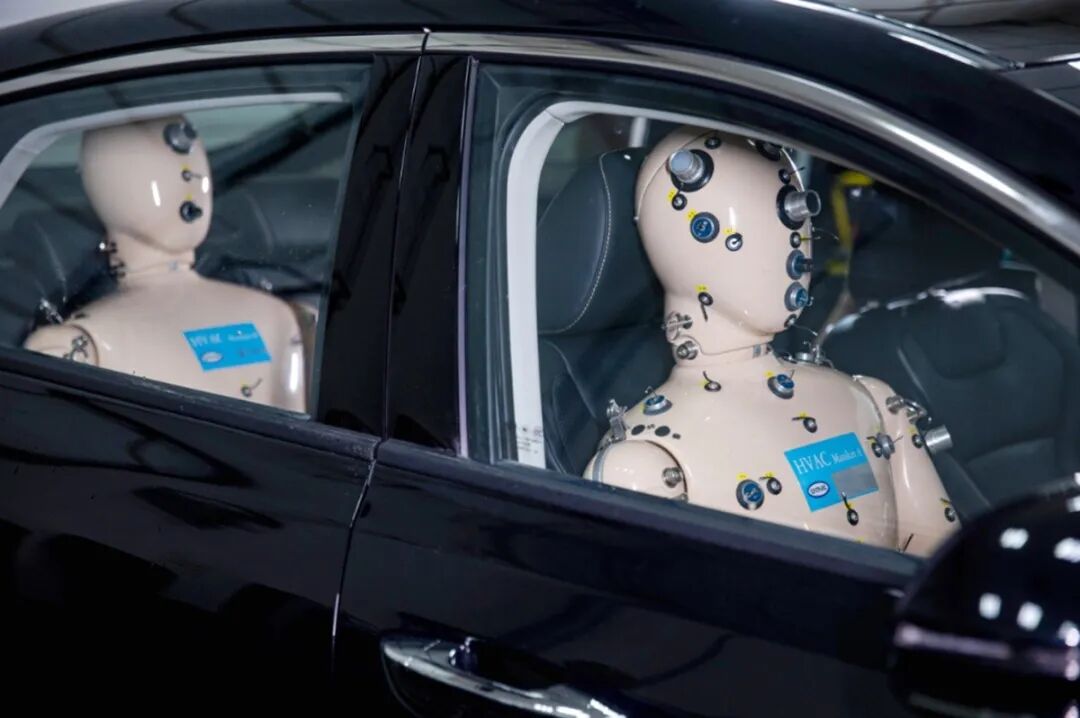
Figure: Let's emphasize again—simulation cannot replace real-world vehicle testing!
While some acceleration in new vehicle research is positive, driven by AI assistance, platform reuse, modular components, and concurrent engineering, other factors stem from internal "996" overwork cultures and even reckless shortcuts like slashing testing processes or replacing real-world road tests with simulations.
One direct consequence is the hasty integration of unverified features. For example, some power batteries should undergo 4,000 cycle validation tests, but certain enterprises halve this to expedite product launches, relying on simulations instead of real-world testing. The hazards are immense; we inhabit a physical world governed by fundamental laws. Risks from reduced prototype quantities, component testing, and road validation do not disappear but shift to users.
Another consequence is the current glut of new models outpacing buyer demand. According to MIIT new vehicle filing directories, 238 new models were updated in the first half of 2026 alone—roughly 1.3 new models per day.
Regulatory tightening began two months earlier.
In August, the MIIT and three other departments jointly issued a notice launching a year-long national campaign to enhance production consistency and quality in road motor vehicle products. The initiative focuses on four areas: production consistency, reliability, durability, and testing validation for new technologies. It cracks down on practices like "showcasing one version for inspection while mass-producing another," replacing real-world tests with simulations, and installing unproven new technologies. Inspections cover automakers, component suppliers, and testing agencies, with companies required to submit self-inspection and rectification reports by December 2026.
The October 10 draft notice from the four departments aims to block issues at the entry point.
The notice adds 51 technical parameters, such as steering wheel type and whether full hidden door handles are equipped, requiring firms to report these for access (market access) and production consistency management. It introduces four general and 21 specific requirements for over 20 innovative designs, including non-circular steering wheels and virtual controls. Power-absorbing doors must have anti-pinch functionality and manual opening capabilities when powered off. Zero-gravity seats, rotating seats, seats reclining into beds, and pop-up cabins are prohibited during driving. Folding and flexible displays are also banned.
Functions affecting driving safety, such as defrosting/demisting, headlights, wipers, and doors, cannot be voice-controlled by non-drivers while moving. Reliability testing must cover at least 30,000 kilometers, with environmental adaptability tests spanning at least one year and including two winters and one summer. Power battery cycle life and durability must be tested in reality, not based solely on supplier reports. Twenty-two recommended and industry standards are elevated to mandatory requirements.
The timeline is clear: starting January 1, 2027, new product filings involving innovative designs must include these technical parameters. Products already approved must supplement this data by July 1, 2027. Those failing to test adequately or providing false information will not be approved.
The China Association of Automobile Manufacturers subsequently issued a statement supporting these measures and called on the industry to abandon irrational innovation models that prioritize form over safety, integrate safety assessments throughout product innovation, address research and development validation gaps, and eliminate pseudo-innovations.
03 What Genuine Innovation Looks Like—and Lessons from Recent Years
Distinguishing genuine innovation from pseudo-innovation and assessing functional value does not require complex validation or reliance on brand rhetoric. Two real-world criteria suffice:
First, does the application of this function or technology reduce the system's overall risks and costs, or merely redistribute them among automakers, users, and third parties?
Second, does it have measurable, verifiable, and reproducible physical metrics, or does it rely solely on adjectives from product launches?
Applying these filters, consider integrated die-casting—a classic example of cost shifting. The saved labor hours and costs on the manufacturing side are real, as are the inflated repair bills. Total costs do not decrease; they merely change pockets. Genuine cost-reducing innovations behave differently: 800V high-voltage platforms and megawatt-level charging address charging time, efficient heat pumps mitigate winter range loss, and axial flux motors optimize cost structures through weight and material reductions. These all push down specific cost factors rather than offloading them onto others.
The key to the second criterion lies in "reproducibility"—a capability must be demonstrable by third parties under identical conditions, not just in the manufacturer's facilities or marketing narratives. AEB performance in challenging scenarios like two-wheelers cutting across, nighttime cone diversions, and stationary pedestrians at night yields consistent results regardless of the tester—that is reproducibility.
The value of the second criterion is best illustrated by the "Safety Requirements for Combined Driving Assistance Systems of Intelligent Connected Vehicles," released in June 2026 and effective January 1, 2027. As China's first mandatory national standard for L2 combined driving assistance, it essentially translates previously ambiguous capabilities into measurable, judicable, and accountable terms. The system must continuously monitor hand and eye contact with the steering wheel during activation, issue alerts upon disengagement, and disable the system for at least 30 minutes after multiple triggers. Navigation-type systems require a minimum of 72 hours of effective road testing, with additional night testing for night-activated features. Scenarios like construction zones, cardboard boxes, pedal-type two-wheelers, and rolled-over vehicles are derived from domestic traffic accident statistics, not arbitrary choices. Vehicle data recording is also mandated, enabling post-accident reconstruction of system behavior. Before this standard, automakers touted their driving assistance strengths arbitrarily; afterward, capabilities became quantifiable data.
Common to all retained features is their independence from external attention—they do not require pedestrians or following vehicles to alter behavior, nor do they externalize costs.
The first lesson from recent years is that gray areas are not moats. The absence of explicit prohibitions never equates to permission. GB 4785, a mandatory national standard, governs vehicle access, production, and sales. Provisions on ADS marker lights in the 2021 draft were deleted entirely. This revision's drafting team includes intelligent driving enterprises for the first time. Rather than scrambling for transition periods afterward, it is wiser to participate in standard-setting early.
The second lesson is that greater intelligence necessitates retaining non-electric, non-algorithmic, non-voice-dependent pathways. This thought process (thread of thought) recurs throughout the four departments' notice: mechanical and structural redundancies must remain for escape, braking, and steering functions. Mandatory mechanical redundancy for door handles, a return to physical controls for critical functions, and bans on voice-activated light shutdowns and gesture controls all share a common logic—they do not reject new technologies but deny single points of failure. A manual hard switch needs no recognition, cannot misactivate, and will not fail due to an OTA update. This represents an unbreachable safety baseline.
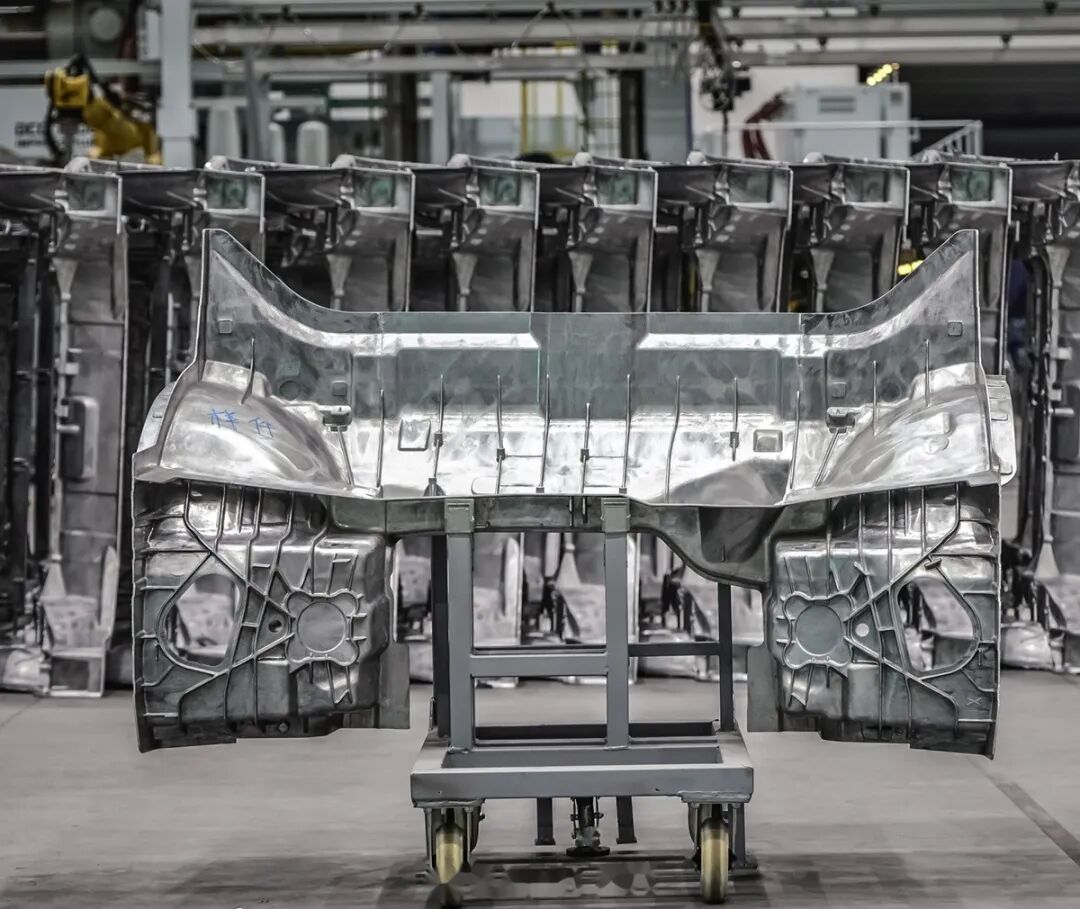
Some innovations, in essence, facilitate enterprises but inconspicuously create pitfalls for users. Yet, in the end, why are they still being touted by these enterprises?
The last point is that the cost of innovation should not be borne by users by default. In-car refrigerators are made standard equipment, yet they are only used 5% of the time. However, every car owner has paid for it and carried its weight. The production line cost savings from integrated die-casting are not reflected in the car price, but the bill for replacing the entire part during repairs falls fully on the car owner. Profits go to the enterprise, while risks are passed on to others. This is why such innovations ultimately end up on the ban list.
Finally, let's return to that lamp.
There is a widely quoted sentence in the discussion of the new regulations: this lamp should be a notice of responsibility, not a display of functionality. As long as the driving authority remains in the hands of the driver at the L2 stage, no signal should be sent to the outside world implying that the car will yield on its own. The ADS indicator light is restricted to L3 and above vehicles, essentially using a lamp to clarify responsibilities. When the light is on, the responsible party has shifted from humans to the system.
Traffic has always been a public language. Traffic lights, turn signals, and brake lights work because they are unique and unambiguous, allowing anyone with basic social awareness to easily understand them. The restrictions on light language, text projections, and expression lights, the prohibition of mixing turn signals with brake and rear fog lights, and the requirement for overall adjustment of variable light intensity all serve the same purpose: as cars become smarter, they must reduce the information entropy they emit rather than increase the reading burden on others.
The biggest illusion of the past two years is our tendency to mistake what is discussed and hyped as what is truly needed. The little blue light topped the trending list, and hidden door handles became a visual symbol of new energy vehicles, yet neither truly solved user problems. The consumer sentiment of 'I may not use it, but you can't not have it' does not contradict the 5% actual usage rate of in-car refrigerators. The issue lies in the fact that after demand stratification, automakers respond with a one-size-fits-all standard logic, making everyone pay a premium for a few scenarios.
From the door handle standard GB 48001—2026, to the combined driving assistance standard GB 47955—2026, to the autonomous driving standard GB44721—2026, and then to the first batch of L3 vehicle access and the four-department innovation design notice, regulatory actions this year have been dense (intensive) and coherent. The signal conveyed by these new regulations is not complex: standards are not the enemy of innovation; they are the grammar that makes innovation understandable to strangers.
The next pseudo-innovation to be eliminated will most likely follow the same old pattern: applauded at product launches but distracting, costly, and consequence-laden on real roads.
But just as 'a dog biting a man' is never news, truly impactful innovations that quickly gain popularity usually do not make the trending lists.
Editor-in-Chief: Yang Jing Editor: He Zengrong

THE END

 < PAST · Past Reviews >
If cars are so hard to sell, why not lower the prices?
What?! The bumper is no longer safe!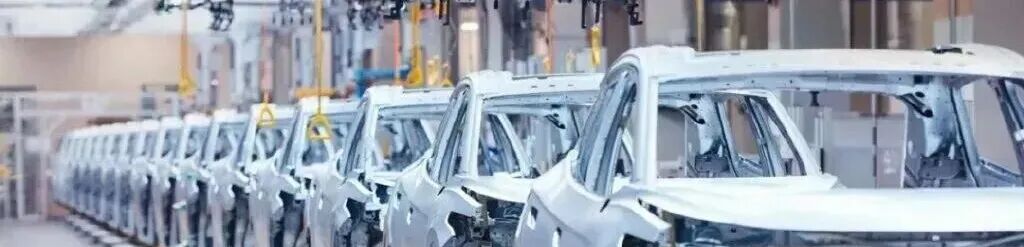
Who would dare to buy the technology of new car-making forces?


-
Is the Turning Point Here for AI Companies' Financing? Even Big Players Now Face 10% Interest Rates
-
![]()
Will the 2026 Auto Market See New Champions Emerge?
-
![]()
Caught Between Policies and Competition: Is Ascend the Future for Chinese Models?
-
![]()
Reviving Classic Designs: European Automakers' Nostalgic Gambit Amidst Chinese Competition
-
![]()
"Little Blue Light" Steps Out of the "Lockdown Room"!
-
![]()
Struggling in the Domestic Market? The Future Lies in Global Expansion—The 'Second Half' of China's New Energy Vehicle Industry
-
How Solid Is the Turning Point for Commercial Spaceflight?
-
![]()
Labor Pains! Li Auto Slashes 3,970 Jobs, Reports Massive Annual Loss of 4 Billion Yuan