Is the Turning Point Here for AI Companies' Financing? Even Big Players Now Face 10% Interest Rates
 10/21 2026
 428
An AI behemoth, fresh from reporting quarterly revenue of $16.8 billion and posting adjusted profits for two consecutive quarters, found itself paying a 10% coupon rate to secure financing.
The oddity of this scenario doesn't lie in the figures themselves but in the timing: just four months prior, the same company's subordinated debt tranche was priced at 8.5%. Anthropic is no fledgling startup lacking a compelling narrative.
Its revenue surged by 45% quarter-over-quarter in Q3 2026, and its post-money valuation from a private funding round in May stood at a staggering $965 billion. The widespread adoption of Claude in the enterprise sector has been repeatedly cited as proof of genuine demand.
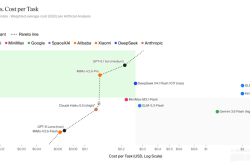
Yet, it is precisely this company that, according to the Financial Times, offered Blackstone (BX.N) an annual coupon rate exceeding 10% in a project codenamed "Polaris," all to secure approximately 1.5 gigawatts of Google (GOOGL.O) TPU computing power.
In contrast to the benchmark yield of around 7% for the ICE BofA BB-rated high-yield bond index, Anthropic's borrowing costs are more than 300 basis points higher.
A BB+-rated borrower is now paying a premium far beyond its peers, despite having just demonstrated its profit-generating capabilities. This premium of over 300 basis points warrants closer scrutiny.
01. Profitability and Credit: A Gap Filled by the Entire Balance Sheet
Anthropic's BB+ rating comes from KBRA, rather than Moody's, S&P, or Fitch. The three major agencies have yet to issue formal ratings, but the BB+ grade already tells a story: it's speculative grade, commonly known as "junk," just one notch below investment grade.
Rating agencies face a unique assessment challenge—as of the end of June 2026, Anthropic had no debt on its balance sheet, with computing power expansion primarily funded through equity financing and off-balance-sheet leasing arrangements.
The information available to KBRA was also limited: revenue, adjusted operating revenue, annualized operating revenue for Q1 2026, and internal performance forecasts for Q2, excluding free cash flow and EBITDA.
Analysts were left to make their own estimates and ultimately relied on a "risk score" to replace a complete financial model—essentially pricing an unprecedented capital structure.
The more critical figures lie ahead: Anthropic anticipates investing over $500 billion in computing resources and infrastructure over the next decade. Given the current financing pace, a substantial portion of this will need to be covered by debt and off-balance-sheet leasing.
When a company transitions from zero debt to hundreds of billions in leverage, the rating logic shifts from "can you repay now" to "can you afford these debts in the future."
The BB+ rating doesn't evaluate today's Anthropic; it evaluates tomorrow's Anthropic, the one that has borrowed half a trillion dollars. This explains why "adjusted profitability" didn't translate into cheaper funding.
Adjusted metrics exclude non-cash items like stock-based compensation, but debt must be repaid with real cash.
In 2025, Anthropic reported an operating loss of $8.06 billion and spent $7.33 billion on computing power and infrastructure. It ended the year with $20.28 billion in cash and short-term investments, while long-term computing power purchase commitments reached $518 billion.
By Q3 of this year, the company's free cash flow had turned positive, and its adjusted gross margin was 85%—cash flow in the quarter was no longer an issue, but the scale of commitments was: $518 billion in purchase obligations versus annualized revenue of about $67 billion based on Q3 figures.
The time lag between profit signals and cash obligations is precisely what the 10% coupon rate attempts to bridge.
02. 10%: More Than Just a Credit Price—It's an "Entry Fee"
The structure of this $60 billion financing deal is itself a lesson in risk pricing. About $42 billion in senior debt is guaranteed by Broadcom (AVGO.O) for residual value—if Anthropic defaults and chip disposal proceeds are insufficient, Broadcom will cover the shortfall. Referring to a similar tranche in the June round, the interest rate was about 5.75% (this round's pricing has not been disclosed).
The remaining $18 billion in subordinated debt lacks this protection. Blackstone's funds plan to subscribe to $9 billion of it, with a 10% coupon rate, and the actual yield is higher after accounting for issuance discounts.
For the same batch of chips and the same leasing cash flow, the spread between secured and unsecured debt has widened from 275 basis points in June to over 400 basis points. The market doesn't distrust Anthropic; it merely distinguishes precisely between "secured computing power" and "bare credit."
The deal is still under negotiation and has not yet closed. Blackstone declined to comment, and Anthropic did not respond to requests for comment. The broader context is that the supply of AI debt is overwhelming demand.
Goldman Sachs statistics show that credit spreads for AI-related high-yield bonds have widened to over 350 basis points, with spreads for debt specifically for data center construction exceeding 400 basis points, while spreads for non-AI BB/B-rated debt remain around 250 basis points.
According to Shenwan Hongyuan, AI-related U.S. dollar debt financing reached $308.1 billion in the first seven months of 2026, 1.65 times the total for 2025. However, the bid-to-cover ratio for new bonds from leading AI companies plummeted from 4.66 times in February to 1.61 times in July.
Money is still being lent, but lenders are starting to set conditions. The entry of private credit has changed the game's pace.
Apollo (APO.N) and Blackstone finalized a $35 billion "Big Sky" chip financing in June 2026, and four months later, the scale of "Polaris" expanded to $60 billion, with the cost of the subordinated tranche rising from 8.5% to 10%.
Blackstone is willing to accept this price for its own reasons: if Anthropic achieves investment-grade rating after going public, the valuation and liquidity of existing subordinated debt will be revalued, and the 10% coupon locks in a stake with a built-in call option.
But this premise is now loosening—according to a Reuters report on October 15, the IPO valuation discussed by investors at the October 14 investor day has fallen from about $2 trillion to about $1.5 trillion.
On the other hand, as private credit becomes the marginal pricer of AI infrastructure, comparable yields in the public market lose their anchoring significance.
10% is not the price Anthropic "should" pay; it is the price it "has to" pay under specific timing and structure.
03. When Even the Most Financially Sound Companies Start Paying a Premium to Borrow
Anthropic's situation warrants serious attention precisely because it is not the most vulnerable player in the industry.
It has revenue, customers, adjusted profits, and financing channels that Blackstone and Apollo are vying to enter. If even it has to offer a 10% coupon rate for subordinated debt, AI infrastructure borrowers without $16.8 billion in quarterly revenue, without consecutive profitable quarters, and without Broadcom's guarantee will face an even steeper financing curve.
Among the 20 junk-rated AI data center bonds tracked by Goldman Sachs, seven rely on a single tenant, CoreWeave, for repayment, while CoreWeave's own bond yields have surged to around 15%, falling into the distressed debt range.
This does not mean the AI infrastructure debt chain will snap tomorrow. In Q1 this year, the operating cash flow coverage ratio for the top five cloud providers was still 1.06 times their capital expenditures, and their combined cash balances reached $201.8 billion at the end of Q2, with limited short-term debt repayment pressure.
But the safety cushion is narrowing, while supply keeps surging—Goldman Sachs fixed-income credit trader Jeffrey Papay expects bond issuance by hyperscale cloud providers and chip firms to rise by about 40% in 2027 compared to 2026, reaching about $340 billion—he noted this is an extrapolation based on current trends, not a Goldman Sachs official forecast.
The emergence of the 10% coupon rate now serves as an early signal: the market is repackaging AI credit from a "narrative premium" framework back into a "risk premium" one, and the repricing has only just begun.
Four months ago, it was 8.5%; four months later, it is 10%. With this 150-basis-point change, Anthropic has marked a more concrete coordinate than any bubble debate: when computing power expansion outpaces cash flow generation, even a "profitable" leading AI company needs to pay real cash in interest to buy time to stay at the table.
Whether time can buy space, no one knows. But the 10% coupon rate at least honestly says: the market is no longer willing to give that answer away for free.
- End -
-
Is the Turning Point Here for AI Companies' Financing? Even Big Players Now Face 10% Interest Rates
-
![]()
Will the 2026 Auto Market See New Champions Emerge?
-
![]()
Caught Between Policies and Competition: Is Ascend the Future for Chinese Models?
-
![]()
Reviving Classic Designs: European Automakers' Nostalgic Gambit Amidst Chinese Competition
-
![]()
"Little Blue Light" Steps Out of the "Lockdown Room"!
-
![]()
Struggling in the Domestic Market? The Future Lies in Global Expansion—The 'Second Half' of China's New Energy Vehicle Industry
-
How Solid Is the Turning Point for Commercial Spaceflight?
-
![]()
Labor Pains! Li Auto Slashes 3,970 Jobs, Reports Massive Annual Loss of 4 Billion Yuan