Will the 2026 Auto Market See New Champions Emerge?
 10/21 2026
 554
Those who once believed that new energy vehicles (NEVs) would completely replace gasoline-powered cars are now having their assumptions challenged by market realities.
As the first nine months of 2026 have elapsed, and with fewer than 80 days remaining in the year, the overall automotive market landscape and its key trends are becoming clear, though the final standings in terms of sales leaders across various segments remain to be determined.
However, a closer look at the big data reveals the emergence of new, contrasting market segments. Recent developments, particularly from Chinese brands such as Geely and Great Wall, have seen a flurry of new HEV (Hybrid Electric Vehicle) models being launched.
All indicators point to one conclusion: after several years of rapid development, the Chinese auto market is poised to form a new structure that exceeds previous expectations. This includes reevaluating the notion that gasoline cars will disappear, recognizing that the decline in PHEV (Plug-in Hybrid Electric Vehicle) sales may not be solely attributable to the rise of BEVs (Battery Electric Vehicles), and acknowledging that REVs (Range-Extended Electric Vehicles) may become the smallest segment, reverting to a transitional technology.
By delving into the data on these topics, we can uncover many fresh insights.
Are All Segments Declining, Except for HEVs, Which Are Rebounding?
There exists a discrepancy between the current market status and public perception.
Consumer perceptions, influenced by recent shifts in automotive consumption policies and public discourse, generally hold that:
In 2026, BEVs will dominate the market, followed by PHEVs, then REVs, with gasoline cars languishing at the bottom of the disdain chain.
However, actual market data suggests that this perception is not entirely accurate.
According to data released by the China Passenger Car Association for the period from January to September, HEVs have been the only segment in China to experience positive growth.
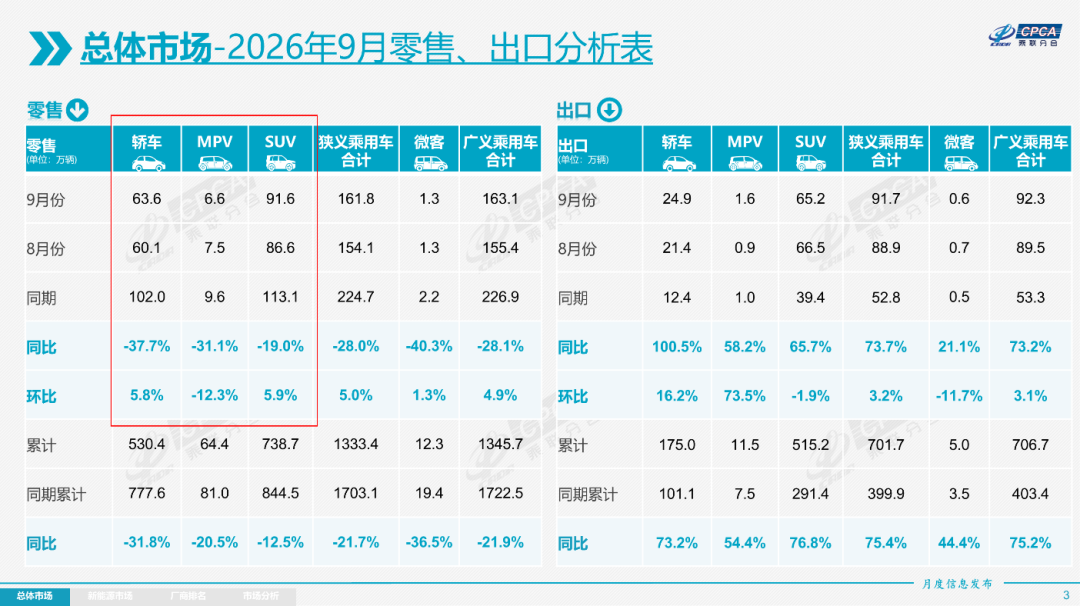
In September retail sales, sedans accounted for 636,000 units, down 37.7% year-on-year, MPVs for 66,000 units, down 31.1%, and SUVs for 916,000 units, down 19%. Narrow passenger vehicles totaled 1.618 million units, down 28% year-on-year.
When examining different energy technology forms, retail sales of gasoline cars fell 43% year-on-year, with pure gasoline cars dropping 49%, domestic brands decreasing 47%, mainstream joint ventures declining 42%, and luxury brands falling 41%.
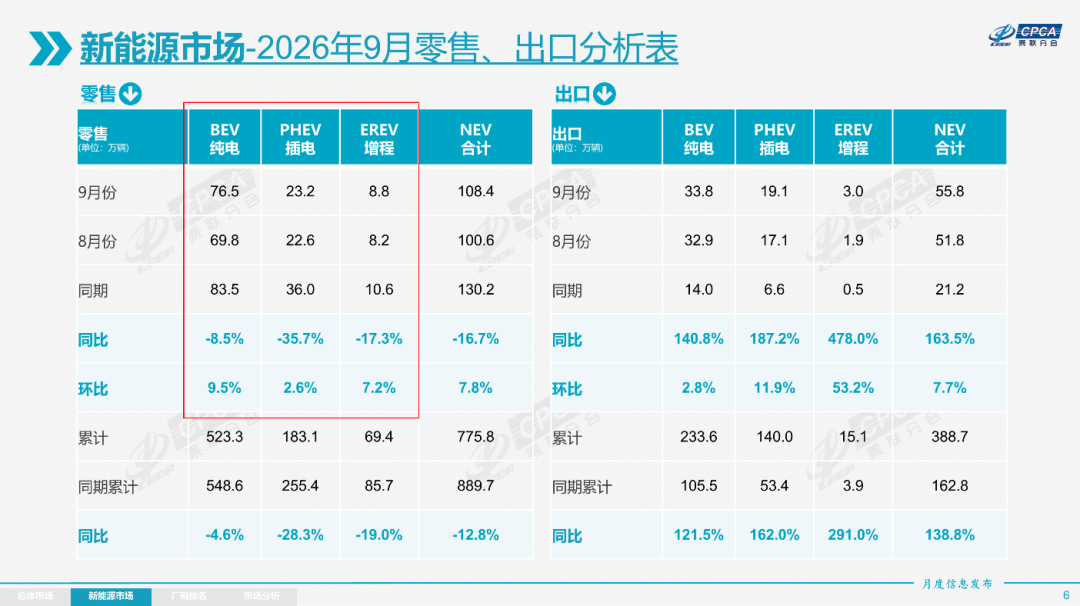
BEV retail sales in September were 765,000 units, the highest among all NEVs, but still down 8.5% year-on-year, with a cumulative decline of 4.6% for the period from January to September. This represents the best performance among NEVs. PHEV sales were 232,000 units in September, down 35.7%, with a cumulative decline of 28.3% for the first nine months. REV retail sales were 88,000 units in September, down 17.3%, with a cumulative decline of 19% for the period from January to September.
In short, PHEVs have plummeted, REVs are declining, and BEVs are slightly down.
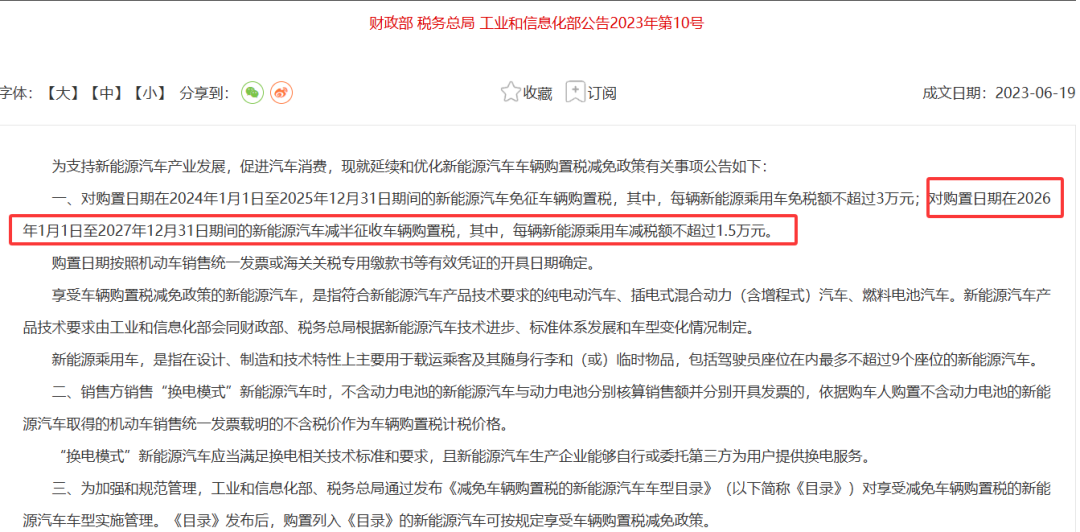
Undoubtedly, this is related to several recent changes. Firstly, NEVs have transitioned from being exempt from purchase taxes to having them halved. Higher requirements for pure electric range and lower requirements for fuel consumption when the battery is depleted have led to price increases for some models. Secondly, oil prices have fluctuated significantly in 2026. Thirdly, as charging infrastructure becomes more convenient, PHEVs are at a disadvantage in terms of range compared to REVs and BEVs.

The decline in BEV sales is notably influenced by the near-saturation of demand for pure electric A00-class vehicles priced under 50,000 yuan. The Wuling Hongguang MINIEV, which once consistently exceeded 50,000 monthly sales, now sells fewer than 20,000 units per month.
When we examine NEV performance and then look at HEVs, the contrast is striking.
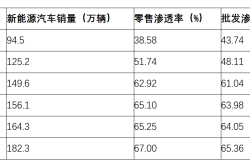
In September, sales of conventional hybrid vehicles increased by 25% year-on-year and 19% month-on-month. Wholesale sales data is even more remarkable, with 125,000 conventional hybrid passenger vehicles wholesale in September alone, up 51% year-on-year. FAW Toyota sold over 40,000 units, GAC Toyota over 30,000, Geely over 16,000, Great Wall over 3,700, and Changan over 3,100.
Furthermore, if we examine monthly wholesale sales from January to September, there were three months where sales exceeded 100,000 units: 102,000 in March, 102,000 in June, 107,000 in August, and 125,000 in September. By the numbers, HEVs have already surpassed REVs and even absorbed many users from PHEVs.
Of course, wholesale sales represent the number of vehicles delivered to 4S dealerships by automakers, which differs from retail sales data. However, in 2026, the HEV market, once dominated solely by Toyota and Honda, has become bustling with the entry of Changan, Geely, SAIC, Great Wall, and other automakers launching new models.
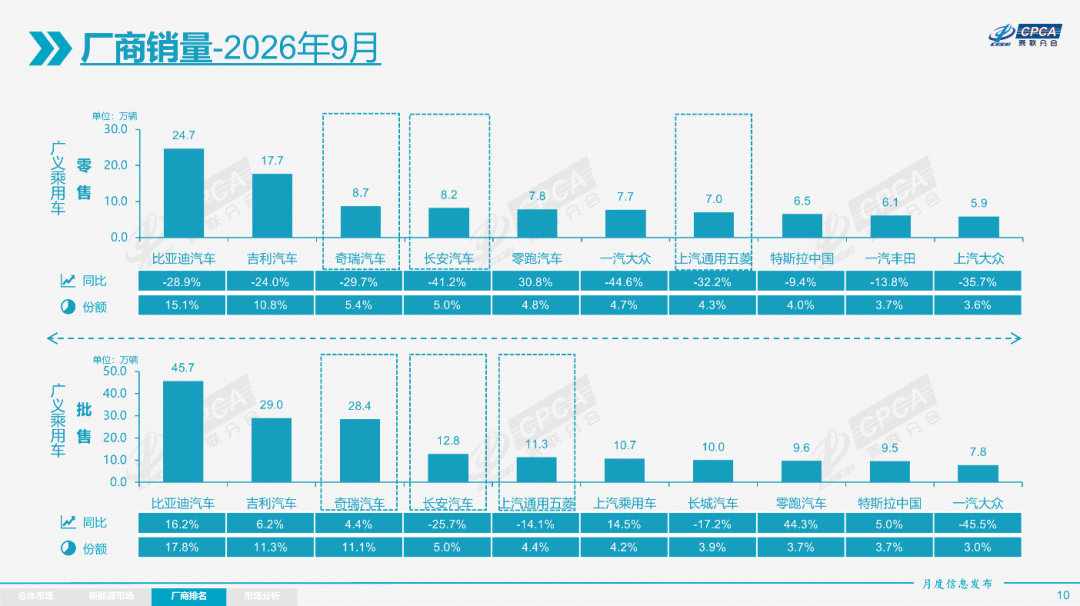
However, beyond this, we must also observe changes and trends in other market segments. By vehicle type, the ranking is SUVs > sedans > MPVs. The MPV market, expected to grow significantly since 2016, has still not materialized after a decade.
In September, SUV sales were 916,000 units, down 19% year-on-year, sedan sales were 636,000 units, down 37.7%, and MPV sales were 66,000 units, down 31.1%, and the only segment with negative month-on-month growth at -12.3%.
For the first nine months, cumulative sales were 8.445 million units for SUVs, 7.776 million for sedans, and 644,000 for MPVs.
How Much More Can They Grow? Will There Be Winners in the HEV Segment?
The growth potential for HEVs is expected to be limited domestically, with greater potential overseas.
In the first half of this year, there was a surge in Chinese brands advancing HEV technology.
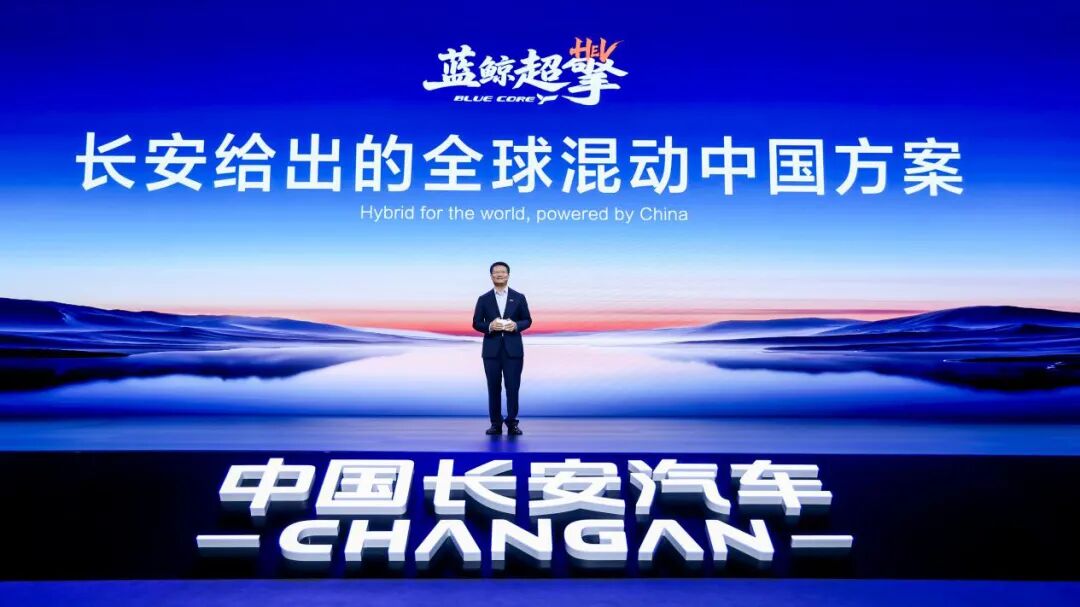
Changan launched its Blue Whale Super Hybrid on March 30, followed by Geely, Chery, and GAC holding press conferences. Great Wall Motors did not hold a brand-level technology launch, but its Ora 5 model has already released much information.
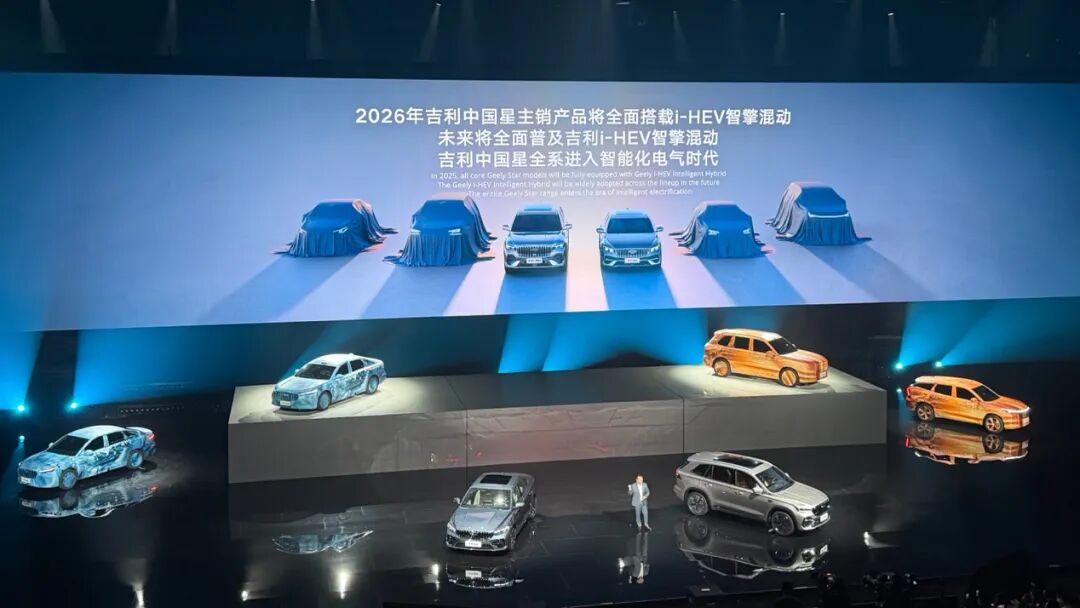
Thus, in the first half of the year, the technology was thoroughly analyzed. There is a general direction but two distinct schools of thought. One direction benefits from the growth of China's NEV technology, allowing it to bypass many of Japanese automakers' hybrid patents. Instead of traditional hybrids with engines as the primary power source and batteries as secondary, they focus on PHEV-like versions.
The two schools refer to large-battery and small-battery approaches.
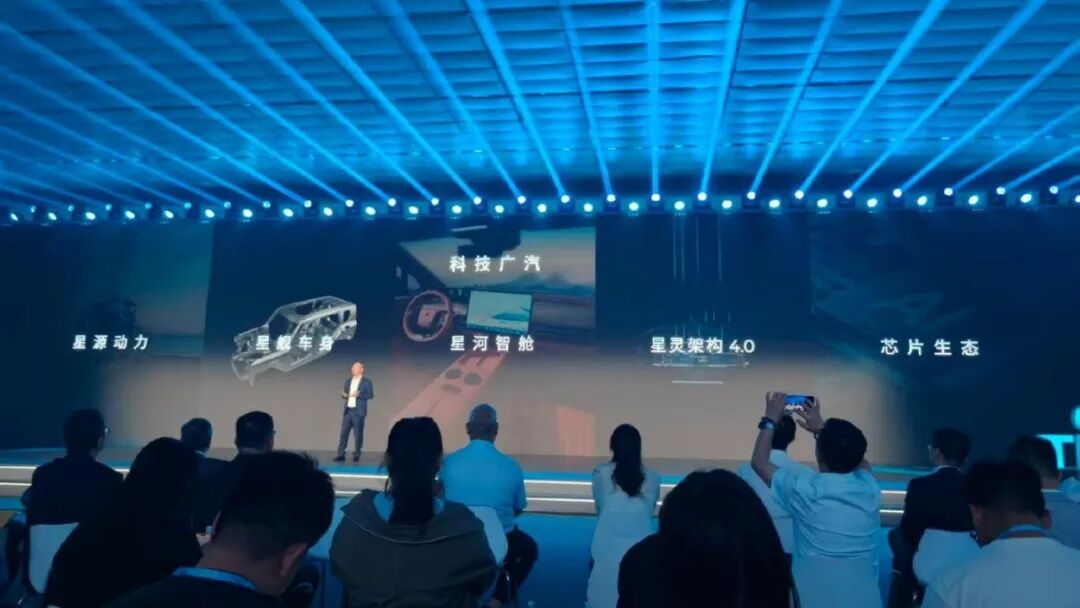
Geely, Changan, and Great Wall mostly use small batteries with capacities under 2kWh, while GAC and Chery predominantly use large batteries with capacities over 5kWh. There is no significant difference in performance, with all currently launched models achieving under 5L/100km in real-world tests, 20% lower than Toyota and Honda's original figures.

The difference lies in that larger battery capacities enable better energy distribution logic, supporting features like intelligent driving assistance, smart cockpits, and even considerations for intelligent chassis systems in the future. A larger battery capacity requires greater redundancy in engine and energy management.
In simpler terms, a large battery provides a safety net, making it easier to supply power to a vehicle's intelligent technologies. This frees the powertrain from the need for highly precise control, balancing accurate power supply with precise control to reduce fuel consumption.
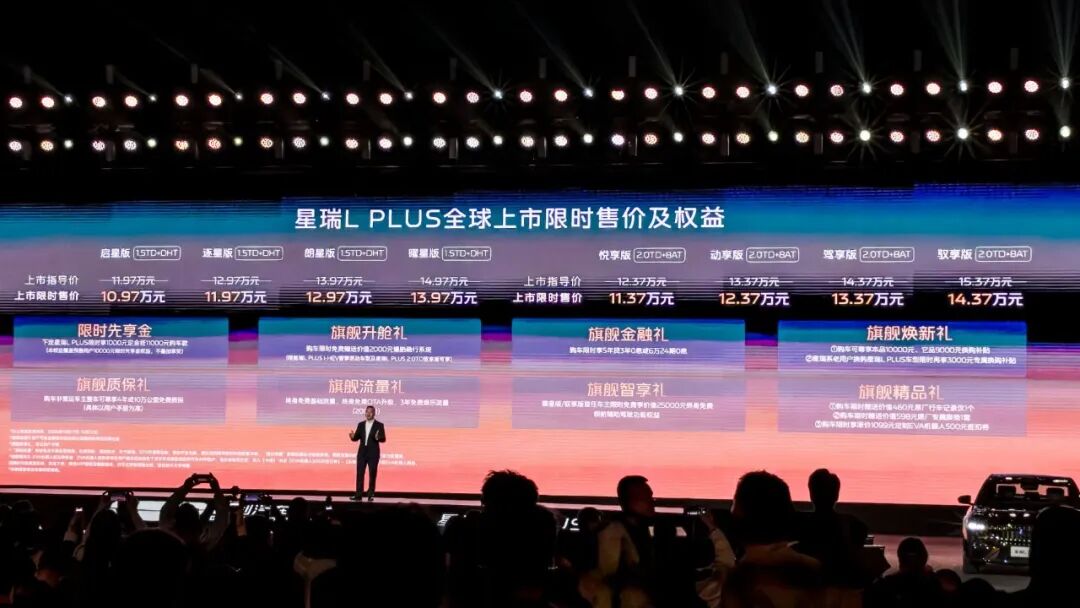
Of course, this is not absolute. For example, the newly launched Geely Xingrui L PLUS and the upcoming Xingyue L PLUS have small battery capacities but still offer LiDAR and advanced intelligent features, relying on powerful engines and AI for precise management.
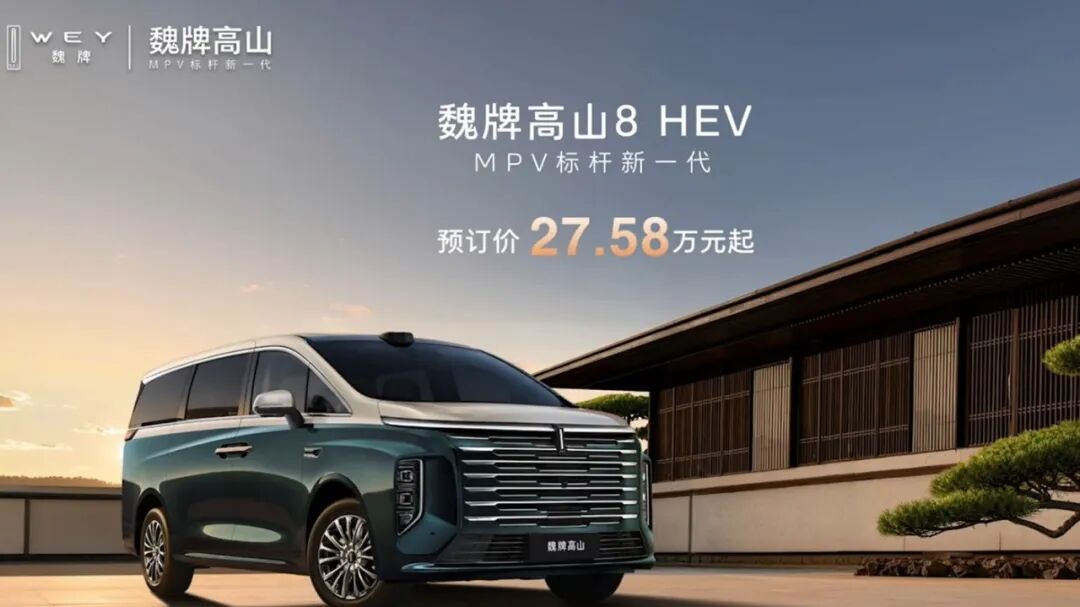
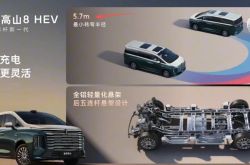
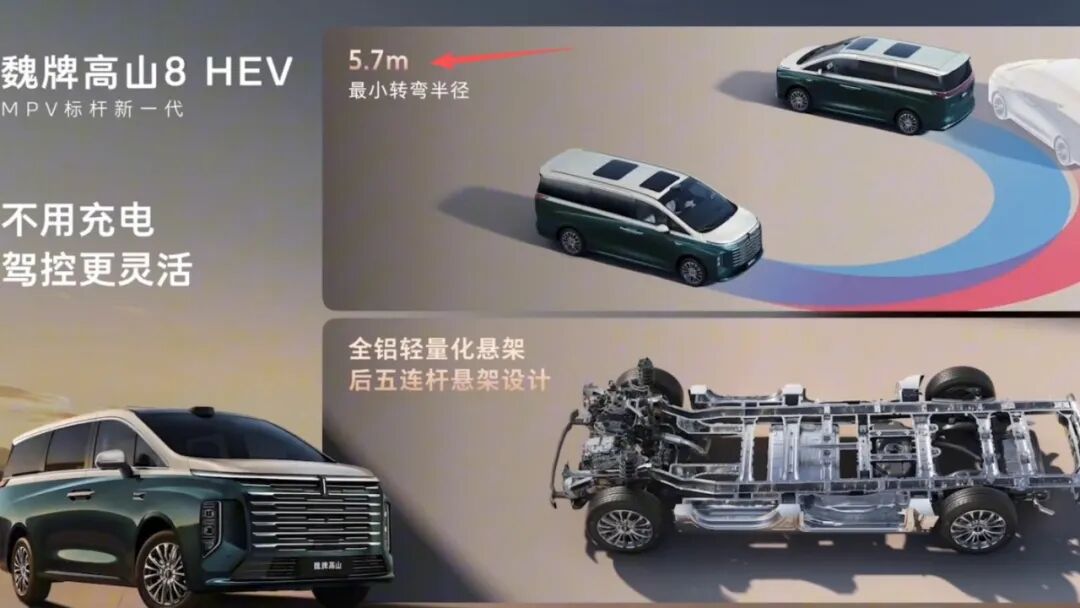
Additionally, the recently pre-sold Great Wall Wey Gaoshan 8 HEV, with a battery capacity under 5kWh, resolves energy distribution through a 2.0T hybrid engine.
So, if the technological differences are not significant, where do the disparities lie?
They lie in the richness of the product lineup and the speed of its rollout, as well as in pricing rationality, which reflects the automakers' technological reserves and true engineering capabilities.
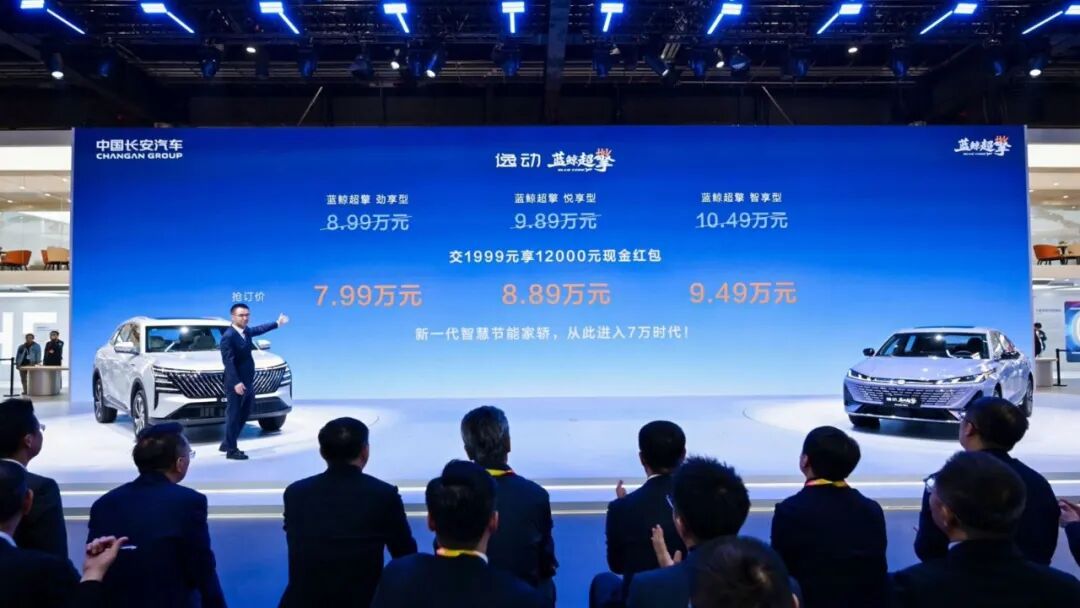
First, consider vehicle pricing. Changan's CS55PLUS hybrid version is priced only 6,000-8,000 yuan more than the original 1.5T model, the CS75PLUS hybrid is about 5,000 yuan more, and the Eado hybrid is surprisingly priced the same as the 1.5T model.
Compared to Changan, Geely is even more aggressive, pricing the Xingrui L PLUS 4,000 yuan cheaper than the 2.0T model.
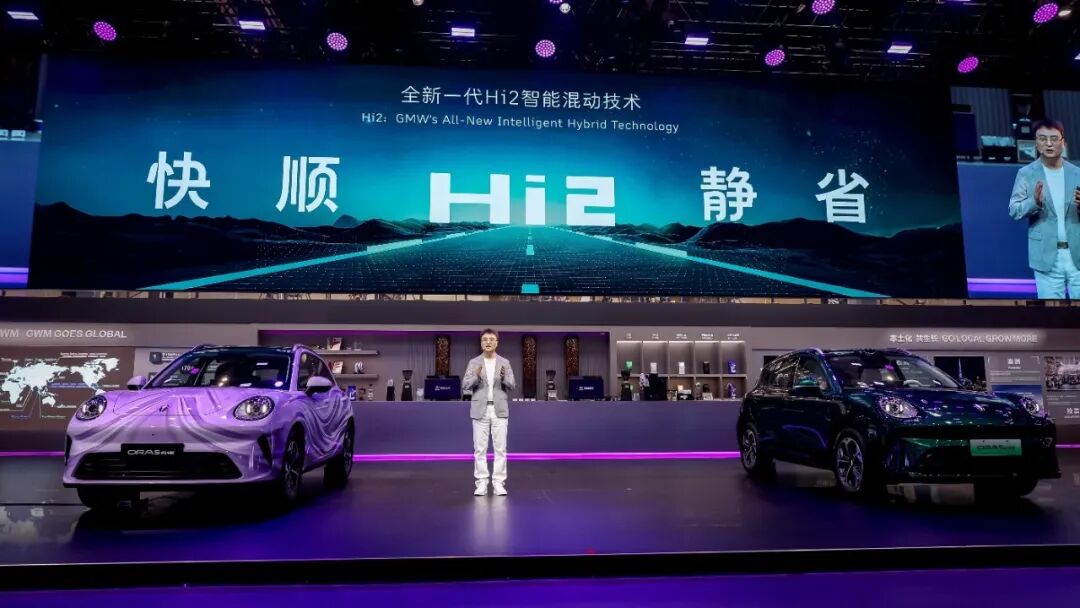
In contrast, Great Wall and GAC Trumpchi do not pursue extreme cost-effectiveness in their pricing. The Trumpchi M8 HEV starts at 219,800 yuan, 30,000 yuan more than the 2.0T model. The Ora 5GT HEV is priced at 109,800 yuan, 10,000 yuan more than the 1.5T model. The recently pre-sold Gaoshan 8 HEV version is priced at 275,800 yuan, expected to be 30,000-40,000 yuan cheaper than the PHEV version.
Next, consider the speed of the model lineup rollout. Currently, Geely is the fastest, followed by Changan, with Great Wall close behind, Trumpchi accelerating, and Chery following.
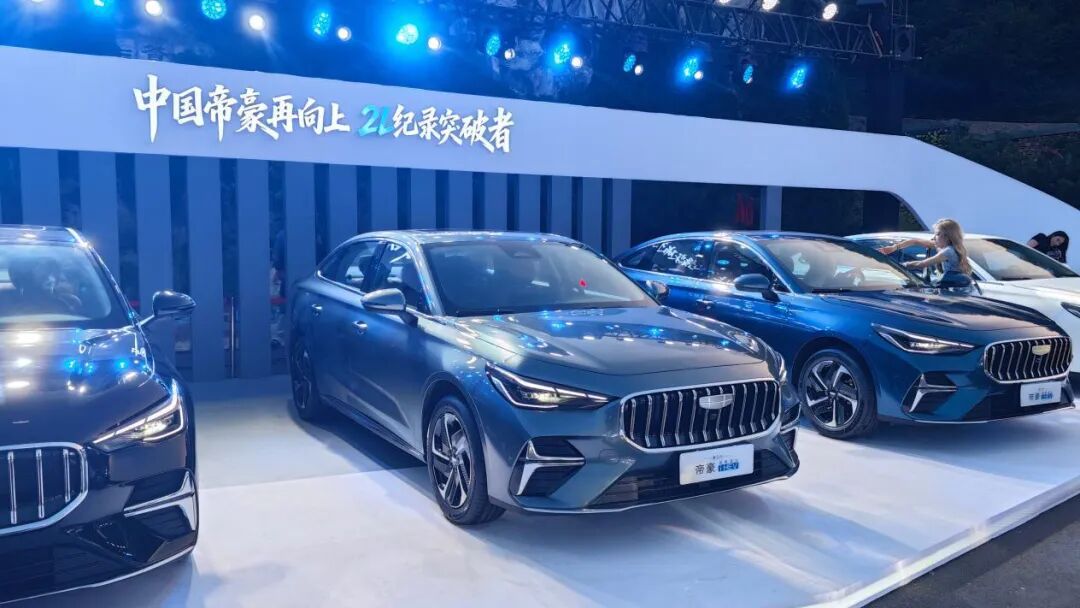
Geely currently offers the Xingyue L Hybrid, Boyue L Hybrid, Xingrui L PLUS, and Dihao, completing its layout in the 90,000-150,000 yuan range.
Changan offers the Eado Hybrid, CS55PLUS Hybrid, and CS75PLUS Hybrid, completing its layout in the 90,000-140,000 yuan range.
Thus, it appears that Geely and Changan are well-positioned to gain a first-mover advantage, quickly establishing market recognition and securing their sales base. However, this does not necessarily determine the competitive outcome, as the overseas market capacity is enormous, allowing for success on both fronts or even dominance overseas.
In Conclusion
Finally, considering whether the market can continue to grow, there seems to be little doubt.
From January to August this year, according to ACEA data for the EU market, conventional hybrid sales were approximately 2.7597 million units, accounting for 36.6% of the market share, making it the single largest powertrain category, with an approximately 11% increase year-on-year compared to 2025.
Based on current policies, the projection is that HEVs may stabilize at an 8-15% market share in the next 3-5 years, as policies and infrastructure support a BEV-dominated, HEV-assisted landscape, with REVs and PHEVs reverting to niche technologies.
From the perspective of the EU, HEV is expected to decline, possibly reaching a low of around 25%, ceding about 10% of its market share, while the share of BEVs (Battery Electric Vehicles) may grow to 40% or even 50%. This is also
-
Is the Turning Point Here for AI Companies' Financing? Even Big Players Now Face 10% Interest Rates
-
![]()
Will the 2026 Auto Market See New Champions Emerge?
-
![]()
Caught Between Policies and Competition: Is Ascend the Future for Chinese Models?
-
![]()
Reviving Classic Designs: European Automakers' Nostalgic Gambit Amidst Chinese Competition
-
![]()
"Little Blue Light" Steps Out of the "Lockdown Room"!
-
![]()
Struggling in the Domestic Market? The Future Lies in Global Expansion—The 'Second Half' of China's New Energy Vehicle Industry
-
How Solid Is the Turning Point for Commercial Spaceflight?
-
![]()
Labor Pains! Li Auto Slashes 3,970 Jobs, Reports Massive Annual Loss of 4 Billion Yuan