Huawei's AI Phone Has Arrived!
 11/18 2026
 365
On November 17, Huawei's independent sub-brand OSTA Xingmang announced that its first product, the OSTA O1 Pro, is now open for pre-order. Marketed as a "HarmonyOS AI phone," the device features a wide bar form factor and comes with the exclusive AI companion "Xiao Xingmang." It will be officially released on November 20.
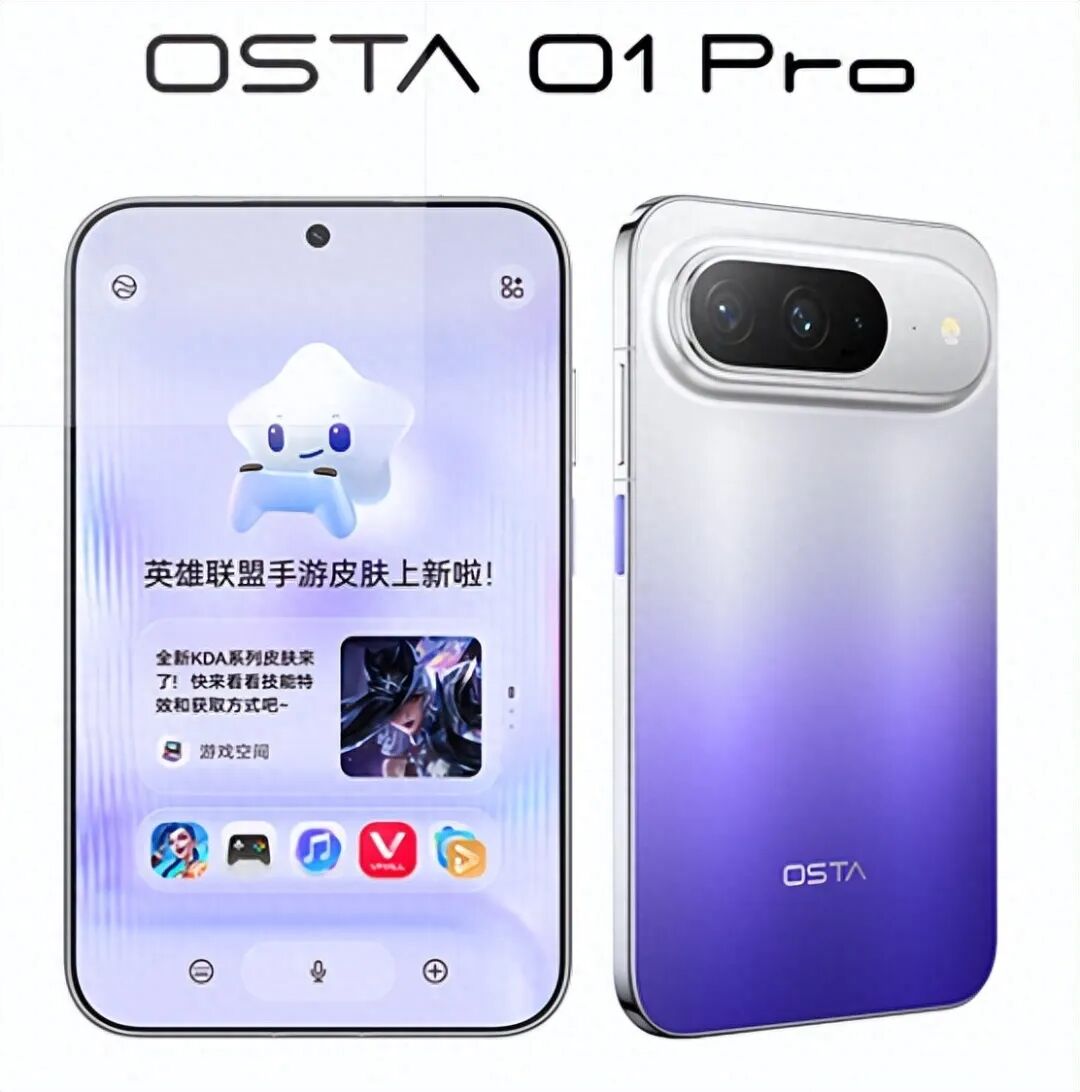
Yu Chengdong described the device as "exploring more new AI possibilities."
After ByteDance's and Nubia's AI phones stumbled due to resistance from the app ecosystem, Huawei is entering the same arena through a sub-brand. One core variable remains: whether HarmonyOS's system-level authority can push AI phones from "able to demonstrate" to "ready for daily use."
I. Crossing the River by Feeling ByteDance's Stones
In September 2026, the Nubia NaviX Ultra, equipped with the Doubao phone assistant, went on sale, generating first-day revenue that "broke 100 million in one second"—equivalent to roughly 17,000 units by sales value.
ByteDance's AI Agent approach has the assistant simulate a real person clicking on the screen and executing tasks across apps. This holds up in product logic, but in business logic it directly touches a sensitive nerve for app companies regarding traffic entry points and data sovereignty.
On October 14, the public notice period for the Doubao phone assistant's "Screen Automation Operation Statement and Agreement" ended. A total of 151 apps explicitly refused its GUI screen automation operations. The list covers WeChat, Alipay, Taobao, Meituan, major banking apps, and almost completely blocks all core scenarios of "getting things done with one sentence."
Market enthusiasm failed to translate into usability.
Nubia President Ni Fei called ecosystem co-building "the hardest hurdle."
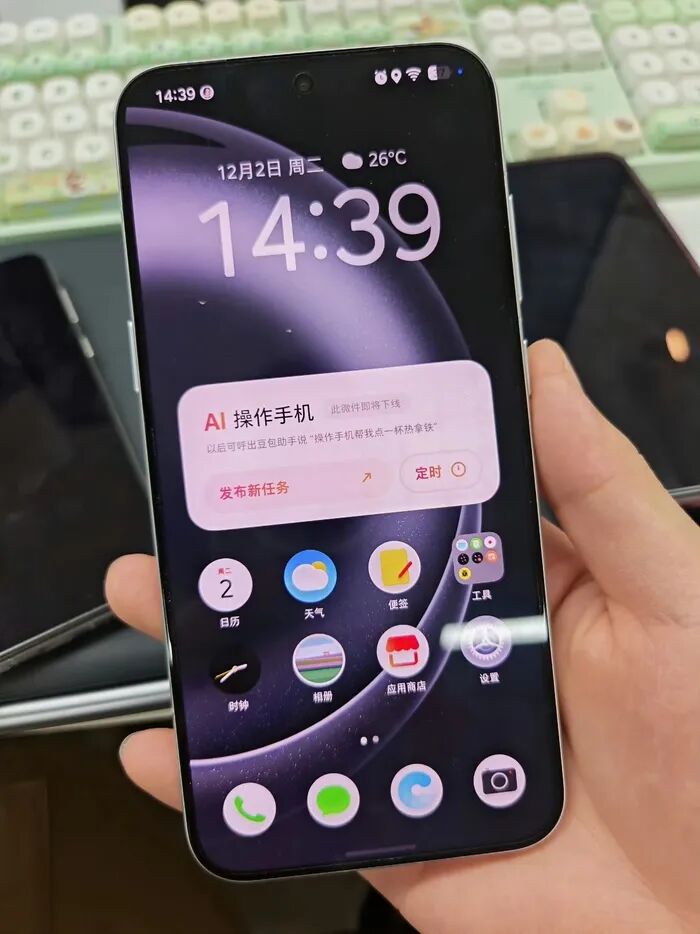
Huawei's trump card is very different.
HarmonyOS 7 has evolved toward an Agent architecture. The system-level intelligent agent Xiaoyi runs locally and can directly invoke underlying permissions. It has opened more than 20 AI subsystem capabilities and GUI control permissions. More than 10,000 apps have integrated HarmonyOS AI capabilities, with 3.68 billion daily calls.
This means Huawei does not need to beg apps for operation permissions as an "outsider"; it is itself the rule-maker.
However, a gap remains between "the system can schedule" and "apps are willing to be scheduled." Whether apps within the HarmonyOS ecosystem cooperate and whether super apps outside the ecosystem buy in are questions the OSTA O1 Pro must answer.
II. The Missing Killer App
AI phones have also had a bumpy journey overseas.
Humane AI Pin raised $230 million. After launching in 2024, actual sales were less than 10,000 units, and a large number of devices were returned. In February 2025, it was sold to HP for $116 million, and the standalone product line was terminated.
Rabbit R1 was priced at $199 and exceeded 100,000 pre-orders, but after reviews went poorly, it fell into return and funding pressure. It ultimately barely found a foothold by transforming into a cross-app voice Agent.
The common mistake of these two products was that they tried to use an immature AI terminal to replace the phone rather than enhance it.
Meta Ray-Ban smart glasses took another path: they did not claim to replace the phone, but provided photography, audio, and lightweight AI interaction as an accessory. Sales exceeded 2 million units.
Signals from overseas markets show that AI capability alone is not enough to support a new hardware category; it must piggyback on users' existing high-frequency devices.
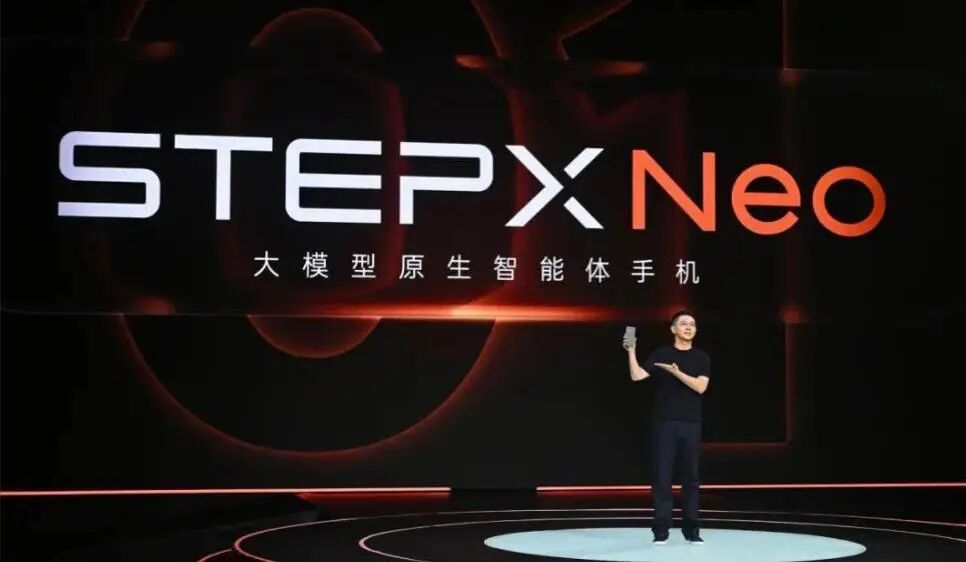
The direction of AI phones is more pragmatic than that of AI Pin, but the "missing killer app" is still an industry-recognized reality. GenAI features have become standard on models with a wholesale price above $400, yet consumers cannot find a reason they must use them.
III. Strong Slogans, Weak Reasons to Upgrade
IDC predicts that global Gen AI phone shipments will reach 432 million units in 2026, accounting for 39.7% of overall phone shipments; shipments of new-generation AI phones in the Chinese market will reach 147 million units, with penetration exceeding half for the first time at 53%. Counterpoint's forecast is more optimistic, believing that the global share of GenAI phones will reach 45% in 2026.
Judging from the promotional language of various manufacturers, AI phones are becoming mainstream in shipment structure.
But another set of data provides a counterweight: in Bloomberg Intelligence's October 2026 survey, AI features ranked last among 11 reasons for upgrading, with only 8% of consumers listing them as a reason to upgrade, 4 percentage points lower than the previous year.
Manufacturers are making AI standard on the supply side, but consumers on the demand side do not regard AI as a purchase reason.
Both things being true at the same time precisely shows that the current AI phone competition is a positioning battle among manufacturers, not a user-driven upgrade wave.

Senior industry expert Zhang Dongwei believes that Huawei's launch of OSTA Xingmang at this point in time is strategically intended to use a sub-brand to absorb the trial-and-error costs of AI phones, while using HarmonyOS's Agent architecture to establish an ecosystem playbook different from that of the Android camp.
If the OSTA O1 Pro can enable "Xiao Xingmang" to smoothly complete cross-app tasks within the HarmonyOS ecosystem, it will at least prove one thing: what AI phones need is not larger model parameters, but a redistribution of "operation rights" at the system level.
As for whether this solution can generate appeal outside HarmonyOS, it depends on how much patience Huawei is willing to pay for ecosystem building.
Zhang Dongwei has recently tried developing several AI Agents based on the Xiaoyi ecosystem of Huawei phones, and calling other third-party software is indeed very convenient.
So, are you optimistic about the market prospects of AI phones? Welcome to leave a comment.
-
![]()
OpenAI Unveils GPT-6.2 Astra and Sol, Outperforming Claude Fable 5.2 at Just 5% of the Cost
-
![]()
Baidu's Q3 Report: Advertising Stalls as AI Takes the Wheel
-
![]()
JD.com: Retail Stops the Bleeding While Overseas Burns Cash — When Will the "Thrashing" End?
-
![]()
Great report! But without Jensen Huang, Nvidia just doesn't feel the same!
-
![]()
LCoS and the Screen Door Effect: Why Do Our Eyes "Catch" the Pixel Gaps?
-
![]()
Cybertruck Failed to Keep Musk, the Car Builder
-
![]()
Chips Are Scarce, Yet TSMC Has Started "Vetting Customers' Finances"?
-
After "Taking Down" Jensen Huang, the United States Officially Shows Its Hand: A Comprehensive Blockade on China's AI Computing Power