White-Label Home Appliances: Who's Got Your Back?
 11/26 2026
 435
Without anyone noticing, brand licensing has morphed into an absurd business model: consumers pay a premium for the brand name, but that premium becomes the brand owner's "rent" and the licensee's "profit"—never translating into better products.
Cover image source: Unsplash

Is that major-brand home appliance you bought actually a "rented" brand?
Recently, a consumer reported to the media that less than a year after purchasing a Panasonic freezer, cracks appeared on its inner wall. When the consumer tried to seek redress, they were caught in a bureaucratic runaround: the seller told them to contact Panasonic's official after-sales service directly, while the official after-sales team flatly said the product "cannot be repaired" and told the user to go back to the seller for a return or exchange.
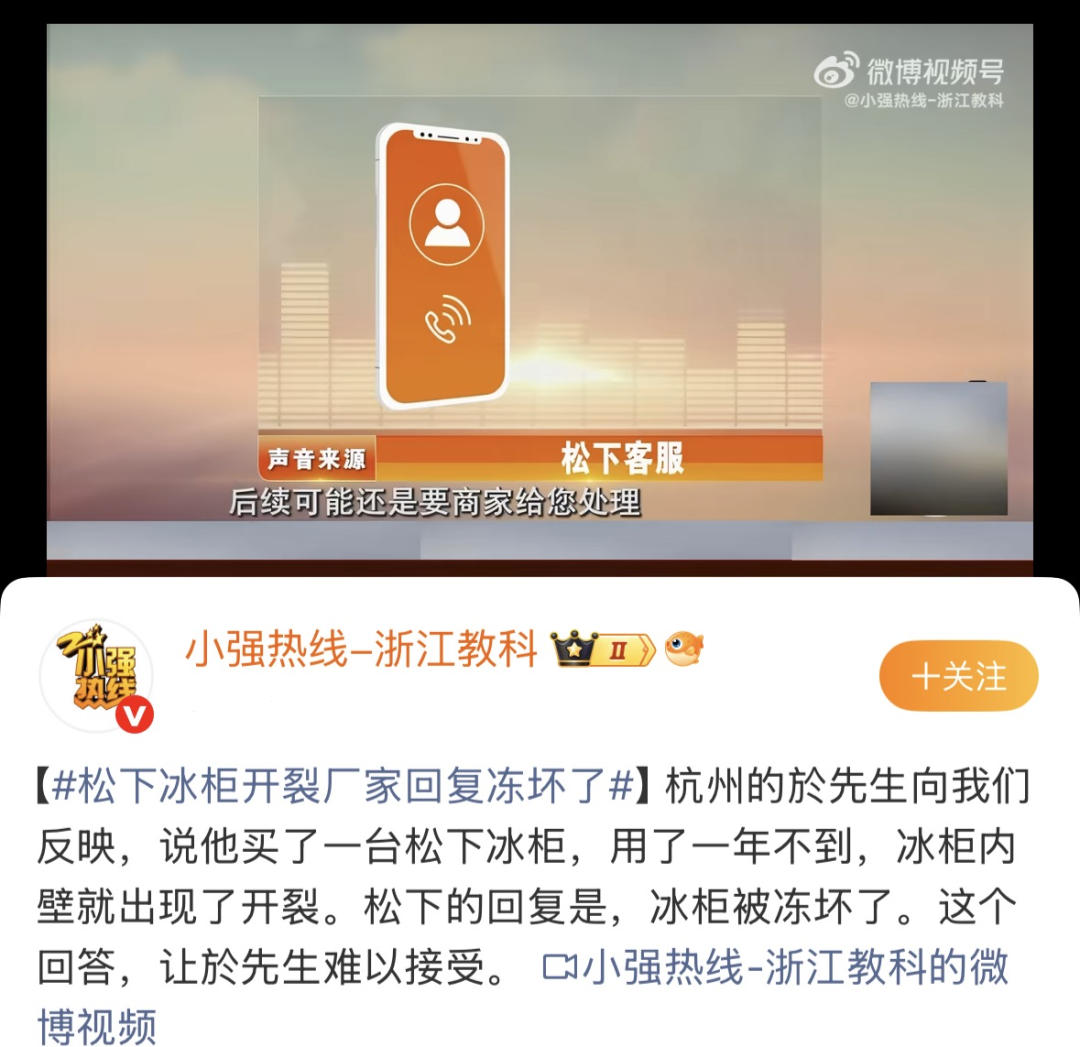
After going in circles, the consumer's problem remains unresolved.
Some industry insiders pointed out that Panasonic may have licensed out this product category and is not the actual manufacturer. But some consumers countered that regardless of who the actual manufacturer is, since the product bears the Panasonic brand label, Panasonic should naturally bear responsibility to the end.
The incident continued to ferment and also reignited a topic that is hardly new in home appliance circles—brand licensing. In fact, there are many cases of major brands licensing their trademarks to third parties for operation, such as Philips, Siemens, Royalstar, and Flyco.
But over the years, issues such as brand trust, product quality, and after-sales service for such products have remained in a gray area. Put simply, the brand is official, but the product is made by a third party. Once a problem arises, who exactly should bear responsibility?
1. Brand Swapping Is Nothing New
As a common business cooperation model, brand licensing has long been old hat. In the home appliance circle, Philips has particularly mastered this tactic.
As early as the 1980s, Philips entered the Chinese market with a range of products such as shavers and personal care items, becoming one of the first foreign brands to produce and sell in China.
However, Philips is actually a giant conglomerate spanning different fields such as lighting, semiconductors, healthcare, and consumer electronics. But as growth across industries generally slowed, diversification instead became a burden, and Philips thus embarked on a path of "slimming down."
Starting in 2004, Philips successively divested businesses such as PC monitors, televisions, and lighting; in 2021, it even sold its home appliance business to Hillhouse Capital, including a 15-year brand usage right.
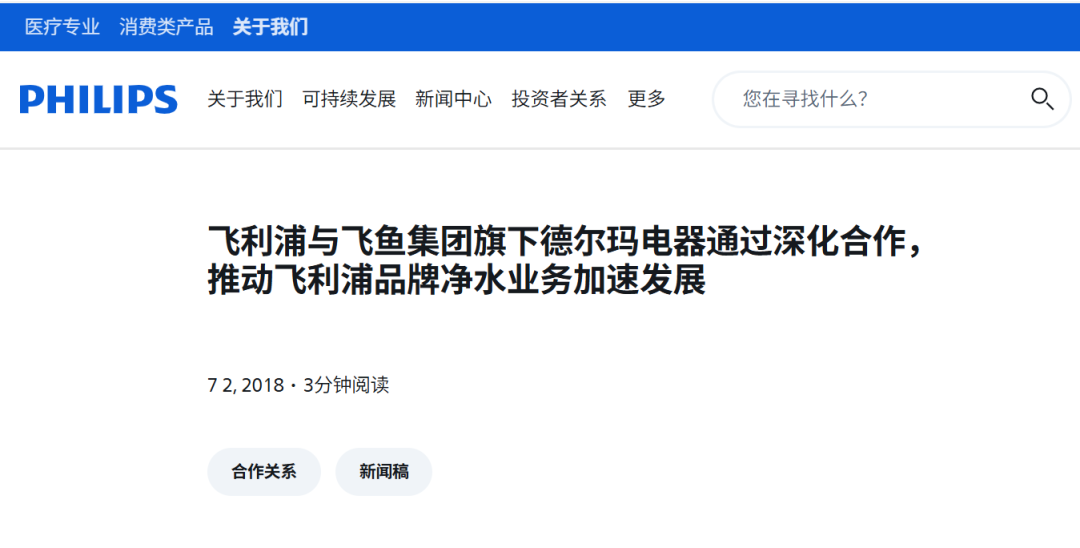
Since then, Philips has further tapped the commercial value of its trademark by renting it out to find partners—authorizing Enboli to research, develop, produce, and sell Philips air conditioners; authorizing Deerma to develop Philips water health products, and so on.
Similar brand licensing is not uncommon among foreign brands.
For example, Siemens announced in 2014 that it was exiting the home appliance field, selling its 50% stake in the joint venture Bosch and Siemens Home Appliances Group to Bosch Group, and Bosch was permitted to use the Siemens brand to produce and sell home appliances over the long term.
In 2016, Toshiba sold 80.1% of its home appliance business shares to Midea and authorized a 40-year global license for the Toshiba brand, allowing Midea to sell under the Toshiba brand worldwide.
In recent years, domestic home appliance brands have also begun to replicate this model. Brands such as AUX, Chigo, and Royalstar have also carried out external brand licensing for categories outside their main business.
Take Royalstar as an example. It is a trademark registered in 1992 by the Hefei Washing Machine General Factory. In 2004, Royalstar established Shanghai Royalstar Economic and Trade Company and licensed out non-mainstream businesses such as small home appliances, kitchen and bathroom products, and televisions.
According to 21st Century Business Herald, in 2013, a total of 10 licensed enterprises used the "Royalstar" brand in different categories, with a combined annual output value exceeding 5 billion yuan.
To sum up, the home appliance brand licensing business mainly takes the following forms:
One is the sale of an entire business, such as Siemens and Toshiba, where the brand owner completely exits operations, sells the relevant business as a whole, and retains only a long-term trademark contract.
Another is that the brand owner retains core categories and licenses non-core categories to third parties to operate—for instance, Philips packaged and sold its core home appliance categories to Hillhouse, while businesses such as water health, massage, and fitness equipment were handed over to Deerma for operation.
The last is pure "brand renting." Royalstar is a typical example, with brand licenses for different categories already scattered among different partners.
2. Quality Control Becomes a Vacuum Zone
Regardless of the form of cooperation, the brand owner's motive is not hard to understand.
For diversified business groups such as Philips and Siemens, the home appliance business accounts for only a small proportion, and home appliances have long become a low-profit "hard business." Rather than clinging to thin margins and cutthroat competition, it is better to pursue businesses with higher profit margins and better prospects.
Moreover, brand licensing is indeed an easy business to make money from.
In 2014, Whirlpool took over Hefei Sanyo and subsequently obtained the right to use the "Royalstar" brand. According to the announcement, from April 1, 2018 to March 31, 2023, it enjoyed the trademark usage rights for Royalstar in washing machines, refrigerators, and microwave ovens. The trademark licensing fee standard for the first year was 3.58 million yuan, increasing by 5% each year.
But the business of "collecting rent" sounds beautiful, while the responsibilities behind it are far more complicated than imagined.
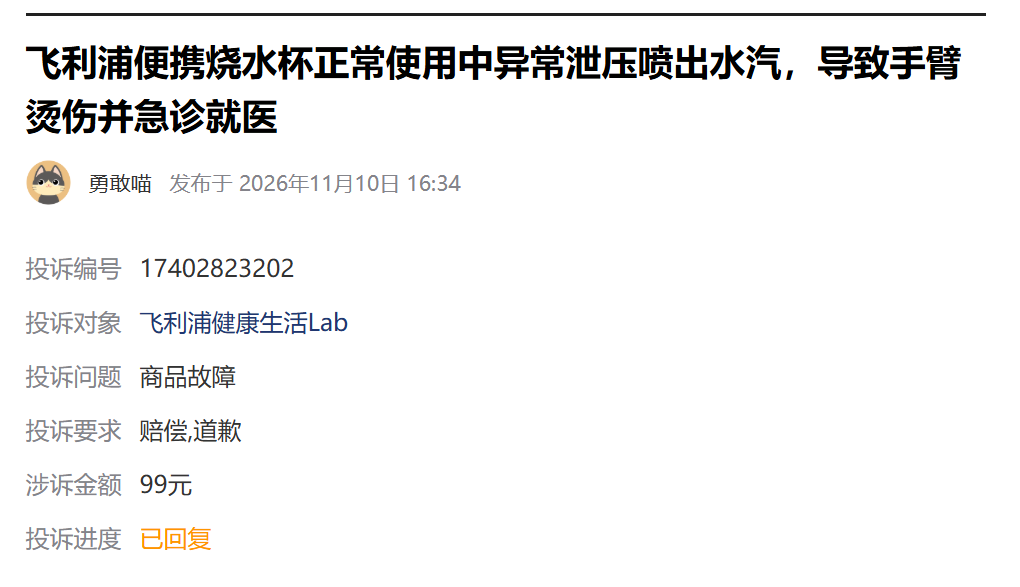
On the Black Cat Complaint platform, there are more than 4,400 complaints about the Philips brand. Some complain about poor quality of products such as shavers and chargers; other consumers complained that they were scalded by a Philips portable electric kettle due to quality problems.
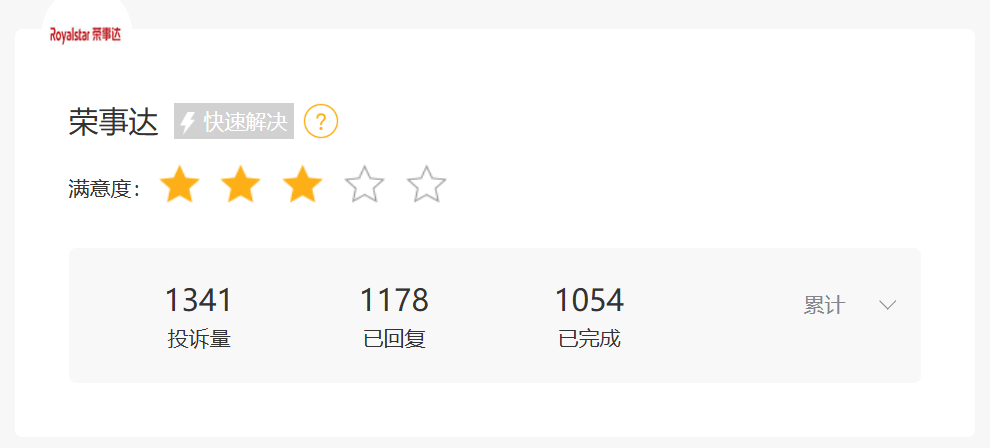
Similarly, there are thousands of related complaints against Royalstar, covering categories such as small home appliances, kitchen and bathroom products, televisions, and refrigerators. It should be noted that most of the categories complained about by consumers have already been licensed out by Royalstar.
The brand is not its own, and quality supervision of such home appliance products inevitably becomes a "vacuum zone."
Generally speaking, a mature brand licensing model is not just renting out a brand trademark. Rather, the brand owner exports management standards and technical requirements and conducts quality control and assessment and elimination. It is an important model for helping brand owners expand their ecosystems.
But even if the brand owner has delegated relevant core technologies at the initial stage of licensing, the market changes every day. To adapt to market development, the licensee must dynamically adjust products and costs and bear actual operating responsibilities, so deviations in business strategy are inevitable.
In the end, although the brand owner will consider whether to continue licensing based on product quality and market feedback, existing cases show that both sides still mostly speak based on commercial performance rather than brand performance.
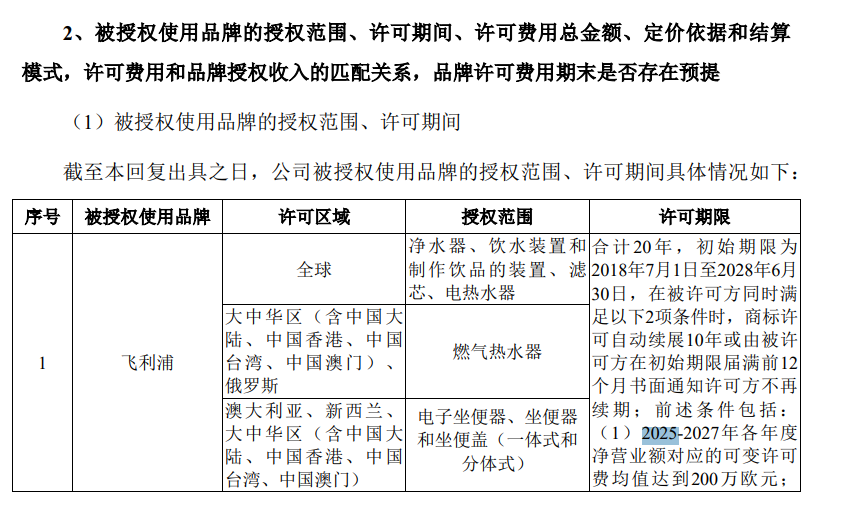
Take the licensing cooperation between Philips and Deerma as an example. Deerma obtained the brand license for Philips' water health business in 2018, with an initial term ending on June 30, 2028. One assessment indicator is that the average variable license fee for the three years from 2025 to 2027 must reach 2 million euros before it is decided whether Deerma can continue to obtain the license for the next ten years.
What worries consumers more is another type of cooperation, where the brand owner simply rents out the trademark, neither effectively managing the licensed categories nor exercising almost any control throughout the cooperation process, completely departing from the core logic of brand licensing.
Once lacking supervision and guidance from the brand owner, licensed merchants may, under cost pressure and business performance pressure, disregard product quality and may even license the brand further to second and third parties.
According to China Business Journal, home appliance industry observer Liu Buchen once pointed out in 2017 that "Royalstar's brand licensing is very chaotic. Licensees of small home appliances basically do not produce small home appliances themselves but find other enterprises for OEM production, so quality problems occur frequently."
Of course, Philips and Royalstar are not isolated cases. Old brands with external licensing operations, such as Electrolux, AUX, Konka, and SAST, also commonly draw consumer complaints about poor OEM quality and inadequate after-sales service.
3. At the End of White-Labeling, Who's Got Your Back?
Without anyone noticing, brand licensing has morphed into an absurd business model: consumers pay a premium for the brand name, but that premium becomes the brand owner's "rent" and the licensee's "profit"—never translating into better products.
However, when sales figures run ahead of product quality, someone always has to pay the price. The Panasonic freezer dispute mentioned at the beginning of the article is a typical case—the product has been sold, but who should be responsible for after-sales?
If Panasonic has already licensed this category for external operation, it will only be responsible for exporting the brand and supervising production, not for producing and selling the product. If a product problem occurs, the actual manufacturer should logically be responsible for after-sales.
But from the consumer's perspective, the angle is completely different. The reason they chose to buy a Panasonic freezer is that they valued Panasonic's brand endorsement. That being the case, if a product problem occurs, can it really be glossed over with one phrase—"brand-licensed product"?
The core of the brand licensing model has never been just "who produces it," but also who supervises the product and who is responsible for it.
Unfortunately, this area is still a gray zone.
According to the Trademark Law, "the licensor shall supervise the quality of the goods on which the licensee uses its registered trademark, and the licensee shall guarantee the quality of the goods on which the registered trademark is used."
In principle, once a product problem occurs, the brand licensor cannot stand aside on the grounds of "not participating in production and operation." But when it comes to the most common "three guarantees" disputes such as repair, return, and exchange, the seller is the first responsible party.
However, the core of brand licensing disputes is often that consumers do not know that "this brand is not that brand." This transaction is built on information asymmetry from the very beginning. If responsibility is defined only by production responsibility, it is indeed difficult to conceal the unfairness in terms of reasonableness.
Of course, industry development always runs ahead of regulation, and the improvement of systems is destined to take time. Raising problems and discussing them thoroughly is itself a step toward pushing the rules forward.
For the home appliance industry, the brand licensing model is not a "monster." The key is how to use it well.
On the one hand, brand owners can raise entry thresholds, establish elimination mechanisms, and strengthen control during cooperation, making brand licensing a long-term business.
On the other hand, brand owners can set up backup mechanisms, such as establishing a "quality deposit" within licensing fees. Once systematic product problems occur, the brand owner must bear joint liability or pay compensation first.
There are precedents for this kind of system. For example, Red Star Macalline's promise of "merchants pay deposits and the mall pays compensation first" is essentially also intended to better win consumer trust.
In the final analysis, behind the brand "signboard" is not just a trademark, but also products, services, responsibility, and trust. As long as consumers still recognize this brand, this connection cannot be severed by a licensing contract.
Brand owners should cherish their reputation more than anyone else. After all, polishing a signboard is not easy, but smashing it is very easy.


-
Apple Is Very Proud: I Sold 710,000 Fewer Phones, Yet Revenue Increased by 55 Billion!
-
Does Xiaomi Need to Go All In?
-
![]()
Xiaomi, Seeking a "New Rhythm"
-
![]()
Only 3 Years Left Before China's Auto Export Boom Ends?
-
![]()
Two Central SOEs Swap Equity Stakes
-
![]()
Aston Martin Appoints New Asia-Pacific Head as Volume Cuts Aim to Protect Pricing
-
![]()
BYD Set to Acquire French Factory, Macron Announces Publicly
-
![]()
Those Who Need a Personal Agent Most Are Middle-Aged People Starting to Become Forgetful