Does Xiaomi Need to Go All In?
 11/26 2026
 529
Source | Bohu Finance (bohuFN)
Author | Lu Fei
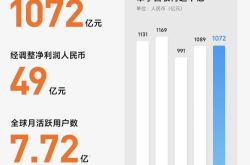
If anyone were to say that Xiaomi is the biggest victim of the storage cycle, most people would probably agree. Last night, Xiaomi released its third-quarter 2026 results and held a conference call. The numbers were ugly:
Revenue came in at 107.2 billion yuan, down 5.2% year-on-year; gross profit was 21.615 billion yuan, down 16.7% year-on-year; operating profit was 6.572 billion yuan, down 56.5% year-on-year; adjusted net profit was 4.88 billion yuan, down 56.8% year-on-year. After three consecutive quarters of decline, Xiaomi's net profit margin has shrunk from 10% last year to below 5%.
Xiaomi President Lu Weibing could not help remarking at the earnings call: "This third quarter is the hardest quarter I have experienced since I started working."
However, the main business is not Xiaomi's most pressing issue right now.
Although the third-quarter report was dismal, many details in the data prove that Xiaomi's hardest time has passed. For example, the smartphone × AIoT business, which accounts for the largest share of revenue, after three consecutive quarters of double-digit decline, clearly showed signs of stabilization in the third quarter, with only a 0.9% year-on-year decline. Amid the overall downturn in China's auto market, the gross margin of innovative businesses such as automobiles and AI still held at 19.2%, clearly ahead of peers.
What deserves the most attention, rather, is AI.
Although compared with internet giants, Xiaomi is less impacted by the AI wave and in the short term does not feel the same sense of crisis as Tencent and NetEase, in the long run AI is also disrupting Xiaomi's business model. Conversely, although new energy vehicles are certainly the last link in Xiaomi's full ecosystem of people, cars, and homes, the core connecting this ecosystem has become AI, which has become the core shaping that vision.
Xiaomi has foundational model works such as mimo and has also put out products such as Xiaomi Claw for trial, but these are obviously not enough. At the same time, AI is an industry whose capital demand grows far faster than traditional business models. Companies of the scale of Google and Tencent have all had their free cash flow drained; top AI talent is even less short of resources. The company founded by Lin Junyang after leaving Alibaba has already reached $5 billion.
So for Xiaomi, AI is not a question of going big or going small, but a question of whether to go all in.
Five years ago, when Lei Jun passionately declared that "making cars is the last major entrepreneurial project of my life," he certainly could not have imagined that in just five years, making cars would no longer be Xiaomi's most important choice.
01 Has the Core Business Bottomed Out?
During the period when storage prices rose most aggressively in the middle of the year, an emotional expression circulated in the market that "going long Xiaomi is equal to being twice short Hynix." This is not enough to summarize all the difficulties Xiaomi faces.
2025 was the peak year since Xiaomi was founded, and many qualifiers were added to it. Demand for major home appliances brought by national subsidies, the miracle of new energy vehicles driven by launch events and brand momentum, and the full ecosystem of people, cars, and homes feeding back into high-end smartphones. But Xiaomi handled the tailwind situation improperly, which led to more impact when the headwind came.
After the national subsidy tide receded, Xiaomi's IoT business declined significantly against last year's high base, down 24 points year-on-year in the first quarter and 19 points in the second quarter; last year's internet public opinion actually significantly affected the reputation of Xiaomi automobiles. Although the first sales data of yu7 shocked the industry, sales in the same period were actually not as good as su7, causing Pengcheng to actually become "the hope of the whole field" for the automobile business; smartphones also fell into a dilemma of product definition.
However, judging from the industry situation, the third quarter is basically a relatively certain bottom for Xiaomi.
From the smartphone business perspective, the revenue level of 45.6 billion yuan was not only better than the market expectation of 43 billion yuan, but the decline also narrowed significantly. From the fourth quarter of last year to the second quarter of this year, Xiaomi's smartphone revenue fell 13.6%, 12.5%, and 7.5% year-on-year respectively, but in the third quarter this number was only 0.8%, and it even grew 8.2% quarter-on-quarter.
On the one hand, this is because Xiaomi's globalization progress is relatively good. It ranks second in the Southeast Asian market with a share of 19.8%;
it ranks third in the European market with a share of 18.8%; it also ranks in the top two in Latin America and the Middle East, with shares of 16.5% and 15.1% respectively. This allows Xiaomi to maintain shipment scale even when impacted.
On the other hand, globalization also allowed Xiaomi to implement its strategy of controlling volume while protecting scale relatively well. In the third quarter, Xiaomi actively reduced low-priced models overseas. Although this caused overseas shipments to fall by more than 30% year-on-year, it also pushed the smartphone gross margin back up by 0.7% to return to management's previous guidance range of "above 9% for the full year," and the average selling price of smartphones rose by nearly 40% to 1,486 yuan.
Considering that the storage industry has entered a new round of price divergence—multiple institutions predict that DRAM memory will still tend toward price increases, but the magnitude is narrowing; NAND flash may be the first to end its rise and may even enter a price decline cycle in 2027—the smartphone market will still be affected in the future, but the magnitude of the impact will tend to stabilize.
Although the automobile business does not look optimistic from the data, actual expectations may be even better than for smartphones.
This year the overall auto market has not performed well. Data from the Passenger Car Association shows that the cumulative decline in the first three quarters was more than 20%. Xiaomi's days are naturally not easy either, with third-quarter revenue of 22.7 billion yuan, down 19.9% year-on-year. But specifically for Xiaomi itself, the performance of the automobile business is mainly affected by the alternation between new and old models.
As we mentioned earlier, although Xiaomi yu7 had impressive first sales, it lacked staying power, and sales struggled around the 10,000 level for a long time. This caused automobile deliveries to fall short of expectations. In the first three quarters of this year, Xiaomi delivered a total of 286,000 vehicles, but after Pengcheng was added, it delivered 50,000 vehicles in October alone. Judging from Pengcheng's current weekly sales level of 8,000, there should not be much problem in continuing to push toward 50,000 monthly sales in the remaining two months.
Combined with Xiaomi's preparations to go overseas next year and the signing of cooperation memoranda with 8 leading German auto dealers, Xiaomi's future delivery level should reach another level.
In other words, for Xiaomi's main businesses, the hardest time has passed.
02 Everything Is Constrained by Insufficient Firepower
But the problem is that the core business bottoming out does not mean Xiaomi has already walked out of its predicament.
If in the past three years Xiaomi's biggest strategic task was to complete its transformation from a hardware company to a technology ecosystem company through carmaking, then in the next three years, the question Xiaomi really needs to answer may be how to redefine this ecosystem in the AI era.
From Xiaomi's own perspective, the reasons for betting on AI are quite sufficient.
On the one hand, Xiaomi's own chips are sufficient.
In terms of models, Xiaomi is the only smartphone manufacturer with self-developed foundational models. mimo has long been able to hold steady in the second tier of domestic models. On September 22, Xiaomi released and open-sourced the MiMo-V2.6 series, which scored 46 points in the AA comprehensive intelligence index and was once the highest-scoring open-source model in the world at that time;
in terms of chips, at the Xuanjie technology communication meeting in August, Xiaomi presented O100, the world's first near-memory computing chip to be mass-produced and implemented, and D100, China's first 3nm high-computing-power chip for intelligent driving.
in terms of hardware ecosystem, Xiaomi has a unique full ecosystem of people, cars, and homes, with more than 1 billion IoT devices worldwide.
On the other hand, AI is already impacting Xiaomi's business model.
Games, social networking, short videos, streaming media—all current internet giants are feudal lords of user attention. The reason Xiaomi dares to cap smartphone hardware profit at below 5% is that it can make money through software and internet services.
But AI's impact on the logic of the mobile internet has already begun to show. A typical case is that, with the help of AI liberating productivity, Hongguo short dramas are devouring everything. NetEase admitted that the decline in its gaming business is related to users being attracted by short dramas.
At the same time, model manufacturers have begun to target hardware. According to supply chain news, OpenAI has begun working on manufacturing phones, Doubao phones have already been updated to the second generation, and Alibaba has rolled out a wide variety of AI hardware, including but not limited to weight scales and AI glasses.
Even for Xiaomi, AI has not yet arrived like Tencent's "the wave is already crashing over," but it is already visibly approaching.
But AI is not a traditional innovation business. There is no qualification to enter only after being optimistic about it (Tencent has already given a lesson), and there is no money-saving shortcut, only endless investment and expectations that returns will be difficult to see in the short term.
Based on Tencent's latest earnings report, its capital expenditure this year is expected to exceed 200 billion yuan; Alibaba's single-quarter capital expenditure also reached 50.5 billion yuan, up 60% year-on-year. The full-year capital expenditure expectations of Google, Meta, and Microsoft even exceed $500 billion.
At the same time, with the tightening of overseas computing power leasing, domestic computing power resources for AI training will be further compressed; foundational models continue to evolve toward larger scale, which means a further increase in computing power demand.
From a purely commercial perspective, AI is not a good choice for Xiaomi; whether to devote itself to AI actually tests whether it has the determination to leap.
Reference sources:
1. Xiaomi earnings report
2. Dolphin Research: Xiaomi: The pit has been climbed out of, but where is the future?
3. China Enterprise-level Magazine: After the hardest quarter, Xiaomi needs to change its approach
4. Will, researcher at the grain factory: Will, researcher at the grain factory | In-depth: Lei Jun standing at the crossroads of AI
The copyright of the cover image and accompanying images belongs to the copyright owners. If the copyright owner believes that their work should not be browsed by everyone or should not be used free of charge, please contact us in time, and this platform will correct it immediately.
-
Apple Is Very Proud: I Sold 710,000 Fewer Phones, Yet Revenue Increased by 55 Billion!
-
Does Xiaomi Need to Go All In?
-
![]()
Xiaomi, Seeking a "New Rhythm"
-
![]()
Only 3 Years Left Before China's Auto Export Boom Ends?
-
![]()
Two Central SOEs Swap Equity Stakes
-
![]()
Aston Martin Appoints New Asia-Pacific Head as Volume Cuts Aim to Protect Pricing
-
![]()
BYD Set to Acquire French Factory, Macron Announces Publicly
-
![]()
Those Who Need a Personal Agent Most Are Middle-Aged People Starting to Become Forgetful