Only 3 Years Left Before China's Auto Export Boom Ends?
 11/26 2026
 524
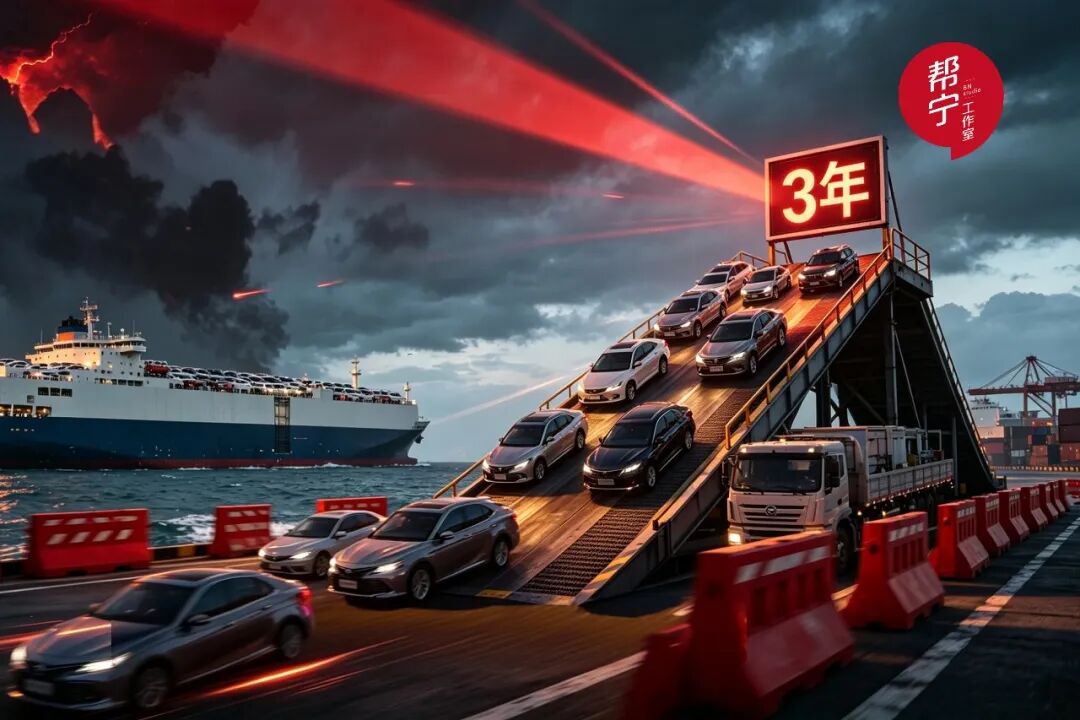
"The Final Battle"
"Another very important issue next year is that exports may be blocked." In a recent interview with Bangning Studio, Cao Dongjie, Executive Deputy General Manager of Dongfeng Honda, offered a cautious assessment of next year's auto market.
In his view, the trade proposal currently being pushed by the EU will genuinely block exports. If domestic demand also fails to pick up, with pressure from both sides, "next year's auto market will be even more brutal." By 2028, if export growth continues to decline, the domestic market will only become more cutthroat.
This is not just one person's view.
"Current exports show the characteristics of front-loaded pace and overdrawn total volume." Cui Dongshu, head of the Passenger Car Association, warned that behind the short-term data being pushed up, the export momentum for the first quarter of next year has actually been consumed in advance.
On November 25, Li Jianjun, Special Assistant to the President of the Automotive Industry Branch of the China Council for the Promotion of International Trade, also said: "Chinese automakers are collectively going global, but overseas markets are not an inexhaustible space for incremental growth."
At present, the relevant report cards are indeed dazzlingly impressive.
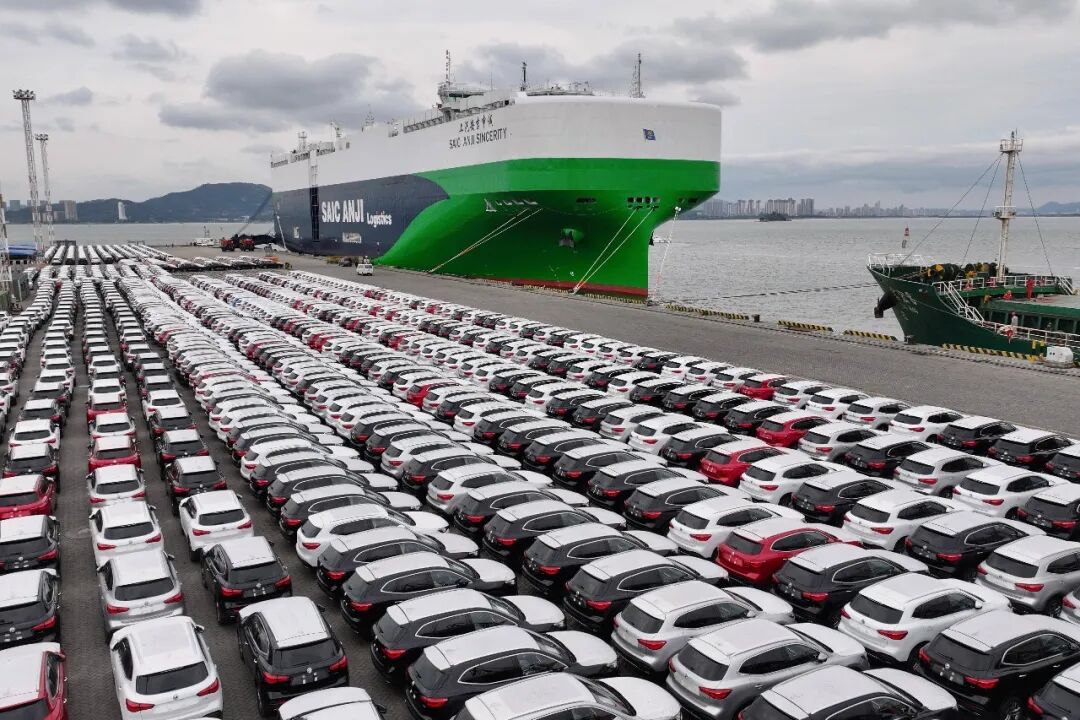
In the first 10 months of this year, domestic auto exports reached 9.271 million vehicles, a year-on-year increase of 65.1%. In October alone, exports reached 1.066 million vehicles, a year-on-year increase of 60.2%, with monthly export volume remaining above 1 million vehicles for 5 consecutive months. According to the estimate of the China Association of Automobile Manufacturers (CAAM), annual auto exports are expected to exceed 11 million vehicles.
What kind of speed is this? For the entire year of 2025, auto exports under CAAM's criteria were 7.098 million vehicles. In other words, this year, in just 10 months, the work of the entire previous year has been completed.
On one hand, records keep being broken, and going overseas is regarded as the way for Chinese automakers to break through; on the other hand, practitioners and researchers are simultaneously issuing warnings. How many Chinese vehicles can overseas markets still absorb? How long can the rapid growth of going overseas last?
▍01 Surging
At present, the domestic auto market is freezing cold, while overseas is burning hot.
Data from the Passenger Car Association shows that in October, domestic passenger car retail sales were 1.643 million vehicles, down 27.1% year-on-year; from January to October, cumulative retail sales were 14.978 million vehicles, down 22.3% year-on-year—the domestic overall market is still under continuous pressure.
On the other side, exports have already supported the sales base of many automakers. In October, passenger car exports (including complete vehicles and CKD) were 928,000 vehicles, up 68.5% year-on-year, and the share of exports in manufacturers' sales climbed to 35%, compared with only 19% in the same period last year. In other words, for every 3 vehicles sold by automakers, 1 is heading overseas.
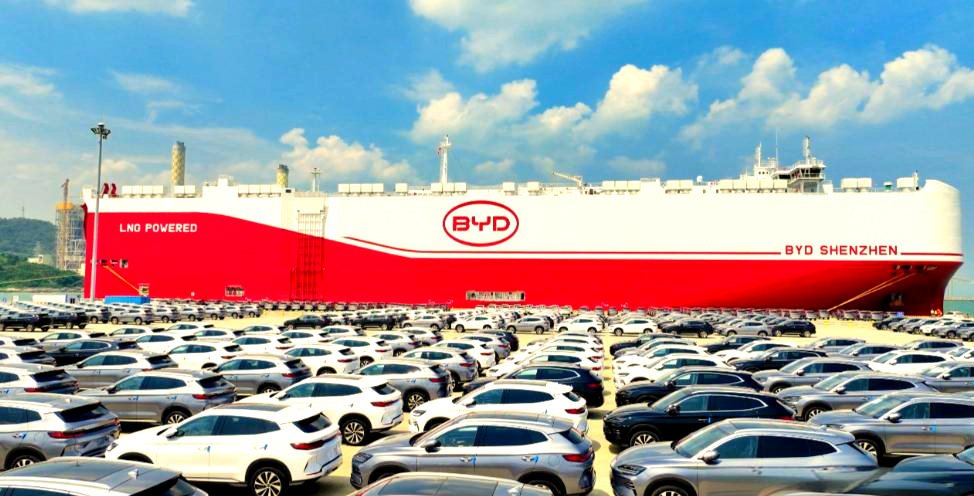
As early as the beginning of this year, automakers made their overseas targets and shares public: Chery 1.5-1.6 million vehicles, SAIC 1.5 million vehicles, BYD 1.3 million vehicles, Changan 750,000 vehicles, Geely 640,000 vehicles, Dongfeng and Great Wall 600,000 vehicles each...
Looking back at this year, the pace of going overseas has never stopped. On November 20, one thousand Voyah Dreamer 9 right-hand-drive versions were shipped from the Wuhan Golden Factory, simultaneously landing an overseas order worth about 1 billion. Officials said this is the first batch of high-end MPVs from China to achieve large-scale overseas shipment after the APEC summit.
"Xiaomi Auto plans to officially go overseas in 2027." Lei Jun, founder of Xiaomi Group, publicly stated after the APEC CEO Summit.
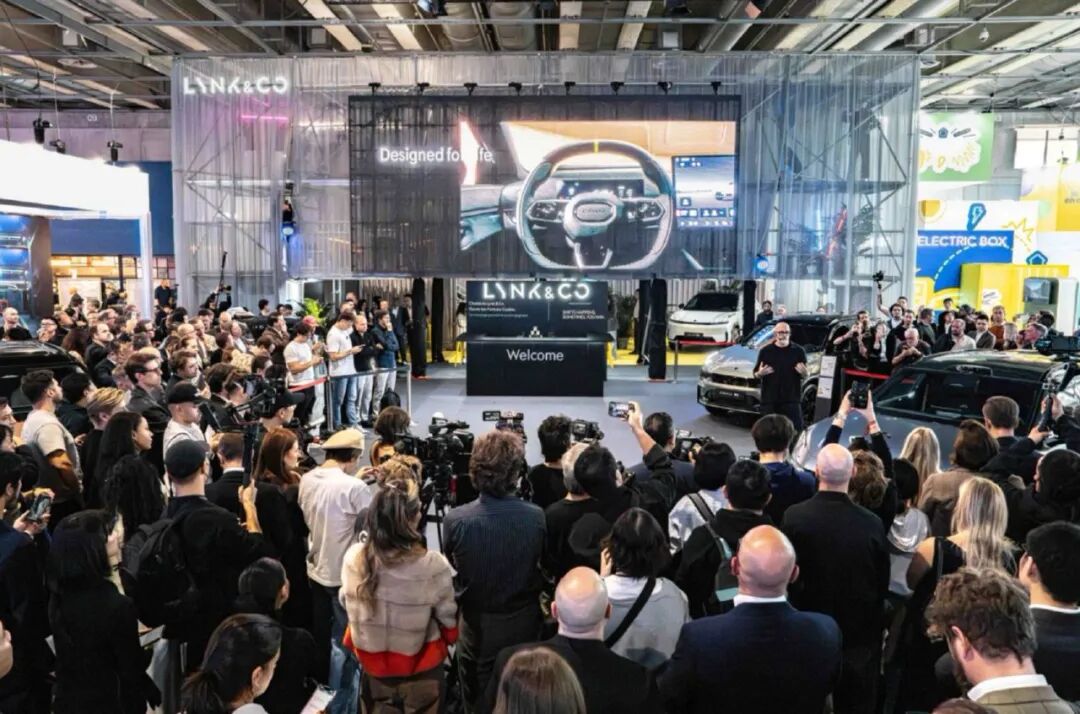
BYD, Chery, GAC, Geely, SAIC... almost all mainstream domestic automakers are tilting resources overseas, building channels, and establishing factories. The scene at the Paris Motor Show in October, where more than 20 Chinese automakers appeared collectively, is still vivid.
Shift the lens to the Middle East, and the pace is even faster. At the end of October this year, in an interview with Bangning Studio, Carlos Ghosn, former chairman of the Renault-Nissan-Mitsubishi Alliance, specifically cited the example of Lebanon: in 2021, the market share of Chinese brands there was almost zero, and in just 5 years it has surged to 25%.
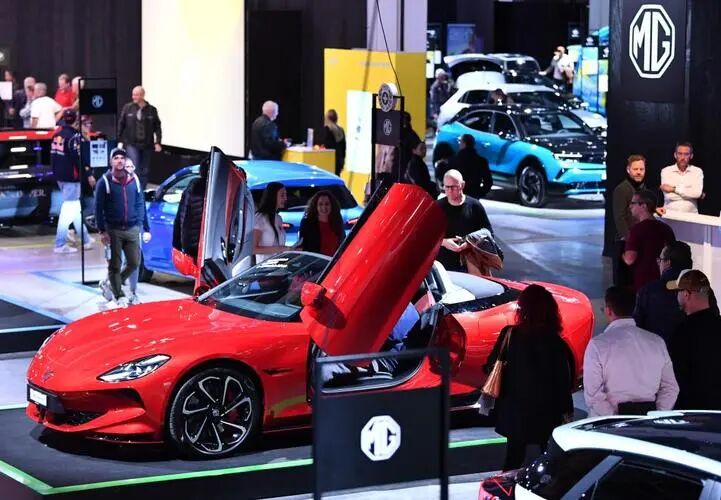
He judged: "I am confident that their share in the Middle East can double again." "As long as reliability no longer holds them back and parts supply can keep up steadily, within at most 10 years, the share of Chinese brands in this market will exceed 50%." "Not just Lebanon, but the entire Middle East will be like this. I have no doubt about it."
His reasoning is that the global auto market sells 93 to 94 million vehicles annually, and China alone accounts for one-third, about 30 million vehicles. After taking a dominant position at home, growth can only go outward, such as to the United States, Europe, Southeast Asia, Africa, and South America. "This is instinct, and also inevitable."
He even believes that Chinese automakers going overseas in line with instinct is a good thing. "Only by going out can there be faster growth; and only by going out can they encounter all kinds of opponents."
For Chinese automakers, exports are no longer just a bonus item that adds flowers to brocade. Overseas price bands are higher than domestic ones, and for the same vehicle, the gross profit from going overseas is often thicker. This part of profit fills the pit for the endless domestic price war.
However, the more dazzling the export figures are, the more one must ask: has it overdrawn anything?
▍02 Only 3 Years Left to the Endgame
How long can Chinese automakers' going overseas continue to surge?
Few people answer this question directly. Based on the views of multiple industry insiders, the window for incremental growth in overseas markets left for Chinese automakers is about 3 years.
First, look at export data over the past 5 years. The industry generally agrees that 2021 was the first year of the overseas explosion, with exports exceeding 2 million vehicles for the first time, surpassing South Korea to rank third globally; in 2022, it surpassed Germany to rise to second; in 2023, it surpassed Japan to take the position of the world's largest auto exporter.
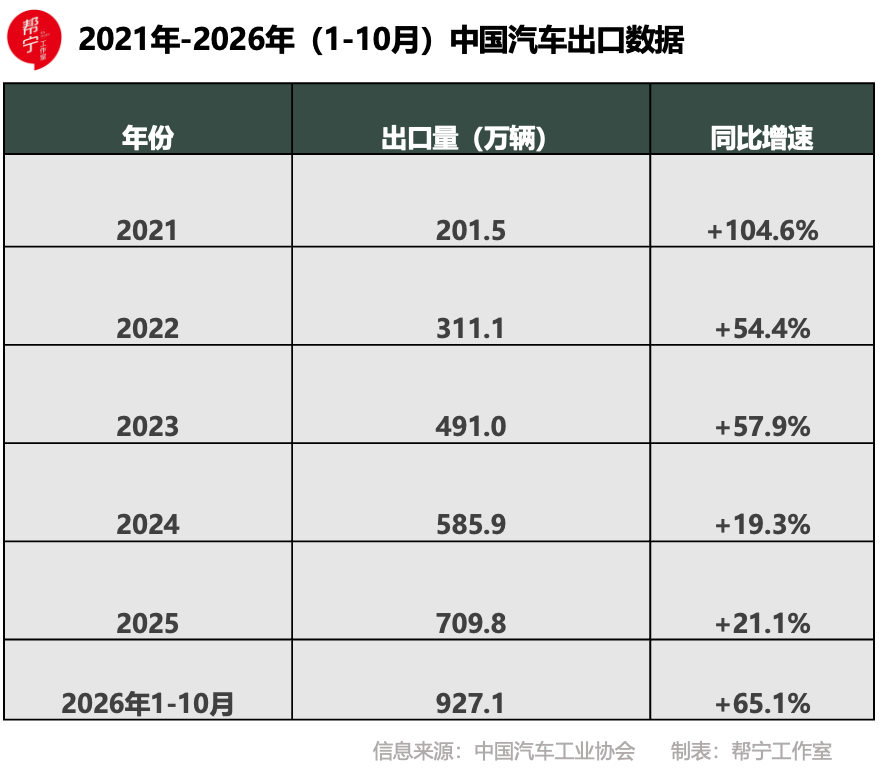
According to CAAM criteria, from 2021 to 2025, China's passenger car exports rose from 2.015 million vehicles to 7.098 million vehicles, totaling about 22.99 million vehicles over 5 years, with total volume increasing 3.5 times.
Many people think the endgame for Chinese automobiles is the day the domestic price war is decided. Actually, it is not. The real major test is the moment when both the domestic and overseas markets reach their ceilings.
The domestic market has already peaked, so the industry is accelerating the pace of expanding overseas markets. In 2025, exports were 7.098 million vehicles, a year-on-year increase of 21.1%, and there is no suspense that this year will break through 10 million vehicles.
But overseas market capacity is not unlimited.
"The incremental growth that Chinese cars can still tap overseas is at most 10-15 million vehicles." A senior industry figure judged.
In 2025, domestic passenger car wholesale volume was 29.554 million vehicles, up 8.8% year-on-year; retail volume was 23.744 million vehicles, up 3.8% year-on-year.
He believes that wholesale volume includes exports, while what truly represents domestic people's demand for buying cars is retail volume—23.744 million vehicles. "Give a little more room, 25 million vehicles, which is roughly the ceiling for domestic passenger car market capacity."
"Optimistically estimated, China's new vehicle production and sales will reach about half of the world." He said that by comparing the two sides, the rough numbers become clear: for passenger cars, domestic and overseas market capacity are both around 25 million vehicles—equivalent to creating another Chinese market overseas. "This year's exports will definitely break 10 million, and the endpoint is 25 million vehicles."
At the current pace of automakers desperately expanding capacity and grabbing channels, the remaining 15 million vehicles of overseas growth space will be filled in about 3 years.
By then, Chinese automobiles will reach the second endpoint—overseas market saturation, which will also be the endgame for Chinese automobiles. The first endpoint was the domestic market, which was already saturated in 2025.
Competition in overseas markets is becoming increasingly fierce.
Take Chery's October sales as an example. 282,500 vehicles looks impressive, but in fact the domestic market contributed only 87,800 vehicles; its overseas base is being pressed step by step by BYD, Geely, and SAIC. With overseas space becoming narrower, strong competitors catching up, and domestic sales efficiency slow to improve, the pressure on Chery is self-evident.
This dilemma is not an isolated case. Old players who went overseas early are being overtaken by new brands; newly launched forces that have just rushed out lack the channels and local operating experience that old players have accumulated over years.
The collective appearance of more than 20 Chinese automakers at the Paris Motor Show is the starting gun for the overseas sprint.
But sprints always have a finish line. When overseas sales reach 25 million vehicles and incremental growth is completely exhausted, that will be the real beginning of Chinese automobiles being unable to "involution" any further.
▍03 Avoiding Pitfalls
In a stock market, what matters? Concentration.
Now, the concentration of the top 15 automakers in the domestic market has exceeded 90%, and companies ranked behind basically no longer even have the qualification to sit at the table. Automakers are all looking for space, and to survive they can only dig into themselves—dig for efficiency, dig for cost, even down to every screw.
Today's involution is still about grabbing food from overseas incremental growth. In about 3 years, when both domestic and overseas markets have peaked, competition will be entirely within the stock, and that will be the real "unable to involute any further."
Chinese automakers have already answered the going-global question halfway. In the first half, the competition was about who dared to go out; in the second half, it is about who can stay.
"If they want to maintain this growth momentum, they must strictly screen the quality of dealers." Ghosn's view is that cooperative dealers must be reliable—not just good at talking, but able to truly implement and deliver impressive performance.

In particular, they should build long-term cooperative relationships like Korean and Japanese brands did back then. This kind of long-term relationship is not superficial harmony and looseness, but high standards and strict requirements that can remain stable for a long time.
"Chinese automakers in the Middle East—by Middle East I do not mean only Lebanon, but the entire Middle East market—have failed to capture the largest share." Ghosn believes there is only one reason: some consumers still have concerns, feeling that Chinese cars cannot match Japanese and Korean cars in reliability.
He said that Chinese cars now have good design, rich configurations, price advantages, and warranty policies are in place. But if you ask others why they do not buy Chinese cars, they generally give two points:
First, they are not sure whether after three or four years, or five or six years, the car will still be as stable and durable as Korean, Japanese, or European brands. Second, they worry that when parts need to be replaced in the future, supply may not keep up.
"As long as these two concerns are gone, within at most 10 years, the share of Chinese brands in this (Middle East) market will exceed 50%." Ghosn predicted.
Yin Tongyue, Chairman of Chery Holding Group, also reminded peers: when going overseas, be modest and low-key, and do not become "overseas braggarts"; learn the lesson from the low-price involution of motorcycles going overseas back then, and resolutely do not engage in price wars, let alone blind expansion.
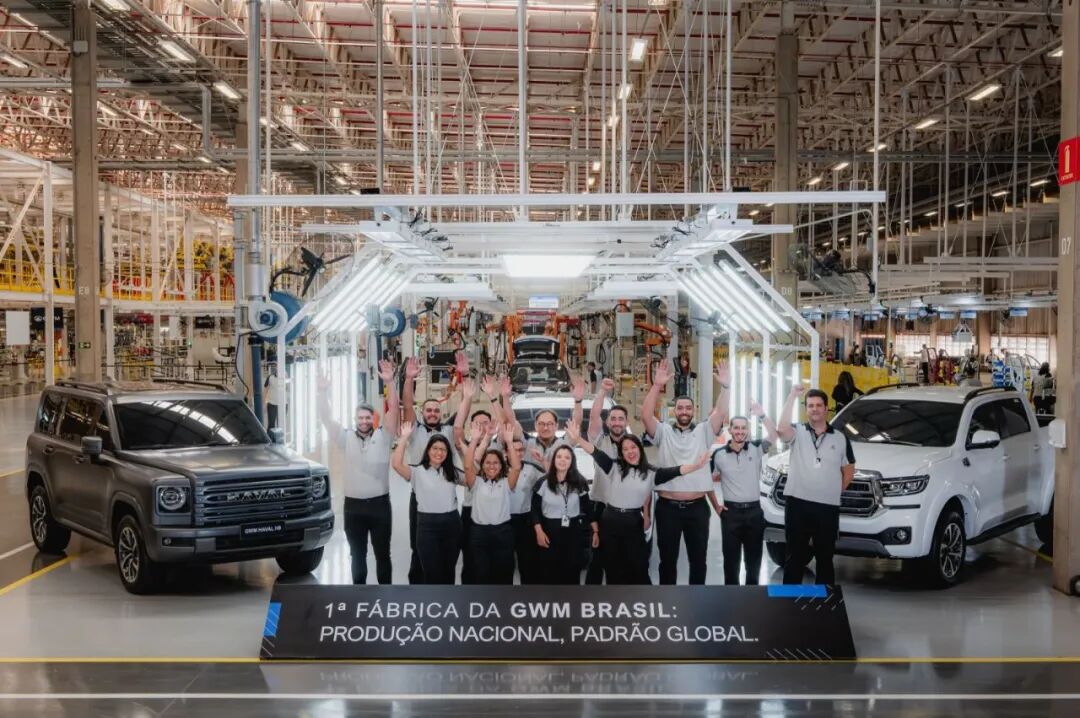
He said that this year's domestic auto export total is expected to break through 10 million vehicles, with new energy accounting for more than half—but selling cars does not mean truly achieving internationalization. Whether one can take root depends on technology, quality, and service.
"The era of simply using going overseas to avoid domestic competition has ended." Zhao Fuquan, Dean of the Tsinghua University Institute of Automotive Industry and Technology Strategy, judged that after deducting China's home market and the United States, which is difficult to enter, the global market that can truly be contested is only around 40 million vehicles; and in places like Southeast Asia, price wars have already started and are becoming a second "Chinese auto market."
Regarding the biggest pitfall to guard against on the road to going overseas, Zhang Yongwei, Chairman of the China EV100 Research Institute, put it bluntly: it is not that cars cannot be sold, but rather the heavy-asset investment overseas. Building a factory means spending billions, yet overseas political changes and policies toward China are hard to predict. Once the local environment changes abruptly, earlier investments may not withstand the shock.
The journey is ninety percent complete when one has traveled half of a hundred miles. Chinese automakers going overseas are approaching the steepest section.
-
Apple Is Very Proud: I Sold 710,000 Fewer Phones, Yet Revenue Increased by 55 Billion!
-
Does Xiaomi Need to Go All In?
-
![]()
Xiaomi, Seeking a "New Rhythm"
-
![]()
Only 3 Years Left Before China's Auto Export Boom Ends?
-
![]()
Two Central SOEs Swap Equity Stakes
-
![]()
Aston Martin Appoints New Asia-Pacific Head as Volume Cuts Aim to Protect Pricing
-
![]()
BYD Set to Acquire French Factory, Macron Announces Publicly
-
![]()
Those Who Need a Personal Agent Most Are Middle-Aged People Starting to Become Forgetful