Two Central SOEs Swap Equity Stakes
 11/26 2026
 492
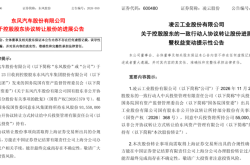
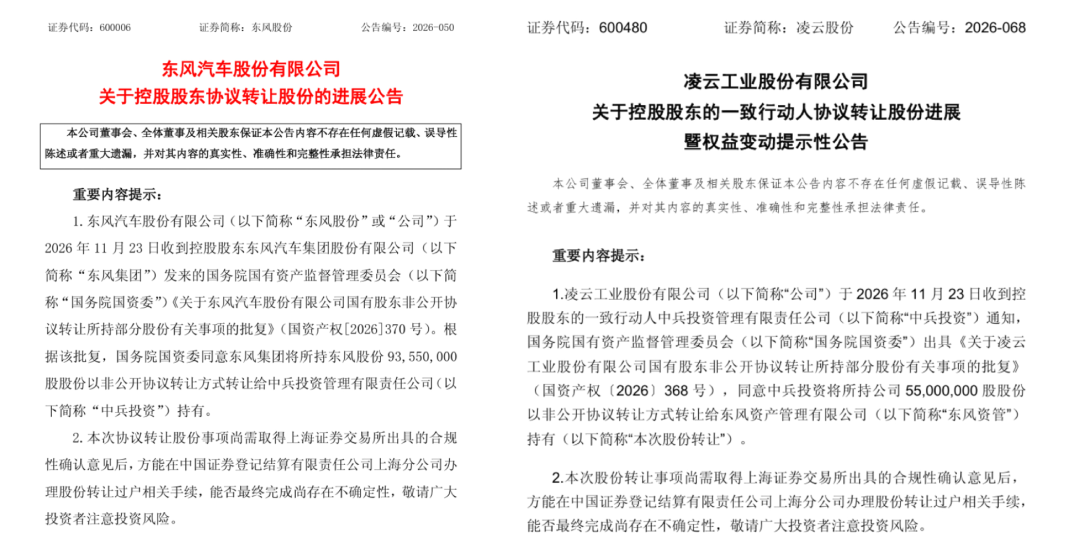
On November 25, Dongfeng Automobile Co., Ltd. (hereinafter "Dongfeng Automobile") disclosed progress on a share transfer by its controlling shareholder: Dongfeng Motor Group Co., Ltd. (hereinafter "Dongfeng Motor Group") has transferred 93.55 million shares, accounting for 4.68% of the company's total share capital, to Zhongbing Investment Management Co., Ltd. (hereinafter "Zhongbing Investment"). The matter has been approved by the State-owned Assets Supervision and Administration Commission of the State Council (SASAC).
Zhongbing Investment is a specialized capital operation platform wholly owned by China North Industries Group Co., Ltd. (hereinafter "China North Industries Group") and serves as the core hub of this two-way transaction.
Dongfeng Asset Management Co., Ltd. (hereinafter "Dongfeng Asset Management"), which is receiving the equity of Lingyun Industrial Co., Ltd. (hereinafter "Lingyun Industrial"), was established as a wholly owned subsidiary of Dongfeng Motor Corporation (hereinafter "Dongfeng Group"). The transfer is priced at 3.9 yuan per share, for a total transaction value of approximately 365 million yuan.
If the transfer is completed smoothly, Dongfeng Motor Group's shareholding ratio will drop from 55% to 50.32%, and it will remain the controlling shareholder; Zhongbing Investment will newly hold a 4.68% stake.
The agreement stipulates that Zhongbing Investment undertakes not to reduce its holdings within 12 months after the share transfer, and further undertakes not to seek control of the listed company or inject assets into it within 36 months—a commitment that underscores the strategic nature of the investment.
A reverse transaction was approved in the same batch. According to an announcement by Lingyun Industrial, Zhongbing Investment transferred 55 million shares, accounting for 4.5% of total share capital, to Dongfeng Asset Management at a price of 6.59 yuan per share, for a total transaction value of 362 million yuan. Dongfeng Asset Management undertakes not to reduce its holdings within 12 months after the transfer.
By comparison, both parties are subject to a 12-month lock-up period, but Zhongbing Investment has additional longer-term commitments related to control, making its constraints stronger. After this transfer is completed, the combined shareholding of Zhongbing Investment and its concert parties will drop from 43.11% to 38.61%. North Lingyun Industrial Group will remain the controlling shareholder of Lingyun Industrial, and China North Industries Group's status as actual controller will remain unchanged.
The two transactions were signed simultaneously on October 19 and received SASAC approval on November 23. The transaction amounts differ by less than 3 million yuan, forming a nearly mirror-image equity swap arrangement between Dongfeng Group and China North Industries Group.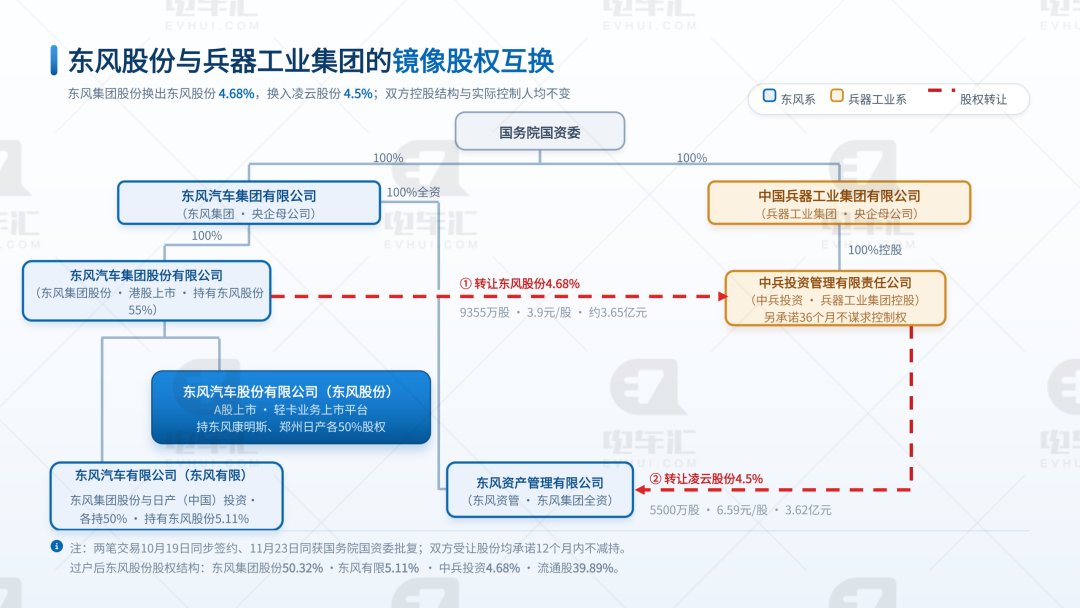
To understand this set of transactions, it is first necessary to clarify the layered equity structure of the Dongfeng system. At the very top is SASAC, which holds 100% of Dongfeng Group, the central SOE parent company of the Dongfeng system; Dongfeng Group wholly controls Dongfeng Motor Group, the Hong Kong-listed entity that is transferring the shares in this transaction. Below that is the A-share listed platform Dongfeng Automobile, which has drawn greater market attention. Dongfeng Motor Group directly holds 55% of it; at the same time, Dongfeng Motor Group and Nissan (China) Investment each hold 50% to jointly establish Dongfeng Motor Co., Ltd. (hereinafter "Dongfeng Limited"), which in turn holds another 5.11% stake in Dongfeng Automobile, with the remaining shares in market circulation.
Once these similarly named but distinct entities are clarified, Dongfeng Automobile's business positioning becomes clear. It is the listed platform in the Dongfeng system carrying the light truck business, with Dongfeng-series light trucks as its core products. It also holds 50% stakes in Dongfeng Cummins and Zhengzhou Nissan respectively, making it an important vehicle for Dongfeng's layout in new energy urban distribution commercial vehicles.
Viewed in isolation, these two transfers appear to be merely a modest adjustment to the shareholding structure within the central SOE system. But against the broader backdrop of automotive central SOE consolidation in the second half of this year, the industry significance of this transaction becomes easier to understand.
On September 11, the Ministry of Industry and Information Technology and eight other departments issued the "15th Five-Year Plan for the Development of the Intelligent Connected New Energy Vehicle Industry," explicitly calling for promoting mergers and reorganizations of automobile enterprises and cross-regional resource integration. Shortly after the policy was introduced, GAC Group announced a plan to acquire equity in a joint venture under FAW through the issuance of shares. After the transaction is completed, FAW will become GAC's second-largest shareholder with strategic influence, while GAC's control will remain unchanged.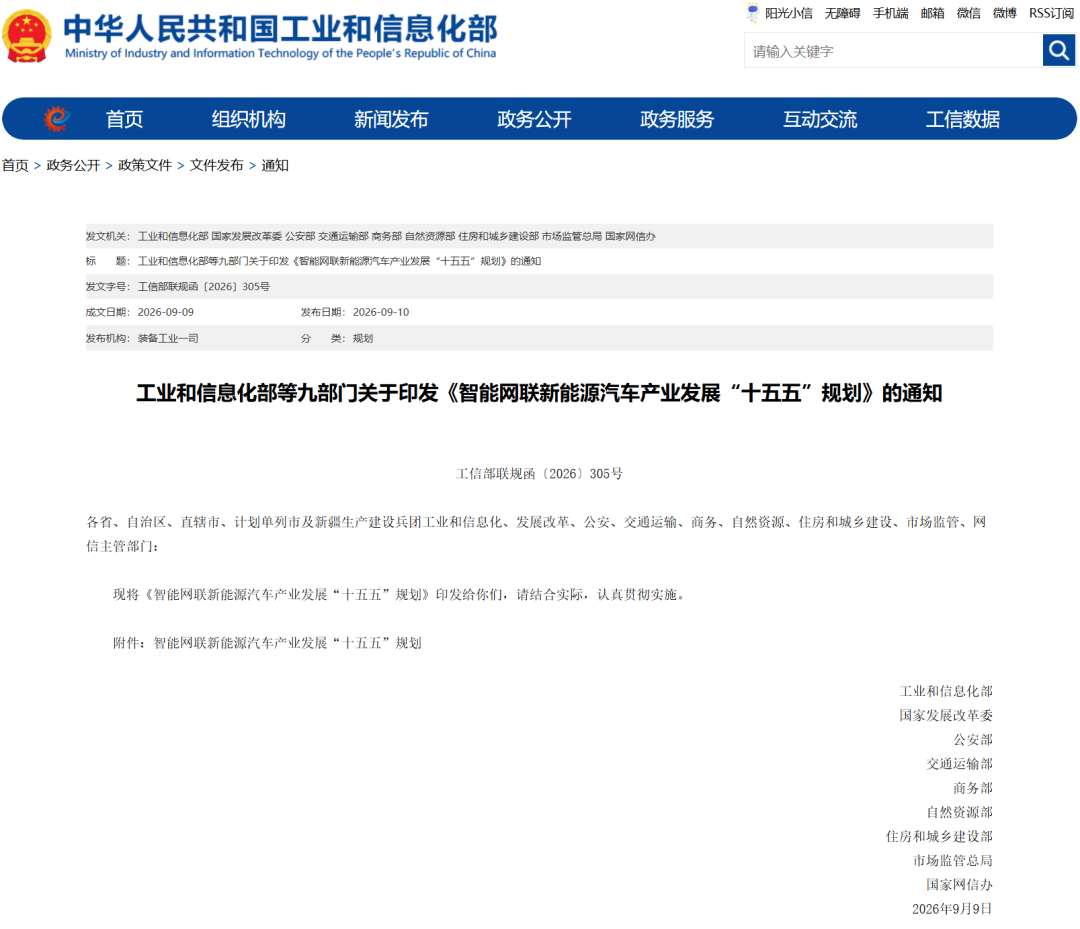
The core approach of the FAW-GAC cooperation is not to touch listed company control but to build long-term strategic ties through equity. This also represents a shift in the thinking behind this round of central SOE consolidation: rigid restructuring dominated by administrative transfers in the past is decreasing, while market-based, capital-oriented flexible integration is becoming the new direction. The equity swap between Dongfeng Group and China North Industries Group is precisely an extension of this logic between the vehicle and parts tracks. Both central SOEs retain dominance over their original businesses and merely exchange equity seats of less than 5% with each other to establish a binding relationship at the industrial chain level.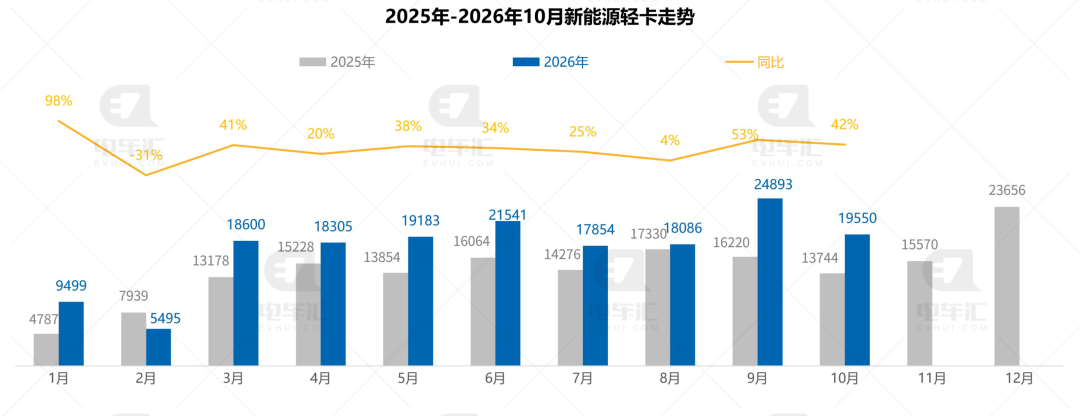
The new energy light truck track is currently in a stage of rapid expansion and is precisely the core direction in which Dongfeng Automobile is focusing its efforts. Data from Dianchehui shows that from January to October 2026, domestic retail sales of new energy light trucks totaled 173,000 units, already exceeding the full-year total of 2025, indicating strong industry growth momentum; Remote and Foton have long occupied the top two positions in the industry, with shares of 16% and 14.4% respectively, and competition on the track continues to intensify.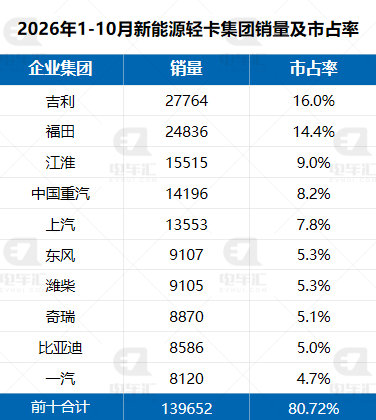
Under the Dongfeng light vehicle brand, its new energy light trucks registered 9,107 units from January to October, with a market share of 5.3%, ranking sixth in the industry. Its year-on-year growth reached 82.2%, significantly outperforming the overall market.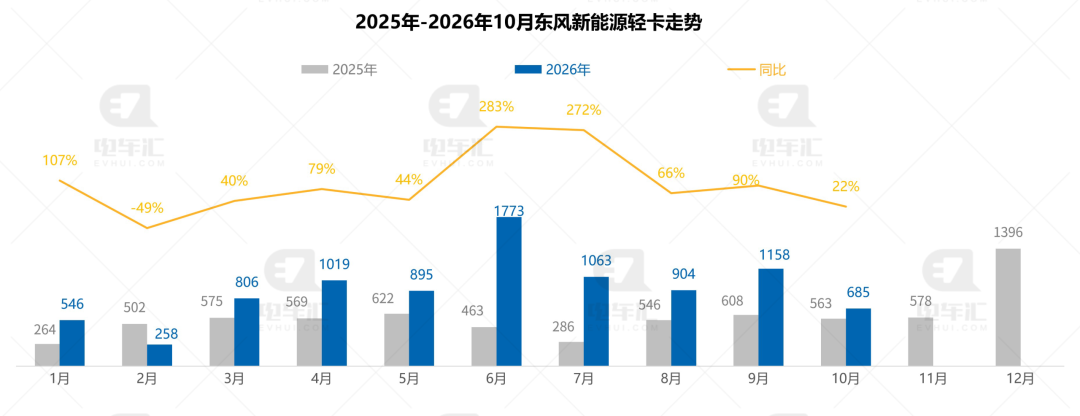
However, amid fierce market competition, lightweight solutions, battery protection capability, and vehicle cost control have become core bottlenecks constraining further volume growth—and these are also the pain points that this industrial chain synergy aims to address.
As a core parts platform under China North Industries Group, Lingyun Industrial focuses on body structural parts, anti-collision beams, hot-formed parts, and new energy battery housings. It has mature mass-production capabilities in high-strength steel, aluminum battery pack housings, and lightweight integrated assemblies. Its product direction exactly matches the needs of new energy light trucks for weight reduction, battery safety protection, and cost reduction—which is the industrial foundation enabling the two parties to reach the equity swap.
According to the announcement, the original intent of this transaction is to deepen strategic cooperation among central SOEs and connect the vehicle and parts industrial chains. China North Industries Group gains a strategic seat in the listed platform of light truck vehicles through Zhongbing Investment's shareholding, while Dongfeng Group gains exposure to a parts enterprise with capabilities in battery housings and lightweight structural parts. Neither party will exit its original track, nor will either change control of its respective listed companies.
This small-scale equity swap model is clearly different from traditional wholly owned acquisitions and large-scale mergers and acquisitions. With relatively low capital expenditure, it binds vehicle manufacturers and parts suppliers into a long-term community of shared interests. Relying on equity ties, both parties have the opportunity to carry out synchronized front-end vehicle model development, new material iteration, and production process collaboration, alleviating industry-wide problems in the new energy light truck sector such as lagging parts development pace, insufficient supply security stability, and difficulty in continuously optimizing costs. The market also expects that Dongfeng Automobile's new energy light trucks may prioritize adopting Lingyun Industrial's lightweight body and integrated battery housing solutions in the future, building differentiated competitiveness in curb weight, range, and battery safety.
In an environment where price wars in new energy commercial vehicles continue and vehicle profits are continuously squeezed, a self-controllable parts supply chain has become an important lever for vehicle enterprises to stabilize their operating fundamentals. This cross-central SOE equity cooperation model can establish communication channels for upstream and downstream R&D, sourcing designation, and supply security without requiring huge capital investment. It also provides a new collaboration model for domestic commercial vehicle central SOEs, and similar linkages between vehicle and parts central SOEs may appear more often in the industry in the future.
For Lingyun Industrial, establishing an equity relationship with Dongfeng Automobile's light truck platform is equivalent to opening up the high-growth incremental track of new energy light trucks. The company's current business focus leans toward passenger vehicle supporting, and its customer structure is relatively concentrated. If subsequent supporting designations are implemented, it is expected to obtain batch orders for commercial vehicle battery housings and lightweight structural parts, broadening its own growth curve. For Dongfeng Automobile, this cooperation also establishes a channel for connecting with upstream core parts resources, supporting the expansion pace of its new energy light truck business and consolidating its market position in the urban distribution new energy commercial vehicle track.
Of course, binding at the equity level does not mean supporting orders will automatically materialize. Subsequent parts designation development, production line modification and adaptation, and negotiation of commercial terms all require a certain period of adjustment. The synergy dividends will only be released gradually, and it will be difficult in the short term to shake the leading position of Remote and Foton. The original competitive landscape of the new energy light truck track will not change significantly.
-
Apple Is Very Proud: I Sold 710,000 Fewer Phones, Yet Revenue Increased by 55 Billion!
-
Does Xiaomi Need to Go All In?
-
![]()
Xiaomi, Seeking a "New Rhythm"
-
![]()
Only 3 Years Left Before China's Auto Export Boom Ends?
-
![]()
Two Central SOEs Swap Equity Stakes
-
![]()
Aston Martin Appoints New Asia-Pacific Head as Volume Cuts Aim to Protect Pricing
-
![]()
BYD Set to Acquire French Factory, Macron Announces Publicly
-
![]()
Those Who Need a Personal Agent Most Are Middle-Aged People Starting to Become Forgetful