Aston Martin Appoints New Asia-Pacific Head as Volume Cuts Aim to Protect Pricing
 11/26 2026
 357
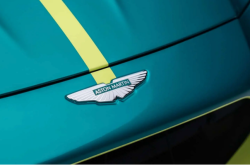
Aston Martin has announced a key leadership appointment: Charlotte Dickson will take over as President of Asia-Pacific and Greater China, succeeding the departed Karl Bayliss. Dickson previously oversaw Asia-Pacific, Japan and China regional operations at McLaren, and her track record aligns closely with Aston Martin's most pressing challenge—finding someone who truly understands how to run a regional market for an ultra-luxury brand at a time when Asia-Pacific, once a growth engine, has stalled.
Leadership changes, as is well known, are never isolated events, and the same holds true for Aston Martin. A review of Aston Martin's 2026 financial data reveals that while its financial metrics are improving, the foundation remains unstable; the Asia-Pacific market is contracting yet cannot be abandoned.
Specifically, Aston Martin's revenue for the first three quarters of 2026 grew 38% year-on-year to £1.017 billion, gross margin rose from 28.3% to 35.2%, and free cash outflow narrowed from £415 million to £225 million, nearly halved. The pre-tax loss for the third quarter narrowed to £77.1 million, a marked improvement from £111.9 million in the same period last year.
However, the financial improvement is mainly supported by the Valhalla. It is reported that this plug-in hybrid supercar delivered approximately 350 units in the first three quarters, pushing the average selling price up to £243,000, a 25% year-on-year increase. High-priced, high-margin special edition models have become Aston Martin's lever for improving financial performance while sales volume remains essentially flat.
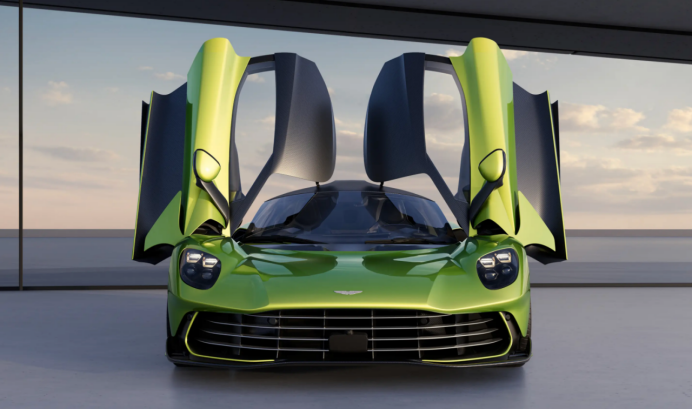
But excluding the Valhalla and special edition models, Aston Martin's core model sales grew only 2%, which is not ideal. Chief Financial Officer Doug Lafferty also acknowledged at the earnings call that the order bank for core models stands at about five months, below the ideal range of six to nine months.
The heavier pressure comes from the balance sheet. As of the end of September 2026, Aston Martin's net debt rose to £1.57 billion, an increase of about £190 million from the end of 2025. Since Lawrence Stroll led the restructuring about six years ago, the company's cumulative after-tax losses have reached approximately £2.3 billion. The £550 million debt financing completed in July 2026, while supplementing liquidity, also means the interest burden will further erode already thin profit margins.
Meanwhile, Aston Martin's China market is also under pressure. At the Q3 earnings call, Aston Martin Chief Financial Officer Doug Lafferty stated bluntly: over the past two years, the number of dealers in China has decreased by about 40%. The process of losing Chinese sales has been painful, but the company has always regarded it as an "opportunity"—when the market returns, it will be captured with a leaner network and higher-quality partners.
In other words, Aston Martin is taking a "volume cuts to protect pricing" approach in China—preferring to sell fewer cars rather than let its brand positioning be diluted in a price war. However, while "volume cuts to protect pricing" is important, if the "active adjustment" in the Chinese market drags on too long, brand presence and dealer confidence could be irreversibly weakened.
And this is precisely where Aston Martin's hiring of Charlotte Dickson is key. During her time at McLaren, Dickson was responsible for commercial strategy in Asia-Pacific, Japan and China, giving her direct experience in channel management, brand maintenance and customer operations for ultra-luxury brands in Asian markets.
However, the task before Charlotte Dickson is not simple. In the short term, she needs to stabilize confidence in the Asia-Pacific dealer network, especially in China, ensuring that remaining partners have sufficient motivation and profit margins to continue operating the brand. In the medium term, she needs to use the attention window created by the Valhalla to bring the Asia-Pacific order bank from "acceptable" back to "healthy" levels. In the long term, she needs to answer a more fundamental question: in a market where electrification is accelerating and local Chinese ultra-luxury brands are beginning to emerge, how much premium space can Aston Martin's British handcrafted narrative still support?
Clearly, a change of leadership is not a panacea. Whether Aston Martin can hold its ground in the Asian market depends on how much patience Gaydon headquarters is willing to give the Asia-Pacific region, and how many truly competitive products it is prepared to offer.
(Images sourced from the internet; removed if infringing)
-
Apple Is Very Proud: I Sold 710,000 Fewer Phones, Yet Revenue Increased by 55 Billion!
-
Does Xiaomi Need to Go All In?
-
![]()
Xiaomi, Seeking a "New Rhythm"
-
![]()
Only 3 Years Left Before China's Auto Export Boom Ends?
-
![]()
Two Central SOEs Swap Equity Stakes
-
![]()
Aston Martin Appoints New Asia-Pacific Head as Volume Cuts Aim to Protect Pricing
-
![]()
BYD Set to Acquire French Factory, Macron Announces Publicly
-
![]()
Those Who Need a Personal Agent Most Are Middle-Aged People Starting to Become Forgetful