Why Is Starship Planning to Orbit Earth Six Times on Its 14th Flight?
 09/28 2026
 570
570
Based on SpaceX's current schedule, the 14th test flight of Starship could launch as early as September 28th, pending regulatory approval.
This time, SpaceX is set to achieve something unprecedented in its previous 13 test flights: truly sending Starship into a sustained orbit around Earth.
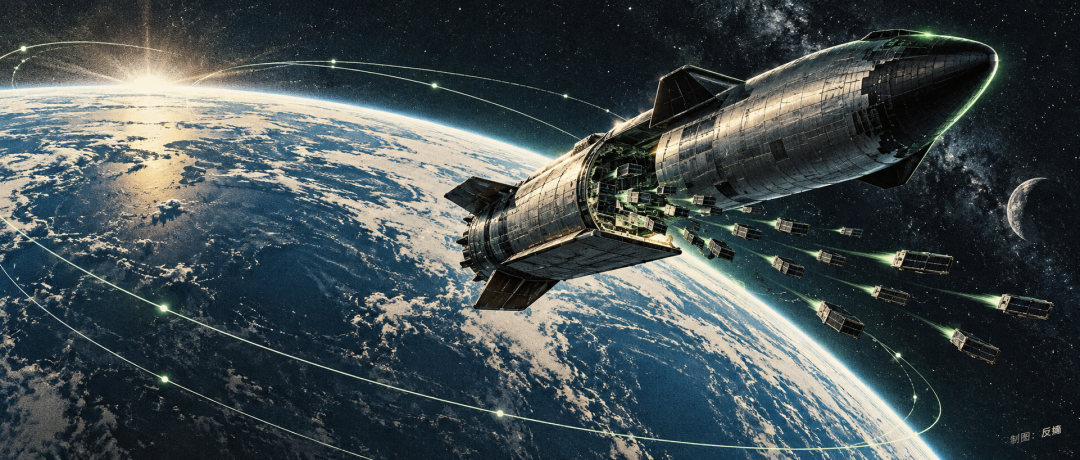
Under the current plan, the Starship upper stage will enter an orbit approximately 275 kilometers above Earth, operate in space for nearly 10 hours, complete about six orbits, and release 26 Starlink V3 satellites after reaching orbit. The spacecraft will then exit orbit and perform a controlled splashdown in the Pacific Ocean west of Chile.
Starship has already completed 13 flights, so why is it only now preparing for a full orbital insertion?
If achieving orbital insertion is enough to demonstrate orbital capability, why is the first orbital mission extending to nearly 10 hours?
These two questions highlight the distinction between the 14th flight and the previous 13 test flights.
The first 13 flights did not achieve full orbital insertion, which was a deliberate choice by SpaceX. Previously, the Starship upper stage always followed a suborbital trajectory with "passive safety," meaning that even if anomalies occurred later in the flight, the spacecraft would ultimately re-enter the atmosphere.
However, the 14th flight marks the first attempt to modify this mission design, allowing Starship to enter orbit and operate continuously there for several hours.
01 The First 13 Flights Without True Orbital Insertion
The difference between "reaching space" and "entering orbit" lies not primarily in altitude but in velocity.
Over three centuries ago, Newton used his famous "cannonball on a mountain" thought experiment to explain orbital motion.
Imagine firing a cannonball horizontally from a sufficiently high mountain. The faster it travels, the farther it goes before landing. When its speed reaches a certain point, the cannonball's downward trajectory matches the curvature of Earth's surface. It remains under Earth's gravitational pull, continuously falling, yet never touches the ground.
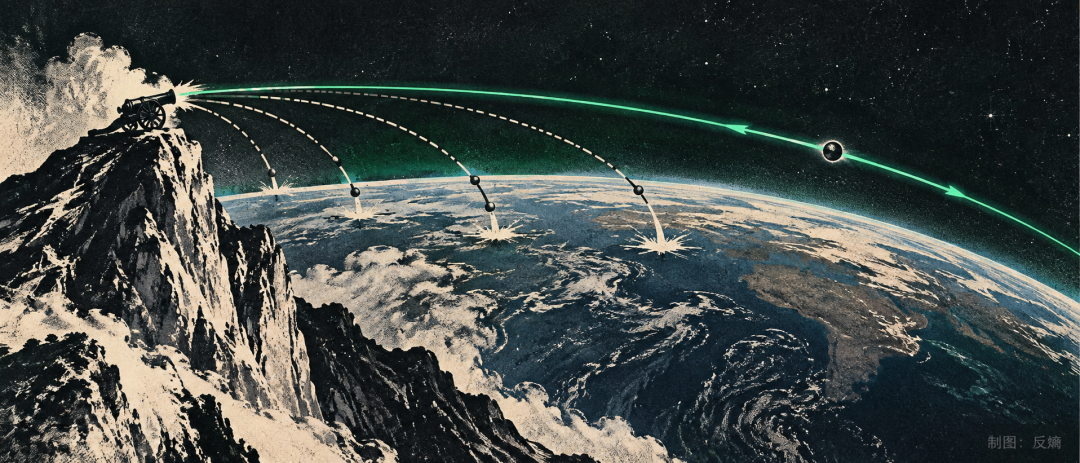
This is what an orbit is.
Low Earth orbit is typically only a few hundred kilometers high, but a spacecraft needs to achieve a velocity of about 7.8 kilometers per second to continuously orbit Earth. Entering orbit does not mean escaping gravity; rather, it means maintaining a continuous free fall under gravitational influence.
Starship has already reached space multiple times and approached orbital velocity, but all previous 13 flights adopted a suborbital design. SpaceX did not provide the upper stage with the full velocity increment required for a stable orbit. Instead, the spacecraft followed a trajectory that would ultimately lead it back into the atmosphere.
This design was not conservative.
The Starship upper stage is approximately 52 meters long, and its propulsion, avionics, attitude control, and thermal protection systems are still undergoing rapid iteration. If such a massive spacecraft entered a stable orbit and then lost active control, the timing and location of subsequent re-entry would become far more complex.
Thus, the first 13 flights remained outside of orbit not because SpaceX lacked the capability to take the final step, but because entering orbit would change the mission logic: Starship would not only need to enter orbit but also maintain propulsion, control, and communication capabilities to actively complete subsequent tasks hours later.
The premise of rapid iteration is not to leave risks to chance but to design disposal paths for anomalies in advance as much as possible.
This is why SpaceX took 13 flights before preparing to let Starship truly enter orbit.
02 The True Significance of the Six-Orbit Flight
Why specifically six orbits?
Because the complete mission of the 14th flight is designed around a nearly 10-hour orbital operation.
At an altitude of approximately 275 kilometers, Starship takes about 90 minutes to complete one orbit around Earth. Six orbits correspond to roughly nine hours of orbital flight time, which, when combined with orbital insertion and return procedures, results in an overall mission duration of nearly 10 hours.
Thus, "six orbits" is not a technical threshold that must be met, nor is it a number chosen by SpaceX to set a record. It is simply the natural outcome of the complete mission sequence.
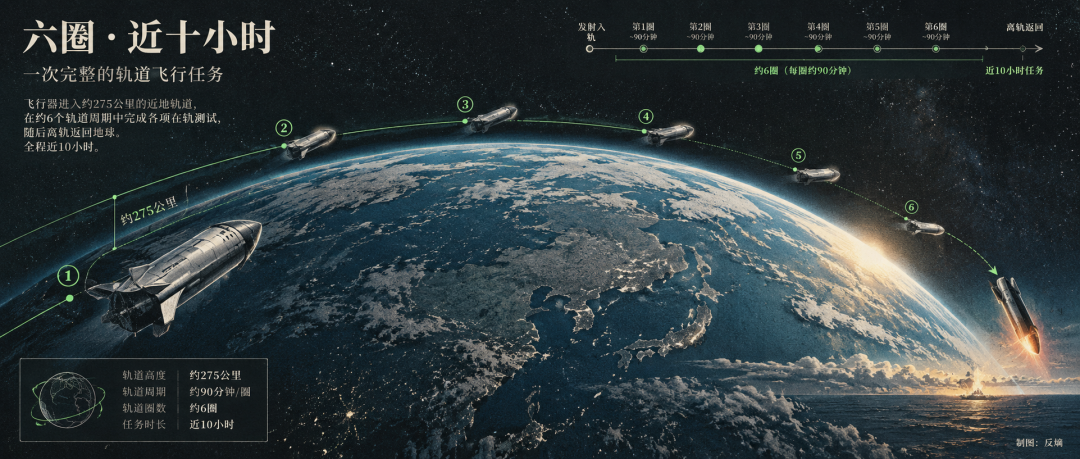
SpaceX has also designed windows for early mission termination. If the spacecraft's condition is insufficient to continue operation, the mission can deorbit early after the second or fifth orbit. Two and five orbits represent exit opportunities at different stages, while six orbits correspond to a complete mission under normal conditions.
Thus, the focus is on these 10 hours.
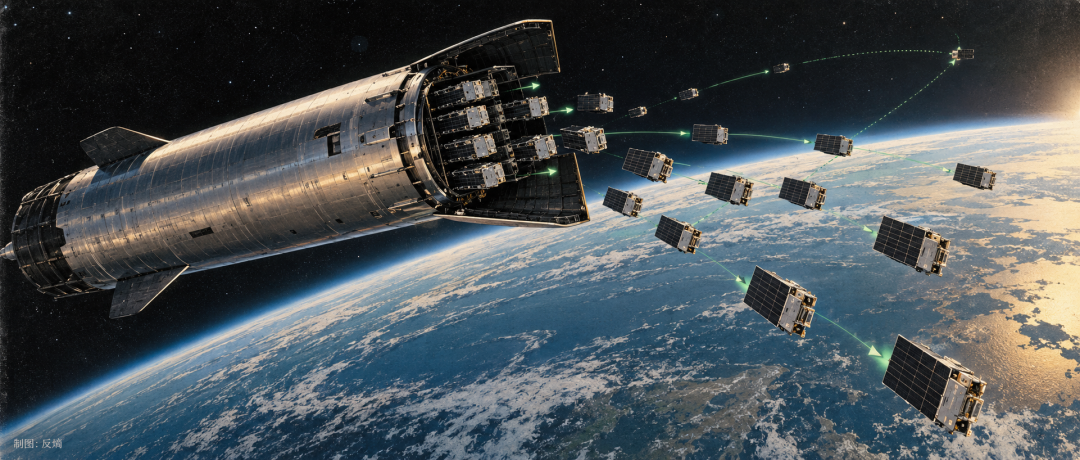
According to the public mission timeline, Starship will begin releasing 26 Starlink V3 satellites approximately 34 minutes after entering orbit. Payload deployment will be largely completed within a little over an hour, but the spacecraft will need to continue operating in orbit for several more hours until it reignites its Raptor engines for deorbiting later in the mission.
After releasing the satellites, Starship will need to maintain normal operation for nearly eight more hours. Previous Starship test flights focused on critical phases such as ascent, separation, and high-speed re-entry, with mission durations typically around one hour. The 14th flight marks the first time a significant portion of the mission is dedicated to orbital operation itself.
What orbital operation tests most is not a single dramatic maneuver but whether multiple systems can remain stable over an extended period.
Starship uses liquid oxygen and liquid methane. After entering microgravity, the position, gas-liquid interface, sloshing, and heat transfer of the propellants become more complex than on the ground. During the third integrated flight test in 2024, SpaceX conducted a cryogenic liquid oxygen transfer test inside Starship as part of a NASA cooperative project, gathering data for future more complex on-orbit propellant management.
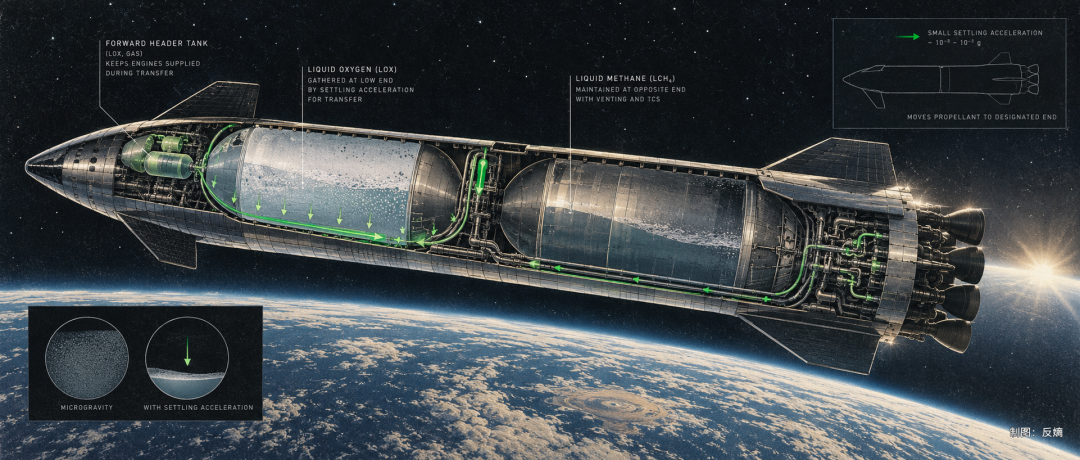
The 14th flight further verifies whether, after several hours of orbital coasting, the propulsion system, power supply, communications, attitude control, avionics, and thermal management can still operate as required and support final deorbiting and re-entry.
The significance of six orbits lies in providing Starship with the time scale needed for a complete orbital mission, allowing SpaceX to obtain, for the first time, a continuous set of data from orbital insertion, payload deployment, sustained operation, to deorbiting and re-entry.
A mature orbital spacecraft must not only withstand the most intense environments during launch and re-entry but also remain reliable during prolonged orbital flight.
03 The First True Transportation Mission
The 14th flight also introduces a change closer to commercial operations than just the first orbital insertion: 26 Starlink V3 satellites are prepared to truly remain in orbit.
The 13th flight already released 20 real V3 satellites.
These satellites deployed their solar arrays and antennas and attempted to establish communications, but because Starship still followed a suborbital trajectory at the time, they ultimately re-entered the atmosphere.
That mission validated deployment procedures.
The 14th flight, however, aims to complete a true orbital delivery.
If the mission proceeds smoothly, the 26 V3 satellites will separate from Starship in orbit and then rely on their own propulsion for subsequent adjustments, gradually joining the Starlink network.
This means Starship faces the requirements of a complete transportation mission for the first time.
During the test flight phase, a rocket first needs to prove it can fly. Even without a payload, obtaining propulsion, structural, control, and re-entry data holds research and development value.
However, a transportation vehicle must also prove it can deliver its cargo. The orbit entered by the payload, separation reliability, and subsequent operational status all become part of the mission outcome.
SpaceX holds a unique advantage here that is difficult for other new rocket projects to replicate: Starlink.
The V3 satellites are larger, with stronger communication capabilities, and rely more heavily on Starship's large cargo bay and high transport capacity. At the same time, Starship also needs real, high-frequency missions to accumulate operational experience.
Rockets need missions, and constellations need rockets. This provides SpaceX with a natural application scenario as it transitions from the research and development phase to the operational phase.
04 From Test Flights to Orbital Transportation
275 kilometers is not particularly high, and six orbits are hardly remarkable in human spaceflight history. In 1961, Vostok 1 completed a manned orbit around Earth; today's space stations can operate continuously for months or even years.

The importance of Starship's 14th flight lies not in setting a new orbital record but in beginning to change the criteria by which a rocket is evaluated.
In the previous 13 flights, external attention focused more on whether Starship could take off, separate, re-enter, and end its flight under control. These questions essentially revolved around "how well Starship flies by itself." But now, it must not only complete a flight but also accomplish a transportation mission.
This is a problem all reusable rockets must face as they transition from testing to operations.
SpaceX's future goals extend far beyond low Earth orbit transportation. Starlink requires Starship to deploy larger-scale satellites, and NASA's Artemis program needs the lunar-version Starship to demonstrate prolonged on-orbit operation and cryogenic propellant transfer capabilities.
The 14th flight is still far from these goals, but it marks the first time Starship has entered the environment that all these missions depend on and operated continuously there for several hours.
For Chinese commercial space enterprises advancing reusable rockets, what can be learned from this flight is not "six orbits" but how SpaceX gradually expands experimental boundaries.
The premise of rapid iteration is not to leave risks to chance but to design disposal paths for anomalies in advance as much as possible.
Newton's imagined cannonball, if given sufficient velocity, could continuously free-fall around Earth. But a true orbital transportation system requires more than just entering orbit; it must also operate there and complete its mission.
Thus, if the 14th flight successfully completes six orbits, the least mystical aspect should be the "six." For Starship, which has already flown 13 times, what truly increases are the previously unavailable hours.
These hours mark the beginning of Starship's continued progression from test flights to orbital transportation.
-
![]()
Contrast! Xiaomi Pengcheng SUV's Order Volume Drops in Second Week: Are Netizens Right to Say It's Below Expectations?
-
![]()
0 yuan phone purchase, ends in 2026
-
![]()
Explosive News! Xu Jiayin’s Evergrande Auto Launches a 'New Business Venture' Amid 186 Million Yuan H1 Profit
-
![]()
Quantum AI Track Begins to Explode: Tsinghua-Affiliated Sober Heterogeneous Secures Nearly 100 Million Yuan Across Two Financing Rounds in Three Months
-
![]()
QClaw Is Ultimately Acquired by WorkBuddy
-
![]()
China Launches Space Computing Initiative: A 'Data Center' in the Sky Comprising Over 1,000 Satellites
-
![]()
Why Is Starship Planning to Orbit Earth Six Times on Its 14th Flight?
-
![]()
Detailed Explanation of Zhuoyu ZYT World: While the Industry is Still Reviewing Recordings, Zhuoyu has Already Thrown AI into the 'GTA World' for Driving Practice