China Launches Space Computing Initiative: A 'Data Center' in the Sky Comprising Over 1,000 Satellites
 09/28 2026
 564
564

This marks the 133rd original article from the Thinking AI Society.
With a total of approximately 1,432 words, the estimated reading time is 5 minutes.
It may sound unbelievable, but in the future, satellite-captured images might not be transmitted back to Earth at all. Instead, they will be processed and analyzed in space, with only the results being sent back.
At the recent Hangzhou Digital Trade Expo, two companies presented the 'blueprint' for this innovative concept.
Earth Path II and Oriental Starlink jointly announced the 'Strings of Space' computing constellation, a groundbreaking project that represents China's first space computing infrastructure designed for both global and deep-space applications. In layman's terms, they intend to dismantle traditional data centers and relocate them to a network of over a thousand satellites.
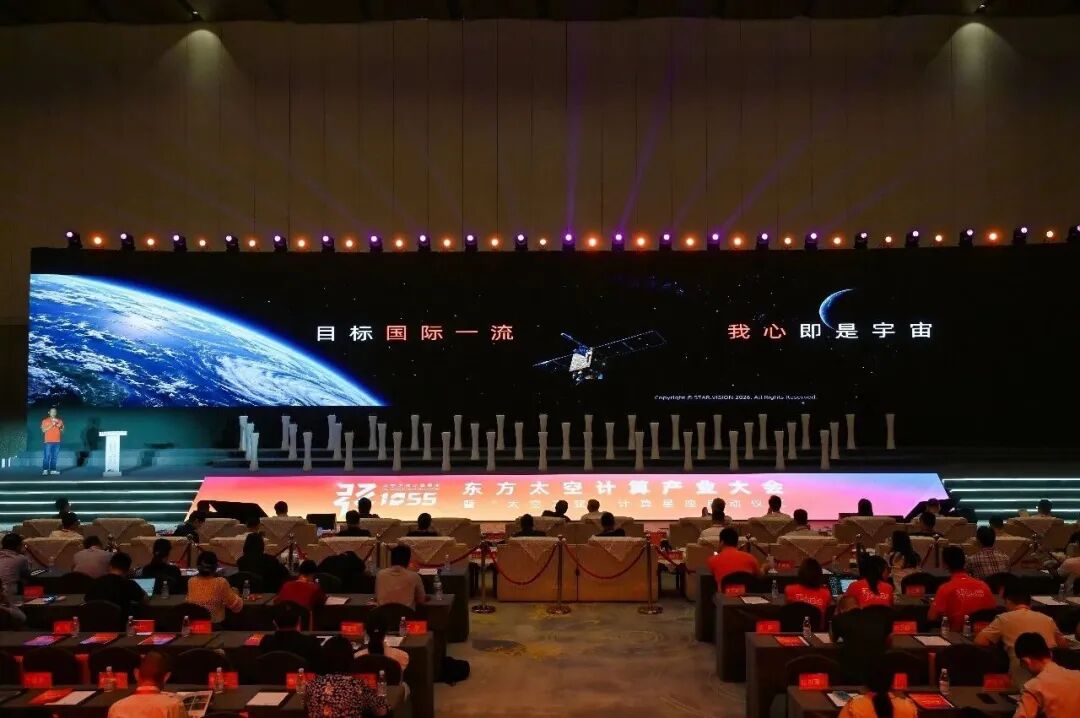 Image Source: Oriental Starlink
How will this 'string' of satellites be constructed?
First, let's delve into its architecture, which categorizes satellites into two distinct layers.
The upper layer, known as the service layer, plans to deploy over 720 'data satellites,' also referred to as inference satellites. These satellites are tasked with capturing data and executing specific operations, such as monitoring crops or detecting fires.
The lower layer, termed the computing layer, envisions placing over 360 'computing satellites,' or training satellites, in dawn-dusk orbits. These satellites are dedicated to providing computational power and can be expanded as needed. The two layers are interconnected via inter-satellite laser links.
Can you spot the pattern? The terms 'inference' and 'training,' traditionally associated with terrestrial data centers, have now been replicated in space. If a single satellite is unable to handle a task, it can offload it via laser to an idle satellite, effectively creating a massive orbital data center.
The implementation will unfold in three stages: the G1 verification satellite, the G2 standard satellite, and the G3 flagship satellite. The launch of the first G1 satellite is not scheduled until the fourth quarter of 2027.
The design power of these three generations of satellites will escalate from 11 kilowatts to 140 kilowatts, with design computing power surging from 40 to 50 petaFLOPS to nearly 1 exaFLOPS. However, it's important to note that these figures are currently theoretical calculations, not actual performance metrics in space.
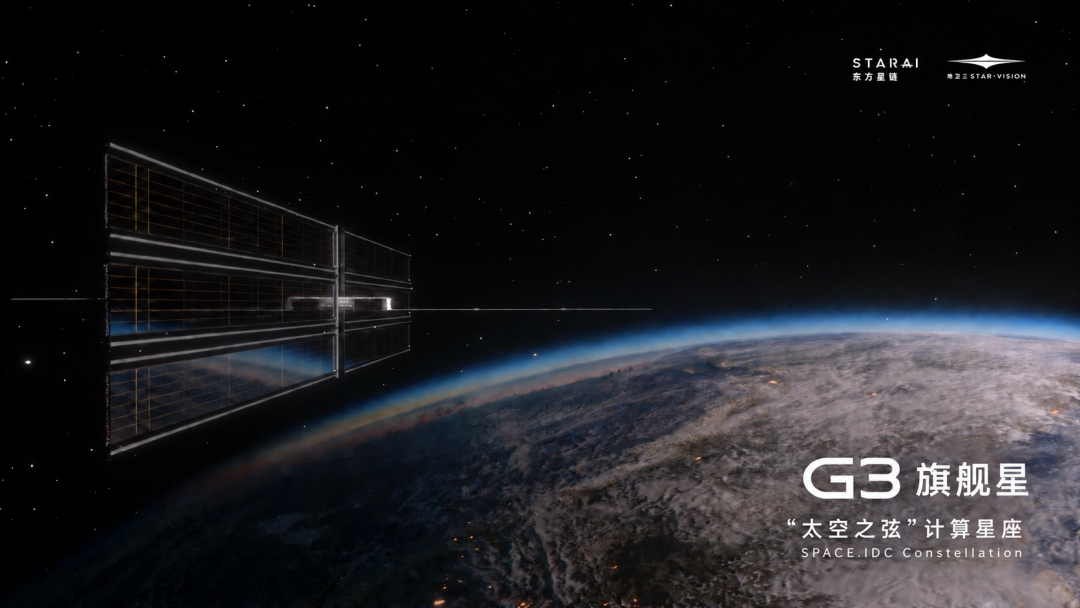
Image Source: Oriental Starlink
Why is it imperative to deploy computing power in space?
Some may question the necessity of moving away from ground-based data centers. Academician Wang Jianyu offers three compelling reasons.
Firstly, the sheer number of satellites is overwhelming. In the past, ground control issued individual instructions to satellites, dictating when and where to capture images. With large constellations, this approach becomes unmanageable. Instead, satellites will be assigned objectives and left to compute and schedule tasks autonomously.
Secondly, data transmission poses a significant bottleneck. Modern remote sensing satellites capture increasingly detailed images, with wavebands expanding from a few to hundreds, leading to explosive data growth. Transmitting all this data to Earth strains bandwidth. Processing data in space first and transmitting only the pertinent information alleviates this bottleneck.
Thirdly, there's a long-term consideration: solar energy in space is virtually inexhaustible. If the cost of electricity in space ever becomes cheaper than on Earth, relocating data centers to space becomes a viable option.
And this is not merely speculative. On August 5th of this year, two hyperspectral satellites were launched, each weighing 300 kilograms and equipped with onboard computing power of 400 teraFLOPS.
The results? Previously, data had to be transmitted to Earth for analysis, a process that took hours or even days. Now, processing occurs in space, with results sent back in minutes, boosting data utilization from less than 10% to over 80%. One satellite monitors cotton in Uzbekistan, while another provides disaster warnings for Indonesia, both under existing contracts.
Ideal vs. Reality
The grander the vision, the more crucial it is to remain grounded.
It's worth noting that they are not the only entities in this field. The Santi Computing Constellation, led by the Zhejiang Lab, launched its first satellites in 2025 and has already detected wildfires in northwest China from space. NationSky's 'Star Computing' plan envisions 2,800 satellites and has even deployed a general-purpose large model on an in-orbit satellite. This field is already bustling with activity.
The most immediate challenge lies in the fact that the first verification satellite won't launch until late 2027, and the current plan for over a thousand satellites remains on the drawing board.
No technical obstacle will be easy to surmount. Without air in space, chip cooling relies solely on radiation; high-end radiation-resistant AI chips already lag behind; inter-satellite laser communication and multi-satellite coordination all necessitate real-world testing.
Then there are the financial and logistical hurdles. The Agricultural Bank of China and the Industrial and Commercial Bank of China have jointly provided 10 billion yuan in credit lines, with an initial tranche of 1 billion yuan, a rare demonstration of large-scale support.
On the launch front, collaborations with Galactic Energy and Oriental Space aim to provide customized launches. However, the industry currently faces a 'more satellites than rockets' dilemma. Launching a 1-kilogram payload to a 500-kilometer orbit still costs around 40,000 yuan per launch with expendable rockets—a reason why everyone is racing to develop reusable rockets.
My assessment is straightforward: the success of such a plan hinges not on the number of satellites planned but on whether the first satellite can launch on schedule and operate effectively in orbit.
So, there's no need to be dazzled by terms like 'thousand satellites' or 'hundreds of petaFLOPS.' The performance of the G1 satellite after its launch in late 2027 will determine whether this 'Strings of Space' becomes a functional network or just an attractive PowerPoint presentation.
By then, satellites will not merely 'see' Earth but truly 'understand' it—a step that's certainly worth waiting for.

All content in this article is sourced from publicly available information.
-
![]()
Contrast! Xiaomi Pengcheng SUV's Order Volume Drops in Second Week: Are Netizens Right to Say It's Below Expectations?
-
![]()
0 yuan phone purchase, ends in 2026
-
![]()
Explosive News! Xu Jiayin’s Evergrande Auto Launches a 'New Business Venture' Amid 186 Million Yuan H1 Profit
-
![]()
Quantum AI Track Begins to Explode: Tsinghua-Affiliated Sober Heterogeneous Secures Nearly 100 Million Yuan Across Two Financing Rounds in Three Months
-
![]()
QClaw Is Ultimately Acquired by WorkBuddy
-
![]()
China Launches Space Computing Initiative: A 'Data Center' in the Sky Comprising Over 1,000 Satellites
-
![]()
Why Is Starship Planning to Orbit Earth Six Times on Its 14th Flight?
-
![]()
Detailed Explanation of Zhuoyu ZYT World: While the Industry is Still Reviewing Recordings, Zhuoyu has Already Thrown AI into the 'GTA World' for Driving Practice