Musk Intends to Gift Every U.S. Child a Share of SpaceX: Will They All Become Musk Shareholders?
 10/21 2026
 535
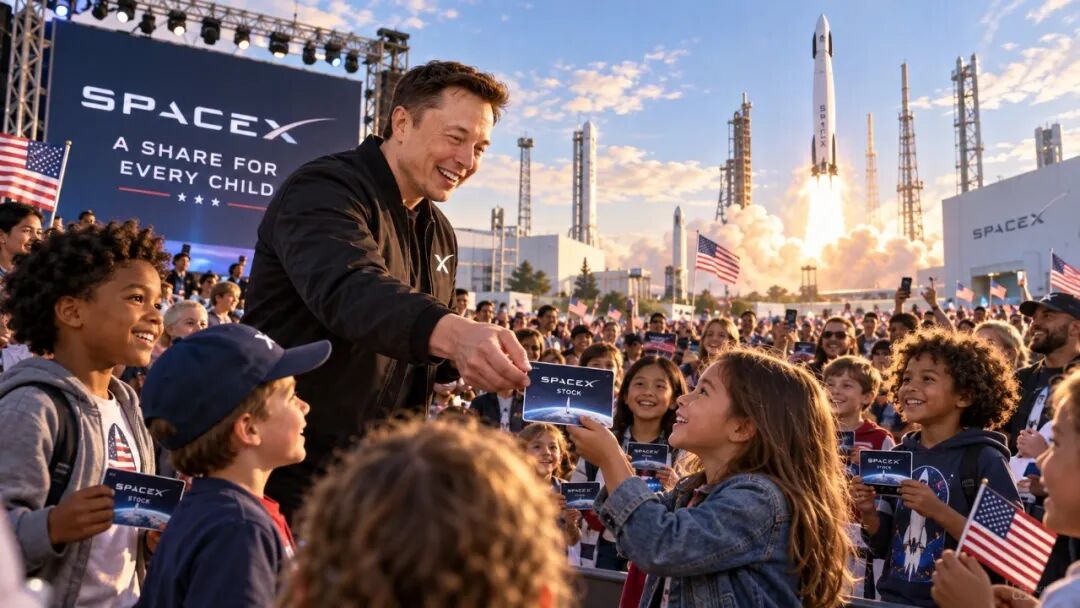
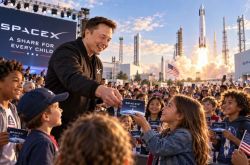
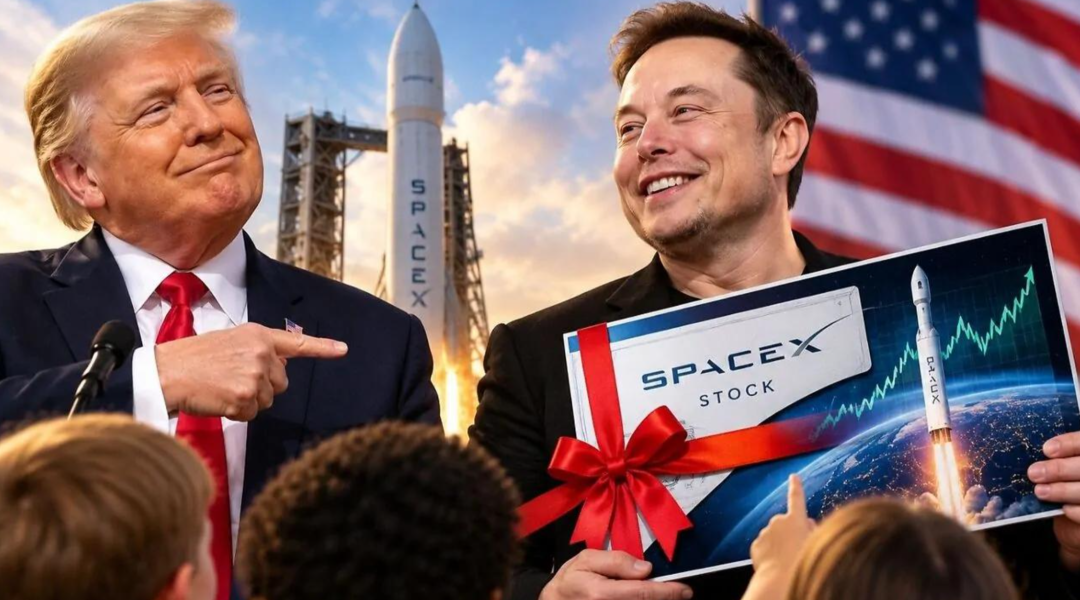
(Note: The image above is an AI-generated illustration, not an actual photograph.)
Musk made a significant announcement on his personal X (formerly known as Twitter) account, revealing his plan to bestow one share of SpaceX stock upon every child in the United States.
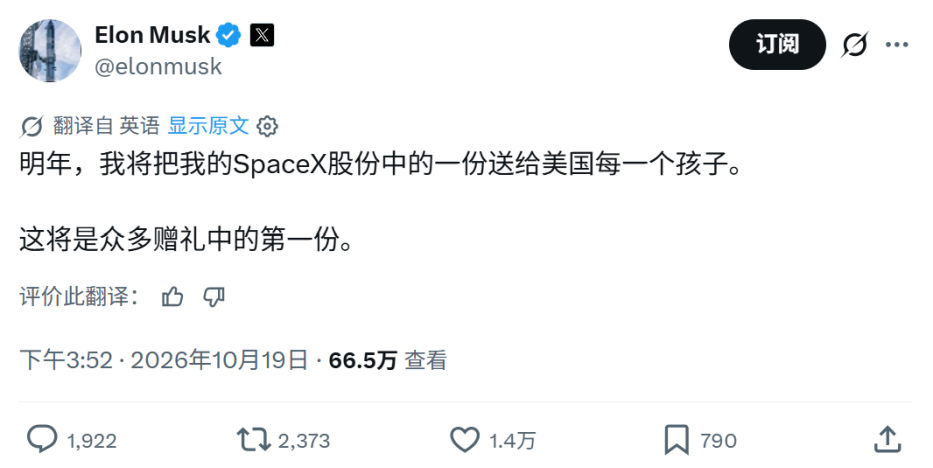
Image credit: Internet
However, he left several key details unspecified, such as the criteria for determining who qualifies as a "U.S. child"—what age range is included? Are children of undocumented immigrants eligible? How will the distribution process be carried out? These questions remain unanswered.
The comments section is abuzz with humor, with some expressing a desire to return to their childhood, while others lament, "Though flowers bloom again, youth never returns."
According to public data, there are approximately 70 million minors in the United States. Given SpaceX's recent stock price exceeding $140, the nominal value of Musk's commitment hovers around $10 billion. While this figure may seem staggering, it is not an exaggeration within Musk's vast portfolio: he owns billions of SpaceX shares, and the portion he intends to distribute represents just over 1% of his total holdings. For the children, it marks their "first stock in life"; for the world's wealthiest individual, it is a grand yet cost-effective gesture.
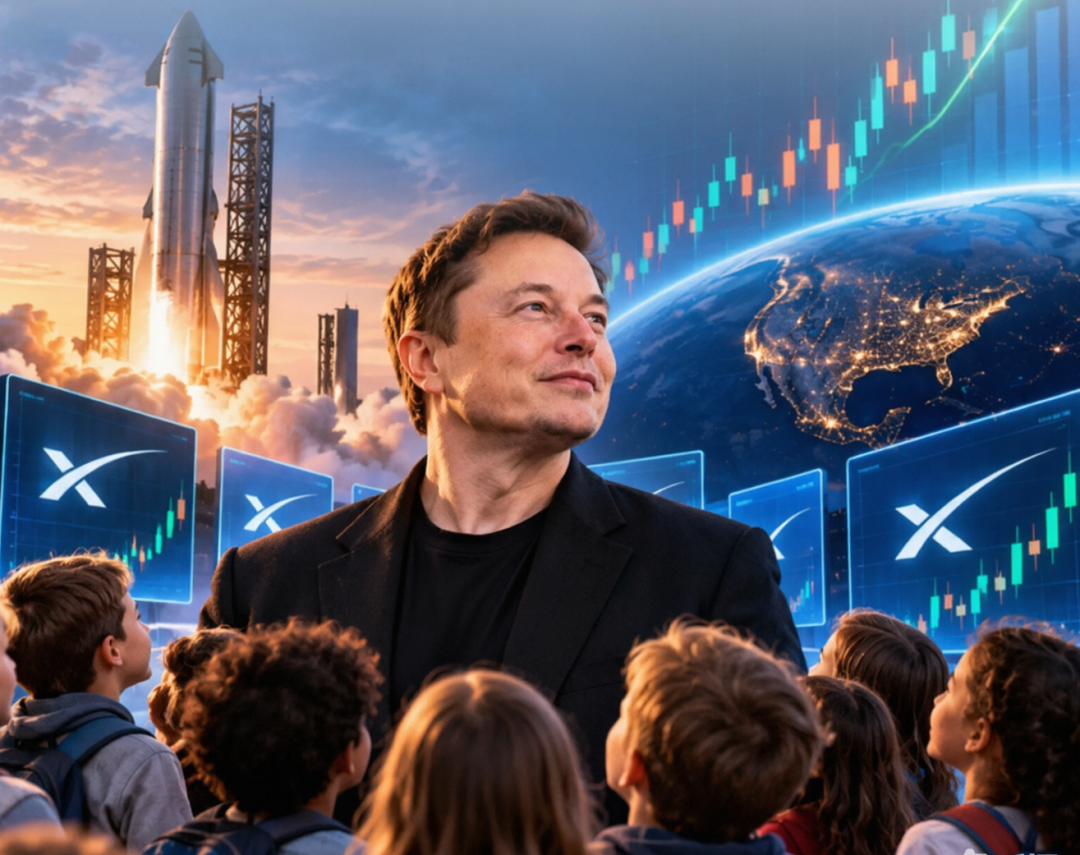
AI-generated illustration
It must be acknowledged that Musk has demonstrated considerable creativity lately. Yet, some wonder: Why not donate cash directly instead?
Is Giving Stock a Practical Option? Why Not Opt for Selling Shares and Donating Cash?
If Musk were to sell his shares first and then donate the proceeds, he might incur substantial capital gains taxes. Furthermore, selling a significant portion of stock could adversely affect the share price—would other shareholders approve? Likely not.
By donating long-held appreciated stock directly, Musk can typically avoid capital gains taxes and may be eligible for a charitable deduction at fair market value (subject to certain limits and thresholds in recent years). Although a $10 billion donation could not be fully deducted in a single year, "donating stock instead of selling it" remains a more tax-efficient strategy than "selling then donating." For an entrepreneur whose wealth is heavily concentrated in his own company's stock, this approach rationally balances various interests—not hypocritically.
As long as the recipients ultimately receive tangible benefits, this outcome is positive, leveraging tax policy to encourage the wealthy to contribute to the greater good.
Why Is Musk Taking This Action?
This initiative transcends mere financial considerations.
Public sentiment has turned against AI and billionaires: AI companies are criticized for reaping disproportionate societal benefits, tech moguls face scrutiny for wealth accumulation, and ordinary families worry about diminishing opportunities for upward mobility. Around the same time, Anthropic announced plans to allocate at least some shares to a public benefit fund. Musk initially commented, "Why not distribute them directly to the public?" before making his own stock-gift pledge.
Image credit: Internet
In essence, this move resembles both a charitable act and a strategic response; a form of wealth redistribution and a counterattack against negative public opinion.
However, it benefits ordinary people—as long as the general populace reaps the rewards, let the billionaire "deities" debate among themselves.
Of course, some may dismiss this as a marketing ploy. Endowing a child with ownership in America's "most exciting company" from birth or childhood presents an almost unbeatable narrative. It transforms "capitalism" from an abstract concept into a tangible account balance, reimagines "tech billionaires" from oppressors to enlighteners. For Musk, this approach is more impactful than donating buildings, scholarships, or foundations because it directly links SpaceX's future vision—rockets, Starlink, Mars, AI, manufacturing reshoring—to a single share.
Personally, while this may be a "marketing move," it inspires many. Truly effective marketing does not rely on secrecy—it directly benefits a broader audience.
How Would the Stock Be Distributed?
Public reports suggest that if Musk proceeds, utilizing Trump Accounts would be the most practical approach. However, as of the press time, Musk has not confirmed this himself.
Trump Accounts are associated with the current administration's landmark child investment policies. The Treasury has automatically opened accounts for millions of children, and regulations permit companies or shareholder charities to donate individual stocks—essentially providing a "highway" for this initiative.
AI-generated illustration
Without this established pathway, constructing a custom distribution channel would be complex, involving identifying eligible children, complying with regulations, and establishing an independent charitable trust or fund. Children would receive not direct shares but a promise of redemption—a far less satisfying experience for beneficiary families.
Utilizing Trump Accounts also offers Musk an opportunity to mend relations with Trump, making this path highly plausible.
The Bottom Line
Musk's move serves legitimate business purposes while also functioning as a social experiment.
Encouraging birth rates or reducing wealth inequality may be long-term objectives, but if this approach proves successful, it could set a precedent for other billionaires. Could government subsidies and billionaire stock donations become a standard model?
Musk refers to this as the "first of many gifts." Whether it materializes remains to be seen.
- END -
-
![]()
Tencent Leads, Baidu Follows, but the AI Office Race is Far from Over
-
![]()
Not Waveguide, Nor BirdBath: TDK Explores a 'Third Path' for AR Displays
-
![]()
Musk Intends to Gift Every U.S. Child a Share of SpaceX: Will They All Become Musk Shareholders?
-
![]()
Hippoc Data Tempers Market Enthusiasm This Time
-
![]()
[Science Popularization] How to Keep 1 Million GPUs Running Without 'Work Stoppage'?
-
![]()
Changan Automobile: Seizing the Moment
-
![]()
Unchecked Production Boom and Traffic Gridlock: What’s the Real Battleground for AI Short Dramas? | China’s AI Short Drama Global Expansion Report
-
![]()
Tesla’s Aerial Vehicle Captures Global Attention, China’s Flying Car Advances with Regulatory Sandbox Trials