Tesla’s Aerial Vehicle Captures Global Attention, China’s Flying Car Advances with Regulatory Sandbox Trials
 10/21 2026
 411
This marks the 152nd original article from the Thinking AI Club.
The full text spans approximately 1,286 words, offering an estimated reading time of 4 minutes.
Several days ago, Tesla’s Roadster made headlines as it soared and tumbled through the skies at a Texas test site, sparking widespread online discussion. For detailed insights, refer to my previous article, ‘Tesla’s ‘Flying Sports Car’ Has Made Its Debut.’ At that time, He Xiaopeng, the CEO of XPENG Motors, liked the post but added a note of caution: “No one can bypass flight certification. I sincerely hope progress in this area accelerates.”
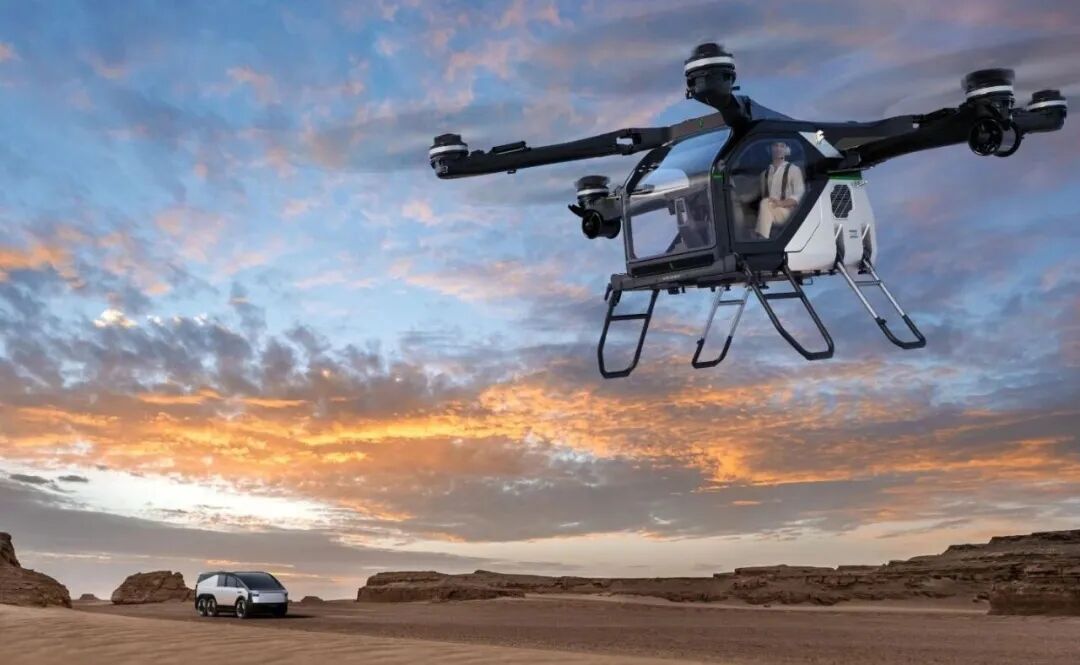
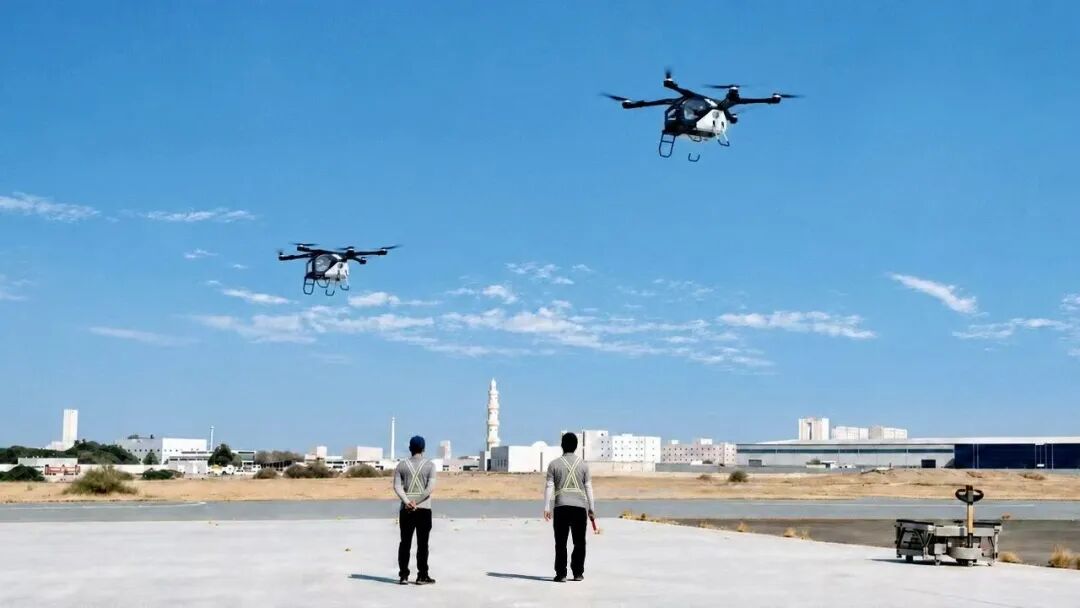
A week later, his own company delivered a response. On October 20, the Sheikh of Ras Al Khaimah in the UAE led a delegation to Guangzhou, visiting XPENG AEROHT’s flying car mass production facility to receive the first Land Aircraft Carrier (X3-F) for deployment in the UAE’s low-altitude demonstration zone.
One side was showcasing flight capabilities, while the other was delivering operational vehicles. This contrast underscores a narrative worth exploring.
Three Strategic Milestones
Let’s establish the timeline first.
In October 2025, XPENG AEROHT achieved its first overseas manned public flight in Dubai, securing 600 orders on the spot—a testament to its technical prowess.
By September 2026, XPENG AEROHT had signed a strategic cooperation agreement with Ras Al Khaimah, entering the UAE’s national regulatory sandbox. Simultaneously, planning commenced for a cross-emirate demonstration route spanning from Abu Dhabi to Ras Al Khaimah, laying the groundwork for regulatory compliance.
Then, on October 20, the first trial operation unit rolled off the production line in Guangzhou. The Sheikh witnessed the entire process, from carbon fiber fuselage construction to final assembly, signaling the operational readiness of the equipment.
Next, the initial batch of trial units will undergo sandbox trial operations under the supervision of the UAE’s Civil Aviation Authority. Both parties aim to advance product certification, cross-emirate route planning, and operational system development. In under a year, all three strategic milestones were successfully realized.
What Does ‘Sandbox’ Mean?
The term ‘sandbox’ is commonly used in the fintech sector. In essence, it involves designating a real-world environment where regulatory agencies closely monitor new innovations, allowing them to operate while simultaneously developing relevant regulations.
For flying cars, the rationale is clear: Flight testing in controlled environments is insufficient. Data must be collected from real airspace, routes, and weather conditions to establish airworthiness certification and operational rules.
The Middle East emerges as an ideal testing ground: Its relatively relaxed airspace, the government’s ambition to position future transportation as a national symbol, and its capacity to bear costs make it suitable. For XPENG AEROHT, every hour of flight data gathered in the sandbox strengthens its case for future certification. For the UAE, leveraging Chinese technology helps secure the title of ‘Global Personal Low-Altitude Flight Demonstration Zone.’ Both sides fulfill their needs and gain a competitive edge.
Why Chinese Technology?
A subtle yet significant detail: The Sheikh received not a polished showroom prototype but a fully production-ready flying vehicle fresh off the assembly line. This marked the first time China’s flying car manufacturing system was inspected at an industrial level by a foreign head of state.
Behind this achievement lies Guangzhou’s world-leading mass production factory for flying cars, capable of producing one unit per hour at full capacity, with an annual planned output of 10,000 units. Orders for the Land Aircraft Carrier have surpassed 7,000. The ground vehicle can be driven with a standard C license, offers over 1,000 km of range, and can even reverse-charge the flying unit.
The Middle East is not the sole destination. In August, the King of Jordan visited specifically to observe the separation and integration demonstration of the ground vehicle and flying unit. Serbian President Vucic has met multiple times with Zhao Deli to establish the first national-level low-altitude economic demonstration zone in Central and Eastern Europe. In January, XPENG AEROHT plans to demonstrate the Land Aircraft Carrier’s flight capabilities in the United States.
While XPENG AEROHT appears to be reaping rewards, the journey is far from over.
First, sandbox trial operations do not equate to commercial operations. The path from trial operations to public ticket sales involves overcoming product certification, route approvals, and operational system development.
Second, domestic airworthiness certification remains incomplete. The X3-F’s type certificate application was accepted in March 2024, and the production certificate in May 2025, but certification is still ongoing. Domestic deliveries are scheduled to begin only by the end of 2026. While international expansion moves swiftly, domestic approvals remain essential.
Third, replicating the Middle East model in Europe and the United States is uncertain. Differences in airspace conditions, regulatory cultures, and market structures pose challenges. Demonstrations in the U.S. have yet to fly, and European regulations are expected to be even stricter.
Nevertheless, when viewed collectively, the week’s two major developments paint a clear picture: Tesla demonstrates that “flying cars can fly,” while Chinese companies answer “how to fly, who governs, and who buys.” The former generates headlines; the latter drives industrial progress.

All content is sourced from publicly available information and represents personal viewpoints only.
-
![]()
Tencent Leads, Baidu Follows, but the AI Office Race is Far from Over
-
![]()
Not Waveguide, Nor BirdBath: TDK Explores a 'Third Path' for AR Displays
-
![]()
Musk Intends to Gift Every U.S. Child a Share of SpaceX: Will They All Become Musk Shareholders?
-
![]()
Hippoc Data Tempers Market Enthusiasm This Time
-
![]()
[Science Popularization] How to Keep 1 Million GPUs Running Without 'Work Stoppage'?
-
![]()
Changan Automobile: Seizing the Moment
-
![]()
Unchecked Production Boom and Traffic Gridlock: What’s the Real Battleground for AI Short Dramas? | China’s AI Short Drama Global Expansion Report
-
![]()
Tesla’s Aerial Vehicle Captures Global Attention, China’s Flying Car Advances with Regulatory Sandbox Trials