6G, Token Factories, Embodied Intelligence: Key Highlights from the 2026 Mobile Network Conference
 11/06 2026
 459
The definition of "operator" is changing in the AI era.
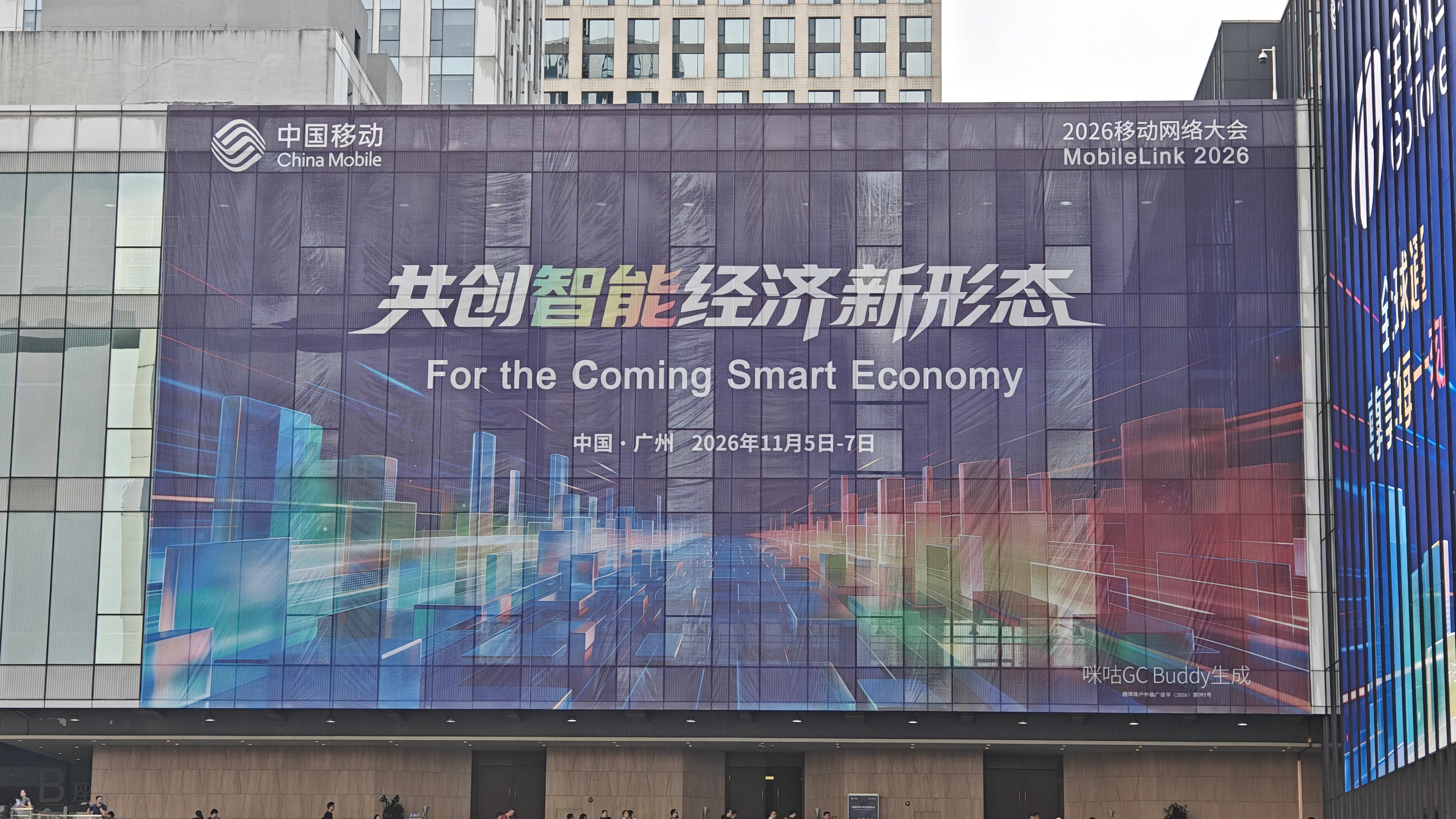
On November 5, the 2026 Mobile Network Conference, themed "Co-creating New Forms of the Intelligent Economy," opened with great fanfare in Guangzhou.
The event was renamed from "Global Partner Conference" to "Mobile Network Conference" precisely because of the shift in operators' identity and positioning. Today, the network is no longer a catch-all term for base stations and fiber optics; it is an integration of communication networks, computing power networks, and intelligence networks. The focus has moved from pure "connectivity" to an integrated foundation of communications + computing power + AI.
(Image source: Leitech)
As Chen Zhongyue, Chairman of China Mobile, put it in June, in the mobile intelligent era, the network is an intelligent flow that carries knowledge and solves problems, and this new era calls on operators to explore broader frontiers of intelligent services.
The 5G-A, 6G and other technologies showcased by China Mobile, Qualcomm, Lenovo, ZTE, OPPO, vivo and other companies at the 2026 Mobile Network Conference are the highways of the AI era and the transmission channels of this "intelligent flow." ZTE championed the slogan "5G-A as the foundation, 6G expanding the boundaries" at the conference venue, and in the future will empower agent architecture and full-stack AI through 6G+AI, integrating AI acceleration with dedicated communication processors.
It is not only operators and network service providers—all enterprises are repositioning themselves around AI.
Token Factories: Another "Power Plant" in the AI Field
In March this year, NVIDIA CEO Jensen Huang first proposed the concept of the Token economy and gave the formula "Revenue = Tokens per watt × Available gigawatts." In his view, the Token is a new commodity, and AIDC intelligent computing centers optimized for large-scale inference have become factories that produce Tokens.
Indeed, computing power is a critical infrastructure in the AI era. Massive computing clusters continuously provide the computing power needed for training and inference of AI large models. A Token Factory is a new operational form that uses data centers as the hardware foundation, layered with models, inference optimization, and scheduling platforms, to produce and deliver Tokens.
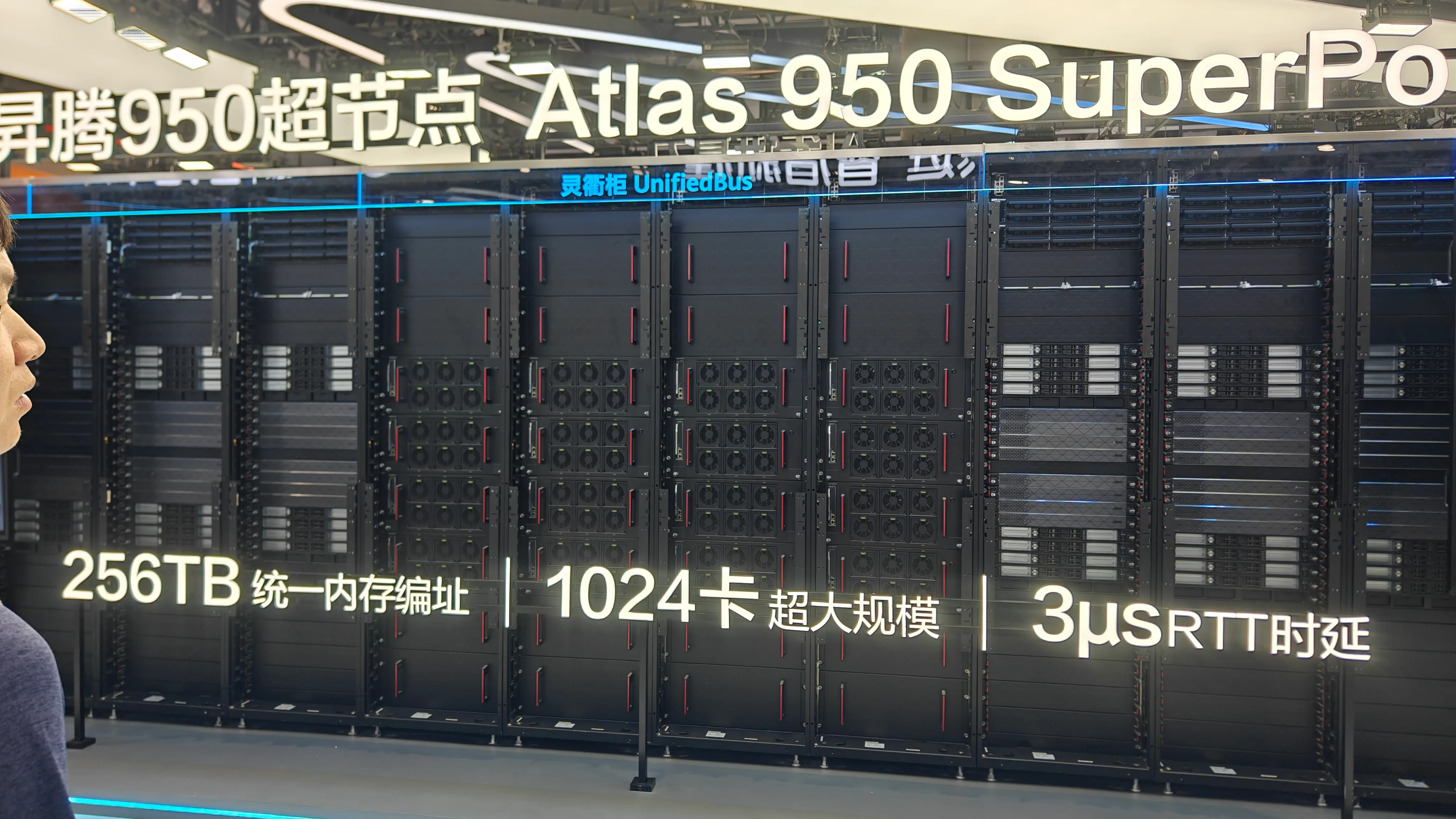
At the 2026 Mobile Network Conference, computing power providers showcased their Token Factory solutions. Huawei, for example, exhibited the Ascend 950 super node, featuring 256TB unified memory addressing, 1,024 Ascend 950 chips, RTT latency of only 3μs, and support for various business models such as internal AI use, compute card leasing, and Token services.
(Image source: Leitech)
H3C exhibited the H3C UniPoD S80000 super node, with a single cabinet accommodating 32 or 64 AI accelerator cards, covering the full range from 32 cards to 1,024 cards and scalable up to 16,384 cards. AI enterprises or Token factories can freely mix and match according to their actual usage scenarios.
Moore Threads exhibited its domestic full-function GPU ten-thousand-card trillion-parameter large model training platform—the KUAE intelligent computing cluster—as well as a low-cost "domestic heterogeneous inference high-quality AI Token Factory solution." Through three underlying technologies—Prefill-Decode (PD) heterogeneous collaboration, high-performance heterogeneous KV Cache conversion, and heterogeneous computing fusion—combined with full-link vertical deep optimization across model adaptation, inference execution, KV Cache management, resource orchestration, and service operations, it improves the effective Token output per unit of resources and overall production efficiency.
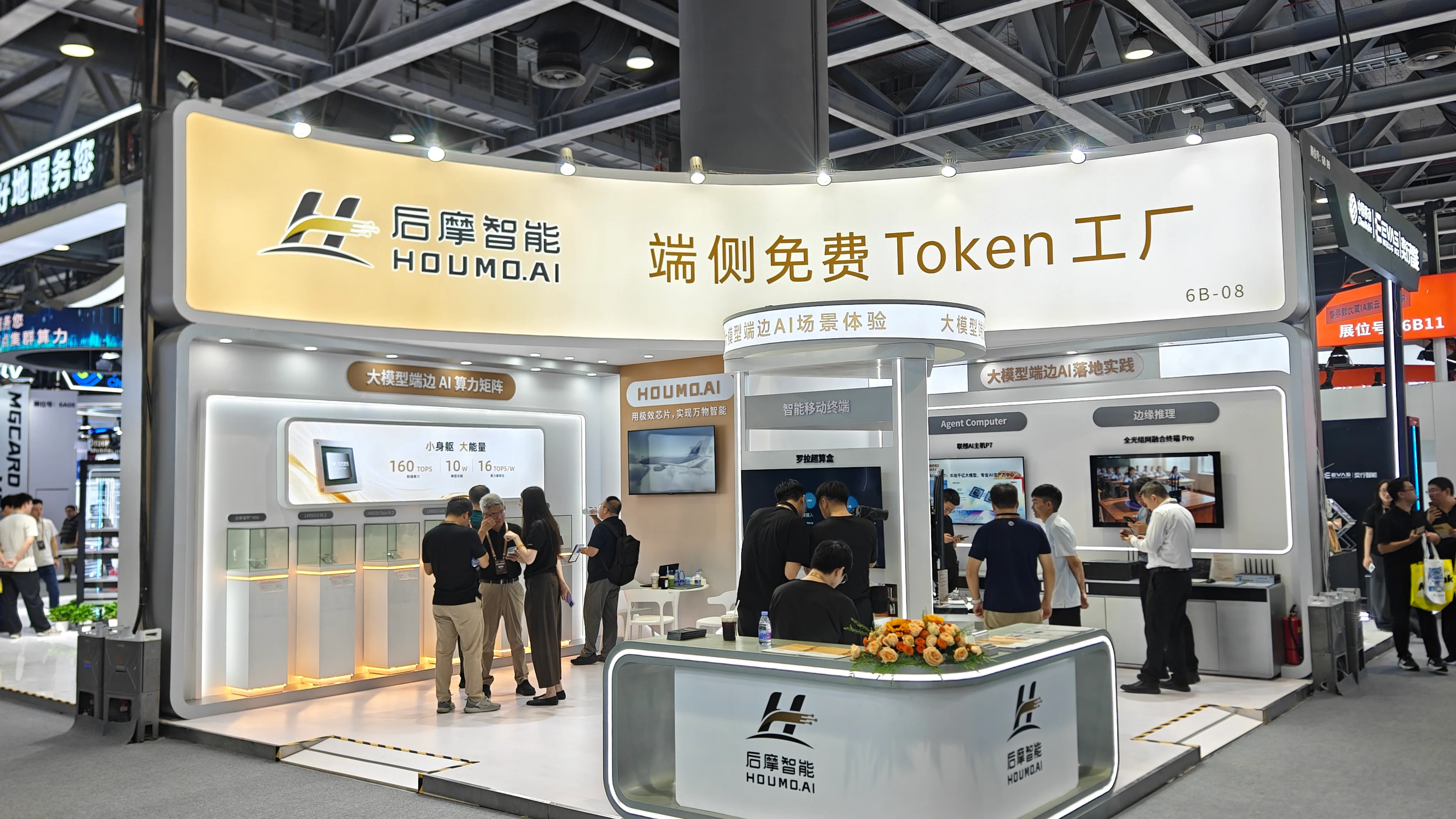
Unlike the above vendors' solutions that focus on cloud-side AI, Houmo AI defines itself as an "end-side free Token factory." With SRAM-CIM as its root technology, it has laid out two technical paths—2D CIM and 3D CIM—corresponding to demands for larger capacity and greater bandwidth, and reduces the marginal cost of end-side AI through computing-in-memory.
(Image source: Leitech)
In 2024, end-side AI chips could only run models of around 7B, with performance of only about 10 Tokens. The new generation of AI chips can already run models of around 120B, and with continuous optimization of AI large models, capabilities have greatly improved at the same parameter count, meeting users' more complex needs. In addition, the advantage of greater privacy will also become a major boost for the popularization of end-side AI in the future.
AI is penetrating every aspect of our lives, and Token operations are becoming more substantial and deeper. The industry's requirements for computing networks are getting higher and higher. Token factories are to AI what power plants are to factories. Huawei, Moore Threads, H3C, Shenzhou Kuntai, Alibaba and other companies have presented their own Token Factory solutions.
Leitech (ID: Leitech) believes that in the future, Token factories will, like power plants supplying electricity to factories, provide AI enterprises with a continuous stream of computing power resources.
From Laboratories to Countless Scenarios: Robots Are Another Star of the Conference
Since ChatGPT ignited the AI industry, "practicality" has been a hot topic in the AI field. Qwen, Doubao, DeepSeek, Gemini, Claude and other well-known large models at home and abroad have proven to us that AI already possesses practical capabilities.
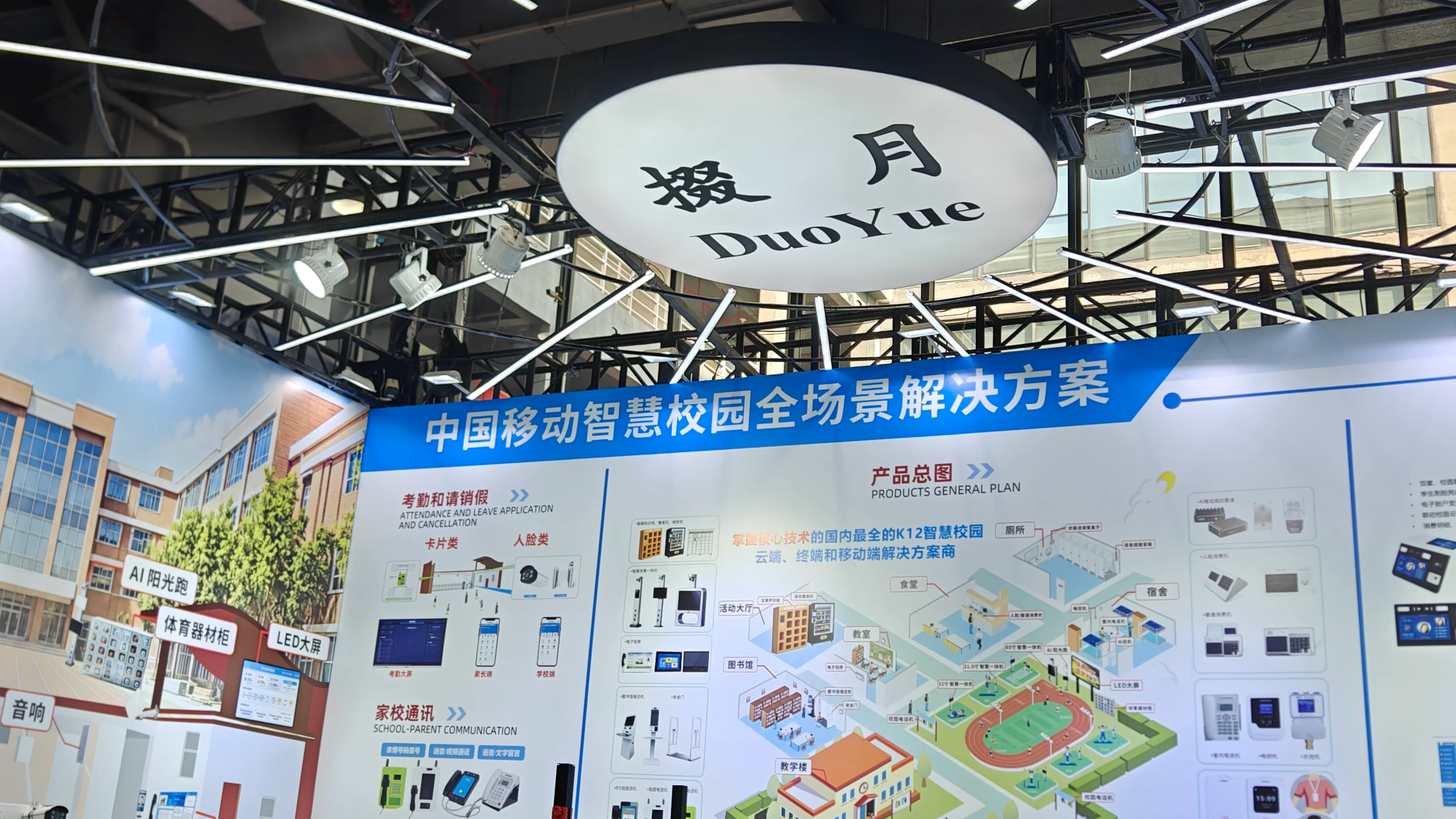
At the 2026 Mobile Network Conference, Duoyue's China Mobile smart campus scenario solution, Shenzhou Taiyue's multi-scenario AI applications, CZUR's AI office solutions, Whale Cloud's AI + healthcare and others all demonstrated to us the performance and role of AI in scenario-based applications.
(Image source: Leitech)
However, what Leitech focuses on most is embodied intelligent robots. AI applications are no longer novel to us today. Robots that are being deployed at scale and in real scenarios are the jewel in the crown of embodied intelligence.
There were not many robot companies participating in the 2026 Mobile Network Conference, but Unitree, AgiBot, Honor, Inspire Robots and other companies were present, exhibiting different categories of robots, dexterous hands and other products.
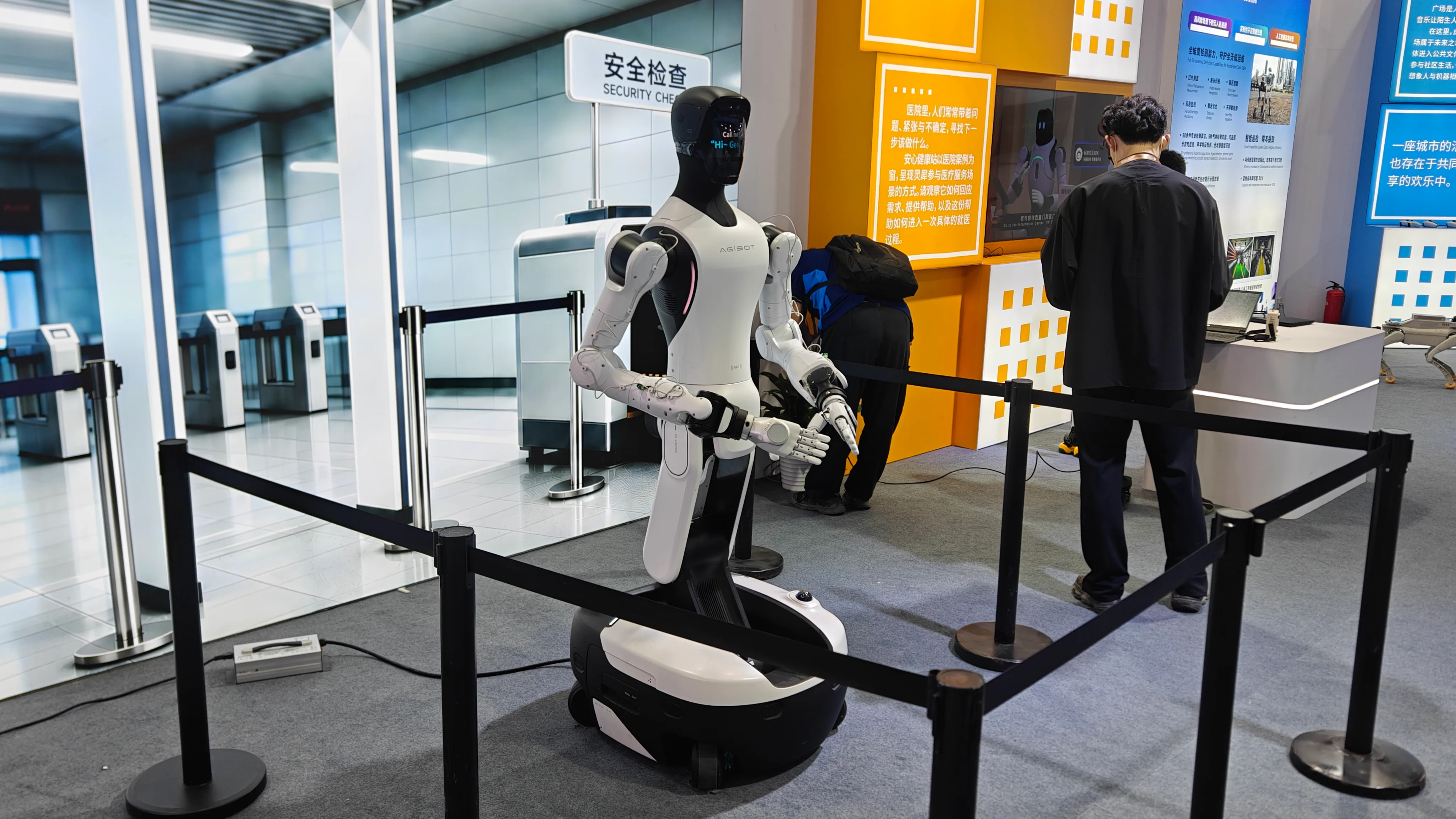
In terms of scenario-based applications, AgiBot exhibited robots designed for subway and hospital inspection, and Fenyinta Technology exhibited the Yaya elderly health companion robot solution. As the host, China Mobile also exhibited the Mobile Star Chef robot specially designed for dining scenarios, demonstrating full-process coffee-making capabilities.
(Image source: Leitech)
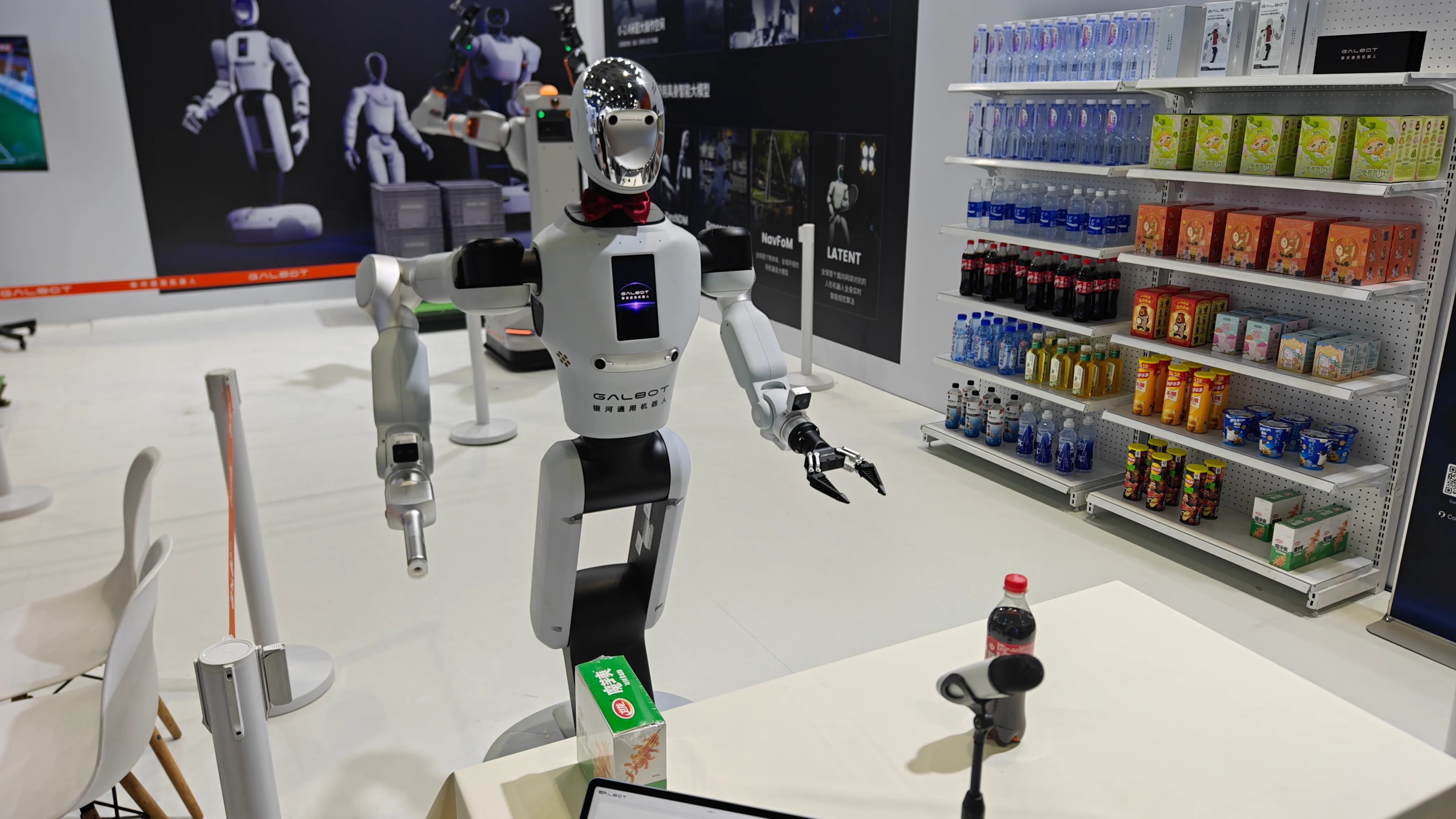
The inspection field already has relatively mature robot solutions, and the retail industry is the next direction targeted by all embodied intelligence companies. Galaxy General, which launched the Galaxy Space Capsule and smart pharmacy and partnered with FamilyMart convenience stores, not only attended the conference but also set up a small retail scenario on site, where users could place orders and robots would automatically pick up goods for them.
After testing by Leitech, Galaxy General's robot was able to accurately grab the products we ordered from the shelves and deliver them to the counter. Of course, compared with manual labor, the robot's efficiency is still much lower.
(Image source: Leitech)
When promoting robots, many companies use "tightening screws on their own factory production lines" to prove the robot's working ability. Although this scenario has moved beyond pure laboratories, most still belong to "pilot validation lines" and are not equivalent to having large-scale commercial mass-production and popularization capabilities. Only when scenarios such as retail and home are fully proven can general-purpose humanoid robots truly have popularization value.
At the 2026 Mobile Network Conference, embodied intelligence companies did not emphasize technology and products, but instead started from scenarios and focused on demonstrating robots' working capabilities. Reproducible and transferable general working capabilities are precisely the foundation for realizing Musk's prediction that "there will be tens of billions of humanoid robots worldwide in the future."
Connectivity Is the Foundation, Computing Power Is the Resource, AI Is the Core
Unlike auto shows, consumer electronics shows and other exhibitions, the enterprises participating in the 2026 Mobile Network Conference are basically partners of China Mobile, and most of the products and solutions they exhibited are aimed at the B2B market.
Judging from the products and solutions exhibited by participating companies, the positioning of the communications industry is being restructured. Communications is no longer independent but has become the bearer foundation of AI. Reconstructing the network in an AI-Native manner has replaced plug-in AI transformation. The network itself possesses perception, computing, and decision-making capabilities. 5G-A delivers current industrial dividends, while 6G is a long-term pre-research and gradual evolution.
AI infrastructure is gradually layering. Large model training is concentrated in intelligent computing centers, but agents, robots, industrial control, and low-altitude sensing require low-latency, high-reliability, locally privacy-controllable inference. AI is not just a battle over computing power, but also a battle over computing power scheduling networks, deterministic connectivity, and device-edge-cloud collaboration.
In the future, the industry will present a landscape where cloud vendors build large models, AIDC intelligent computing centers provide Tokens, and companies represented by China Mobile are responsible for selecting models, scheduling, and distributing Tokens through MoMA (Mobile Model Service Platform). MoMA will rely on the advantages of the national computing network and edge nodes to package the computing power of intelligent computing centers into inclusive services that can be called on demand and purchased by Token volume.
Ultimately, when it reaches C-end scenarios, AI will move from cloud-based large models to distributed intelligence and end-side embodied intelligence. The application focus will also shift from mobile apps and cloud conversations to networked robots, industrial agents, home agents, and low-altitude devices.
Source: Leitech
Images in this article are from: 123RF licensed image library Source: Leitech
-
![]()
Is Toyota Cutting Ties with the Rest of the World for China?
-
![]()
"China's Buffett" Goes All-In on AI and Crashes Hard! Turns Into a "0.6 Yuan Fund" in Just 4 Months
-
![]()
The Pain Points of Lingguang as a Personal Agent: Xiaohongshu and Rokid Join Forces to Fill the Gaps
-
![]()
Yu Chengdong "Takes Advice": the "Crown Prince" Returns as the New AITO M8 Rolls Back into Huawei Stores
-
![]()
Hongguo Short Dramas Takes on Doubao—Even Jack Ma Can't Sit Still?
-
![]()
Breaking! AITO Secures Major Orders for Smart Policing and Official Vehicles
-
In the AI Era, the Real Competition Is Not Just AI Itself
-
![]()
Toyota's Half-Year Report: New Cars and Robotics as New Business Lines underpin "Stabilization" and "Survival" Transformation